This study characterized ocean biological carbon pump metrics in the second iteration of the REgional Carbon Cycle Assessment and Processes (RECCAP2) project. The analysis here focused on comparisons of global and biome‐scale regional patterns in particulate organic carbon (POC) production and sinking flux from the RECCAP2 ocean biogeochemical model ensemble against observational products derived from satellite remote sensing, sediment traps, and geochemical methods. There was generally good model‐data agreement in mean large‐scale spatial patterns, but with substantial spread across the model ensemble and observational products. The global‐integrated, model ensemble‐mean export production, taken as the sinking POC flux at 100 m (6.08 ± 1.17 Pg C yr−1), and export ratio defined as sinking flux divided by net primary production (0.154 ± 0.026) both fell at the lower end of observational estimates. Comparison with observational constraints also suggested that the model ensemble may have underestimated regional biological CO2 drawdown and air‐sea CO2 flux in high productivity regions. Reasonable model‐data agreement was found for global‐integrated, ensemble‐mean sinking POC flux into the deep ocean at 1,000 m (0.65 ± 0.24 Pg C yr−1) and the transfer efficiency defined as flux at 1,000 m divided by flux at 100 m (0.122 ± 0.041), with both variables exhibiting considerable regional variability. The RECCAP2 analysis presents standard ocean biological carbon pump metrics for assessing biogeochemical model skill, metrics that are crucial for further modeling efforts to resolve remaining uncertainties involving system‐level interactions between ocean physics and biogeochemistry.
Variations in atmosphere total column-mean CO2 (XCO2) collected by the National Aeronautics and Space Administration's Orbiting Carbon Observatory-2 satellite can be used to constrain surface carbon fluxes if the influence of atmospheric transport and observation errors on the data is known and accounted for. Due to sparse validation data, the portions of fine-scale variability in XCO2 driven by fluxes, transport, or retrieval errors remain uncertain, particularly over the ocean. To better understand these drivers, we characterize variability in OCO-2 Level 2 version 10 XCO2 from the seasonal scale, synoptic-scale (order of days, thousands of kilometers), and mesoscale (within-day, hundreds of kilometers) for 10 biomes over North America and adjacent ocean basins. Seasonal and synoptic variations in XCO2 reflect real geophysical drivers (transport and fluxes), following large-scale atmospheric circulation and the north-south distribution of biosphere carbon uptake. In contrast, geostatistical analysis of mesoscale and finer variability shows that real signals are obscured by systematic biases across the domain. Spatial correlations in along-track XCO2 are much shorter and spatially coherent variability is much larger in magnitude than can be attributed to fluxes or transport. We characterize random and coherent along-track XCO2 variability in addition to quantifying uncertainty in XCO2 aggregates across typical lengths used in inverse modeling. Even over the ocean, correlated errors decrease the independence and increase uncertainty in XCO2. We discuss the utility of computing geostatistical parameters and demonstrate their importance for XCO2 science applications spanning from data reprocessing and algorithm development to error estimation and carbon flux inference.
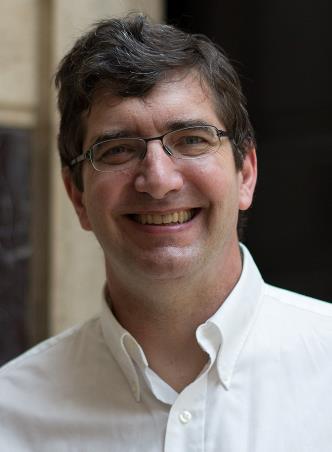 Scott Doney合作论文数Scott Doney Computational Biogeochemistry Lab, Department of Environmental Sciences, University of Virginia2
 Jens Daniel Müller合作论文数1
 Gretchen Keppel-Aleks合作论文数Department of Climate and Space Sciences and Engineering, College of Engineering, University of Michigan-Ann Arbor1
 Emma L Cavan合作论文数Ecosystems and the Environment, Department of Life Sciences, Faculty of Natural Sciences, Imperial College London1
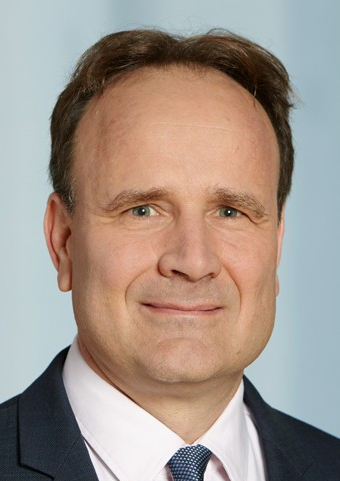 Nicolas Gruber合作论文数Department of Environmental Systems Science, ETH Zürich1
 Devries Tim合作论文数Dept Geog, Univ Calif Santa Barbara1
 Colleen B. Mouw合作论文数University of Rhode;Graduate School of Oceanography;Graduate School of Oceanography, University of Rhode1
 Judith Hauck合作论文数1
 Francois William Primeau合作论文数School of Physical Sciences, University of California, Irvine1
 Stephanie Henson合作论文数National Oceanography Centre;University of Southampton1




