We demonstrate enhanced Peltier cooling at the nanoscale using geometrical constriction. This nozzle structure leads to electron expansion under an applied bias, which in turn results in additional cooling. This extra cooling enhances the overall Peltier effect when the electrons are out of equilibrium with the lattice. An ensemble Monte Carlo simulation is used to demonstrate the non-equilibrium expansion of an electron gas using nanoscale trapezoidal geometric confinement. The proposed device operates under steady-state conditions, providing enhanced cooling compared to a one-dimensional flat geometry. We observe a five-fold increase in both the maximum cooling temperature and cooling power density, reaching more than 5 kW/cm(2), when comparing the trapezoidal geometry to the regular flat geometry.
We present Monte-Carlo (MC) simulations and analyses of a newly proposed thermodynamic cycle in a solid-state regime, which is fundamentally apart from well-known solid-state thermoelectric or thermionic generators. The thermodynamic cycle is designed in analogy to the Otto cycle and includes compression, heating, and release of electronic gas. During the electron gas expansion, part of the energy is delivered to the load, and part of it is rejected to the lattice. Considering the non-equilibrium and the transient nature of the device, it is not limited by the Carnot efficiency. We show that thermal efficiencies higher than 70% are possible when the input heat is small. As we increase the input heat, the efficiency drops significantly and approaches a few percent due to larger electron-phonon interaction rates for higher energy electrons.
Buildings are responsible for a considerable fraction of the energy wasted globally every year, and as a result, excess carbon emissions. While heat is lost directly in colder months and climates, resulting in increased heating loads, in hot climates cooling and ventilation is required. One avenue towards improving the energy efficiency of buildings is to integrate thermoelectric devices and materials within the fabric of the building to exploit the temperature gradient between the inside and outside to do useful work. Cement-based materials are ubiquitous in modern buildings and present an interesting opportunity to be functionalized. We present a systematic investigation of the electronic transport coefficients relevant to the thermoelectric materials of the calcium silicate hydrate (C-S-H) gel analogue, tobermorite, using Density Functional Theory calculations with the Boltzmann transport method. The calculated values of the Seebeck coefficient are within the typical magnitude (200-600 μ V / K ) indicative of a good thermoelectric material. The tobermorite models are predicted to be intrinsically p -type thermoelectric material because of the presence of large concentration of the Si-O tetrahedra sites. The calculated electronic figure of merit, ZT , for the tobermorite models have their optimal values of 0.983 at (400 K and 10 ^17 cm ^−3 ) for tobermorite 9 Å, 0.985 at (400 K and 10 ^17 cm ^−3 ) for tobermorite 11 Å and 1.20 at (225 K and 10 ^19 cm ^−3 ) for tobermorite 14 Å, respectively.
The thermoelectric building envelope (TBE) integrates thermoelectric materials with the building envel-ope for active space heating and cooling. The advantage of TBE heating and cooling includes its signifi-cantly low-profile design and no refrigerant use. Although there are existing studies evaluating TBE performance, they were based on limited operating conditions. The study aims to experimentally evalu-ate the heating and cooling performance of a TBE prototype under various operating conditions. The TBE prototype was installed between two psychrometric chambers, which simulated indoor and outdoor con-ditions. The prototype was tested at an indoor temperature of around 22.35-23.58 degrees C and outdoor tem-peratures from-7.35 degrees C and 16.99 degrees C for heating and from 28.36 degrees C to 40.95 degrees C for cooling, with varied power inputs and fan conditions. The maximum coefficient of performance (COP) of TBE in heating mode is 3.2. The average heating COP of TBE with a current of 1.5 A in four winter scenarios is 1.37. The average heating COP of TBE operating with the current of 0.3-1.5 A at an outdoor temperature of 12 degrees C is 2.27. The TBE system demonstrates a better heating efficiency than an auxiliary electric heater for the heat pump system. The experimental results and evaluation obtained provide critical guidance for the deployment of TBE applications. (c) 2022 Elsevier B.V. All rights reserved.
A continuous underground pipeline monitoring system is needed to avoid energy waste or pipeline explosions and minimize the negative environmental impact. Thermoelectric-powered Internet of things (IoT) sensors can be a promising solution due to reliable power sources supplied by thermoelectric generators to scavenge the wasted heat through the pipeline surface. Conformal thermoelectric generators (cTEGs) are suitable for pipeline applications; however, the current study is mainly focused on harvesting body heat, which is not suitable for piping systems because of the different thermal path. Here we designed and fabricated a film-based cTEG on a roll-to-roll manufacturing platform using an electrothermal model to achieve an optimized device structure and performance. The unique design of this cTEG device provides the capability of scavenging mid- to low-grade waste heat, which is the most common wasted heat source for underground pipeline systems. The proposed device fabrication method combines bulk TE elements with a flexible printed circuit board to maximize the power output and minimize the cost. The resulting power output density of a cTEG integrated with four pairs of p-n junctions is 1.26 mW/m(2) at a temperature difference of 50 degrees C, which is 2 times higher than the value reported in the current literature. This study provides a potential pathway for using TEGs as energy sources for powering underground pipeline monitoring systems in a cost-effective way for real applications.
A thermoelectric building envelope (TBE) is a new type of active building envelope that incorporates thermoelectric material in the building's enclosure. In TBE, the electrical energy and thermal energy can transfer between them through thermoelectric material. As a result, TBE can provide cooling or heating to indoor space if power is applied. TBE-based cooling or heating has high reliability and a low maintenance cost, low CO2 emission, and no refrigerant use. TBE is conducive to the operation of net-zero energy and greenhouse gas emission buildings by using renewable energy. In this study, a multi -stage TBE prototype for space heating and cooling was designed, assembled, and tested. The performance of the TBE prototype was evaluated in two psychrometric chambers with controlled temperature and humidity in Herrick Laboratory at Purdue University. The performance was analyzed, including the surface and air temperatures, cooling capacity, and COP defined as the ratio of cooling capacity to the power input. The test result indicated that the COP of TBE in summer scenarios rangedfrom 0.46 to 2.4 with varied power inputs. The cooling capacity of one prototype can exceed 6.3 kW/cm2. The findings discussed can guide the design and operation of TBE.
The worldwide energy crisis and environmental deterioration are probably humanity's greatest challenges. Thermoelectricity, which allows for the mutual conversion between thermal and electrical energy, has become a promising technology to alleviate this challenge. Increasingly more research focuses on how to fabricate and apply thermoelectric materials for harvesting energy and regulating the indoor thermal environment. However, only a few studies have focused on cementitious materials with thermoelectric potential. Thermoelectric cement is a composite material in which particular additives can enhance the thermoelectric performance of ordinary cement. By potentially replacing traditional construction materials with thermoelectric cement in building applications, electricity could be generated from waste heat, reducing the use of fossil fuels, and supplementing other renewable energy sources like solar and wind. This article presents a review of fundamentals, fabrication, characterization, composition, and performance, as well as modeling methods and opportunities for thermoelectric cement composites. The literature reviewed covers the period from 1998 to 2020 related to thermoelectric cement. It also presents the challenges and problems to overcome for further development and provide future research directions of thermoelectric cement.
This paper discusses a novel design and analysis of a conformal thermoelectric generator (cTEG), which can be used for powering the internet-of-things (IoT) wireless sensors for continuous monitoring of steam pipelines operation and maintenance. This conformal device is designed to be directly attached to a cylindrical steam pipe, therefore has a mechanical flexibility to bending align to the pipe curvature (conformality), and which transports superheated steam at 200 degrees C or around. Lack of continuous monitoring of underground pipelines have resulted in a significant loss of money, time, and resources. This primarily is due to limited access for reading data or replacing batteries. This issue can be addressed using cTEG which can directly convert wasted heat from pipeline to electricity for continuous powering of IoT sensors. The cTEG can be made from a classical bulk bismuth telluride (Bi2Te3) for sintered TEG legs. In the analysis, the material properties of the legs are expected be constant and independent to the temperature where the figure-of-merit is near 1.0 at room temperature. A rollto-roll thermoelectric module is considered by using Kapton film as the substrates with PDMS for filling the gap to achieving low cost and high performance. The electro-thermal device optimization was conducted by using analytical model. Available heat flow in the system is determined by the device design and the hot and cold side heat exchange. Hence these heat transfer limit the power output per device footprint. The moderate passive air convection can be enhanced by extending surface areas by fins to improve the power output. This work particularly focused on the optimization of the module design while the thickness is limited by the requirement of maintaining the mechanical conformability to a pipe surface. Variational conditions (steam temperature, flow rate, pipe diameter) and design parameters (fill factor and leg length) were investigated. In addition, this approach can be applied to other TEG designs with such dimension limitations. The upper limit of power output per device footprint is found at 19.5 W/m2 with fill factor of 20%, where cTEG could achieve to 35 W/m2 at the optimum with few centimeters thickness. The material cost to manufacture the cTEG was estimated and was found to be closer to a comparable range of the first set of primary batteries. The novel modeling method presented here can also be applied to other energy-related fields, such as geothermal, deep sea monitoring field in which heat and electricity co-optimization is of vital importance.
Thermoelectric cement, the mixture of cement and thermoelectric additives, can convert energy between thermal and electrical forms due to the thermoelectric additives. Potentially, they could be the material for building envelopes to harvest waste heat and/or provide space cooling or heating. When there is a significant difference between indoor and outdoor temperatures, the thermoelectric cement can generate electricity using the temperature gradient. And the same material can cool or heat building space via building envelopes with an electrical input. The research aimed to identify and characterize thermoelectric cement candidates for building envelope applications. The additives used in the studied thermoelectric cement candidates include graphite and MnO2. Except for the additives, the study also explored the impact of the two different fabrication methods: wet-mixing and dry-mixing on thermoelectric performance. The images of TE cement candidates taken by scanning electron microscopy and energy dispersive X-ray microscopy visualized the morphology and distribution of additives in the thermoelectric cement composites. The DynaCool Physical Properties Measurement System used in the study simultaneously measured the candidates' thermoelectric properties, including thermal conductivity, electrical conductivity, Seebeck coefficient, and Figure of merit (ZT). The test results showed that the thermoelectric cement with the additives of 10% (weight ratio) graphite and 5% MnO2 has the highest ZT of 6.2 x 10(-6) at 350 K. ZT of the thermoelectric cement is even higher to 10(-5) orders of magnitude when applying a four-probe electrical resistivity method to account for the contact resistance.
We analyzed the potential of thermoelectrics for electricity generation in a combined heat and power (CHP) waste heat recovery system. The state-of-the-art organic Rankine cycle CHP system provides hot water and space heating while electricity is also generated with an efficiency of up to 12% at the MW scale. Thermoelectrics, in contrast, will serve smaller and distributed systems. Considering the limited heat flux from the waste heat source, we investigated a counterflow heat exchanger with an integrated thermoelectric module for maximum power, high efficiency, or low cost. Irreversible thermal resistances connected to the thermoelectric legs determine the energy conversion performance. The exit temperatures of fluids through the heat exchanger are important for the system efficiency to match the applications. Based on the analytic model for the thermoelectric integrated subsystem, the design for maximum power output with a given heat flux requires thermoelectric legs 40–70% longer than the case of fixed temperature reservoir boundary conditions. With existing thermoelectric materials, 300–400 W/m2 electrical energy can be generated at a material cost of $3–4 per watt. The prospects of improvements in thermoelectric materials were also studied. While the combined system efficiency is nearly 100%, the balance between the hot and cold flow rates needs to be adjusted for the heat recovery applications.
Ragone plot showing power density (kW/kg) and energy density (kWh/kg) is widely used for batteries, fuel cells and other energy conversion technologies. This is particularly useful for transportation and mobile applications where the weight is a key limiting factor. Here, we present for the first time, Ragone plot for scalable fuel-burning thermoelectric power generators. Optimizing thermoelectric leg geometry, the highest power and energy densities nearly scale with the square root of the material figure-of-merit (ZT). Internal heat recovery can improve fuel economy by 350% (reaching an efficiency >20% for a temperature independent ZT(avg) similar to 0.5), however, there is a trade-off due to the additional mass of heat exchanger hence the reduced power density. Prospects for electrification of particularly compact and unmanned vehicles are discussed. We foresee the potential of using fuel to drive fully-electric vehicles with high temperature thermoelectric generators. Development of the technologies for high heat transfer, reliable and robust contacts, and high ZT over a wide temperature range presents opportunities in the future energy landscape for mobile applications.
Non-uniform self-heating and temperature hotspots are major concerns compromising the performance and reliability of submicron electronic and optoelectronic devices. At deep submicron scales where effects such as contact-related artifacts and diffraction limits accurate measurements of temperature hotspots, non-contact thermal characterization can be extremely valuable. In this work, we use a Bayesian optimization framework with generalized Gaussian Markov random field (GGMRF) prior model to obtain accurate full-field temperature distribution of self-heated metal interconnects from their thermoreflectance thermal images (TRI) with spatial resolution 2.5 times below Rayleigh limit for 530nm illumination. Finite element simulations along with TRI experimental data were used to characterize the point spread function of the optical imaging system. In addition, unlike iterative reconstruction algorithms that use ad hoc regularization parameters in their prior models to obtain the best quality image, we used numerical experiments and finite element modeling to estimate the regularization parameter for solving a real experimental inverse problem.
Surface coolers are heat exchangers with fins on the air side. When air approaches the fins, a portion is diverted away (bypass) because of the adverse pressure gradients induced by the fins. Also, for the air that does flow between the fins, a portion exits (loss) because of pressure rise along the fins due to friction Both bypass and loss reduce the effectiveness of surface coolers to transfer heat to the air. In this study, steady RANS with the SST model (with and without conjugate heat transfer) were performed to examine how geometric and operating parameters affect bypass, loss, pressure drop, and heat transfer in two surface coolers commonly used in aircraft applications. Of the surface coolers, one has continuous fins, and the other has staggered or non-staggered segmented fins. Geometric parameter examined include: spacing between the fins (S/H = 0.2, 0.4, 0.6, 0.8), thickness of the fins (t/H = 0.1, 0.2, 0.4), length of the fins (L/H = 1, 5, 10), and the height of the channel, where the surface cooler is placed (C/H = 2.5, 5, 10, 20, 40 cm), where H is the height of the fin, and C is the half the height of the channel. Operating parameters examined include: velocity (Vin = 32.5, 65, 97.5, and 135 m/s) and temperature (Tin = 300 and 473 K) of flow approaching the surface cooler, the fins' wall temperature (Tw = 300, 320, 350, 375, 400, 493 K). Results obtained show C/H to significantly affect bypass and loss until C/H reaches about 20. Bypass, loss, and pressure drop all increase monotonically as the blockage created by the fins, t/(S + t), increases. The ratio of the Nusselt number to the pressure coefficient is a maximum when t/(S + t) = 0.33 for the conjugate cases and 0.5 for the isothermal cases. Vin, Tin, and Tw were found to have negligible effects on bypass, but have appreciable effects on loss when spacing between the fins is small. For the geometries studied, segmenting the fins was found to increase loss, resulting in the worst heat-transfer rate and highest pressure drop.
Thermoelectric generators directly convert heat into electricity, typically made from bulk solid thermoelectric materials. They are a widely used technology in exhaust gas heat recovery from automotive vehicles or radioisotope power generation in space satellites. We propose a film-laminated device structure for lower cost and higher volume production. The film-laminated thermoelectric generator design includes a wide variety of thin-film materials and insulator polymer films. Despite the simple fabrication process, the challenges in the bypass heat leak across the insulator film would increase in a film-laminated device structure. The insulator films in the device exhibit low thermal conductivities but cannot be neglected compared to the thermoelectric materials. Comprehensive analysis is conducted on laminated film-based thermoelectric power generators. The study includes the impacts of the geometry design and thermal conductivity to the power output. The sensitivity of design parameters and material properties is investigated. Cost of the power ($/W) from the available heat is estimated. Both of the above are influenced by the effective heat transfer coefficient of the external thermal contacts. The normalized power as a function of the thermal conductivity ratio of the laminate to the thermoelectric materials is determined for a given ZT value. This relationship can be utilized to measure the impact of the laminating material for any material combination. The power output monotonical decreases as the thermal conductivity ratio gets closer to unity. It is highly desirable to use a one order of magnitude lower thermal conductivity for the insulator, especially for thin thermoelectric layer design.
Many quantum computing approaches require deep cryogenic refrigeration to preserve quantum coherence using superconducting or high electron mobility topological materials. State-of-the-art cryo-refrigerators achieve 20 mK with a step at 4 K using a regenerative Gifford-McMahon cycle with a total COP of 10-9. Huge amount of energy is required to cool the lattice while conduction electrons are the ones used for information processing. High performance computing requires very fast operations on qubits. Here we investigate the possibility to develop thermodynamic cycles for transient cryogenic cooling of non-equilibrium electrons inside the quantum computer circuit. Under moderate cryogenic conditions and in picosecond range, compression and expansion of Fermionic electron gas can be achieved without exchanging energy with the lattice. Device geometries are investigated for modulating electrostatic confinement of electrons to mimic Joule-Thomson refrigeration. Preliminary investigation of COP is also reported.
The Ragone relation is a facile approach to assess and compare electro-chemical battery performance in terms of two critical performance parameters: power density and energy density. This power and energy nexus is equally relevant for thermal energy storage materials for thermal management applications that require a balance between energy storage capacity and on-demand cooling or heating rates. Here, thermal energy storage is evaluated for sensible heating and for phase-change materials (PCMs). We propose an analytic expression using a lumped mass model for thermal storage through an analogy with heat diffusion that allows for intuitive mapping of materials and components in power-energy space. In addition, a previously proposed figure-of-merit, $\eta_q$, describing the intrinsic capability of PCMs to rapidly absorb or discharge heat is placed in the context of the thermal Ragone (power-energy) relation. This figure of merit serves as a proxy for the cooling power of PCMs and single-phase materials to store thermal energy. Thus, $\eta_q$ plotted against energy density can serve graphically to illustrate performance tradeoffs between different thermal storage materials, as well as composites composed of different materials.
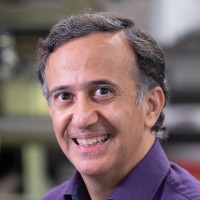 Ali Shakouri合作论文数College of Engineering, Purdue University86
 Dustin Kendig合作论文数Baskin Sch. of Eng., Univ. of California;c;Baskin Sch. of Eng., Univ. of California25
 Eckhard A. Groll合作论文数School of Mechanical Engineering, Purdue University14
 tetsuji tamura合作论文数11iwao takiguchi合作论文数11
 Orkan Kurtulus合作论文数11
 Yee Rui Koh合作论文数Sch. of Electr. & Comput. Eng., Purdue Univ.;c;Sch. of Electr. & Comput. Eng., Purdue Univ.10
 Masaru Ishizuka合作论文数9
 Peter Bermel合作论文数Department of Physics|Massachusetts Institute of Technology9
 Je-Hyeong Bahk合作论文数Dept Elect & Comp Engn, Univ Calif Santa Barbara9kenichi adachi合作论文数8
 Lorenzi Bruno合作论文数8
 Dario Narducci合作论文数CNISM and Department of Materials Science, University of Milano–Bicocca8Ninad Trifale合作论文数7Yefeng Liu (刘业凤)合作论文数上海理工大学能源与动力工程学院制冷技术研究所7Shinji Nakagawa合作论文数7
 Amirkoushyar Ziabari合作论文数7
 Eric Allen Nauman合作论文数Human Injury Research and Regenerative Technologies Laboratory, University of Cincinnati;Department of Biomedical Engineering, College of Engineering and Applied Science, University of Cincinnati7
 Tim Fisher合作论文数Samueli School of Engineering, University of California, Los Angeles7atsuhiko imai合作论文数6A Bar-Cohen合作论文数6Gl Solbrekken合作论文数6
 Ming Qu合作论文数6
 Xiaoli Liu合作论文数Lyles Sch Civil Engn, Purdue Univ5
 Avram Bar Cohen合作论文数A. James Clark School of Engineering, University of Maryland5
 Ning Wang (王宁)合作论文数Department of Physics, School of Mathematics and Physics, University of Science and Technology Beijing5
 Morten Boje Blarke合作论文数5
 Conrad S.N. Johnston合作论文数4H Ryoson合作论文数4Ruchita Jani合作论文数4
 Bjorn Vermeersch合作论文数4
 Lorenzo Stella合作论文数4
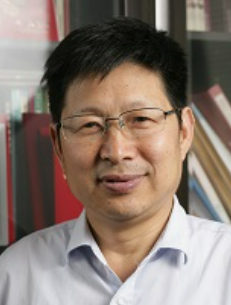 Henry Yin (殷洪玺)合作论文数School of Information and Communication Engineering, Dalian University of Technology4
 Brian Norton合作论文数Tyndall National Institute, University College Cork/Technologicall University Dublin4
 Niall Holmes合作论文数Trinity College, University of Dublin4
 Jorge Kohanoff合作论文数International Centre for Theoretical Physics4
 James Christofferson合作论文数4A. Kameyama合作论文数3mitsuo hashimoto合作论文数3charles ray johns合作论文数3
 Charles R. Johns合作论文数3yuichi ishida合作论文数3michael fan wang合作论文数3
 Esther Orisakwe合作论文数3
 Yogendra Joshi合作论文数George W. Woodruff School of Mechanical Engineering, Georgia Institute of Technology;School of Electrical and Computer Engineering, Georgia Institute of Technology3
 Yi Xuan合作论文数3Yoshio Masubuchi合作论文数3
 Andrei G. Fedorov合作论文数George W. Woodruff School of Mechanical Engineering, Georgia Institute of Technology3Kerry Maize合作论文数3




