Least Square Policy Iteration (LSPI) is a model-free Reinforcement Learning algorithm capable of dealing with continuous states and actions. Chebyshev polynomials are utilized as the approximator in LSPI while Kalman Filtering handles sampled, corrupted and delayed data. Since LSPI solves optimal problems, the algorithm needs to have an exploration phase in order to avoid local minima and to cope with non-stationary cost-to-go functions. The chapter investigates how often information between neighbors in cooperative Multi-Agent Systems (MAS) needs to be exchanged in order to meet a desired performance. It suggests that stabilizing upper bounds for intervals between two consecutive broadcasting instants of each individual agent, thereby giving rise to asynchronous communication. It analyses the optimal intermittent feedback problem for MASs. The chapter explains the optimal intermittent feedback …
The paper describes the approach used at the Department of Automatic Control at Lund Institute of Technology to maintain a high level of practical laboratory experiments. The Department integrates laboratory experiments into its control courses. If the laboratory exercises are properly organized and the student volume is sufficiently large, it is possible to combine a high level of practical laboratory experiments in control education at a reasonable cost. The use of off-the-shelf hardware and open-source software are important, With desktop processes, it is possible to achieve high utilization of lab space and high student throughput.
In modern chemical process industry, process state transitions. or grade changes. are common operations. Frequent production changes increase the focus on efficient operator support for such procedures. The aims of a grade change may be complex, and sometimes conflicting. Fast transitions are desirable in order to minimize production loss. There may also be safety aspects that must be considered, in order to achieve acceptable risks of failure. Operator acceptance is a key issue for a decision support systems, and is the topic of this paper. We address the problem by combining dynamic optimization techniques and a tool for sequential control; JGrafchart.
A novel approach to the control of a GDI engine is presented. The controller consists of a combination of sub-controllers, where torque feedback is a central part. The sub-controllers are, with a few exceptions, designed using simple linear feedback and feedforward control-design methods, in contrast to traditional table-based engine control. A silent extremum-controller is presented. It is used to minimize the fuel consumption in stratified mode. The controller has been evaluated with good results on the European driving cycle using a dynamic simulation model.
New software technologies are important for the future of control (and vice versa) in an age of increasing complexity. This paper discusses what are the trends?.
To achieve good performance in systems with limited computer resources, the constraints of the implementation platform must be taken into account at design time. To facilitate this, software tools are needed to analyze and simulate how timing affects control performance. This article describes two such tools: Jitterbug and TrueTime.
The paper presents some preliminary results on dynamic scheduling of model predictive controllers (MPCs). In an MPC, the control signal is obtained by on-line optimization of a cost function, and the MPC task may experience very large variations in execution time from sample to sample. Unique to this application, the cost function offers an explicit, on-line quality-of-service measure for the task. Based on this insight, a feedback scheduling strategy for multiple MPCs is proposed, where the scheduler allocates CPU time to the tasks according to the current values of the cost functions. Since the MPC algorithm is iterative, the feedback scheduler may also abort a task prematurely to avoid excessive input-output latency. A case study is presented, where the new approach is compared to conventional fixed-priority and earliest-deadline-first scheduling. General problems related to the real-time implementation of MPCs are also discussed.
The paper discusses dynamic real-time scheduling in the context of model predictive control (MPC). Dynamic scheduling in this setting is motivated by the highly varying execution times associated with MPC controllers. Premature termination of the optimization algorithm is exploited to trade off prolonged computations versus computational delay. A feedback scheduling strategy for multiple MPC controllers is also proposed, where the scheduler allocates CPU time to the tasks according to the current values of the cost functions. Simulated examples show how the overall control performance may benefit from the application of the proposed schemes.
Considerable attention has been devoted to the study of computer-aided process fault detection and diagnosis in recent years. A number of automated approaches have been proposed for this problem. Unfortunately, there exists very little body of work that compare and evaluate the different approaches to highlight their relative merits and demerits. This paper reports one such comparative study. This work compares the performance of a model-based diagnostic method (diagnostic model processor) and a neural network-based approach (ellipsoidal neural networks) on an industrial case study. The relative advantages and drawbacks of these two approaches are contrasted suggesting when one might use one of these alternatives.
The problem studied in this paper is how to distribute computing resources over a set of real-time control loops in order to optimize the total control performance. Two subproblems are investigated: how the control performance depends on the sampling interval, and how a recursive resource allocation optimization routine can be designed. Linear quadratic cost functions are used as performance indicators. Expressions for calculating their dependence on the sampling interval are given. An optimization routine, called a feedback scheduler, that uses these expressions is designed.
The paper presents the emerging field of integrated control and CPU-time scheduling, where more general scheduling models and methods that better suit the needs of control systems are developed. This creates possibilities for dynamic and flexible integrated control and scheduling frameworks, where the control design methodology takes the availability of computing resources into account during design and allows online trade-offs between control performance and computing resource utilization.
Presents an approach to stability analysis of fuzzy systems. The analysis is based on Lyapunov functions that are continuous and piecewise quadratic. The approach exploits the gain-scheduling nature of fuzzy systems and results in stability conditions that can be verified via convex optimization over linear matrix inequalities. Examples demonstrate the many improvements over analysis based on a single quadratic Lyapunov function. Special attention is given to the computational aspects of the approach and several methods to improve the computational efficiency are described
A novel stability criterion for fuzzy systems is presented. The search for a piecewise quadratic Lyapunov function is formulated as a convex optimization problem.
A real-time systems course focused on control system implementation is described. The course consists of three parts: real-time programming, computer implementation of control systems, and industrial control systems. The course contains a two week project where the students either implement a computer control system for some laboratory process, or does a project focused on real-time kernel implementation. In order to show the students all the levels in a real-time kernel, we use our own real-time kernel in the projects. The paper discusses the course contents, describes the real-time kernel used, and the organization of the projects.
The paper presents how Grafchart, a toolbox based on Grafcet, object-oriented programming ideas and high-level Petri nets, can be used to implement a batch control recipe execution and recipe representation system. A brief overview of Grafchart is given and it is shown how its concepts fit the models defined in the recent ISA batch control standard S88.01. A simulated batch process cell scenario is presented together with several alternative ways of representing batch recipes.
A framework for automating operating procedure synthesis for batch processes was presented in Part I of this paper. In this Part, we present iTOPS, an Intelligent Tool for Operating Procedure Synthesis, an automated system which is an implementation of the proposed framework. iTOPS has been developed using Gensym’s G2 expert system environment. The architecture of iTOPS and the implementation and algorithmic details of each of its components are explained. Also, the application of iTOPS to an industrial case study is presented.
A review of some recent stability results for fuzzy, heterogeneous, and hybrid control systems.
IEC 1131-3 is a standard for programming languages used in PLCs. It defines a function block diagram language and a type of Grafcet, Sequential Function Charts. An object oriented prototype of these parts has been implemented. Various execution methods are discussed. Algorithms for local and global sorting are implemented and evaluated. The standard is found to be unclear in some parts.
This paper presents a combined control and information model. Existing concepts from the information system area are modified to suit batch applications. The model has been applied to a simulated scenario consisting of a multi-purpose multi-path batch cell. The goal of the information model is to establish a framework for information systems that supports integrated batch plant operation.
The paper presents how object-oriented sequential function charts can be used to implement a batch control recipe management system. Grafchart, a toolbox based on Grafcet, object-oriented programming ideas and High-level Petri nets, is presented. It is shown how the concepts of Grafchart fit the models defined in the ISA batch control standard ISA-S88.01. A simulated batch process cell scenario is presented together with alternative ways of representing control recipes.
 Anton Cervin合作论文数Department of Automatic Control, Faculty of Engineering, Lund University5
 Anders Rantzer合作论文数Department of Automatic Control, Faculty of Engineering, Lund University;Linnaeus center LCCC, Lund University4
 Charlotta Johnsson合作论文数Department of Engineering Cybernetics, The Norwegian University of Science and Technology4
 Johan Eker合作论文数Department of Automatic Control, Faculty of Engineering, Lund Institute of Technology;Ericsson3
 Johan Åkesson合作论文数Department of Automatic;Lund Institute of Technology;Department of Automatic, |Lund Institute of Technology3
 Dan Henriksson合作论文数3
 Venkat Venkatasubramanian合作论文数Department of Chemical Engineering, Columbia University in the City of New York;Complex Resilient Intelligent Systems Laboratory, Columbia University in the City of New York2
 Bo Bernhardsson合作论文数2
 G Bekey合作论文数1L Elghaoui合作论文数1A Anta合作论文数1L Busoniu合作论文数1Df Coutinho合作论文数1Anders Nilsson合作论文数1Ra Freeman合作论文数1bm bethke合作论文数1JH Sandee合作论文数1F Allg ower合作论文数1Balakrishnan, V.合作论文数1IF Akyildiz合作论文数1Shankar Viswanathan合作论文数1
 Hossein Bobarshad合作论文数Faculty of New Sciences and Technologies, University of Tehran1
 Jose Araujo合作论文数1
 Eric Marie Jacques Feron合作论文数Division of Computer, Electrical and Mathematical Sciences and Engineering, King Abdullah University of Science and Technology1
 Lincoln, B.合作论文数1
 Björn Wittenmark合作论文数Department of Automatic Control, Lunds Universitet1
 Vs Victor Dolk合作论文数Control Systems Technology Group, Eindhoven University of Technology1
 Rafal Goebel合作论文数Department of Mathematics And Statistics, Loyola University Chicago1
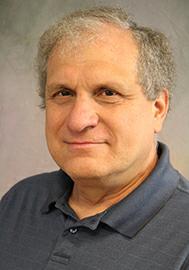 Raymond A. Decarlo合作论文数Elmore Family School of Electrical and Computer Engineering, Purdue University1
 Claude Samson合作论文数INRIA1
 Ricardo Sanz合作论文数Autonomous Systems Laboratory, Universidad Politécnica de Madrid1
 Bart De Schutter合作论文数Delft Center for Systems and Control, Delft University of Technology1
 Damien Ernst合作论文数Department of Electrical Engineering and Computer Science, Faculty of Applied Sciences, University of Lieg1
 Ricardo G. Sanfelice合作论文数Department of Electrical and Computer Engineering, University of California Santa Cruz1
 Emilio Frazzoli合作论文数Laboratory for Information and Decision Systems, Massachusetts Institute of Technology;Operations Research Center, Massachusetts Institute of Technology;Eidgenössische Technische Hochschule Zürich1
 John N. Tsitsiklis合作论文数Department of Electrical Engineering and Computer Science, Massachusetts Institute of Technology1
 Lui Sha合作论文数Department of Computer Science, The Grainger College of Engineering, University of Illinois Urbana-Champaign;Cyber Physical Systems Integration Laboratory, University of Illinois Urbana-Champaign1
 Dimitri P. Bertsekas合作论文数School of Computing and Augmented Intelligence, Arizona State University1
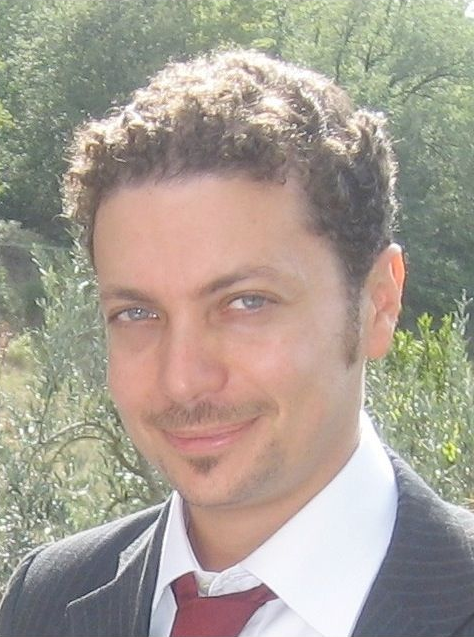 Alberto Bemporad合作论文数IMT School for Advanced Studies Lucca;ODYS S.r.l.1
 Robert Babuska合作论文数Department of Cognitive Robotics, Faculty of Mechanical, Maritime and Materials Engineering, Delft University of Technology1
 Joao Pedro Hespanha合作论文数Department of Electrical and Computer Engineering, College of Engineering, University of California, Santa Barbara;Department of Mechanical Engineering, University of California, Santa Barbara;Center for Control, Dynamical Systems and Computation, University of California, Santa Barbara1
 Stefan Siegmund合作论文数Ctr Dynam, Tech Univ Dresden1
 Lieven Vandenberghe合作论文数Department of Electrical and Computer Engineering, Samueli School of Engineering, University of California, Los Angeles;Department of Mathematics, University of California, Los Angeles1
 Rajagopalan Srinivasan合作论文数Department of Chemical Engineering, Indian Institute of Technology Madras;Laboratory for Intelligent Applications in Chemical Engineering, Indian Institute of Technology Madras1
 Leonid Berezansky合作论文数Department of Mathematics, Ben-Gurion University of the Negev1
 Rainer Blind合作论文数Institute for Systems Theory and Automatic Control, University of Stuttgart1
 Stephen P. Boyd (史提芬·博伊德)合作论文数Department of Electrical Engineering, School of Engineering, Stanford University;Institute for Computational and Mathematical Engineering, School of Engineering, Stanford University1
 Giovanni Ulivi合作论文数Universita degli Studi "Roma Tre"1Erdal Cayirci合作论文数Izmir-ETE;Stavanger-Dataunitor AS1




