The ability to flexibly combine existing knowledge in response to novel circumstances is highly adaptive. However, the neural correlates of flexible associative inference are not well characterized. Laboratory tests of associative inference have measured memory for overlapping pairs of studied items (e.g., AB, BC) and for nonstudied pairs with common associates (i.e., AC). Findings from functional neuroimaging and neuropsychology suggest the ventromedial prefrontal cortex (vmPFC) may be necessary for associative inference. Here, we used a neuropsychological approach to test the necessity of vmPFC for successful memory-guided associative inference in humans using an overlapping pairs associative memory task. We predicted that individuals with focal vmPFC damage ( n = 5; 3F, 2M) would show impaired inferential memory but intact non-inferential memory. Performance was compared with normal comparison participants ( n = 10; 6F, 4M). Participants studied pairs of visually presented objects including overlapping pairs (AB, BC) and nonoverlapping pairs (XY). Participants later completed a three-alternative forced-choice recognition task for studied pairs (AB, BC, XY) and inference pairs (AC). As predicted, the vmPFC group had intact memory for studied pairs but significantly impaired memory for inferential pairs. These results are consistent with the perspective that the vmPFC is necessary for memory-guided associative inference, indicating that the vmPFC is critical for adaptive abilities that require application of existing knowledge to novel circumstances. Additionally, vmPFC damage was associated with unexpectedly reduced memory for AB pairs post-inference, which could potentially reflect retroactive interference. Together, these results reinforce an emerging understanding of a role for the vmPFC in brain networks supporting associative memory processes. SIGNIFICANCE STATEMENT We live in a constantly changing environment, so the ability to adapt our knowledge to support understanding of new circumstances is essential. One important adaptive ability is associative inference which allows us to extract shared features from distinct experiences and relate them. For example, if we see a woman holding a baby, and later see a man holding the same baby, then we might infer that the two adults are a couple. Despite the importance of associative inference, the brain systems necessary for this ability are not known. Here, we report that damage to human ventromedial prefrontal cortex (vmPFC) disproportionately impairs associative inference. Our findings show the necessity of the vmPFC for normal associative inference and memory integration.
OBJECTIVE:Fear generalization, the generalization of fear to innocuous stimuli, is a characteristic component of pathological anxiety. Neural models of fear generalization suggest the involvement of the medial prefrontal cortex (mPFC). However, conflicting empirical findings complicate our understanding of the role of the mPFC in pathological anxiety. To address important unanswered questions in this area, a detailed review and synthesis of results from human and nonhuman animal investigations of conditioned fear generalization was conducted.METHOD:Empirical articles were identified through March 2017 and selected if they used fear conditioning, measured fear generalization, and included a measure of activity in the mPFC or manipulation of mPFC functioning.RESULTS:In human cued fear conditioning, the ventral mPFC plays an important role in the inhibition of fear generalization, whereas dorsal mPFC is important for the activation of generalized fear. This pattern remains to be further investigated in nonhuman animal models. Nonhuman animal research suggests an interaction between the neural correlates of contextual fear generalization and timing, such that the mPFC appears to increase fear generalization at remote time points and reduce generalization at recent time points following acquisition.CONCLUSIONS:The literature suggests a key role for the mPFC in fear generalization, but empirical details vary depending on specific regions within the mPFC, the animal model used, and the timing of the generalization test. Further research is needed to elucidate the role of the mPFC in fear generalization, which could in turn facilitate more effective pharmacological interventions for pathological anxiety. (PsycINFO Database Record
Schemas, as memory representations of typical contexts, allow for generalization from previous experiences while often improving memory organization and accuracy. However, these advantageous characteristics of schematic memory may come at the cost of episode-specific information. In the human brain, this tradeoff between general and specific knowledge has been linked to differential contributions of the medial temporal lobes (MTL) to episode-specific memory and the ventromedial prefrontal cortex (vmPFC) to generalized, schematic memory. Here, we used a neuropsychological approach to test whether participants with focal vmPFC damage (n = 6) would show a reduced influence of schematic memory relative to healthy normal comparison participants (n = 12) in a recognition task that presented schematically congruent or incongruent contexts at study. As predicted, normal comparison participants were more likely to identify items as old after studying them in congruent contexts, and this effect was reflected in increased true and false recognition. These effects of prior context on recognition were not observed in the vmPFC group, suggesting that vmPFC damage reduced the influence of schematic memory. These findings are consistent with the proposition that the vmPFC plays an important role in integrating previous experience into ongoing memory processes while acting as part of a larger memory network.SIGNIFICANCE STATEMENT:In the human brain, new memories are strongly influenced by existing knowledge of relevant context (sometimes called "schemas"). Schemas can benefit memory by expediting learning and increasing capacity in familiar contexts, but these benefits may simultaneously reduce episode-specific memory. Here we show that damage to the human ventromedial prefrontal cortex (vmPFC) reduced the influence of existing knowledge on new memories. Our findings suggest that the vmPFC plays a key role in schematic memory processes by integrating previous experiences and contextual information to influence memory. These findings provide novel insight into the brain regions necessary for normal schematic memory and enhance our understanding of the brain networks supporting memory processes.
 Jabari Allen合作论文数3Jordan Fuller合作论文数3Daniel Korenfeld合作论文数3Alex Kane合作论文数3Zach Burklund合作论文数3Sandi Bowers合作论文数3Andrew Westermann-Long合作论文数3Teresa Vodopest合作论文数3
 Max McDermott合作论文数Utah State University3Sam Shepherd合作论文数3Daniel Jones合作论文数3
 Christopher L. Zerr合作论文数Center for Applied Psychophysiology, Truman State University3
 Francisco Alex合作论文数3
 Peterson Joshua合作论文数university of california berkeley3
 Fredric Shaffer合作论文数Northeast Missouri State University3Evan Fluty合作论文数2
 David K. Warren合作论文数Division of Infectious Diseases, John T. Milliken Department of Medicine, Washington University School of Medicine in St. Louis;Barnes-Jewish Hospital;Clinical Research Training Center, Washington University2
 Melissa Duff合作论文数2
 Daniel Tranel合作论文数Department of Psychological and Brain Sciences, College of Liberal Arts and Sciences, University of Iowa;Department of Neurology, Carver College of Medicine, University of Iowa2
 Alison R Preston合作论文数Department of Psychology, College of Liberal Arts, University of Texas at Austin;Department of Psychiatry and Behavioral Sciences, Dell Medical School, University of Texas at Austin1
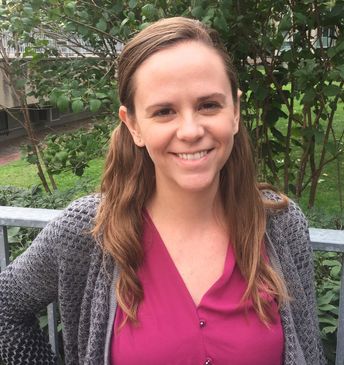 Meg Schlichting合作论文数Department of Psychology, Faculty of Arts & Science, University of Toronto;Budding Minds Lab, University of Toronto1Stasheff Steven F合作论文数1Bhattarai Sajag合作论文数1Shankar Malini合作论文数1Jones Samuel H合作论文数Carver College of Medicine and Department of Psychology, University of Notre Dame1Frederick R Blodi合作论文数1
 Jean M. Bennett合作论文数Naval Air Warfare Center Weapons Division1
 Stewart Thompson合作论文数New Mexico Institute of Mining and Technology, New Mexico Tech1Jeannette L. Bennicelli合作论文数1
 Dagmar Zeithamova合作论文数Department of Psychology, University of Texas1
 Arlene V Drack合作论文数Department of Ophthalmology, Emory University1




