To address today's complex problems, professionals must work with people with domain expertise in a variety of disciplines and from different backgrounds. Undergraduates in computing programs have opportunities to work on team projects in courses, where typically, all students have similar expertise in the course content. However, they do not gain much experience in working on projects where team members are required to apply domain knowledge from different disciplinary backgrounds to effectively address complex societal problems. In the past four years, 176 students in a software engineering course at a public, primarily undergraduate institution, have collaborated on teams with students enrolled in business, statistics, and criminology courses to address issues identified by community partners. In evaluating their experience, students appreciated the interdisciplinary collaborative opportunities, despite the challenges and frustrations that come from perceptions of inequality in workload, and inconsistencies in team dynamics. Additionally, they consistently rated their own learning of course content higher at the end of the semester on multiple quantitative measures; this is corroborated by the students' grades on course assignments. The authors conclude that mentored and supportive environments, where professors offer explicit guidance on collaborating with people from diverse backgrounds and disciplines, and opportunities to practice, and sometimes fail, help prepare students for the problem-solving challenges they will encounter in the workplace. This poster reflects on the coursework, grading practices, students' learning outcomes, pedagogy, and guidance on developing interdisciplinary team skills.
This manuscript offers an overview of 11 disciplinary perspectives on the failed and destructive War on Drugs and the salutary prospects from decriminalizing drug use, including History, African American studies, Journalism, Sociology, Political Science, Cost Accounting, Urban Education, Counseling, Psychology, Nursing, and Public Health. This offers a roadmap for counselor social and political advocacy with drug policy and highlights community collaboration opportunities.
Which pedagogical techniques better engage computer science (CS) students in computing for social good? We examine this question with students enrolled in classes using the Collaborating Across Boundaries to Engage Undergraduates in Computational Thinking (CABECT) pedagogical model, that pairs CS and non-CS courses with a community partner to propose solutions to a local problem. Pre- and post-tests of self-assessed concerns about civic responsibility, global responsibility, and local civic efficacy were administered to the students in a three-year long pedagogical experiment, which paired five CS courses with five journalism courses. While CS students were not statistically different from their journalism peers in pre-test measures of social and global responsibility, they lagged behind in local efficacy. In the posttest, CS students had significantly increased their sense of local efficacy to the extent that they were statistically indistinguishable from journalism students. Community-engaged learning projects, such as the one in the CABECT model, show great potential for attracting students to computing for social good.
This submission was accepted for a special edition of Science Education and Civic Engagement: An International Journal focused on “Teaching Through Covid.” This submission was drawn from interviews, journals, and workshops of faculty participants and reviewed by the special edition editors prior to acceptance.
This paper reports on a multi-semester study of the impact on student perceptions of their computational thinking abilities as a result of collaboration between students in computer science (CS) and journalism courses to solve a problem for a community partner, Habitat for Humanity. Interdisciplinary computing collaborations have become a popular mode of instruction in upper-level CS courses. In many cases, these collaborations have been with other STEM disciplines. However, there are non-STEM fields that have been transformed by computer science and can also serve as fruitful test beds for curricular innovation; journalism is one such field. In this study, undergraduate students in CS and journalism courses focused on creating a computational solution to address a real community need. The study investigates whether immersion in multidisciplinary collaborative experiences increases the computational thinking abilities of both CS and non-CS students. 41 CS students participated in the study alongside 96 students in a range of other STEM and non-STEM majors. Quantitative data were collected to gauge students' attainment of concepts and skills constitutive to computational thinking. Pre-test data indicate that CS students were no different from other STEM students in their own assessment of computational thinking and skills. Post-test data indicate that while all students made significant gains in self-assessment of skills and knowledge, CS majors fared significantly better than their peers. It is particularly noteworthy that CS majors' gains outpaced those of computer engineering majors. Further research is planned to gain additional insight into the possible reasons behind these results.
(ProQuest: ... denotes obscured text omitted.)IntroductionTo best prepare undergraduates for careers in journalism, we continue to retool our curriculum to include courses that will incorporate opportunities to practice and produce multimedia content and to work with editors and clients on producing a publishable body of work.As educators we must also stay current on the marketable skills needed to enter not only journalism but also the related fields of public relations, social media and communications. We have found it helpful in the past to find and pair with community organizations that might benefit from our skills. These opportunities to work on local stories and projects also help the community by filling a need that professional journalists and content producers alone cannot fill.While working on local stories, students come to realize their storytelling can help empower a community, highlighting issues or agents of change often not given extensive exposure in traditional media.Unlike traditional forms of journalism, publicly oriented newsmaking explicitly encourages young people to participate in community life. Supported by a directed curriculum and reflection, student journalists go out into their neighborhoods and talk to people actively engaged in social and political networks. Then the students construct a problem-solving dialogue with readers, writing stories that focus on issues that affect people's daily lives. (Novek, 1999, p. 145)This article describes the design and execution of a yearlong community-based public journalism project across several sections of a single course, over the course of a full academic year.BackgroundIn July 2013, members of a nonpartisan civic group in Trenton, NJ, called Beautiful Trenton engaged in an online discussion about ways of using technology to get more city residents involved in addressing community problems and in participating in the forthcoming May 2014 Trenton municipal elections. One of the authors participated in the discussion and suggested that students from The College of New Jersey might assist by building an informative website for the elections. In subsequent discussions, the authors and leading members of Beautiful Trenton worked out a plan to create the website, with social media extensions, over the course of the academic year.Beautiful Trenton (2015) was started in 2009 and is a movement engaging diverse and committed Trenton residents to envision the future of the city, articulate this vision, educate the voting public about the issues, and encourage candidates and decision-makers to commit to progressive solutions (para. 1). What was disconcerting to the group and to many concerned citizens of the city was the degree of voter apathy in Trenton. Voter turnout in the 2010 election was less than 30%. The organization's hope was, with a comprehensive election website, voters could gain access to content that would augment newspaper and broadcast accounts and get them interested in voting in an informed way. According to a 2010 Pew Research Center for the People and the Press Study, 44% of Americans get their news from one or more internet or mobile digital sources. We decided that an online, responsive WordPress site could be read from a laptop, desktop or mobile phone, and we created such a site.The project was built around our Writing for Interactive Multimedia course, a 100- to 200- level cross-listed course required for majors in Journalism and Professional Writing and Interactive Multimedia at The College of New Jersey. Others who take the course as an elective include Communications, Business and Liberal Arts majors. The students range from freshmen to seniors and are at all competency levels in terms of their writing and digital skills.The course was tailored to meet the goals set out for both majors and included writing on deadline for online media, using concepts in search engine optimization, collaboration with classmates, critical thinking, project planning, and the use of social media to promote content. …
Innovative solutions for complex problems entail diversity of perspectives, and students must learn to integrate concepts from multiple disciplinary areas. Yet, to provide collaborative experiences that cross disciplinary boundaries, educators must navigate numerous administrative and pedagogical challenges. In this hands-on workshop participants will learn how to leverage existing courses for students and faculty to collaborate across disciplines and with a community partner, to develop socially-relevant computational solutions for real-world problems. Participants will also brainstorm ideas on addressing specific challenges at their own institutions. The intended audience is educators interested in engaging their students in deep computational thinking through immersive multidisciplinary collaborative experiences. Registered participants will be reimbursed the workshop registration fee through NSF Award# 1141170. We will additionally offer a stipend to participants who adopt our model, administer assessments and provide us with their results for analysis and inclusion in reports. More information will be available at http://tardis.tcnj.edu/cabect/. Laptop Recommended.
There is a growing need to develop courses that demonstrate the articulations between computer science and an array of computing-dependent fields. This hands-on workshop will introduce participants to a model for students and faculty to collaborate across disciplines and with a community organization to develop computational solutions to address complex real-world problems. The strength of this model lies in leveraging existing courses and courseware rather developing new ones. Participants will learn how to develop at their own institutions, similar collaborations that involve computer science, a computing-dependent discipline and a community partner. We will provide access to materials that participants can adapt for their own courses to redesign existing courseware: best practices; pitfalls to be avoided and how to deal with them; instructional materials developed for the courses used in our project; assessment and evaluation instruments developed for the courses used in our project; instructions on adapting the assessment and evaluation instruments for other courses; instructions, documentation, and configuration scripts for using the technology needed for such collaborations. The presenters will share experiences and lead a brainstorming session to design strategies for dealing with challenges and for gaining institutional support for such collaborations. Participants are encouraged to bring their laptops to work on, but this is not required.
To broaden participation in computing we need to look beyond traditional domains of inquiry and expertise. We present results from a demonstration project in which interactive journalism was used to infuse computational thinking into the standard curriculum and regular classroom experience at a middle school with a diverse population. Outcomes indicate that we were able to develop positive attitudes about computational thinking and programming among students and teachers who did not necessarily view themselves as “math types.” By partnering with language arts, technology and math teachers at Fisher Middle School, Ewing New Jersey, we introduced the isomorphism between the journalistic process and computational thinking to 7th and 8th graders. An intense summer institute, first with the teachers and then with students recruited from the school, immersed them in the “newsroom of the future” where they researched and wrote news stories, shot and edited video, and developed procedural animations in Scratch to support their storylines. An afterschool club sustained the experience. The teachers adapted interactive journalism and Scratch programming to enrich standard language arts curriculum and are infusing computational thinking in classroom experiences throughout the school.
As the need for multidisciplinary computing education continues to increase, consideration for distributed expertise will become critical to implementing a successful curriculum. A model of cooperative expertise is presented in which faculty maintain responsibility for their own course, creating and evaluating assignments for their students that support learning in their colleagues' courses as well. We present outcomes of an experiment to implement this model at two geographically separated institutions through three courses (two at one institution, one at the other), by faculty in computer science, media and English. Results reported include faculty analysis of student achievement in each course and student surveys of attitudes toward multidisciplinary collaboration. Overall, it appears that student learning and attitudes are enhanced by the experience.
Computing education has permeated virtually all disciplines, expanding learning with new technology and an updated definition of literacy that includes computational thinking. As opportunities for multi-disciplinary courses that include computing increase, so do the challenges placed on faculty to develop such courses and the required computing expertise needed to teach them. This paper defines an approach for leveraging the distributed expertise of faculty across disciplines and institutions in a variety of ways to facilitate cross-institutional and multi-disciplinary education where computing is among the disciplines. Two prototype courses that use this approach are described and evaluated, lessons learned are discussed, and potential future course collaborations are presented.
To address the critical shortage of students entering computing fields, as well as broaden participation in computing, we present a summer and afterschool program in Interactive Journalism through which middle school students and their teachers develop an appreciation for and competence in computational thinking. We report on the outcomes of our first year in which three middle school language arts teachers, a technology teacher and a guidance counselor collaborate with college faculty to publish a school magazine of the future. Students and their teachers research and conduct interviews to develop news stories that are then presented as story packages with text, video, and procedural animations in Scratch. Results of formal data collection show changes in students' perceptions of what it means to program, as well as their emerging confidence in their ability to design computational solutions and to program.
The tremendous growth of the 3-D, first person video game genre provided a vehicle through which to create a one-year, upper level undergraduate experience in multidisciplinary, highly collaborative software design and implementation. We report on a team-taught course that encompassed concepts from the contributing disciplines of computer science, digital media, film, theater and music. The learning environment balanced individual experiential skills development with reflective analysis of media implementation as our students built a media-rich interactive game. This panel provides four perspectives on the design and execution of the course and resulting game from our contributing areas: computer science (Wolz), digital art (Sanders), music/sound technology (Nakra), and writing (Pearson). As moderator, Ault, whose own work is at the intersection of our fields, provides a unifying perspective.
She integrates multidisciplinary collaborative projects in her courses, to create immersive learning experiences that deeply engage students with a
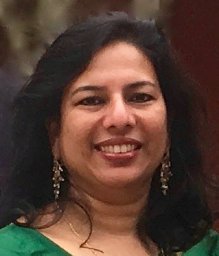 Sarah Monisha Pulimood合作论文数The College of New Jersey11
 Diane C. Bates合作论文数10
 Ursula Wolz合作论文数Computer Science and Interactive Multimedia, The College of New Jersey;Riversound Solutions;Eugene Lang College of Liberal Arts, The New School6
 Meredith Stone合作论文数3
 Lillian N. Cassel合作论文数Department of Computing Sciences, Villanova University2Phillip Sanders合作论文数1Dara Whalen合作论文数1
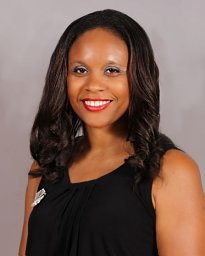 Natasha Patterson合作论文数1
 Michael B. Mitchell合作论文数1Tabitha Dell'Angelo合作论文数1
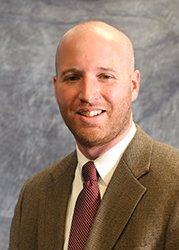 Daniel H. Bowen合作论文数Arts Humanities & Civ Engagement Lab, Texas A&M Univ1
 Sandy Gibson合作论文数1
 Joanna Herres合作论文数1Deborah G. Tatar合作论文数available - click to provide one
No description available of Deborah G. Tatar1
Joanna Herres合作论文数1Deborah G. Tatar合作论文数available - click to provide one
No description available of Deborah G. Tatar1 Steve R. Harrison合作论文数Virginia Tech1Christopher Ault合作论文数1
 Thomas P. Way合作论文数Department of Computing Sciences, College of Liberal Arts and Sciences, Villanova University1
 Teresa Nakra合作论文数Department of Design and Creative Technology, School of the Arts and Communication, The College of New Jersey;Department of Music, The College of New Jersey;Department of Interactive Multimedia, The College of New Jersey1




