A practical method for interactive guessing of LEXC lexicon entries is presented.The method is based on describing groups of similarly inflected words using regular expressions.The patterns are compiled into a finite-state transducer (FST) which maps any word form into the possible LEXC lexicon entries which could generate it.The same FST can be used (1) for converting conventional headword lists into LEXC entries, (2) for interactive guessing of entries, (3) for corpus-assisted interactive guessing and (4) guessing entries from corpora.A method of representing affixes as a table is presented as well how the tables can be converted into LEXC format for several different purposes including morphological analysis and entry guessing.The method has been implemented using the HFST finite-state transducer tools and its Python embedding plus a number of small Python scripts for conversions.The method is tested with a near complete implementation of Finnish verbs.An experiment of generating Finnish verb entries out of corpus data is also described as well as a creation of a full-scale analyzer for Finnish verbs using the conversion patterns.
The paper presents two finite-state methods which can be used for aligning pairs of cognate words or sets of different allomorphs of stems. Both methods use weighted finite-state machines for choosing the best alternative. Individual letter or phoneme correspondences can be weighted according to various principles, e.g. using distinctive features. The comparison of just two forms at a time is simple, so that method is easier to refine to include context conditions. Both methods are language independent and could be tuned for and applied to several types of languages for producing gold standard data. The algorithms were implemented using the HFST finite-state library from short Python programs. The paper demonstrates that the solving of some non-trivial problems has become easier and accessible for a wider range of scholars.
The paper shows how a certain kind of underlying representations (or deep forms) of words can be constructed in a straightforward manner through aligning the surface forms of the morphs of the word forms. The inventory of morphophonemes follows directly from this alignment. Furthermore, the two-level rules which govern the different realisations of such morphophonemes follow fairly directly from the previous steps. The alignment and rules are based upon an approximate general metric among phonemes, e.g., articulatory features, that determines which alternations are likely or possible. This enables us to summarise contexts for the different realisations.
Regular correspondences between historically related languages can be modelled using finite- state transducers (FST). A new method is presented by demonstrating it with a bidirectional experiment between Finnish and Estonian. An artificial representation (resembling a proto- language) is established between two related languages. This representation, AFE (Aligned Finnish-Estonian) is based on the letter by letter alignment of the two languages and uses mechanically constructed morphophonemes which represent the corresponding characters. By describing the constraints of this AFE using two-level rules, one may construct useful mappings between the languages. In this way, the badly ambiguous FSTs from Finnish and Estonian to AFE can be composed into a practically unambiguous transducer from Finnish to Estonian. The inverse mapping from Estonian to Finnish is mildly ambiguous. Steps according to the proposed method could be repeated as such with dialectal or older written texts. Choosing a set of model words, aligning them, recording the mechanical correspondences and designing rules for the constraints could be done with a limited effort. For the purposes of indexing and searching, the mild ambiguity may be tolerable as such. The ambiguity can be further reduced by composing the resulting FST with a speller or morphological analyser of the standard language.
A novel method is presented for compiling two-level rules which have multiple context parts. The same method can also be applied to the resolution of so-called right-arrow rule conflicts. The method makes use of the fact that one can efficiently compose sets of two-level rules with a lexicon transducer. By introducing variant characters and using simple pre-processing of multi-context rules, all rules can be reduced into single-context rules. After the modified rules have been combined with the lexicon transducer, the variant characters may be reverted back to the original surface characters. The proposed method appears to be efficient but only partial evidence is presented yet.
Currently, research infrastructures are being designed and established in many disciplines, all partly to address the problem that they all suffer from an enormous fragmentation of their resources and tools. In the domain of language resources and tools the CLARIN initiative has been funded since 2008 to overcome many of the integration and interoperability hurdles. CLARIN can build on knowledge and work from many projects that have been carried out over many years, and will build stable and robust services for use by researchers. Service centres will play a key role, and must provide persistent and highly available services that adhere to criteria as they have been established by CLARIN. In the last year of the preparatory phase of CLARIN these centres are currently developing four use cases that can demonstrate how the various pillars CLARIN has been working on can be integrated. All four use cases fulfil the criteria of being cross-national.
Proceedings of the NODALIDA 2009 workshop Nordic Perspectives on the CLARIN Infrastructure of Language Resources. Editors: Rickard Domeij, Kimmo Koskenniemi, Steven Krauwer, Bente Maegaard, Eirikur Rognvaldsson and Koenraad de Smedt. NEALT Proceedings Series, Vol. 5 (2009), 12-15. © 2009 The editors and contributors. Published by Northern European Association for Language Technology (NEALT) http://omilia.uio.no/nealt . Electronically published at Tartu University Library (Estonia) http://hdl.handle.net/10062/9207 .
A new emerging European research infrastructure called CLARIN and a related project called HFST are briefly described. HFST has built a programming interface on top of some existing open source finite-state packages such as SFST and OpenFST. In order to verify its utility, HFST has built open source tools on top of this HFST interface. These tools create lexical transducers, compile morphophonological two-level rules and combine them into a transducer lexicon. The tools have been tested against independently created with full-scale lexicons and rules for Northern Sámi and Lule Sámi languages which have more complicated lexical and morphophonological structure than most other European languages.
This paper elaborates a model for representing various types of semantic calendar expressions (SCEs), which correspond to the disambiguated intensional meanings of natural-language calendar phrases. The model uses finite-state transducers (FSTs) to mark denoted periods of time on a set of timelines also represented as an FST. In addition to an overview of the model, the paper presents methods to combine the periods marked on two timeline FSTs into a single timeline FST and to adjust the granularity and span of time of a timeline FST. The paper also discusses advantages and limitations of the model.
This paper elaborates a model for representing semantic calendar expressions (SCEs), which correspond to the intensional meanings of natural-language calendar phrases. The model uses finite-state transducers (FSTs) to mark denoted periods of time on a set of timelines represented as a finite-state automaton (FSA). We present a treatment of SCEs corresponding to quantified phrases ( any Monday; every May) and an implication operation for requiring the denotation of one SCE to contain completely that of another.
The paper provides a general introduction to the CLARIN project, a large-scale European research infrastructure project designed to establish an integrated and interoperable infrastructure of language resources and technologies. The goal is to make language resources and technology much more accessible to all researchers working with language material, particularly non-expert users in the Humanities and Social Sciences. CLARIN intends to build a virtual, distributed infrastructure consisting of a federation of trusted digital archives and repositories where language resources and tools are accessible through web services. The CLARIN project consists of 32 partners from 22 countries and is currently engaged in the preparatory phase of developing the infrastructure. The paper describes the objectives of the project in terms of its technical, legal, linguistic and user dimensions.
Kempe and Karttunen [1] have presented a method that compiles a set of parallel conditional replacement (rewriting) rules into a finite-state transducer. Other, simpler methods exist for single rules or for rules of a restricted type, but they can be used only in restricted situations.
 Krister Lindén合作论文数Department of General Linguistics;University of Helsinki;Department of General Linguistics, University of Helsinki8
 Anssi Yli-Jyrä合作论文数4
 Jyrki Niemi合作论文数4
 Antti Arppe合作论文数Department of Linguistics, University of Alberta3Martin Wynne合作论文数2
 Lauri Karttunen合作论文数Stanford University;Palo Alto Research Center2
 Peter Wittenburg合作论文数2
 Tamás Váradi合作论文数Research Institute for Linguistics;Hungarian Academy of Sciences;Hungarian Academy of Sciences, Research Institute for Linguistics2
 Simo Parpola合作论文数Institute for Advanced Studies, Hebrew University;University of Helsinki2
 Anssi Yli-Jyra合作论文数Department of General Linguistics, University of Helsinki2hanna westerlund合作论文数1lauri carlson合作论文数1
 Miikka Silfverberg合作论文数Alma Media1
 Robin Cooper合作论文数Department of Philosophy, Linguistics and Theory of Science, University of Gothenburg;Centre for Linguistic Theory and Studies in Probability, University of Gothenburg1
 Ronald M. Kaplan合作论文数Information Sciences and Technologies Laboratory, Xerox Palo Alto Research Center;Linguistics Department, Stanford University1
 Gertjan Van Noord合作论文数University of Groningen1
 Fred Karlsson合作论文数Department of Languages, Faculty of Arts, University of Helsinki;Department of Modern Languages, University of Helsinki1Lars Borin合作论文数Department of Linguistics;Uppsala University;Department of Linguistics, Uppsala University1
 Martti Vainio合作论文数Department of Phonetics1
 Nicoletta Calzolari合作论文数Institute of Computational Linguistics, Consiglio Nazionale delle Ricerche;European Language Resources Association1
 Maciej Piasecki合作论文数Institute of Applied Informatics;University of Technology;Institute of Applied Informatics, University of Technology1
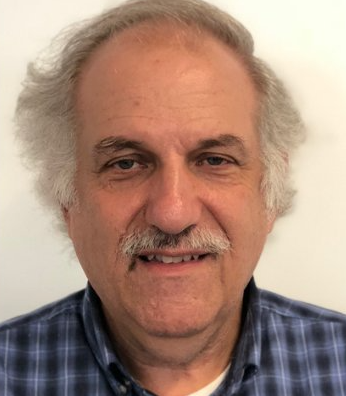 Kenneth Church合作论文数Khoury College of Computer Sciences, Northeastern University;The Institute for Experiential AI, Northeastern University1
 Bente Maegaard合作论文数Center for Sprogteknologi;University of Copenhagen;Center for Sprogteknologi, University of Copenhagen1Lothar Lemnitzer合作论文数University of Tübingen, Tübingen, Germany1Mirka Hyvärinen合作论文数1Atro Voutilainen合作论文数Department of Modern Languages,
University of Helsinki1Gerhard Budin合作论文数University of Vienna
gerhard.budin@univie.ac.at1Jean-Marie Pierrel合作论文数Lès Nancy1
Bente Maegaard合作论文数Center for Sprogteknologi;University of Copenhagen;Center for Sprogteknologi, University of Copenhagen1Lothar Lemnitzer合作论文数University of Tübingen, Tübingen, Germany1Mirka Hyvärinen合作论文数1Atro Voutilainen合作论文数Department of Modern Languages,
University of Helsinki1Gerhard Budin合作论文数University of Vienna
gerhard.budin@univie.ac.at1Jean-Marie Pierrel合作论文数Lès Nancy1 Inguna Skadina合作论文数1
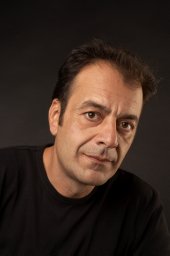 Stelios Piperidis合作论文数Institute for Language and Speech Processing Artemidos1Laura Kataja合作论文数1Steven Krauwer合作论文数OTS, Utrecht1
 Eva Hajičová合作论文数Institute of Formal and Applied Linguistics, Faculty of Mathematics and Physics, Charles University1Pirkko Nuolijarvi合作论文数1Dan Tufiş合作论文数Romanian Academy1
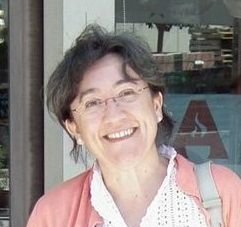 Núria Bel合作论文数Universitat Pompeu Fabra1Pasi Tapanainen合作论文数Clinical Research Services Turku (CRST), University of Turku1
 Mietta Lennes合作论文数Department of Phonetics;University of Helsinki;Department of Phonetics, University of Helsinki1
 Asko Parpola合作论文数Institute for Asian and African Studies, University of Helsinki1




