Practical garment design spans two modes: intuitive creation from high-level intent, such as a reference image or text description, and complex low-level editing across 2D sewing patterns and 3D draped geometry, which requires professional training to navigate their complex interdependencies. Yet existing frameworks address only part of this challenge, offering either garment generation from casual inputs or direct editing on sewing patterns. To support both ends of the spectrum, we propose Garment Particles, a 5D point-cloud representation that jointly encodes 2D sewing patterns and 3D geometry. This representation enables Garment Particles Flow (GPF), a rectified flow framework that supports intuitive generation from high-level inputs (text, images, sketches) and various editing operations on 2D sewing patterns and 3D geometries via diffusion posterior sampling. Finally, we introduce Particles-to-Pattern Flow that converts generated garment particles into curved-based patterns for simulation. We validate our model's generation ability on multiple datasets, achieving state-of-the-art garment generation results against competitive baselines. Our model also enables many garment editing scenarios, including garment interpolation, sewing pattern editing, point-cloud- and silhouette-conditioned garment generation. Our project website is at https://garment-particles.github.io .
Meshes are among the most common 3D scene representations, but directly generating meshes is challenging because the representation contains important symmetries, including permutation invariance of faces and vertices. MeshFlow learns to generate triangle meshes directly as triangle soups, avoiding the need to serialize meshes into long autoregressive sequences. We adopt equivariant optimal-transport flow matching models that respect the key symmetries of triangle soups: arbitrary permutations of faces and permutations of the vertices within each face. Toward this goal, we propose a simple yet effective modification to the Diffusion Transformer architecture, resulting in a scalable network capable of modeling a velocity field while maintaining the desired equivariance. We further introduce an optimal-transport-based training objective that improves convergence by eliminating supervision signals that violate these symmetries. MeshFlow achieves mesh quality comparable to state-of-the-art autoregressive mesh generators while providing about an 18× speedup during inference. Project page is at https://qiisun.github.io/MeshFlow/.
Estimating physically accurate, simulation-ready garments from a single image is challenging due to the absence of image-to-physics datasets and the ill-posed nature of this problem. Prior methods either require multi-view capture and expensive differentiable simulation or predict only garment geometry without the material properties required for realistic simulation. We propose a feed-forward framework that sidesteps these limitations by first fine-tuning a vision-language model to infer material composition and fabric attributes from real images, and then training a lightweight predictor that maps these attributes to the corresponding physical fabric parameters using a small dataset of material-physics measurements. Our approach introduces two new datasets (FTAG and T2P) and delivers simulation-ready garments from a single image without iterative optimization. Experiments show that our estimator achieves superior accuracy in material composition estimation and fabric attribute prediction, and by passing them through our physics parameter estimator, we further achieve higher-fidelity simulations compared to state-of-the-art image-to-garment methods.
Apparel is essential to human life, offering protection, mirroring cultural identities, and showcasing personal style. Yet, the creation of garments remains a time-consuming process, largely due to the manual work involved in designing them. To simplify this process, we introduce AIpparel, a multimodal foundation model for generating and editing sewing patterns. Our model fine-tunes state-of-the-art large multimodal models (LMMs) on a custom-curated large-scale dataset of over 120,000 unique garments, each with multimodal annotations including text, images, and sewing patterns. Additionally, we propose a novel tokenization scheme that concisely encodes these complex sewing patterns so that LLMs can learn to predict them efficiently. AIpparel achieves state-of-the-art performance in single-modal tasks, including text-to-garment and image-to-garment prediction, and enables novel multimodal garment generation applications such as interactive garment editing. The project website is at https://georgenakayama.github.io/AIpparel/.
The rapid advancement of native multi-modal models and omni-models, exemplified by GPT-4o, Gemini, and o3, with their capability to process and generate content across modalities such as text and images, marks a significant milestone in the evolution of intelligence. Systematic evaluation of their multi-modal output capabilities in visual thinking processes (also known as multi-modal chain of thought, M-CoT) becomes critically important. However, existing benchmarks for evaluating multi-modal models primarily focus on assessing multi-modal inputs and text-only reasoning while neglecting the importance of reasoning through multi-modal outputs. In this paper, we present a benchmark, dubbed RBench-V, designed to assess models' vision-indispensable reasoning abilities. To construct RBench-V, we carefully hand-pick 803 questions covering math, physics, counting, and games. Unlike previous benchmarks that typically specify certain input modalities, RBench-V presents problems centered on multi-modal outputs, which require image manipulation such as generating novel images and constructing auxiliary lines to support the reasoning process. We evaluate numerous open- and closed-source models on RBench-V, including o3, Gemini 2.5 Pro, Qwen2.5-VL, etc. Even the best-performing model, o3, achieves only 25.8 the human score of 82.3 multi-modal reasoning. Data and code are available at https://evalmodels.github.io/rbenchv
Multimodal foundation models have demonstrated strong generalization, yet their ability to transfer knowledge to specialized domains such as garment generation remains underexplored. We introduce VLG, a vision-language-garment model that synthesizes garments from textual descriptions and visual imagery. Our experiments assess VLG's zero-shot generalization, investigating its ability to transfer web-scale reasoning to unseen garment styles and prompts. Preliminary results indicate promising transfer capabilities, highlighting the potential for multimodal foundation models to adapt effectively to specialized domains like fashion design.
Neural radiance fields (NeRFs) have gained popularity with multiple works showing promising results across various applications. However, to the best of our knowledge, existing works do not explicitly model the distribution of training camera poses, or consequently the triangulation quality, a key factor affecting reconstruction quality dating back to classical vision literature. We close this gap with ProvNeRF, an approach that models the provenance for each point -- i.e., the locations where it is likely visible -- of NeRFs as a stochastic field. We achieve this by extending implicit maximum likelihood estimation (IMLE) to functional space with an optimizable objective. We show that modeling per-point provenance during the NeRF optimization enriches the model with information on triangulation leading to improvements in novel view synthesis and uncertainty estimation under the challenging sparse, unconstrained view setting against competitive baselines. The code will be available at https://github.com/georgeNakayama/ProvNeRF.
Great progress has been made in learning-based object detection methods in the last decade. Two-stage detectors often have higher detection accuracy than one-stage detectors, due to the use of region of interest (RoI) feature extractors which extract transformation-invariant RoI features for different RoI proposals, making refinement of bounding boxes and prediction of object categories more robust and accurate. However, previous RoI feature extractors can only extract invariant features under limited transformations. In this paper, we propose a novel RoI feature extractor, termed Semantic RoI Align (SRA), which is capable of extracting invariant RoI features under a variety of transformations for two-stage detectors. Specifically, we propose a semantic attention module to adaptively determine different sampling areas by leveraging the global and local semantic relationship within the RoI. We also propose a Dynamic Feature Sampler which dynamically samples features based on the RoI aspect ratio to enhance the efficiency of SRA, and a new position embedding, i.e., Area Embedding, to provide more accurate position information for SRA through an improved sampling area representation. Experiments show that our model significantly outperforms baseline models with slight computational overhead. In addition, it shows excellent generalization ability and can be used to improve performance with various state-of-the-art backbones and detection methods. The code is available at https://github.com/cxjyxxme/SemanticRoIAlign.
Neural radiance fields (NeRF) rely on volume rendering to synthesize novel views. Volume rendering requires evaluating an integral along each ray, which is numerically approximated with a finite sum that corresponds to the exact integral along the ray under piecewise constant volume density. As a consequence, the rendered result is unstable w.r.t. the choice of samples along the ray, a phenomenon that we dub quadrature instability. We propose a mathematically principled solution by reformulating the sample-based rendering equation so that it corresponds to the exact integral under piecewise linear volume density. This simultaneously resolves multiple issues: conflicts between samples along different rays, imprecise hierarchical sampling, and non-differentiability of quantiles of ray termination distances w.r.t. model parameters. We demonstrate several benefits over the classical sample-based rendering equation, such as sharper textures, better geometric reconstruction, and stronger depth supervision. Our proposed formulation can be also be used as a drop-in replacement to the volume rendering equation of existing NeRF-based methods. Our project page can be found at pl-nerf.github.io.
While the community of 3D point cloud generation has witnessed a big growth in recent years, there still lacks an effective way to enable intuitive user control in the generation process, hence limiting the general utility of such methods. Since an intuitive way of decomposing a shape is through its parts, we propose to tackle the task of controllable part-based point cloud generation. We introduce DiffFacto, a novel probabilistic generative model that learns the distribution of shapes with part-level control. We propose a factorization that models independent part style and part configuration distributions, and present a novel cross diffusion network that enables us to generate coherent and plausible shapes under our proposed factorization. Experiments show that our method is able to generate novel shapes with multiple axes of control. It achieves state-of-the-art part-level generation quality and generates plausible and coherent shape while enabling various downstream editing applications such as shape interpolation, mixing, and transformation editing. Please visit our project webpage at https://difffacto.github.io/
 Leonidas Guibas合作论文数Computer Science Department, School of Engineering, Stanford University;Department of Electrical Engineering, Stanford University5
 Gordon Wetzstein合作论文数Department of Electrical Engineering, Stanford University;Department of Computer Science, Stanford University;Rhoda AI5
 Guandao Yang (杨关道)合作论文数Cornell University4
 Shimin Hu (胡事民)合作论文数Department of Computer Science and Technology, Tsinghua University3
 Ke Li合作论文数School of Computing Science, Faculty of Applied Sciences, Simon Fraser University3
 Mikaela Angelina Uy合作论文数Stanford University;Google3
 Tong Wu (吴桐)合作论文数Institute of Trustworthy Embodied AI, College of Intelligent Robotics and Advanced Manufacturing, Fudan University2
 Yang Zheng (郑旸)合作论文数Computer Science Department, Stanford University2
 Rahul Krishna Thomas合作论文数1
 Yi Zhang (张仪)合作论文数State Key Laboratory of Virtual Reality Technology and Systems, School of Computer Science and Engineering, Beijing University of Aeronautics and Astronautics;Graphics and Geometric Computing Group, Department of Computer Science and Technology, Tsinghua University1Timur Levent Kesdogan合作论文数1
 Guo-Ye Yang合作论文数Tsinghua University1Jan Ackermann合作论文数1
 Zikai Xiao合作论文数College of Computer Science and Technology, Zhejiang University;Zhejiang Key Laboratory of Medical Imaging Artificial Intelligence1
 Zhengyang Geng (耿正阳)合作论文数Computer Science Department, School of Computer Science, Carnegie Mellon University1Hugo Bertiche合作论文数1
 Meng-Hao Guo (国孟昊)合作论文数Department of Computer Science and Technology, Tsinghua University1
 Maria Korosteleva合作论文数KAIST1
 Jing Nathan Yan合作论文数Google DeepMind, Google1
 Qi Sun合作论文数Immersive Computing Lab, Tandon School of Engineering, New York University;Center for Urban Science and Progress, Tandon School of Engineering, New York University1
 Tai-Jiang Mu (穆太江)合作论文数1
 Gabriel (Jiahui) Huang合作论文数Adobe Research1
 Yang You (尤洋)合作论文数Computer Science Department, School of Engineering, Stanford University1
 Jing Liao (廖菁)合作论文数Department of Computer Science, City University of Hong Kong1
 Hu Han (韩琥)合作论文数Key Laboratory of Intelligent Information Processing, Institute of Computing Technology, Chinese Academy of Sciences;University of Chinese Academy of Sciences1
 Takeo Igarashi合作论文数Department of Computer Science, Graduate School of Information Science and Technology, The University of Tokyo1
 Olga Sorkine-Hornung合作论文数Department of Computer Science, ETH Zurich;Interactive Geometry Lab, Institute of Visual Computing, ETH Zurich1
 Houwen Peng (彭厚文)合作论文数Microsoft Research1
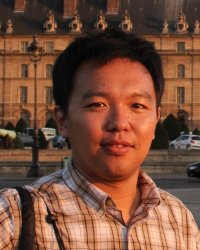 Qixing Huang合作论文数1
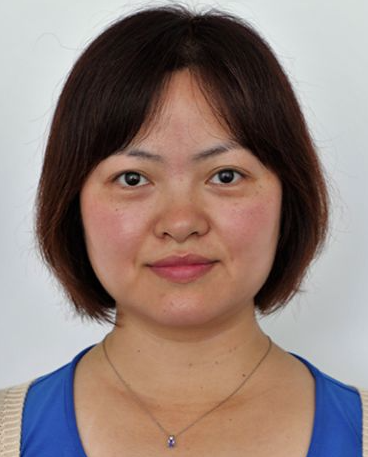 Sharon X. Huang合作论文数Department of Informatics and Intelligent Systems, College of Information Sciences and Technology, Penn State University;Institute for Computational and Data Sciences, Penn State University;Huck Institutes of the Life Sciences, Penn State University1
 Menglei Chai合作论文数AR Perception, Google Inc.1
 Thabo Beeler合作论文数Google;Animatico AG;Arbrea Labs AG1
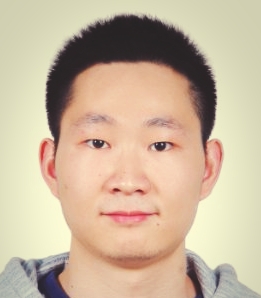 Jinnian Zhang (张进年)合作论文数Huawei Technologies Ltd.1




