This work proposes a new formulation to the long-standing problem of convex decomposition through learning feature fields, enabling the first feed-forward model for open-world learning of convex decomposition. Our method produces high-quality decompositions of 3D shapes into a union of convex bodies, which are essential to accelerate collision detection in physical simulation, amongst many other applications.The key insight is to adopt a feature learning approach and learn a continuous feature field that can later be clustered to yield a good convex decomposition via our self-supervised, purely-geometric objective derived from the classical definition of convexity.Our formulation can be used for single shape optimization, but more importantly, feature prediction unlocks scalable, self-supervised learning on large datasets resulting in the first learned open-world for convex decomposition.Experiments show that our decompositions are higher-quality than alternatives and generalize across open-world objects as well as across representations to meshes, CAD models, and even Gaussian splats.
Open-vocabulary long-horizon manipulation requires robots to reason over flexible instructions and complex multi-object scenes while adaptively planning, executing, monitoring, and recovering from failures. We address these demands with a closed agent loop in which a VLM orchestrates heterogeneous robot capabilities as interruptible tools. Unlike in virtual AI agents, the timing of decisions, actions and tool calls is important in a physical world that does not pause for reasoning. We refer to this setting as Physical Orchestration, and propose VoLoAgent, a VLM that plans, monitors, and recovers by treating a VLA/WAM as an interruptible tool it steers mid-rollout alongside vision models and action primitives. To evaluate these long-horizon capabilities, we introduce RoboVoLo, a high-fidelity benchmark for open-vocabulary long-horizon manipulation across common sense, memory/state tracking, complex references, and world knowledge, with both task-level success and failure-mode diagnostics. Experiments show VoLoAgent substantially outperforms single VLA/VLM or tool-based systems, with validation on real-robot experiments. Project page: https://chicychen.github.io/VoLo/
Vision Language Models (VLMs) demonstrate strong qualitative visual understanding, but struggle with metrically precise spatial reasoning required for embodied applications. The agentic paradigm promises that VLMs can use a wide variety of tools that could augment these capabilities, such as depth estimators, segmentation models, and pose estimators. Yet it remains an open challenge how to realize this vision without solely relying on handcrafted prompting strategies or enforcing fixed, predefined tool pipelines that limit VLMs' ability to discover optimal tool-use patterns. Reinforcement Learning could overcome this gap, but has so far been limited to reasoning with a single visual tool due to the large search space in multi-tool reasoning. We introduce Double Interactive Reinforcement Learning (DIRL), a two-phase training framework where VLMs learn to coordinate multiple tools through interactive exploration and feedback. In the teaching phase, we combine demonstrations from a single tool specialist trained via interactive RL with traces from a frontier model using all tools. In the exploration phase, the model further refines multi-tool coordination through continued RL. Our model, SpaceTools, with tool-augmented spatial reasoning ability, achieves state-of-the-art performance on spatial understanding benchmarks (RoboSpatial-Home, BLINK, Internal Benchmark) and demonstrates reliable real-world manipulation using a 7-DOF robot as a tool. DIRL provides substantial improvements over the vanilla SFT (+12% on RoboSpatial) and RL (+16% on RoboSpatial) baselines.
We propose PartField, a feedforward approach for learning part-based 3D features, which captures the general concept of parts and their hierarchy without relying on predefined templates or text-based names, and can be applied to open-world 3D shapes across various modalities. PartField requires only a 3D feedforward pass at inference time, significantly improving runtime and robustness compared to prior approaches. Our model is trained by distilling 2D and 3D part proposals from a mix of labeled datasets and image segmentations on large unsupervised datasets, via a contrastive learning formulation. It produces a continuous feature field which can be clustered to yield a hierarchical part decomposition. Comparisons show that PartField is up to 20 more accurate and often orders of magnitude faster than other recent class-agnostic part-segmentation methods. Beyond single-shape part decomposition, consistency in the learned field emerges across shapes, enabling tasks such as co-segmentation and correspondence, which we demonstrate in several applications of these general-purpose, hierarchical, and consistent 3D feature fields. Check our Webpage! https://research.nvidia.com/labs/toronto-ai/partfield-release/
Existing dynamic scene interpolation methods typically assume that the motion between consecutive timesteps is small enough so that displacements can be locally approximated by linear models. In practice, even slight deviations from this small-motion assumption can cause conventional techniques to fail. In this paper, we introduce Global Motion Corresponder (GMC), a novel approach that robustly handles large motion and achieves smooth transitions. GMC learns unary potential fields that predict SE(3) mappings into a shared canonical space, balancing correspondence, spatial and semantic smoothness, and local rigidity. We demonstrate that our method significantly outperforms existing baselines on 3D scene interpolation when the two states undergo large global motions. Furthermore, our method enables extrapolation capabilities where other baseline methods cannot.
Reverse engineering 3D computer-aided design (CAD) models from images is an important task for many downstream applications including interactive editing, manufacturing, architecture, robotics, etc. The difficulty of the task lies in vast representational disparities between the CAD output and the image input. CAD models are precise, programmatic constructs that involve sequential operations combining discrete command structure with continuous attributes, making it challenging to learn and optimize in an end-to-end fashion. Concurrently, input images introduce inherent challenges such as photometric variability and sensor noise, complicating the reverse engineering process. In this work, we introduce a novel approach that conditionally factorizes the task into two sub-problems. First, we leverage vision-language foundation models (VLMs), a finetuned Llama3.2, to predict the global discrete base structure with semantic information. Second, we propose TrAssembler that, conditioned on the discrete structure with semantics, predicts the continuous attribute values. To support the training of our TrAssembler, we further constructed an annotated CAD dataset of common objects from ShapeNet. Putting all together, our approach and data demonstrate significant first steps towards CAD-ifying images in the wild. Code and data can be found in https://github.com/qq456cvb/Img2CAD.
We present a framework for perspective-aware reasoning in vision-language models (VLMs) through mental imagery simulation. Perspective-taking, the ability to perceive an environment or situation from an alternative viewpoint, is a key benchmark for human-level visual understanding, essential for environmental interaction and collaboration with autonomous agents. Despite advancements in spatial reasoning within VLMs, recent research has shown that modern VLMs significantly lack perspective-aware reasoning capabilities and exhibit a strong bias toward egocentric interpretations. To bridge the gap between VLMs and human perception, we focus on the role of mental imagery, where humans perceive the world through abstracted representations that facilitate perspective shifts. Motivated by this, we propose a framework for perspective-aware reasoning, named Abstract Perspective Change (APC), that effectively leverages vision foundation models, such as object detection, segmentation, and orientation estimation, to construct scene abstractions and enable perspective transformations. Our experiments on synthetic and real-image benchmarks, compared with various VLMs, demonstrate significant improvements in perspective-aware reasoning with our framework, further outperforming fine-tuned spatial reasoning models and novel-view-synthesis-based approaches.
Gaussian splatting has become a popular representation for novel-view synthesis, exhibiting clear strengths in efficiency, photometric quality, and compositional edibility. Following its success, many works have extended Gaussians to 4D, showing that dynamic Gaussians maintain these benefits while also tracking scene geometry far better than alternative representations. Yet, these methods assume dense multi-view videos as supervision, constraining their use to controlled capture settings. In this work, we are interested in extending the capability of Gaussian scene representations to casually captured monocular videos. We show that existing 4D Gaussian methods dramatically fail in this setup because the monocular setting is underconstrained. Building off this finding, we propose a method we call Dynamic Gaussian Marbles, which consist of three core modifications that target the difficulties of the monocular setting. First, we use isotropic Gaussian “marbles”, reducing the degrees of freedom of each Gaussian, and constraining the optimization to focus on motion and appearance over local shape. Second, we employ a hierarchical divide-and-conquer learning strategy to efficiently guide the optimization towards solutions with globally coherent motion. Finally, we add image-level and geometry-level priors into the optimization, including a tracking loss that takes advantage of recent progress in point tracking. By constraining the optimization in these ways, Dynamic Gaussian Marbles learns Gaussian trajectories that enable novel-view rendering and accurately capture the 3D motion of the scene elements. We evaluate on the (monocular) Nvidia Dynamic Scenes dataset and the Dycheck iPhone dataset, and show that Gaussian Marbles significantly outperforms other Gaussian baselines in quality, and is on-par with non-Gaussian representations, all while maintaining the efficiency, compositionality, editability, and tracking benefits of Gaussians.
We present MV2Cyl, a novel method for reconstructing 3D from 2D multi-view images, not merely as a field or raw geometry but as a sketch-extrude CAD. Extracting extrusion cylinders from raw 3D geometry has been extensively researched in computer vision, while the processing of 3D data through neural networks has remained a bottleneck. Since 3D scans are generally accompanied by multi-view images, leveraging 2D convolutional neural networks allows these images to be exploited as a rich source for extracting extrusion cylinder information. However, we observe that extracting only the surface information of the extrudes and utilizing it results in suboptimal outcomes due to the challenges in the occlusion and surface segmentation. By synergizing with the extracted base curve information, we achieve the optimal reconstruction result with the best accuracy in 2D sketch and extrude parameter estimation. Our experiments, comparing our method with previous work that takes a raw 3D point cloud as input, demonstrate the effectiveness of our approach by taking advantage of multi-view images.
Neural radiance fields (NeRFs) have gained popularity with multiple works showing promising results across various applications. However, to the best of our knowledge, existing works do not explicitly model the distribution of training camera poses, or consequently the triangulation quality, a key factor affecting reconstruction quality dating back to classical vision literature. We close this gap with ProvNeRF, an approach that models the provenance for each point -- i.e., the locations where it is likely visible -- of NeRFs as a stochastic field. We achieve this by extending implicit maximum likelihood estimation (IMLE) to functional space with an optimizable objective. We show that modeling per-point provenance during the NeRF optimization enriches the model with information on triangulation leading to improvements in novel view synthesis and uncertainty estimation under the challenging sparse, unconstrained view setting against competitive baselines. The code will be available at https://github.com/georgeNakayama/ProvNeRF.
Gaussian splatting methods are emerging as a popular approach for converting multi-view image data into scene representations that allow view synthesis. In particular, there is interest in enabling view synthesis for dynamic scenes using only monocular input data – an ill-posed and challenging problem. The fast pace of work in this area has produced multiple simultaneous papers that claim to work best, which cannot all be true. In this work, we organize, benchmark, and analyze many Gaussian-splatting-based methods, providing apples-to-apples comparisons that prior works have lacked. We use multiple existing datasets and a new instructive synthetic dataset designed to isolate factors that affect reconstruction quality. We systematically categorize Gaussian splatting methods into specific motion representation types and quantify how their differences impact performance. Empirically, we find that their rank order is well-defined in synthetic data, but the complexity of real-world data currently overwhelms the differences. Furthermore, the fast rendering speed of all Gaussian-based methods comes at the cost of brittleness in optimization. We summarize our experiments into a list of findings that can help to further progress in this lively problem setting.
We propose OptCtrlPoints, a data-driven framework designed to identify the optimal sparse set of control points for reproducing target shapes using biharmonic 3D shape deformation. Control-point-based 3D deformation methods are widely utilized for interactive shape editing, and their usability is enhanced when the control points are sparse yet strategically distributed across the shape. With this objective in mind, we introduce a data-driven approach that can determine the most suitable set of control points, assuming that we have a given set of possible shape variations. The challenges associated with this task primarily stem from the computationally demanding nature of the problem. Two main factors contribute to this complexity: solving a large linear system for the biharmonic weight computation and addressing the combinatorial problem of finding the optimal subset of mesh vertices. To overcome these challenges, we propose a reformulation of the biharmonic computation that reduces the matrix size, making it dependent on the number of control points rather than the number of vertices. Additionally, we present an efficient search algorithm that significantly reduces the time complexity while still delivering a nearly optimal solution. Experiments on SMPL, SMAL, and DeformingThings4D datasets demonstrate the efficacy of our method. Our control points achieve better template-to-target fit than FPS, random search, and neural-network-based prediction. We also highlight the significant reduction in computation time from days to approximately 3 minutes.
Neural radiance fields (NeRF) rely on volume rendering to synthesize novel views. Volume rendering requires evaluating an integral along each ray, which is numerically approximated with a finite sum that corresponds to the exact integral along the ray under piecewise constant volume density. As a consequence, the rendered result is unstable w.r.t. the choice of samples along the ray, a phenomenon that we dub quadrature instability. We propose a mathematically principled solution by reformulating the sample-based rendering equation so that it corresponds to the exact integral under piecewise linear volume density. This simultaneously resolves multiple issues: conflicts between samples along different rays, imprecise hierarchical sampling, and non-differentiability of quantiles of ray termination distances w.r.t. model parameters. We demonstrate several benefits over the classical sample-based rendering equation, such as sharper textures, better geometric reconstruction, and stronger depth supervision. Our proposed formulation can be also be used as a drop-in replacement to the volume rendering equation of existing NeRF-based methods. Our project page can be found at pl-nerf.github.io.
Neural radiance fields (NeRFs) have enabled high fidelity 3D reconstruction from multiple 2D input views. However, a well-known drawback of NeRFs is the less-than-ideal performance under a small number of views, due to insufficient constraints enforced by volumetric rendering. To address this issue, we introduce SCADE, a novel technique that improves NeRF reconstruction quality on sparse, unconstrained input views for in-the-wild indoor scenes. To constrain NeRF reconstruction, we leverage geometric priors in the form of per-view depth estimates produced with state-of-the-art monocular depth estimation models, which can generalize across scenes. A key challenge is that monocular depth estimation is an illposed problem, with inherent ambiguities. To handle this issue, we propose a new method that learns to predict, for each view, a continuous, multimodal distribution of depth estimates using conditional Implicit Maximum Likelihood Estimation (cIMLE). In order to disambiguate exploiting multiple views, we introduce an original space carving loss that guides the NeRF representation to fuse multiple hypothesized depth maps from each view and distill from them a common geometry that is consistent with all views. Experiments show that our approach enables higher fidelity novel view synthesis from sparse views. Our project page can be found at scade-spacecarving-nerfs.github.io.
In this supplementary document , we first present a detailed overview of our network architecture, the training and generation procedure, in Sec. 1. We then provide ablations on how different components of our pipeline impact the performance of our model, in Sec. 2. Subsequently, in Sec. 3 we provide additional results both on the shape generation task as well as on the shape editing task. Next, we demonstrate various applications of our model such as shape and image inversion, in Sec. 4 and Sec. 5
While the community of 3D point cloud generation has witnessed a big growth in recent years, there still lacks an effective way to enable intuitive user control in the generation process, hence limiting the general utility of such methods. Since an intuitive way of decomposing a shape is through its parts, we propose to tackle the task of controllable part-based point cloud generation. We introduce DiffFacto, a novel probabilistic generative model that learns the distribution of shapes with part-level control. We propose a factorization that models independent part style and part configuration distributions, and present a novel cross diffusion network that enables us to generate coherent and plausible shapes under our proposed factorization. Experiments show that our method is able to generate novel shapes with multiple axes of control. It achieves state-of-the-art part-level generation quality and generates plausible and coherent shape while enabling various downstream editing applications such as shape interpolation, mixing, and transformation editing. Please visit our project webpage at https://difffacto.github.io/
Impressive progress in generative models and implicit representations gave rise to methods that can generate 3D shapes of high quality. However, being able to locally control and edit shapes is another essential property that can unlock several content creation applications. Local control can be achieved with part-aware models, but existing methods require 3D supervision and cannot produce textures. In this work, we devise PartNeRF, a novel part-aware generative model for editable 3D shape synthesis that does not require any explicit 3D supervision. Our model generates objects as a set of locally defined NeRFs, augmented with an affine transformation. This enables several editing operations such as applying transformations on parts, mixing parts from different objects etc. To ensure distinct, manipulable parts we enforce a hard assignment of rays to parts that makes sure that the color of each ray is only determined by a single NeRF. As a result, altering one part does not affect the appearance of the others. Evaluations on various ShapeNet categories demonstrate the ability of our model to generate editable 3D objects of improved fidelity, compared to previous part-based generative approaches that require 3D supervision or models relying on NeRFs.
This document supplements our submission Point2Cyl: Reverse Engineering 3D Objects from Point Clouds to Extrusion Cylinders. In particular, we differentiate our work with traditional primitive fitting (Sec. S.1), provide additional details and proofs and robustness of theorems from the main paper (Sec. S.2), network details for our Point2Cyl (Sec. S.3), implementation details of the baselines (Sec. S.4), data preprocessing (Sec. S.5) and visualization post-processing details (Sec. S.6), and additional experiment comparisons, ablations and failure cases (Sec. S.7).
We propose Point2Cyl, a supervised network transforming a raw 3D point cloud to a set of extrusion cylinders. Reverse engineering from a raw geometry to a CAD model is an essential task to enable manipulation of the 3D data in shape editing software and thus expand their usages in many downstream applications. Particularly, the form of CAD models having a sequence of extrusion cylinders -- a 2D sketch plus an extrusion axis and range -- and their boolean combinations is not only widely used in the CAD community/software but also has great expressivity of shapes, compared to having limited types of primitives (e.g., planes, spheres, and cylinders). In this work, we introduce a neural network that solves the extrusion cylinder decomposition problem in a geometry-grounded way by first learning underlying geometric proxies. Precisely, our approach first predicts per-point segmentation, base/barrel labels and normals, then estimates for the underlying extrusion parameters in differentiable and closed-form formulations. Our experiments show that our approach demonstrates the best performance on two recent CAD datasets, Fusion Gallery and DeepCAD, and we further showcase our approach on reverse engineering and editing.
We propose a novel technique for producing high-quality 3D models that match a given target object image or scan. Our method is based on retrieving an existing shape from a database of 3D models and then deforming its parts to match the target shape. Unlike previous approaches that independently focus on either shape retrieval or deformation, we propose a joint learning procedure that simultaneously trains the neural deformation module along with the embedding space used by the retrieval module. This enables our network to learn a deformation-aware embedding space, so that retrieved models are more amenable to match the target after an appropriate deformation. In fact, we use the embedding space to guide the shape pairs used to train the deformation module, so that it invests its capacity in learning deformations between meaningful shape pairs. Furthermore, our novel part-aware deformation module can work with inconsistent and diverse part-structures on the source shapes. We demonstrate the benefits of our joint training not only on our novel framework, but also on other state-of-the-art neural deformation modules proposed in recent years. Lastly, we also show that our jointly-trained method outperforms various non-joint baselines.
 Leonidas Guibas合作论文数Computer Science Department, School of Engineering, Stanford University;Department of Electrical Engineering, Stanford University14
 Minhyuk Sung合作论文数School of Computing, Korea Advanced Institute of Science and Technology;Graduate School of AI, Korea Advanced Institute of Science and Technology7
 Ke Li合作论文数School of Computing Science, Faculty of Applied Sciences, Simon Fraser University5
 Kiyohiro (George) Nakayama (中山聖博)合作论文数Stanford University3
 Despoina Paschalidou合作论文数NVIDIA Toronto AI Lab3
 Birdal Tolga合作论文数Stanford University3
 Nicholas Sharp合作论文数NVIDIA2
 Faisal Ladhak合作论文数Natural Language Processing Group, Computer Science Department, Columbia University2Konstantinos Tertikas合作论文数2Colton Stearns合作论文数2
 Valts Blukis合作论文数NVIDIA2
 Adam Harley合作论文数Meta2
 Yannis Avrithis合作论文数Inria Rennes-Bretagne Atlantique2
 Jonathan Tremblay合作论文数NVIDIA2
 Quang-Hieu Pham合作论文数Singapore University of Technology and Design2
 JJ (Jeong Joon) Park合作论文数University of Washington2
 Yang You (尤洋)合作论文数Computer Science Department, School of Engineering, Stanford University2
 Qing Qu合作论文数2
 Boxiao Pan合作论文数Luma AI2
 Stan Birchfield合作论文数NVIDIA2
 Sai-Kit Yeung (楊世傑)合作论文数Division of Integrative Systems and Design, Hong Kong University of Science and Technology;Department of Computer Science and Engineering, Hong Kong University of Science and Technology;Department of Ocean Science, Hong Kong University of Science and Technology2
 Binh-Son Hua合作论文数Trinity College Dublin, The University of Dublin2
 Duc Nguyen合作论文数Methodist Hospital for Surgery2
 Chan Hee (Luke) Song合作论文数NVIDIA2Chanho Park合作论文数1Jihyeon Je合作论文数1Xuan Luo合作论文数1Chirag Vashist合作论文数1Donglai Xiang合作论文数1Eunji Hong合作论文数1Rahul Krishna Thomas合作论文数1
 Junru Lin合作论文数University of Toronto1
 Yuezhi Yang (杨越之)合作论文数Department of Computer Science, The University of Texas at Austin1Mikhail Okunev合作论文数1
 Siyi Chen (陈思怡)合作论文数University of Michigan;NVIDIA1Alex Zook合作论文数1
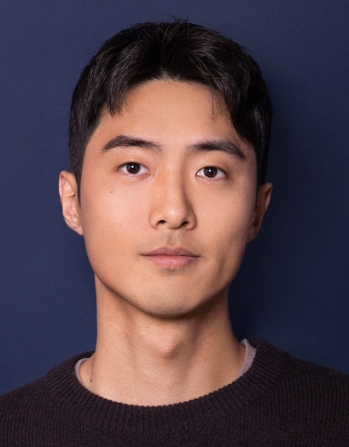 Phillip Y. Lee合作论文数Graduate School of AI, Korea Advanced Institute of Science and Technology1Nguyen-Mihn Hieu合作论文数1
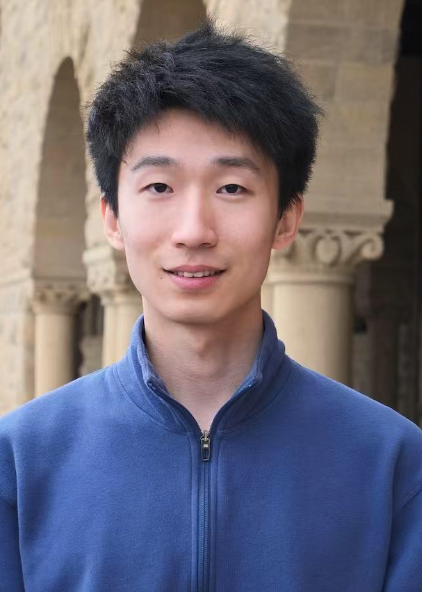 Jiaqi Han合作论文数Stanford University1
 Joseph G. Lambourne合作论文数1
 Olivia Hsu合作论文数University of California1Purvi Goel合作论文数Stanford Univ1Minghua Liu合作论文数1
 Florian Dubost合作论文数Corresponding author.1
 Adithyavairavan Murali合作论文数1
 Yen-Yu Chang合作论文数Cornell Tech, Cornell University1
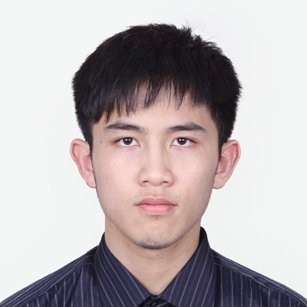 Guandao Yang (杨关道)合作论文数Cornell University1
 Gim Hee Lee合作论文数Department of Computer Science, National University of Singapore;Computer Vision and Robotic Perception (CVRP) Laboratory, National University of Singapore;Graduate School for Integrative Sciences and Engineering, National University of Singapore;Institute of Data Science, National University of Singapore1
 Noam Aigerman合作论文数Department of Computer Science and Operations Research, Faculty of Arts and Science, Université de Montréal;Mila1




