Face recognition templates are compact identity representations, yet they also encode rich semantic information about facial appearance. Prior work has shown that templates can be inverted to images or indirectly manipulated through image-editing pipelines, but direct semantic editing in template space remains largely unexplored. Existing interpretability methods for face recognition often rely on manual neuron inspection or predefined attribute labels, limiting scalability and semantic flexibility. To address this gap, we propose SCOUT (Semantic Concept Discovery for Open-VocabUlary Editing of Face Recognition Templates), an end-to-end framework for discovering and directly manipulating semantic concepts in face recognition templates using mechanistic interpretability. SCOUT learns sparse template representations, generates semantic hypotheses for latent features from natural-language descriptions, and validates their stability. The resulting features act as controllable semantic directions for direct editing, avoiding costly edit–re-encode pipelines. Experiments with face recognition models using CNN, ViT, and Swin backbones show that SCOUT discovers interpretable concepts beyond standard attribute labels and enables controllable, identity-aware template manipulation with negligible impact on identity matching. We further show that edited templates can subsequently be decoded with independent inversion models for visualization and evaluation.
Deep-learning models, including those used in biometric recognition, have achieved remarkable performance on benchmark datasets as well as real-world recognition tasks. However, a major drawback of these models is their lack of transparency in decision-making. Mechanistic interpretability has emerged as a promising research field intended to help us gain insights into such models, but its application to biometric data remains limited. In this work, we bridge this gap by introducing the FaceMINT library, a publicly available Python library (build on top of Pytorch) that enables biometric researchers to inspect their models through mechanistic interpretability. It provides a plug-and-play solution that allows researchers to seamlessly switch between the analyzed biometric models, evaluate state-of-the-art sparse autoencoders, select from various image parametrizations, and fine-tune hyperparameters. Using a large scale Glint360K dataset, we demonstrate the usability of FaceMINT by applying its functionality to two state-of-the-art (deep-learning) face recognition models: AdaFace, based on Convolutional Neural Networks (CNN), and SwinFace, based on transformers. The proposed library implements various sparse auto-encoders (SAEs), including vanilla SAE, Gated SAE, JumpReLU SAE, and TopK SAE, which have achieved state-of-the-art results in the mechanistic interpretability of large language models. Our study highlights the promise of mechanistic interpretability in the biometric field, providing new avenues for researchers to explore model transparency and refine biometric recognition systems. The library is publicly available at www.gitlab.com/peterrot/facemint.
Explainable artificial intelligence (XAI) aims to ensure an AI system's decisions are transparent and understandable by humans, which is particularly important in potentially sensitive application scenarios in surveillance, security and law enforcement. In these and related areas, understanding the internal mechanisms governing the decision-making process of AI-based systems can increase trust and consequently user acceptance. While various methods have been developed to provide insights into the behavior of AI-based models, solutions capable of explaining different aspects of the models using Natural Language are still limited in the literature. In this paper, we therefore propose a novel approach for interpreting the information content encoded in face templates, produced by state-of-the-art (SOTA) face recognition models. Specifically, we utilize the Text Encoder from the Contrastive Language-Image Pretraining (CLIP) model and generate natural language descriptions of various face attributes present in the face templates. We implement two versions of our approach, with the off-the-shelf CLIP text-encoder and a fine-tuned version using the VGGFace2 and MAADFace datasets. Our experimental results indicate that the fine-tuned text encoder under the contrastive training paradigm increases the attribute-based explainability of face recognition templates, while both models provide valuable human-understandable insights into modern face recognition models.
In this work, we address the problem of cross-resolution face recognition, where a low-resolution probe face is compared against high-resolution gallery faces. To address this challenging problem, we investigate two approaches for bridging the quality gap between low-quality probe faces and high-quality gallery faces. The first approach focuses on degrading the quality of high-resolution gallery images to bring them closer to the quality of the probe images. The second approach involves enhancing the resolution of the probe images using face hallucination. Our experiments on the SCFace and DroneSURF datasets reveal that the success of face hallucination is highly dependent on the quality of the original images, since poor image quality can severely limit the effectiveness of the hallucination technique. Therefore, the selection of the appropriate face recognition method should consider the quality of the images. Additionally, our experiments also suggest that combining gallery degradation and face hallucination in a hybrid recognition scheme provides the best overall results for cross-resolution face recognition with relatively high-quality probe images, while the degradation process on its own is the more suitable option for low-quality probe images. Our results show that the combination of standard computer vision approaches such as degradation, super-resolution, feature fusion, and score fusion can be used to substantially improve performance on the task of low resolution face recognition using off-the-shelf face recognition models without re-training on the target domain.
Soft-biometric privacy-enhancing techniques represent machine learning methods that aim to: (i) mitigate privacy concerns associated with face recognition technology by suppressing selected soft-biometric attributes in facial images (e.g., gender, age, ethnicity) and (ii) make unsolicited extraction of sensitive personal information infeasible. Because such techniques are increasingly used in real-world applications, it is imperative to understand to what extent the privacy enhancement can be inverted and how much attribute information can be recovered from privacy-enhanced images. While these aspects are critical, they have not been investigated in the literature. We, therefore, study the robustness of several state-of-the-art soft-biometric privacy-enhancing techniques to attribute recovery attempts. We propose PrivacyProber, a high-level framework for restoring soft-biometric information from privacy-enhanced facial images, and apply it for attribute recovery in comprehensive experiments on three public face datasets, i.e., LFW, MUCT and Adience. Our experiments show that the proposed framework is able to restore a considerable amount of suppressed information, regardless of the privacy-enhancing technique used, but also that there are significant differences between the considered privacy models. These results point to the need for novel mechanisms that can improve the robustness of existing privacy-enhancing techniques and secure them against potential adversaries trying to restore suppressed information.
Machine learning is the domain of algorithms capable of learning from data to improve their performance on a task or set of tasks. Common machine learning tasks include classification, regression, and generative modelling. The most common modern example of machine learners in practical use is deep neural networks coupled with an extrinsic optimizer such as stochastic gradient descent. Recently, scaled-up large language models have shown increasing capabilities of in-context meta-learning, which has been used to improve their performance on language tasks through few-shot learning. In this paper, we show that pre-trained large language models can act as machine learners with regard to in-context data, without using extrinsic optimization tools or weight updates. By evaluating the language models' inference time machine learning abilities on synthetic or appropriately transformed datasets, we conclusively show that they're able to model complex relationships between data in the input context. This implies that inference-time machine learning tasks represent a meaningful capability evaluation task for large language models.
This paper presents the summary of the Efficient Face Recognition Competition (EFaR) held at the 2023 International Joint Conference on Biometrics (IJCB 2023). The competition received 17 submissions from 6 different teams. To drive further development of efficient face recognition models, the submitted solutions are ranked based on a weighted score of the achieved verification accuracies on a diverse set of benchmarks, as well as the deployability given by the number of floating-point operations and model size. The evaluation of submissions is extended to bias, cross-quality, and large-scale recognition benchmarks. Overall, the paper gives an overview of the achieved performance values of the submitted solutions as well as a diverse set of baselines. The submitted solutions use small, efficient network architectures to reduce the computational cost, some solutions apply model quantization. An outlook on possible techniques that are underrepresented in current solutions is given as well.
In this paper, we aim to address the large domain gap between high-resolution face images, e.g., from professional portrait photography, and low-quality surveillance images, e.g., from security cameras. Establishing an identity match between disparate sources like this is a classical surveillance face identification scenario, which continues to be a challenging problem for modern face recognition techniques. To that end, we propose a method that combines face super-resolution, resolution matching, and multi-scale template accumulation to reliably recognize faces from long-range surveillance footage, including from low quality sources. The proposed approach does not require training or fine-tuning on the target dataset of real surveillance images. Extensive experiments show that our proposed method is able to outperform even existing methods fine-tuned to the SCFace dataset.
AbstractRecently, digital face manipulation and its detection have sparked large interest in industry and academia around the world. Numerous approaches have been proposed in the literature to create realistic face manipulations, such as DeepFakes and face morphs. To the human eye manipulated images and videos can be almost indistinguishable from real content. Although impressive progress has been reported in the automatic detection of such face manipulations, this research field is often considered to be a cat and mouse game. This chapter briefly discusses the state of the art of digital face manipulation and detection. Issues and challenges that need to be tackled by the research community are summarized, along with future trends in the field.
Due to advances in deep learning and convolutional neural networks (CNNs) there has been significant progress in the field of visual age estimation from face images over recent years. While today's models are able to achieve considerable age estimation accuracy, their behaviour, especially with respect to specific demographic groups is still not well understood. In this paper, we take a deeper look at CNN-based age estimation models and analyze their performance across different race and gender groups. We use two publicly available off-the-shelf age estimation models, i.e., FaceNet and WideResNet, for our study and analyze their performance on the UTKFace and APPA-REAL datasets. We partition face images into sub-groups based on race, gender and combinations of race and gender. We then compare age estimation results and find that there are noticeable differences in performance across demographics. Specifically, our results show that age estimation accuracy is consistently higher for men than for women, while race does not appear to have consistent effects on the tested models across different test datasets.
This paper presents a summary of the Masked Face Recognition Competitions (MFR) held within the 2021 International Joint Conference on Biometrics (IJCB 2021). The competition attracted a total of 10 participating teams with valid submissions. The affiliations of these teams are diverse and associated with academia and industry in nine different countries. These teams successfully submitted 18 valid solutions. The competition is designed to motivate solutions aiming at enhancing the face recognition accuracy of masked faces. Moreover, the competition considered the deployability of the proposed solutions by taking the compactness of the face recognition models into account. A private dataset representing a collaborative, multi-session, real masked, capture scenario is used to evaluate the submitted solutions. In comparison to one of the top-performing academic face recognition solutions, 10 out of the 18 submitted solutions did score higher masked face verification accuracy.
Crowd-counting is a longstanding computer vision used in estimating the crowd sizes for security purposes at public protests in streets, public gatherings, for collecting crowd statistics at airports, malls, concerts, conferences, and other similar venues, and for monitoring people and crowds during public health crises (such as the one caused by COVID-19). Recently, the performance of automated methods for crowd-counting from single images has improved particularly due to the introduction of deep learning techniques and large labelled training datasets. However, the robustness of these methods to varying imaging conditions, such as weather, image perspective, and large variations in the crowd size has not been studied in-depth in the open literature. To address this gap, a systematic study on the robustness of four recently developed crowd-counting methods is performed in this paper to evaluate their performance with respect to variable (real-life) imaging scenarios that include different event types, weather conditions, image sources and crowd sizes. It is shown that the performance of the tested techniques is degraded in unclear weather conditions (i.e., fog, rain, snow) and also on images taken from large distances by drones. On the opposite, clear weather conditions, crowd-counting methods can provide accurate and usable results.
In this paper we address the problem of representing 3D visual data with parameterized volumetric shape primitives. Specifically, we present a (two-stage) approach built around convolutional neural networks (CNNs) capable of segmenting complex depth scenes into the simpler geometric structures that can be represented with superquadric models. In the first stage, our approach uses a Mask RCNN model to identify superquadric-like structures in depth scenes and then fits superquadric models to the segmented structures using a specially designed CNN regressor. Using our approach we are able to describe complex structures with a small number of interpretable parameters. We evaluated the proposed approach on synthetic as well as real-world depth data and show that our solution does not only result in competitive performance in comparison to the state-of-the-art, but is able to decompose scenes into a number of superquadric models at a fraction of the time required by competing approaches. We make all data and models used in the paper available from this https URL.
Super-resolution methods have proven to be useful in the face domain, where they can be used to improve the quality of low-resolution images, as well as images subjected to different forms of visual degradation, such as out-of-focus, shot noise and motion blur. Super-resolution methods can be used on such data to improve the performance of various biometric systems, such as face recognition and surveillance systems. Landmark localisation is of key importance in biometric systems, since it is typically used in the image processing pipeline to align face images to a canonical pose expected by automatic face recognition systems. This paper evaluates the use of face superresolution systems in terms of their effect on the performance of face landmark localisation methods. Experiments with different face super-resolution systems show that the impact of super-resolution on face landmark localisation is heavily dependent on the specific super-resolution method, however, the impact of each tested method is positive in comparison to landmark localisation directly from low-resolution face images. Based on our findings, the inclusion of face superresolution as one of the first pre-processing steps in the face recognition pipeline is recommended.
ROSUS 2020 – Računalniška obdelava slik in njena uporaba v Sloveniji 2020 je strokovna računalniška konferenca, ki jo od leta 2006 naprej vsako leto organizira Inštitut za računalništvo iz Fakultete za elektrotehniko, računalništvo in informatiko, Univerze v Mariboru. Konferenca povezuje strokovnjake in raziskovalce s področij digitalne obdelave slik in strojnega vida z uporabniki tega znanja, pri čemer uporabniki prihajajo iz raznovrstnih industrijskih okolij, biomedicine, športa, zabavništva in sorodnih področij. Zbornik konference ROSUS 2020 združuje strokovne prispevke več deset avtorjev, od tega dva vabljena predavanje ter več demonstracijskih prispevkov. Prispevki podajajo najnovejše dosežke slovenskih strokovnjakov s področij digitalne obdelave slik in strojnega vida, osvetljujejo pa tudi trende in novosti na omenjenih strokovnih področjih. Velik poudarek prispevkov je na promoviranju ekonomske koristnosti aplikacij računalniške obdelave slik in vida v slovenskem prostoru. Takšne računalniške aplikacije zaradi visoke natančnosti, robustnosti in izjemnih hitrosti pri obdelovanju informacij nudijo namreč nove priložnosti za uveljavitev na trgu visokih tehnologij.
In this chapter, we address the problem of biometric identity recognition from the vasculature of the human sclera. Specifically, we focus on the challenging task of multi-view sclera recognition, where the visible part of the sclera vasculature changes from image to image due to varying gaze (or view) directions. We propose a complete solution for this task built around Convolutional Neural Networks (CNNs) and make several contributions that result in state-of-the-art recognition performance, i.e.: (i) we develop a cascaded CNN assembly that is able to robustly segment the sclera vasculature from the input images regardless of gaze direction, and (ii) we present ScleraNET, a CNN model trained in a multi-task manner (combining losses pertaining to identity and view-direction recognition) that allows for the extraction of discriminative vasculature descriptors that can be used for identity inference. To evaluate the proposed contributions, we also introduce a new dataset of ocular images, called the Sclera Blood Vessels, Periocular and Iris (SBVPI) dataset, which represents one of the few publicly available datasets suitable for research in multi-view sclera segmentation and recognition. The datasets come with a rich set of annotations, such as a per-pixel markup of various eye parts (including the sclera vasculature), identity, gaze-direction and gender labels. We conduct rigorous experiments on SBVPI with competing techniques from the literature and show that the combination of the proposed segmentation and descriptor-computation models results in highly competitive recognition performance.
Finger vein recognition has gained a lot of attention in recent years due to the high robustness of existing recognition models against spoofing attacks as well as their high recognition performance. A lot of effort has been put into improving the performance of the recognition models over the years while studies exploring their robustness have not received a comparable amount of attention in the literature. The paper tries to fill this gap by empirically analysing the robustness of three popular finger vein recognition models, i.e., Repeated Line Tracking (RLT), Maximum Curvature (MC), and Wide Line Detector (WLD), against four types of image distortions, i.e., blur, two types of noise and JPEG2000 compression, and evaluating their impact on the verification performance of the three selected models. Experimental results on the VERA finger vein dataset show that the tested finger vein models are highly susceptible to the presence of noise and blur, whereas compression artifacts have only a limited affect on the overall recognition performance.
Contemporary face hallucination (FH) models exhibit considerable ability to reconstruct high-resolution (HR) details from low-resolution (LR) face images. This ability is commonly learned from examples of corresponding HR-LR image pairs, created by artificially down-sampling the HR ground truth data. This down-sampling (or degradation) procedure not only defines the characteristics of the LR training data, but also determines the type of image degradations the learned FH models are eventually able to handle. If the image characteristics encountered with real-world LR images differ from the ones seen during training, FH models are still expected to perform well, but in practice may not produce the desired results. In this paper we study this problem and explore the bias introduced into FH models by the characteristics of the training data. We systematically analyze the generalization capabilities of several FH models in various scenarios where the degradation function does not match the training setup and conduct experiments with synthetically downgraded as well as real-life low-quality images. We make several interesting findings that provide insight into existing problems with FH models and point to future research directions.
ROSUS 2019 – Računalniška obdelava slik in njena uporaba v Sloveniji 2019 je strokovna računalniška konferenca, ki jo od leta 2006 naprej vsako leto organizira Inštitut za računalništvo iz Fakultete za elektrotehniko, računalništvo in informatiko, Univerze v Mariboru. Konferenca povezuje strokovnjake in raziskovalce s področij digitalne obdelave slik in strojnega vida z uporabniki tega znanja, pri čemer uporabniki prihajajo iz raznovrstnih industrijskih okolij, biomedicine, športa, zabavništva in sorodnih področij. Zbornik konference ROSUS 2019 združuje 14 strokovnih prispevkov petdesetih avtorjev, od tega vabljeno predavanje ter 4 demonstracijske prispevke. Prispevki podajajo najnovejše dosežke slovenskih strokovnjakov s področij digitalne obdelave slik in strojnega vida, osvetljujejo pa tudi trende in novosti na omenjenih strokovnih področjih. Velik poudarek prispevkov je na promoviranju ekonomske koristnosti aplikacij računalniške obdelave slik in vida v slovenskem prostoru. Takšne računalniške aplikacije zaradi visoke natančnosti, robustnosti in izjemnih hitrosti pri obdelovanju informacij nudijo namreč nove priložnosti za uveljavitev na trgu visokih tehnologij.
It has been a longstanding goal in computer vision to describe the 3D physical space in terms of parameterized volumetric models that would allow autonomous machines to understand and interact with their surroundings. Such models are typically motivated by human visual perception and aim to represents all elements of the physical word ranging from individual objects to complex scenes using a small set of parameters. One of the de facto stadards to approach this problem are superquadrics - volumetric models that define various 3D shape primitives and can be fitted to actual 3D data (either in the form of point clouds or range images). However, existing solutions to superquadric recovery involve costly iterative fitting procedures, which limit the applicability of such techniques in practice. To alleviate this problem, we explore in this paper the possibility to recover superquadrics from range images without time consuming iterative parameter estimation techniques by using contemporary deep-learning models, more specifically, convolutional neural networks (CNNs). We pose the superquadric recovery problem as a regression task and develop a CNN regressor that is able to estimate the parameters of a superquadric model from a given range image. We train the regressor on a large set of synthetic range images, each containing a single (unrotated) superquadric shape and evaluate the learned model in comparative experiments with the current state-of-the-art. Additionally, we also present a qualitative analysis involving a dataset of real-world objects. The results of our experiments show that the proposed regressor not only outperforms the existing state-of-the-art, but also ensures a 270× faster execution time.
 Vitomir Struc合作论文数Faculty of Electrical Engineering, University of Ljubljana25
 Peter Peer合作论文数University of Ljubljana
Faculty of Computer and Information Science
Computer Vision Laboratory6
Peter Peer合作论文数University of Ljubljana
Faculty of Computer and Information Science
Computer Vision Laboratory6 Peter Rot合作论文数Univ Ljubljana, Fac Elect Engn, Ljubljana 1000, Slovenia5
 Walter J. Scheirer合作论文数Department of Computer Science and Engineering, University of Notre Dame5
 Simon Dobrisek合作论文数Faculty of Electrical Engineering Laboratory of Artificial Perception, Systems and Cybernetics, University of Ljubljana4
 Hazım Kemal Ekenel合作论文数Smart Interaction and Machine Intelligence Technologies Lab, Department of Computer Engineering, Istanbul Technical University;New York University Abu Dhabi4
 Berk Kemal Ozata合作论文数2
 Fadi Boutros合作论文数Fraunhofer Institute for Computer Graphics Research;National Research Center for Applied Cybersecurity2
 Tim Oblak合作论文数Joint Research Centre, European Commission2
 Mohamad Al Jazaery合作论文数Lane Department of Computer Science and Electrical Engineering, West Virginia University2
 Joel Brogan合作论文数Univ Notre Dame, Dept Comp Sci & Engn, Notre Dame, IN 46556 USA2
 Sandipan Banerjee合作论文数University of Notre Dame2
 Jan Niklas Kolf合作论文数Fraunhofer Institute for Computer Graphics Research IGD2
 Raghavendra Ramachandra合作论文数Department of Information Security and Communication Technology, Faculty of Information Technology and Electrical Engineering, Norwegian University of Science and Technology2
 Brandon J. RichardWebster合作论文数Kitware2
 Franc Solina合作论文数Computer Vision Laboratory, Faculty of Computer and Information Science, University of Ljubljana;Academy of Fine Arts and Design, Department of Video and New Media, University of Ljubljana2
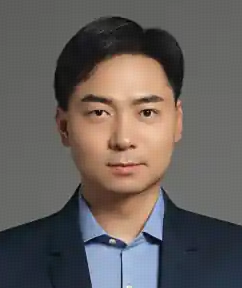 Dacheng Tao (陶大程)合作论文数College of Computing & Data Science, Nanyang Technological University;Lee Kong Chian School of Medicine, Nanyang Technological University;DaXiao Robot2
 Guodong Guo合作论文数Department of Computer Science and Electrical Engineering, Benjamin M. Statler College of Engineering and Mineral Resources, West Virginia University;Computer Vision Laboratory, Center for Identification Technology Research, West Virginia University2
 Naser Damer合作论文数Fraunhofer Institute for Computer Graphics Research IGD2
 Aparna Bharati合作论文数Dept Comp Sci & Engn, Univ Notre Dame2
 Patrick J. Flynn合作论文数Department of Computer Science & Engineering, College of Engineering, University of Notre Dame;Notre Dame Computer Vision Research Lab, College of Engineering, University of Notre Dame2Ales Jaklic合作论文数Computer Vision Laboratory
Faculty of computer and Information Science
University of Ljubljana,2
Patrick J. Flynn合作论文数Department of Computer Science & Engineering, College of Engineering, University of Notre Dame;Notre Dame Computer Vision Research Lab, College of Engineering, University of Notre Dame2Ales Jaklic合作论文数Computer Vision Laboratory
Faculty of computer and Information Science
University of Ljubljana,2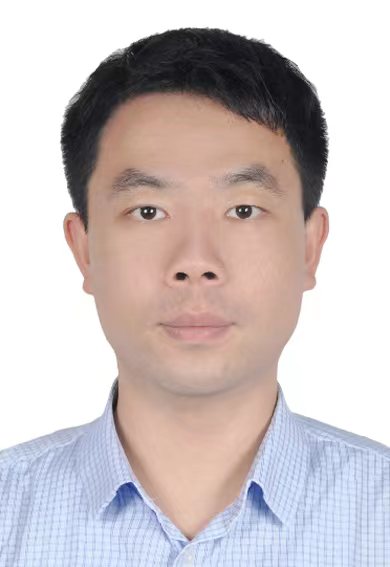 Changxing Ding (丁长兴)合作论文数School of Future Technology, South China University of Technology2
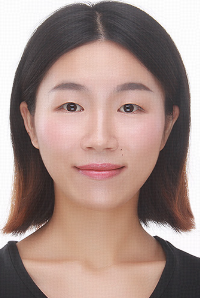 Qin Zhou (周芹)合作论文数Department of Computer Science and Engineering, East China University of Science and Technology1Richard Everson合作论文数1Wang Wei合作论文数1Shuangping Huang (黄双萍)合作论文数1Sanka Rasnayaka合作论文数1Sachith Seneviratne合作论文数1João Ribeiro Pinto合作论文数1Alireza Memarmoghadam合作论文数1
 Josef Bigun合作论文数School of Information Technology, Halmstad University1Sara Alansari合作论文数1Christophe Ecabert合作论文数1
 Xiaohe Wu (武小荷)合作论文数School of Computer Science and Technology, Faculty of Computing, Harbin Institute of Technology1
 Sajid Javed合作论文数Electrical Engineering and Computer Science Department, Khalifa University of Science and Technology1
 Rama Krishna Sai Subrahmanyam Gorthi合作论文数Indian Institute of Technology Tirupati1
 Marcos Nieto合作论文数1
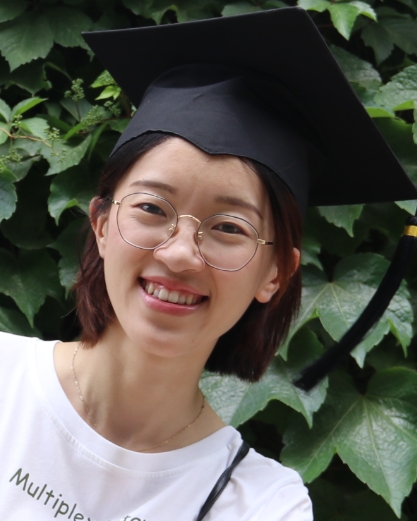 Peixia Li合作论文数SigmaLab, University of Sydney1
 Ruben Tolosana合作论文数1
 Litu Rout合作论文数Google DeepMind1Jurek Elliesen合作论文数1Asaki Kataoka合作论文数1Che Manqiang合作论文数1
 Pengcheng Fang合作论文数Johns Hopkins Bloomberg School of Public Health;Department of Computer and Data Sciences, Case Western Reserve University1
 Mohsen Saffari合作论文数1
 Mohamad Alansari合作论文数Khalifa University of Science and Technology1Haojie Zhao合作论文数1
 Seokeon Choi合作论文数On-Device Learning Team, Qualcomm AI Research1




