Objective To obtain preliminary data on the short- and intermediate-term effects of battlefield acupuncture (BFA) on self-reported pain intensity in a relatively large cohort of veterans to assess whether a more comprehensive clinical trial evaluation is warranted. Methods The treatment, in an outpatient group setting, consisted of up to five auricular semipermanent needles inserted into each ear at prespecified points. Efficacy of treatment was measured by self-reported pain, using the Defense and Veterans Pain Rating Scale, just before treatment and at posttreatment days 0, 1, 7, and 30. Results A total of 112 patients attended the group clinics. The mean pretreatment pain score was 6.8, with an immediate postprocedure decrease of 2.4 points. The proportion of patients reporting decreased pain was 88.4%, 80.7%, 52.4%, and 51% at posttreatment days 0, 1, 7, and 30, respectively. Conclusions The short- and intermediate-term beneficial effect of BFA on chronic pain is clinically meaningful. The large proportion of patients reporting decreased pain even 30 days after treatment suggests that the long-term effect of BFA merits further investigation.
Vascular endothelial growth factor-165 (VEGF165) regulates numerous cellular activities during angiogenesis, but its complex effects on vascular morphology are not highly quantified. By fractal-based, multiparametric branching analysis of vascular pattern, maximum increases in vessel density were stimulated at lower VEGF concentrations, but maximum increases in vessel diameter, leakage and activity of endothelial nitric oxide synthase (eNOS) were stimulated at higher VEGF concentrations. Following exogenous application of VEGF165 to the quail chorioallantoic membrane (CAM) for 24 h at embryonic day 7, vessel density and diameter were measured in arterial endpoints by the fractal dimension (Df) and generational branching parameters for vessel area density (Av), vessel length density (Lv) and vessel diameter (Dv) with the computer code VESGEN. The VEGF-induced switch from normal vessels of increased vessel density to abnormal, dilated vessels characteristic of tumor vasculature and other pathologies resulted from a threefold increase in VEGF concentration (1.25 to 5 μg/CAM). Activity of eNOS increased to 60% after 3 h at 5 μg VEGF/CAM compared to 10% at 1.25μg/CAM, correlating positively with the VEGF-dependent switch from increased vessel density to increased vessel diameter. Supported by NASA Glenn IRD04-54 & NCC3-622/782/912; NSF EEC-9529161; NIH GM-40711 & HL29582.
The benefits of a mouse model are efficiency and availability of transgenics/knockouts. Quantitation of cerebral blood in small animals is difficult because the cannulation procedure may introduce errors. The [14C]-iodoantipyrine autoradiography (IAP) method requires both the tissue concentration and the time course of arterial concentration of the [14C] radioactive tracer. A single point-analysis technique was evaluated for measuring blood flow in mice (30 g ± 0.3 g; n=11) by using computational models of sensitivity analysis, which quantitates relationships between the predictions of a model and its parameters. Using [14C]-IAP in conjunction with mathematical algorithms and assumed arterial concentration-versus-time profiles, cortical blood flow was deduced from single-point measurements of the arterial tracer concentration. The data showed the arterial concentration profile that produced the most realistic blood flows (1.6 ± 0.4; mean ± SD, ml/g/min) was a profile with a ramp time of 30 sec followed by a constant value over the remaining time period of 30 sec. Sensitivity analysis showed that the total experimental time period was a more important parameter than the lag period and the ramp period. Thus, it appears that the accuracy of the assumption of linearly increasing arterial concentration depends on the experimental time period and the final arterial [14C]-iodoantipyrine concentration.
An acute reduction in oxygen delivery to a tissue is associated with metabolic changes aimed at maintaining ATP homeostasis. However, given the complexity of the human bioenergetic system, it is difficult to determine quantitatively how cellular metabolic processes interact to maintain ATP homeostasis during stress (e.g., hypoxia, ischemia, and exercise). In particular, we are interested in determining mechanisms relating cellular oxygen concentration to observed metabolic responses at the cellular, tissue, organ, and whole body levels and in quantifying how changes in tissue oxygen availability affect the pathways of ATP synthesis and the metabolites that control these pathways.In this study, we extend a previously developed mathematical model of human bioenergetics, to provide a physicochemical framework that permits quantitative understanding of oxygen as a metabolic regulator. Specifically, the enhancement-sensitivity analysis-permits studying the effects of variations in tissue oxygenation and parameters controlling cellular respiration on glycolysis, lactate production, and pyruvate oxidation. The analysis can distinguish between parameters that must be determined accurately and those that require less precision, based on their effects on model predictions. This capability may prove to be important in optimizing experimental design, thus reducing use of animals.
Although all tissues in the body can adapt to varying physiological/pathological conditions, muscle is the most adaptable. To understand the significance of cellular events and their role in controlling metabolic adaptations in complex physiological systems, it is necessary to link cellular and system levels by means of mechanistic computational models. The main objective of this work is to improve understanding of the regulation of energy metabolism during skeletal/cardiac muscle ischemia by combining in vivo experiments and quantitative models of metabolism. Our main focus is to investigate factors affecting lactate metabolism (e.g., NADH/NAD) and the inter-regulation between carbohydrate and fatty acid metabolism during a reduction in regional blood flow. A mechanistic mathematical model of energy metabolism has been developed to link cellular metabolic processes and their control mechanisms to tissue (skeletal muscle) and organ (heart) physiological responses. We applied this model to simulate the relationship between tissue oxygenation, redox state, and lactate metabolism in skeletal muscle. The model was validated using human data from published occlusion studies. Currently, we are investigating the difference in the responses to sudden vs. gradual onset ischemia in swine by combining in vivo experimental studies with computational models of myocardial energy metabolism during normal and ischemic conditions.
 Marco E. Cabrera合作论文数4
 Gerald Saidel合作论文数Department of Biomedical Engineering, Case School of Engineering, School of Medicine, Case Western Reserve University;Center for Modeling Integrated Metabolic Systems, Case Western Reserve University2
 William C. Stanley合作论文数2R. Polimanti合作论文数1Danielle L. Magness合作论文数1Pe Dicorleto合作论文数1Y. Li合作论文数1Terri L. McKay合作论文数1Mary B. Vickerman合作论文数1
 Chalam Kakarla V合作论文数Dept Ophthalmol, Univ Florida1Satish Kalhan合作论文数Department of Gastroenterology, Cleveland Clinic Foundation, Lerner Research Institute;School of Medicine, Case Western Reserve University1Kravetz Jeffrey D合作论文数1Chandrasekharan Unni M合作论文数1
 Quan Chen合作论文数Hefei University of Technology, Hefei University of Technology1
 John Concato合作论文数Yale University School of Medicine1
 Qiongshi Lu合作论文数Department of Biostatistics & Medical Informatics, School of Medicine and Public Health, University of Wisconsin–Madison1
 Boyang Li合作论文数1
 Joel Gelernter合作论文数Department of Neuroscience, School of Medicine, Yale University;Division of Human Genetics, School of Medicine, Yale University1
 Ningling Sun (孙宁玲)合作论文数People's Hospital, Peking University1
 Kelly Cho合作论文数1
 Harrington Karra合作论文数The Florey Institute of Neuroscience and Mental Health, The University of Melbourne1Andrew G. Farr合作论文数1
 Murray Stein合作论文数Department of Psychiatry, School of Medicine, University of California San Diego1Maria B. Grant合作论文数1
 Hongyu Zhao (赵宏宇)合作论文数School of Public Health, Yale University1
 Nallakkandi Rajeevan合作论文数Department of Diagnostic;Yale University;School of Medicine;School of Medicine, Yale University1
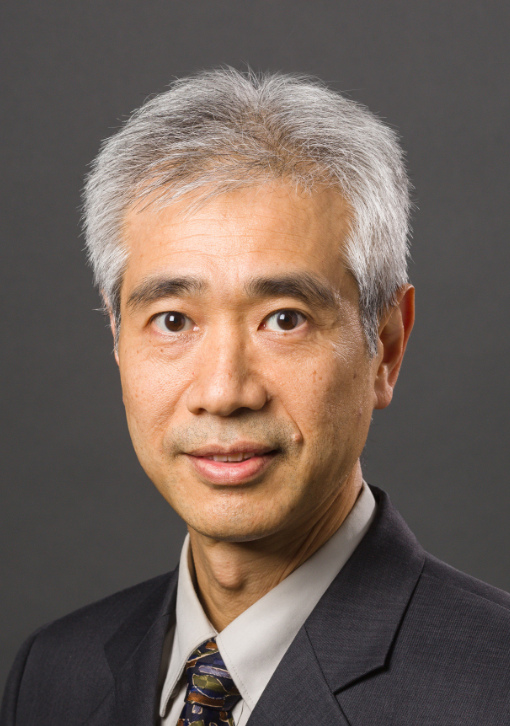 Kei-Hoi Cheung合作论文数Yale University1Kui Xu合作论文数1Mihaela Aslan合作论文数1Saiju Pyarajan合作论文数NYU Cancer Institute, New York University1
 Robert H. Pietrzak合作论文数Department of Psychology, University of Connecticut1Joseph C. Lamanna合作论文数1
 Michelle Puchowicz合作论文数The Department of Physiology and Biophysics, School of Medicine, Case Western Reserve University1
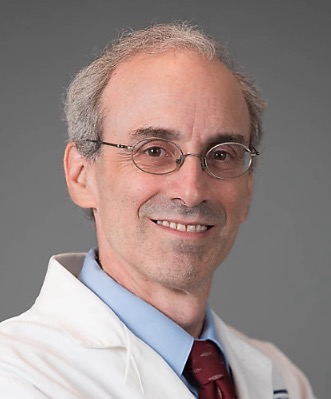 John Michael Gaziano合作论文数Division of Aging, Brigham and Women's Hospital;Harvard Medical School1Daniel G. Federman合作论文数1Patricia Parsons-Wingerter合作论文数1




