The usage of mobile phones has increased multifold in the recent decades mostly because of its utility in most of the aspects of daily life, such as communications, entertainment, and financial transactions. Feature phones are generally the keyboard based or lower version of touch based mobile phones, mostly targeted for efficient calling and messaging. In comparison to smart phones, feature phones have no provision of a biometrics system for the user access. The literature, have shown very less attempts in designing a biometrics system which could be most suitable to the low-cost feature phones. A biometric system utilizes the features and attributes based on the physiological or behavioral properties of the individual. In this research, we explore the usefulness of keystroke dynamics for feature phones which offers an efficient and versatile biometric framework. In our research, we have suggested an approach to incorporate the user’s typing patterns to enhance the security in the feature phone. We have applied k-nearest neighbors (k-NN) with fuzzy logic and achieved the equal error rate (EER) 1.88% to get the better accuracy. The experiments are performed with 25 users on Samsung On7 Pro C3590. On comparison, our proposed technique is competitive with almost all the other techniques available in the literature.
The use of mobile devices has increased many folds over the last few years. Smart phones are used not only for communication but also for storage of personal contents like photos, videos, documents, and bank account and credit/debit card details. Secure access to these contents is very important. Nowadays, many mobile devices come with inbuilt biometric-enabled security features like fingerprint, face recognition, and iris. However, additional battery power is consumed each time a user unlocks the device using any one of these security features. In order to enable prolonged use of the device, there is a strong need to find ways to conserve power in mobile devices. At the same time, it is also equally important that the smart phone user knows how long the battery of his device will last. In this paper, we present a novel power optimization and battery lifetime prediction framework called P4O ( P attern, P rofiling, P rediction, and P ower O ptimization). Our contributions are threefold—(i) Propose a novel framework for power optimization in smart phones. (ii) Propose a new approach for battery lifetime forecast. (iii) Implement and validate the efficacy of the proposed framework. For experimental results, the proposed framework was implemented on the Android-based smartphone. The experimental results validate the proposed framework with power optimization up to 40% over default Linux and Android power saving features available in an Android operating system. This framework is also able to forecast battery lifetime with accuracy of up to 98%.
. With increased adoption of smartphones, security has become important like never before. Smartphones store confidential information and carry out sensitive financial transactions. Biometric sensors such as fingerprint scanners are built in to smartphones to cater to security concerns. However, due to limited size of smartphone, miniaturised sensors are used to capture the biometric data from the user. Other hand based biometric modalities like hand veins and finger veins need specialised thermal/IR sensors which add to the overall cost of the system. In this paper, we introduce a new hand based biometric modality called Fistprint. Fistprints can be captured using digital camera available in any smartphone. In this work, our contributions are:i) we propose a new non-touch and non-invasive hand based biometric modality called fistprint. Fistprint contains many distinctive elements such as fist shape, fist size, fingers shape and size, knuckles, finger nails, palm crease/wrinkle lines etc. ii) Prepare fistprint DB for the first time. We collected fistprint information of twenty individuals - both males and females aged from 23 years to 45 years of age. Four images of each hand fist (total 160 images) were taken for this purpose. iii) Propose Fistprint Automatic Authentication SysTem (FAAST). iv) Implement FAAST system on Samsung Galaxy smartphone running Android and server side on a windows machine and validate the effectiveness of the proposed modality. The experimental results show the effectiveness of fistprint as a biometric with GAR of 97.5 % at 1.0% FAR.
The blockchain is a distributed network that records digital transactions on a publicly accessible ledger. This paper explores whether blockchain technology provides a suitable platform for the preservation of digital documents. This paper suggests that the hash functions provide a better technique for authentication and storage of documents. Compared to digital certificates, hashing provides better privacy and security. It does not involve the third party for authenticating and the problem of single point storage is eliminated due to distributed nature of blockchain network.
A design of equiangular spiral photonic crystal fiber (PCF) in As2Se3 chalcogenide glass is reported for mid-infrared supercontinuum generation. Supercontinuum covering the 1.2-15m molecular fingerprint region is achieved using only 8mm long designed PCF pumped with 50fs laser pulses of 500W peak power. The structural parameters have been tailored for all-normal dispersion characteristic. Proposed structure has high nonlinearity (=12474W(-1)km(-1)) at 3.5m with very low and flat dispersion -2.9[ps/(nmxkm)]. Supercontinuum with such broadening and high coherence degree is applicable for mid-infrared spectroscopy, gas sensing, early cancer diagnostics and free space communication.
This paper attempts to bring a new inventive and non-mainstream biometric development to the fore. A completely automated and unified approach to authenticate individuals using finger nail plate surface images has been proposed. There has not been any attempt in utilizing the texture and the contour information of the nail-plate for human authentication in literature. This has motivated us to explore the nail plate based identification for security applications and applying approaches that ascertain the best possible performance. The complex technique of Interferometry is perhaps the most widely used approach in the literature to carry out analysis on nail-bed which is the inner part of the nail unit. In this paper, we propose a very convenient and efficient method by acquiring low resolution images of nail plate surface which is the outermost part of the nail unit. The contour and texture characteristics of nail plates from three fingers are represented by the appearance and shape based feature descriptors. The paper presents two ways of integrating the nail-plate features from three fingers: (1) score level rules for fusion of matching scores and (2) the classifier based fusion of matching scores by employing decision tree and support vector machines. The experimental results from 180 users and a total of 2700 nail plate images validate the contributions from this paper.
This paper investigates the integration of two modalities: facial thermograms and ear, extracted from the same face, by using rank level fusion scheme. The first modality consists of the infrared thermal faces acquired using infrared camera whereas the second one constitutes point features on the ear imaged using ordinary digital camera. The acquired facial thermo grams and ear images are first normalized by locating ROI and then features are extracted using Haar wavelets and SHIFT (Scale Invariant Feature Transform) respectively. Integration of their associated ranks has been done by using the modified Borda count and logistic regression methods. The proposed authentication system is tested on 500 facial thermo grams and ear images and operates on 98% of genuine acceptance rates (GAR) at 0.1% of false acceptance rate (FAR). Although substantial work remains to be done, yet our results indicate that the rank level integration of facial thermo grams and ear images is poised to provide a promising direction to the face based multimodal biometric systems.
 Ajay Kumar合作论文数Department of Computing, Faculty of Engineering, The Hong Kong Polytechnic University14
 Feng Min合作论文数13
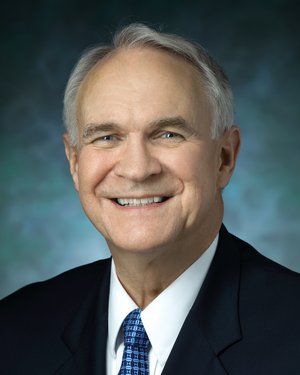 David L. Guyton合作论文数Department of Otolaryngology-Head and Neck Surgery, School of Medicine, Johns Hopkins University12
 Tanvir Singh Mundra合作论文数12Yung-hui Li合作论文数11
 Jinli Suo (索津莉)合作论文数Department of Automation, Tsinghua University11
 Marios Savvides合作论文数Department of Electrical & Computer Engineering, College of Engineering, Carnegie Mellon University;CyLab Biometrics Center, Carnegie Mellon University;UltronAI;Oosto;Bossa Nova Robotics;HawXeye Inc.11
 Song-Chun Zhu (朱松纯)合作论文数Institute for Artificial Intelligence, Peking University;Beijing Institute for General Artificial Intelligence;Department of Automation, Tsinghua University9
 Om Prakash Verma合作论文数2Nirmal Pandey合作论文数2
 Jeffrey Cohn合作论文数Robotics Institute, School of Computer Science, Carnegie Mellon University;Department of Psychology, University of Pittsburgh;Department of Psychiatry, University of Pittsburgh;Deliberate.ai2
 Kristina Irsch合作论文数2
 Madasu Hanmandlu合作论文数CSE Department, Maturi Venkata Subba Rao Engineering College2Saini, T.S.合作论文数1Amitabh Thapliyal合作论文数1
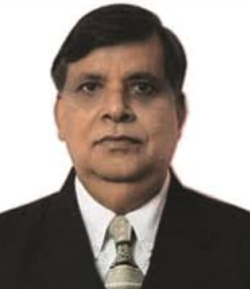 RK Sinha合作论文数Department of Applied Physics, Delhi Technological University1Shruti Garg合作论文数1
 Mourad Zghal合作论文数Cirta'Com Laboratory, Engineering School of Communication of Tunis (Sup'Com), Ghazala Technopark, Ariana 2083, Tunisia1
 Rim Cherif合作论文数Cirta'Com Laboratory, Engineering School of Communication of Tunis (Sup'Com), Ghazala Technopark, Ariana 2083, Tunisia1Shantaram Vasikarla合作论文数1




