Presentation attack detection (PAD) is a critical component in secure face authentication. We present a PAD algorithm to distinguish face spoofs generated by a photograph of a subject from live images. Our method uses an image decomposition network to extract albedo and normal. The domain gap between the real and spoof face images leads to easily identifiable differences, especially between the recovered albedo maps. We enhance this domain gap by retraining existing methods using supervised contrastive loss. We present empirical and theoretical analysis that demonstrates that contrast and lighting effects can play a significant role in PAD; these show up, particularly in the recovered albedo. Finally, we demonstrate that by combining all of these methods we achieve state-of-the-art results on both intra-dataset testing for CelebA-Spoof, OULU, CASIA-SURF datasets and inter-dataset setting on SiW, CASIA-MFSD, Replay-Attack and MSU-MFSD datasets.
In this paper, we introduce a novel technique called geometric sequence (GS) imaging, specifically for the purpose of low power and light weight tracking in human computer interface design. The imaging sensor is programmed to capture the scene with a train of packets, where each packet constitutes a few images. The delay or the baseline associated with consecutive image pairs in a packet follows a fixed ratio, as in a geometric sequence. The image pair with shorter baseline or delay captures fast motion, while the image pair with larger baseline or delay captures slow motion. Given an image packet, the motion confidence maps computed from the slow and the fast image pairs are fused into a single map. Next, we use a Bayesian update scheme to compute the motion hypotheses probability map, given the information of prior packets. We estimate the motion from this probability map. The GS imaging system reliably tracks slow movements as well as fast movements, a feature that is important in realizing applications such as a touchpad type system. Compared to continuous imaging with short delay between consecutive pairs, the GS imaging technique enjoys several advantages. The overall power consumption and the CPU load are significantly low. We present results in the domain of optical camera based human computer interface (HCI) applications, as well as for capacitive fingerprint imaging sensor based touch pad systems.
In this paper, we present a non parametric modeling for phase maps of interferometric SAR. Cosine and Sine projections maps are generated from the SAR phase map, and each of them are individually modeled by fitting 2D basis functions. The coefficients of these basis functions describe a "smoothed" version of the original phase map. Several applications can be derived from this noise filtered phase map: better phase unwrapping and SAR image compression are to of the applications that we will be discussing in the paper. The approach can be extended to other imaging domains that involve large maps of directional or phase data, such as modeling of phase MRI images, modeling of wind directions in meteorological data, etc.
In this article we have proposed an abstract representation for a sequence using a constant sized 3D matrix. Subsequently the representation may be utilized for many analytical purposes. We have attempted to use it for comparing sequences, and analyzed the method's asymptotic complexity. Providing a metric for sequence comparison is an underlying operation to many bioinformatics applications. In order to show the effectiveness of the proposed sequence comparison technique we have generated some phylogeny over two sets of bio-sequences and compared them with the ones available in literature. The results prove that our technique is comparable to the standard ones. The technique, called the correlogram-based method, is borrowed from the image analysis area. We have also done some experiments with synthetically generated sequences in order to compare correlogram-based method with the well-known dynamic programming method. Finally, we have discussed some other possibilities on how our method can be used or extended.
For applications such as behavior recognition it is important to maintain the identity of multiple targets, while tracking them in the presence of splits and merges, or occlusion of the targets by background obstacles. Here we propose an algorithm to handle multiple splits and merges of objects based on dynamic programming and a new geometric shape matching measure. We then cooperatively combine Kalman filter-based motion and shape tracking with the efficient and novel geometric shape matching algorithm. The system is fully automatic and requires no manual input of any kind for initialization of tracking. The target track initialization problem is formulated as computation of shortest paths in a directed and attributed graph using Dijkstra's shortest path algorithm. This scheme correctly initializes multiple target tracks for tracking even in the presence of clutter and segmentation errors which may occur in detecting a target. We present results on a large number of real world image sequences, where upto 17 objects have been tracked simultaneously in real-time, despite clutter, splits, and merges in measurements of objects. The complete tracking system including segmentation of moving objects works at 25 Hz on 352times288 pixel color image sequences on a 2.8-GHz Pentium-4 workstation
Video-based surveillance systems have a wide range of applications for traffic monitoring, as they provide more information as compared to other sensors. In this paper, we present a rule-based framework for behavior and activity detection in traffic videos obtained from stationary video cameras. Moving targets are segmented from the images and tracked in real time. These are classified into different categories using a novel Bayesian network approach, which makes use of image features and image-sequence-based tracking results for robust classification. Tracking and classification results are used in a programmed context to analyze behavior. For behavior recognition, two types of interactions have mainly been considered. One is interaction between two or more mobile targets in the field of view (FoV) of the camera. The other is interaction between targets and stationary objects in the environment. The framework is based on two types of a priori information: 1) the contextual information of the camera's FoV, in terms of the different stationary objects in the scene and 2) sets of predefined behavior scenarios, which need to be analyzed in different contexts. The system can recognize behavior from videos and give a lexical output of the detected behavior. It also is capable of handling uncertainties that arise due to errors in visual signal processing. We demonstrate successful behavior recognition results for pedestrian-vehicle interaction and vehicle-checkpost interactions.
This paper proposes a method for progressive lossy-to-lossless compression of four-dimensional (4-D) medical images (sequences of volumetric images over time) by using a combination of three-dimensional (3-D) integer wavelet transform (IWT) and 3-D motion compensation. A 3-D extension of the set-partitioning in hierarchical trees (SPIHT) algorithm is employed for coding the wavelet coefficients. To effectively exploit the redundancy between consecutive 3-D images, the concepts of key and residual frames from video coding is used. A fast 3-D cube matching algorithm is employed to do motion estimation. The key and the residual volumes are then coded using 3-D IWT and the modified 3-D SPIHT. The experimental results presented in this paper show that our proposed compression scheme achieves better lossy and lossless compression performance on 4-D medical images when compared with JPEG-2000 and volumetric compression based on 3-D SPIHT.
Developing a seamless merging of real and virtual image streams and 3D models is an active research topic in augmented reality (AR). We propose a method for real-time augmentation of real videos with 2D and 3D objects by addressing the occlusion issue in an unique fashion. For virtual planar objects (such as images), the 2D overlay is automatically overlaid in a planar region selected by the user in the video. The overlay is robust to arbitrary camera motion. Furthermore, a unique background-foreground segmentation algorithm renders this augmented overlay as part of the background if it coincides with foreground objects in the video stream, giving the impression that it is occluded by foreground objects. The proposed technique does not require multiple cameras, camera calibration, use of fiducials, or a structural model of the scene to work. Extending the work further, we propose a novel method of augmentation by using trifocal tensors to augment 3D objects in 3D scenes to similar effect and implement it in real time as a proof of concept. We show several results of the successful working of our algorithm in real-life situations. The technique works on a real-time video from a USB camera, Creative Webcam III, on a P IV 1.6 GHz system without any special hardware support.
This paper describes a real-time system for multi-target tracking and classification in image sequences from a single stationary camera. Several targets can be tracked simultaneously in spite of splits and merges amongst the foreground objects and presence of clutter in the segmentation results. In results we show tracking of upto 17 targets simultaneously. The algorithm combines Kalman filter-based motion and shape tracking with an efficient pattern matching algorithm. The latter facilitates the use of a dynamic programming strategy to efficiently solve the data association problem in presence of multiple splits and merges. The system is fully automatic and requires no manual input of any kind for initialization of tracking. The initialization for tracking is done using attributed graphs. The algorithm gives stable and noise free track initialization. The image based tracking results are used as inputs to a Bayesian network based classifier to classify the targets into different categories. After classification a simple 3D model for each class is used along with camera calibration to obtain 3D tracking results for the targets. We present results on a large number of real world image sequences, and accurate 3D tracking results compared with the readings from the speedometer of the vehicle. The complete tracking system including segmentation of moving targets works at about 25Hz for 352×288 resolution color images on a 2.8 GHz pentium-4 desktop.
Bimodal speech recognition is a novel extension of acoustic speech recognition for which both acoustic and visual speech information are used to improve the recognition accuracy in noisy environments. Although various bimodal speech systems have been developed, a rigorous and detailed comparison of the possible geometric visual features from speakers' faces has not been given yet in the previous papers. Thus, in this paper, the geometric visual features are compared and analyzed rigorously for their importance in bimodal speech recognition. The relevant information of each possible single visual feature is used to determine the best combination of geometric visual features for both visual-only and bimodal speech recognition. From the geometric visual features analyzed, lip vertical aperture is the most relevant; and the set formed by the vertical and horizontal lip apertures and the first order derivative of the lip corner angle gives the best results among the possibilities of reduced set of geometric features that were analyzed.Also, in this paper, the effect of the modelling parameters of hidden Markov models (HMM) on each single geometric lip feature's recognition accuracy is analyzed. Finally, the accuracy of acoustic-only, visual-only, and bimodal speech recognition methods are experimentally determined and compared using the optimized HMMs and geometric visual features. Compared to acoustic and visual-only speech recognition, the bimodal speech recognition scheme has a much improved recognition accuracy using the geometric visual features, especially in the presence of noise. The results obtained showed that a set of as few as three labial geometric features are sufficient to improve the recognition rate by as much as 20% (from 62%, with acoustic-only information, to 82%, with audio-visual information at a signal to noise ratio (SNR) of 0 dB). (C) 2004 Elsevier B.V. All rights reserved.
We present a functional data analysis (FDA) based method to statistically model continuous signs of the American Sign Language (ASL) for use in the recognition of signs in continuous sentences. We build models in the Space of Probability Functions (SoPF) that captures the evolution of the relationships among the low-level features (e.g. edge pixels) in each frame. The distribution (histogram) of the horizontal and vertical displacements between all pairs of edge pixels in an image frame forms the relational distributions. We represent these sequence of relational distributions, corresponding to the sequence of image frames in a sign, as a sequence of points in a multi-dimensional space, capturing the salient variations in these relational distributions over time; we call this space the SoPF. Each sign model consists of a mean sign function and covariance functions, capturing the variability of each sign in the training set. We use functional data analysis to arrive at this model. Recognition and sign localization is performed by correlating this statistical model with any given sentence. We also present a method to infer and learn sign models, in an unsupervised manner, from sentence samples containing the sign; there is no need for manual intervention.
 Jun Ohya合作论文数GITI, Waseda University8
 Santosh Ranganath合作论文数6
 Pankaj Kumar合作论文数6
 Kim Boyer合作论文数College of Engineering and Applied Sciences, University at Albany, State University of New York6
 Mustafa N. Kaynak合作论文数Arizona State University6
 Adrian David Cheok合作论文数Imagineering Institute;iUniversity Tokyo;Mixed Reality Lab6
 Chi Chung Ko合作论文数Department of Electrical and Computer Engineering, National University of Singapore5
 Sumit Gupta合作论文数Department of Computer Science and Engineering, MVGR College of Engineering4
 Zhi Qi (齐志)合作论文数School of Integrated Circuits, Southeast University4
 Ashraf A Kassim合作论文数Singapore University of Technology and Design;Department of Electrical & Computer Engineering, National University of Singapore4
 Prabir Burman合作论文数4
 Rajeev Sharma合作论文数3
 Chandratilak De Silva Liyanage合作论文数School of Digital Science, Universiti Brunei Darussalam3
 Weimin Huang (黄为民)合作论文数Department of Electrical and Computer Engineering, Faculty of Engineering and Applied Science, Memorial University3
 Kim L. Boyer合作论文数Department of Electrical and Computer Engineering, University at Albany3david m t ting合作论文数2
 Sylvain Chevalier合作论文数ARTEMIS project Unit, GET/INT2Vasudevan V. Vinod合作论文数2
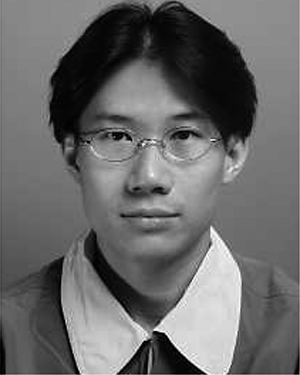 Hee Lin Wang合作论文数2Surendra Ranganath合作论文数1Sunita Nayak合作论文数1david kashtan合作论文数1james warren neil合作论文数1edward j gaudet合作论文数1Max Horowitz-Gelb合作论文数1maeellen gavin合作论文数1Bryan Galloway合作论文数1jason mafera合作论文数1joseph andrew tykowski合作论文数1
 Shlok Mishra合作论文数Department of Computer Science, University of Maryland;Google1
 Balaram Singh合作论文数1Ying Qiao合作论文数1Lee Philip合作论文数1P. Burman合作论文数1
 Sudeep Sarkar合作论文数Department of Computer Science and Engineering, University of South Florida1
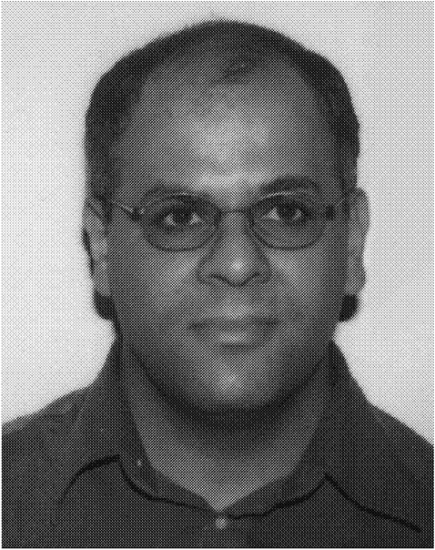 Michael Boshra合作论文数Center for Research in Intelligent Systems, University of California1
 Guoray Cai合作论文数Pennsylvania State University, University Park, PA1Zhang Jian合作论文数1
 Alan MacEachren合作论文数Department of Geography, College of Earth and Mineral Sciences, Pennsylvania State University1
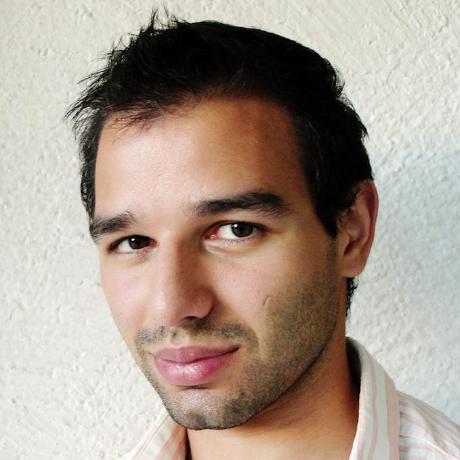 Sofien Bouaziz合作论文数Meta1
 Fatih Porikli合作论文数Qualcomm AI Research1
 Wen-Sheng Chu合作论文数Google1Dale R. Setlak合作论文数1
 Ingmar Rauschert合作论文数Department Computer Science and Engineering, Pennsylvania State University;Laboratory for Perception, Action and Cognition, Pennsylvania State University1
 Kay Chen Tan合作论文数Department of Data Science and Artificial Intelligence, Faculty of Computer and Mathematical Sciences, The Hong Kong Polytechnic University1Isaac Brewer合作论文数1
 Pingkun Yan (闫平昆)合作论文数Deep Imaging Analytics Lab, School of Engineering, Rensselaer Polytechnic Institute;Department of Biomedical Engineering, School of Engineering, Rensselaer Polytechnic Institute;Xi'an Institute of Optics and Precision Mechanics, Chinese Academy of Sciences1
 Ramanathan Subramanian合作论文数Faculty of Science & Technology, University of Canberra1




