The problem of eigenstructure assignment (eigenvalue and eigenvector assignment) plays an important role in control theory and applications. In this note, we introduce a new approach to eigenstruc- ture assignment using decentralized control. First, several analytical results are presented to characterize the set of decentralized controllers which achieve desired eigenvalue assignment. Then, a method is pro- posed to simultaneously assign eigenvalues and eigenvectors of a linear system using decentralized control. The method is applied to the control of a power system to illustrate its effectiveness.
This paper studies the convergence and properties of the solutions of the riccati difference equation. Special emphasis is given to systems which are not necessarily stabilizable, particularly those having roots on the unit circle. Besides generalizing and unifying previous work, the results have application to a number of important problems including filtering, modelling and control of systems with purely deterministic disturbances such as sinusoids.
This paper compares and contrasts the characteristics of the least squares parameter estimation algorithm applied to problems in filtering, prediction and control. We shall discuss the underlying assumptions, the specific form that the algorithm takes and comment on the similarities and differences in the analysis of convergence.
In adaptive control, 3 orders are relevant. These are the system order, model order and controller order. In much of control theory and identification, the system and model orders are assumed to be equal. However, in principle, it would be possible to independently assign the order of the system, model and controller. This paper discusses the rationale behind such an assignment and the resulting implications. A new result on adaptive control of non-mimimum phase systems will also be presented.
Necessary and sufficient conditions are given for the identifiability of open loop transfer functions for linear continuous time systems operating in closed loop. It is shown that provided certain structural properties are assumed, it is necessary and sufficient that the joint input-output spectral density be block diagonal when evaluated at infinity. With finite data, the spectral density cannot be exactly determined. However, it is shown in the paper, that the errors in the recovered open loop transfer functions will be small provided the estimated spectral density is approximately block diagonal when evaluated at infinity. This latter result leads to a practical test for identifiability of closed loop systems using finite data.
 Graham Goodwin合作论文数School of Electrical Engineering and Computing, University of Newcastle;School of Engineering, University of Newcastle;College of Engineering, Science and Environment, University of Newcastle8
 Siew Wah Chan合作论文数1
 Soura Dasgupta合作论文数Department of Electrical and Computer Engineering, University of Iowa;Department of Applied Mathematical and Computational Sciences, University of Iowa;College of Engineering, University of Iowa;Iowa Technology Institute, University of Iowa1Ioan Doré Landau合作论文数GR-Automatique Ensieg1
 Marimuthu Palaniswami合作论文数Department of Electrical and Electronic Engineering, Melbourne School of Engineering, University of Melbourne1
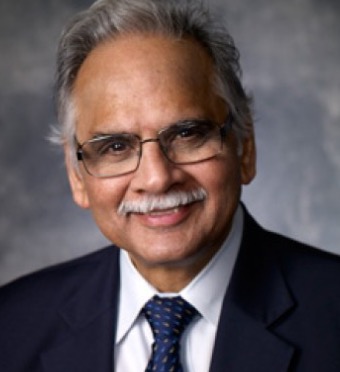 Mathukumalli Vidyasagar合作论文数Indian Institute of Technology, Hyderabad1Charles A. Desoer合作论文数1
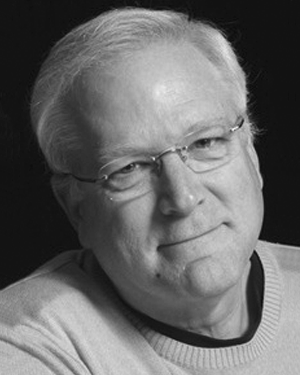 Charles E. Rohrs合作论文数Tellabs Research Center1




