We consider the class of interconnected non-linear dynamic systems suggested by the problem of longitudinal and lateral control of a platoon of vehicles on automated highways. After describing the physical setting from which the control problem arises, we propose a local indirect adaptive control scheme for this class of interconnected non-linear systems. Then, we establish that the proposed local adaptive control scheme is suitable for monotonically decreasing the magnitude of deviations of each dynamic system's state from its sink manifold provided that (a) the exogenous input is varying sufficiently slowly and (b) the parameter error is sufficiently small. As a consequence, these deviations are bounded with a bound independent of the number of subsystems in the interconnection.
The problem to be solved involves a highway automation project. The overall system consists of N vehicles (the platoon). Each vehicle is driven by the same input u and the state of the kth vehicle affects the dynamics of the (k+1)th vehicle. Furthermore, the dynamics of each vehicle is affected by its (local) state-feedback controller. Under very general conditions, it is shown that for sufficiently slowly varying inputs, decentralized controllers can be designed so that the platoon maintains its cohesion.< >
In this paper, we consider the problem of combined longitudinal and lateral control of a platoon of non-identical vehicles on a curved lane of a highway. Based on nonlinear models of vehicles' combined longitudinal and lateral dynamics, we propose nonlinear control laws for a platoon of vehicles accelerating on a curved lane of highway. The implementation issues regarding the needed sensors, estimators, guidance system, and communication link are discussed. Simulation results show that the proposed control laws perform well, for roads with suitably large radius of curvature, under nominal operation.
This paper presents a preliminary system study of a longitudinal control law for a platoon of nonidentical vehicles using a simplified nonlinear model for the vehicle dynamics. This study advances the art of automatic longitudinal control for a platoon of vehicles in the sense that it considers longer platoons composed of nonidentical vehicles; furthermore, the longitudinal control laws presented in this study take advantage of communication possibilities not available in the recent past. We assume that for i = 1, 2, . . . vehicle i knows at all times vl and al (the velocity and acceleration of the lead vehicle) in addition to the distance between vehicle i and the preceding vehicle, i − 1. A control law is developed and is tested on a simulation of a platoon of 16 vehicles where the lead vehicle increases its velocity at a rate of 3 m.s−2; it is shown that the distance between successive vehicles does not change by more than 0.12 m in spite of variations in the masses of the vehicles (from the nominal), of communication delay and of noise in measurements.
This chapter develops the main properties of the linear time-invariant representationR = [A B C D] when the matrix A is general.
This book is the result of our teaching over the years an undergraduate course on Linear Optimal Systems to applied mathematicians and a first-year graduate course on Linear Systems to engineers. The
 Frank M. Callier合作论文数19A. Nazli Gündes合作论文数11Kabuli, M.G.合作论文数5S. Sheikholeslam合作论文数5J. J. Anagnost合作论文数5
 Ernest S. Kuh (葛守仁)合作论文数Department of Electrical Engineering and Computer Sciences, University of California, Berkeley5C. A. Lin合作论文数4Gustafson, C.合作论文数4Chan, W.S.合作论文数4
 Amit Bhaya合作论文数Fudan University, Fudan University4
 Mathukumalli Vidyasagar合作论文数Indian Institute of Technology, Hyderabad4
 Lotfi A. Zadeh合作论文数Department of Electrical Engineering & Computer Sciences, University of California, Berkeley4W.S. Chan合作论文数3Shahab Sheikholeslam合作论文数3R. J. Minnichelli合作论文数3M. J. Chen合作论文数2
 S. Shankar Sastry合作论文数Department of Electrical Engineering and Computer Sciences, University of California, Berkeley;C3 Digital Transformation Institute;FHL Vive Center for Enhanced Reality;Richard C. Blum Center for Developing Economies2
 Leon O. Chua合作论文数Electrical Engineering and Computer Sciences Department, College of Engineering, University of California, Berkeley2
 Stephen P. Boyd (史提芬·博伊德)合作论文数Department of Electrical Engineering, School of Engineering, Stanford University;Institute for Computational and Mathematical Engineering, School of Engineering, Stanford University2McMahon, D.H.合作论文数1Mg Kabuli合作论文数1Y.T.Wang合作论文数1Ming-Jeh Chen合作论文数1Wing, J.合作论文数1Chen, M.J.合作论文数1Cheng, V.合作论文数1
 Pravin Varaiya合作论文数Department of Electrical Engineering and Computer Sciences, University of California, Berkeley1
 Yeheskel Bar Ness合作论文数New Jersey Institute of Technology1Roger W Brockett合作论文数1J. Wing合作论文数1
 Marimuthu Palaniswami合作论文数Department of Electrical and Electronic Engineering, Melbourne School of Engineering, University of Melbourne1
 Richard Saeks合作论文数1M.-Y. Wu合作论文数1
 Graham Goodwin合作论文数School of Electrical Engineering and Computing, University of Newcastle;School of Engineering, University of Newcastle;College of Engineering, Science and Environment, University of Newcastle1
 Nick Mckeown合作论文数Department of Computer Science, Stanford University;Department of Electrical Engineering, Stanford University1M.K Inan合作论文数1
 Steven E. Shladover合作论文数Institute of Transportation Studies, University of California, Berkeley1Kwai Sang Sin合作论文数1Alan S Willsky合作论文数Laboratory for Information and Decision Systems;Department of Electrical Engineering and Computer Science ;Massachusetts Institute of Technology;Computer Science and Artificial Intelligence Laboratory1R. F. Estrada合作论文数1F. L. Lam合作论文数1
 Masayoshi Tomizuka合作论文数Mechanical Systems Control Lab, Department of Mechanical Engineering, University of California, Berkeley1
 Jean Walrand合作论文数Berkeley Laboratory for Information and System Sciences, Department of Electrical Engineering and Computer Sciences, University of California, Berkeley;Ethernovia;Dhaani Systems, Inc1
 Shahram M. Shahruz合作论文数Berkeley Engineering Research Institute1
 Jeffrey A. Feinstein合作论文数Department of Pediatrics, Stanford University;Vera Moulton Wall Center for Pulmonary Vascular Disease, Stanford University Medical Center;Lucile Packard Children's Hospital, Stanford University1
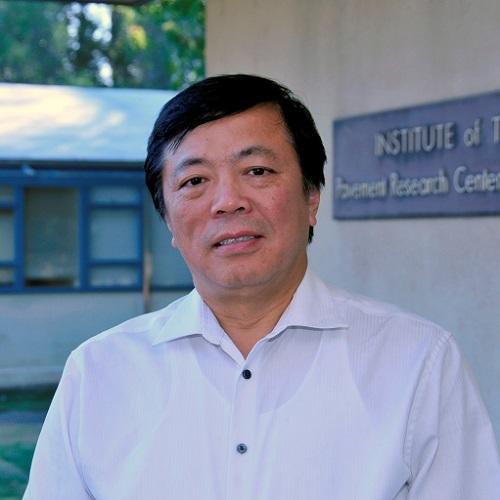 Wei-Bin Zhang合作论文数Institute of Transportation Studies, University of California, Berkeley1Chi-Tsong Chen合作论文数1GF OSTER合作论文数1




