Magnets with noncircular aperture are desired for fixed-field accelerators to accommodate horizontal orbit offset between beams of different energy. For muon colliders, an elliptic bore allows for concentration of radiation shielding on the midplane and combined-function fields in the same aperture are required in the arc magnets. In this article, we present the design of an Nb-Ti combined-function canted-cosine-theta (CCT) magnet with an elliptic aperture. We first review the basic principles to construct the CCT coil path for dipole and quadrupole fields on an elliptic surface. We conducted an optimization study considering windability and field quality, resulting in a magnet with short-sample current of 12.1kA at 4.2K, generating 4.38T dipole field and 31.6T/m quadrupole gradient. Finally, stress analysis with full 3-D models was carried out to ensure mechanical robustness.
Superconducting magnets enable energy-frontier accelerators by generating strong magnetic fields to steer and focus the particles. Although high-temperature superconductors such as REBa_{2}Cu_{3}O_{x} (rebco, RE = rare earth) hold a strong potential for generating a higher magnetic field than Nb-Ti and Nb_{3}Sn, the associated magnet and conductor technology for accelerator applications is still in its infancy. The U.S. Magnet Development Program is developing rebco magnet technology in collaboration with industry. Here we report an experiment of making a dipole magnet called C3 using commercial high-temperature superconducting corc® wires. The magnet, following a canted cosθ design, generated a dipole field of 5.99 T at 4.2 K in its clear aperture of 65 mm at 6.795 kA when a resistive voltage of 105 μV appeared across one of the coils in the magnet. The stored energy was 53 kJ at the peak field. The magnet showed no degradation in the current-carrying capability at 4.2 K after the thermal cycle. We report on the detailed design, fabrication, and performance of the C3 magnet that can be of interest to potential users of this emerging technology. We also discuss issues and research needs to inform future rebco magnet development. The experiment represented another step to addressing if the high-temperature superconducting accelerator magnet technology can increase the discovery capability of future particle accelerators.
REBCO coated conductors have a strong potential for high-field magnet applications. The rebco technology, however, is still in its infancy for accelerator magnet applications. As part of the U.S. Magnet Development Program, we developed a six-layer canted cos theta dipole magnet, C3a, using corc wires developed by Advanced Conductor Technologies LLC. All the layers were wound using a semiautomated winding machine. Three layers of the magnet used corc wires containing the SuperPower "AP" rebco tapes and the remaining layers used the wires containing the "HM" tapes. At 77 K, both kinds of corc wires showed 5% to 10% degradation, after bending to a minimum bend radius of 30 or 35 mm, with respect to the self-field critical current measured before winding. At 4.2 K, the magnet reached 9.5 kA at a ramp rate of 9 A s(-1) and generated a dipole field of 1.4 T. The critical current of one layer degraded by 4% after a current transient up to 10.5 kA ramped in an averaged rate of 175 kA s(-1) or 20 T s(-1). We confirmed the HM corc wire can carry a higher current than the AP corc wire at 4.2 K. The test results of the C3a magnet showed that the fabrication and assembly procedure can be used for the upcoming full-scale C3 magnet.
We present the initial design of the matching dipole B2PF, a large aperture cosine-theta magnet for the Electron-Ion Collider (EIC). First we share an optimized 2D magnet cross-section based on a double-layer design with Nb-Ti Rutherford cable. This cross-section is optimized to meet the required field quality in the 120 mm coil aperture both at the nominal operating current and considering iron saturation effects during the ramp. Next, we share a first design of the 3D coil ends optimized for windability, field quality, and minimizing the conductor peak field. Based on the resulting peak field, we evaluate the short-sample margin of the design for an operating target of 6.3 T dipole field at 1.9 K. Finally, we share an initial mechanical design study which utilizes a key-and-bladder support structure capable of adjusting magnet preload.
Magnets in the accelerator interaction region (IR) present significant challenges because of high field requirements and limited available space. Conical-shaped magnets offer advantages in these environments by allowing closer placement to the interaction point while maintaining clearance from synchrotron radiation. Interestingly, numerical studies have shown that conical canted-cosine-theta (CCT) designs produce a constant field distribution along the axial direction in the IR quadrupoles for the Electron-Ion Collider (EIC) at Brookhaven National Laboratory. However, the field harmonics generated by conical CCT windings are not yet fully understood. This paper presents an analytical approach to describe the magnetic field produced by a conical surface current and proposes a method for designing conical CCT magnets for accelerator applications. First, we begin with a surface current sheet having a general cosine-theta distribution in spherical coordinates and solve the vector potential using the Green’s function. The magnetic fields generated by the conical current sheet are expressed using associated Legendre polynomials. These results are then related to circular field harmonics and integral field harmonics for designing a coil that produces a pure multipole field. Next, a single layer of the conical CCT winding path is produced based on the cosine-theta current distribution. Finally, the magnetic field quality of dipole and quadrupole conical CCT coils with multiple layers is verified using the Biot-Savart law.
REBCO coated conductors have a strong potential for high-field magnet applications. The REBCO technology, however, is still in its infancy for accelerator magnet applications. As part of the U.S. Magnet Development Program (MDP), we developed a six-layer canted $\cos \theta$ dipole magnet, C3a, using CORC® wires developed by Advanced Conductor Technologies LLC. All the layers were wound using a semi-automated winding machine. Three layers of the magnet used CORC® wires containing the SuperPower “AP” REBCO tapes and the remaining layers used the wires containing the “HM” tapes. At 77 K, both kinds of CORC® wires showed 5% to 10% degradation, after bending to a minimum bend radius of 30 or 35 mm, with respect to the self-field critical current measured before winding. At 4.2 K, the magnet reached 9.5 kA at a ramp rate of 9 A s$^{-1}$ and generated a dipole field of 1.4 T. The critical current of one layer degraded by 4% after a current transient up to 10.5 kA ramped in an averaged rate of 175 kA s$^{-1}$ or 20 T s$^{-1}$. We confirmed the HM CORC® wire can carry a higher current than the AP CORC® wire at 4.2 K. The test results of the C3a magnet showed that the fabrication and assembly procedure can be used for the upcoming full-scale C3 magnet.
The US Physics community completed the Snowmass planning process in 2022, culminating in the HEPAP Particle Physics Project Prioritization Panel (P5) publishing its summary report at the end of 2023. Building on this, the US Magnet Development Program, a national accelerator magnet R D program established by DOE-OHEP in 2016, has updated its strategic plan to align with the 2023 P5 report, resulting in this roadmap document.
The Canted-Cosine-Theta (CCT) magnet is known for generating high-quality multipole fields using a continuous winding scheme on a cylindrical surface. In this work, we extend this concept to a conical surface, demonstrating that the distinctive properties of CCT magnets are preserved. The conical CCT dipole presents advantages in confined spaces or environments where multiple beams interact, such as at the interaction points (IP) of particle accelerators. The deployment of conical CCT magnets has the potential reducing the number of magnets along beam lines while still meeting optical specifications. We introduce a discrete winding scheme of line currents for a dipole on a conical surface and provide the magnetic field generated along its length.
Stress managed magnet designs allow to limit the strain and stresses applied to the conductor during assembly and operation. In canted cos(θ) (CCT) designs, the conductor is wound around a mandrel: the impregnation process creates a bonding between the two, that can fail during magnet powering. The energy releases due to debonding are considered a potential cause of training quenches. In this study, we investigate these events modeling the mandrel-conductor interfaces by means of cohesive zone material models. The material properties were calibrated by means of measurements performed on representative interfaces, and the models were validated comparing the results with strain gauge measurements. A thermal model was used to compute the local temperature increase in the strands as a function of the energy released by debonding and frictional sliding across the newly formed interfaces. The result was then used to define a quench condition for the model, allowing to simulate the full training process of the CCT magnet. The obtained training curve is in reasonable agreement with the experimental results.
Superconducting magnets with noncircular aperture are desired for accelerators and many other high-field applications. This paper presents new methods for the analytic design of elliptic bore superconducting accelerator magnets. Part 1 of this work shares the derivation of current to field relations between a sheet current density on an elliptic cylinder and the magnetic field harmonics inside the aperture. This result is explored in the general context of elliptic bore magnet design with relevant scaling laws compared between elliptic and circular bore magnets. In part 2, this approach is applied to the specific geometry of canted-cosine-theta (CCT) accelerator magnets, enabling analytic winding design for single or mixed circular harmonics within elliptic aperture CCT magnets.
DMRadio-m^3 is an experiment that is designed to be sensitive to KSVZ and DFSZ QCD axion models in the 10–200 MHz (41 neV/c^2 – 0.83 μeV/c^2) range. The experiment uses a solenoidal dc magnetic field to convert an axion dark-matter signal to an ac electromagnetic response in a coaxial copper pickup. The current induced by this axion signal is measured by dc SQUIDs. In this work, we present the electromagnetic modeling of the response of the experiment to an axion signal over the full frequency range of DMRadio-m^3, which extends from the low-frequency, lumped-element limit to a regime where the axion Compton wavelength is only a factor of two larger than the detector size. With these results, we determine the live time and sensitivity of the experiment. The primary science goal of sensitivity to DFSZ axions across 30–200 MHz can be achieved with a 3σ live scan time of 2.9 years.
Lawrence Berkeley National Laboratory is pursuing stress-managed Nb3Sn Canted-Cosine-Theta (CCT) magnet technology for high field accelerator magnets. Although promising results have been reported, improvements in the training performance are desired. This work describes the fabrication and testing campaigns of two subscale Nb3Sn CCT magnets; a baseline impregnated with National High Magnetic Field Laboratory Mix-61 and a magnet impregnated with paraffin wax. The paraffin magnet reached the short sample limit of the conductor, to within the measurement uncertainty, with no training quenches inside the magnet. In contrast, the baseline magnet reached 80% of the short sample limit after approximately 20 quenches and exhibits some loss of memory after thermal cycles. Inter-layer flexible quench antennas combined with voltage tap data show that all quenches appear identical and originate from a region corresponding to the location of peak field in the cable. Although this success should be replicated at higher fields, these first test results demonstrate the potential for training free Nb3Sn accelerator magnets operating near the short-sample limit.
Future collider accelerators will rely on high-temperature superconductors reaching high field up to 20 T and above. Among the existing high-temperature superconducting materials, the Rare-earth Barium Copper Oxide (ReBCO) tapes arranged according to the Conductor-on-Round-Core (CORC®) concept could be a viable solution to wound accelerator magnets such as Cosine Canted Theta (CCT) magnets. Dedicated experimental characterization of the critical current to quantify the degradation due to the winding process and operating conditions should proceed in parallel to the development of numerical models capable to reproduce and, in perspective, predict the cable performance. This paper presents the development of a new multi-physics model for a CORC® wound with ReBCO tapes together with its validation. The $T-A$ formulation has been used leveraging the high aspect ratio of tapes, suitably coupled with a conduction thermal model which for the first time properly accounts for the cable convective cooling. The model developed in this work can accurately simulate the thermal, electric and magnetic behaviors and the current sharing among tapes by using a set of self-consistent boundary conditions adopted for the first time in this kind of simulations. The model is verified and benchmarked against other well-established formulations on a set of test cases. The comparison of the computed $V-I$ characteristic of the straight cable to available experimental data shows that the main physics features of the cable are well captured by the model, including performance degradation due to cable tapering at the terminations.
Within the U.S. Magnet Development Program, LBNL is planning to fabricate and test hybrid magnets combining Nb3Sn and Bi-2212 canted-cosine theta (CCT) magnets. The first planned hybrid magnet test integrates a 1 m long, 90 mm bore Nb3Sn dipole magnet (CCT5), and a 39 cm long, 30.8 mm bore Bi-2212 dipole magnet (BIN5c), which are already fabricated and were tested individually. The second planned hybrid magnet test integrates a 1.5 m long, 120 mm bore Nb3Sn dipole magnet (CCT6), still under design, and a 1 m long, 40 mm bore Bi-2212 dipole magnet (BiCCT1), which is under fabrication. This work gives an update of the status of the Bi-2212 CCT magnet program, and focuses on the first hybrid magnet (CCT5/BIN5c). The electromagnetic and mechanical analysis of the CCT5/BIN5c hybrid magnet is presented, as well as the proposed mechanical assembly process. The quench protection strategy associated with the hybrid magnet test is also presented.
High-temperature superconducting REBa $_{2}$ Cu $_{3}$ O $_{7-x}$ ( rebco ) conductors have the potential to generate a high magnetic field over a broad temperature range. The corresponding accelerator magnet technology, still in its infancy, can be attractive for future energy-frontier particle colliders such as a multi-TeV muon collider. To help develop the technology, we explore the requirements and potential characteristics of a rebco magnet, operating at 4.2 or 20 K, with a dipole field of 8–10 T in a clear aperture of 150 mm. We use the canted $\cos \theta$ magnet configuration to reduce the electromagnetic stresses on the conductors. We present the resulting dipole fields, field gradients for combined-function cases, conductor stresses, magnet dimensions and conductor lengths. We also discuss the conductor performance that is required to achieve the target dipole field at 4.2 and 20 K. The information can provide useful input to the development of rebco magnet and conductor technology for collider-ring magnets in a muon collider.
The QCD axion is a leading dark matter candidate that emerges as part of the solution to the strong CP problem in the Standard Model. The coupling of the axion to photons is the most common experimental probe, but much parameter space remains unexplored. The coupling of the QCD axion to the Standard Model scales linearly with the axion mass; therefore, the highly-motivated region 0.4-120 neV, corresponding to a GUT-scale axion, is particularly difficult to reach. This paper presents the design requirements for a definitive search for GUT-scale axions and reviews the technological advances needed to enable this program.
After a summary of relevant comments and recommendations from various reports over the last ten years, this paper examines the modeling needs in accelerator physics, from the modeling of single beams and individual accelerator elements, to the realization of virtual twins that replicate all the complexity to model a particle accelerator complex as accurately as possible. We then discuss cutting-edge and emerging computing opportunities, such as advanced algorithms, AI/ML and quantum computing, computational needs in hardware, software performance, portability and scalability, and needs for scalable I/O and in-situ analysis. Considerations of reliability, long-term sustainability, user support and training are considered next, before discussing the benefits of ecosystems with integrated workflows based on standardized input and output, and with integrated frameworks and data repositories developed as a community. Last, we highlight how the community can work more collaboratively and efficiently through the development of consortia and centers, and via collaboration with industry.
As part of the US Magnet Development Program, Lawrence Berkeley National Laboratory (LBNL) is working on the development of high field stress-managed Nb$_{3}$Sn dipole magnets using canted-cosine-theta (CCT) technology. As part of this program, a series of two layer magnets, CCT3/4/5, with short sample bore field of approximately 10 T and a 90 mm diameter open aperture have been designed, fabricated, and tested. The first magnet in the series, CCT3, was limited to less than 70% of the short sample current, this limitation is believed to be due to conductor damage. The second magnet in the series, CCT4, reached 86% of the short sample current, after changes to the groove geometry were made to accommodate dimensional changes in the cable during heat treatment. The third and final magnet of this series, CCT5, reached 88% of the short sample current with improved training relative to CCT4, after changes were made to the impregnation and assembly methods. While this two layer series was used to successfully demonstrate Nb$_{3}$Sn CCT magnet technology, improvements in the training behavior of these magnets is desirable. For this purpose, a subscale program has been devised in order to probe the causes and explore reductions / improvements to training in stress-managed magnet technology. The subscale nature of the magnets allows for faster turnaround in the fabrication and testing process. In this paper, we present the design and test results for the first (baseline) subscale Nb$_{3}$Sn CCT magnet and demonstrate that the subscale platform and the larger two-layer magnets produce similar training results.
The most effective way to achieve very high collision energies in a circular particle accelerator is to maximize the field strength of the main bending dipoles. In dipole magnets using Nb-Ti superconductor the practical field limit is considered to be 8-9 T. When Nb3Sn superconductor material is utilized, a field level of 15-16 T can be achieved. To further push the magnetic field beyond the Nb3Sn limits, High Temperature Superconductors (HTS) need to be considered in the magnet design. The most promising HTS materials for particle accelerator magnets are Bi2212 and REBCO. However, their outstanding performance comes with a significantly higher cost. Therefore, an economically viable option towards 20 T dipole magnets could consist in an hybrid solution, where both HTS and Nb3Sn materials are used. We discuss in this paper preliminary conceptual designs of various 20 T hybrid magnet concepts. After the definition of the overall design criteria, the coil dimensions and parameters are investigated with finite element models based on simple sector coils. Preliminary 2D cross-section computation results are then presented and three main layouts compared: cos-theta, block, and common-coil. Both traditional designs and more advanced stress-management options are considered.
 Soren Prestemon合作论文数Accelerator Technology and Applied Physics Division, Lawrence Berkeley National Laboratory39
 S. Caspi合作论文数35Diego Arbelaez合作论文数Department of Mechanical Engineering, University of California25
 Paolo Ferracin合作论文数LHC Division, CERN21Tengming Shen合作论文数Nat. High Magn. Field Lab., Florida State Univ.;c;Nat. High Magn. Field Lab., Florida State Univ.20
 Reed Teyber合作论文数Lawrence Berkeley Natl Lab17
 Maxim Marchevsky合作论文数Accelerator Technology & Applied Physics Division, Lawrence Berkeley National Laboratory15
 Stephen A. Gourlay合作论文数Lawrence Berkeley National Laboratory15Jose Luis Rudeiros Fernandez合作论文数Lawrence Berkeley National Laboratory14
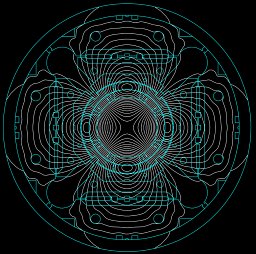 Giorgio Vallone合作论文数Lawrence Berkeley National Laboratory13
 Xiaorong Wang合作论文数Applied Superconductivity Laboratory, Southwest Jiaotong University13
 Laura Garcia Fajardo合作论文数Lawrence Berkeley National Laboratory11Ian Pong合作论文数11
 Marcos Turqueti合作论文数Fermi National Laboratory10Bernhard Auchmann合作论文数10r hafalia合作论文数9Mariusz Juchno合作论文数CERN;c;CERN9Rochepault, E.合作论文数Lawrence Berkeley Nat. Lab.;c7
 Arno Godeke合作论文数Department of Applied Physics, University of Twente7Helene Felice合作论文数7A. Hafalia合作论文数6Ji Qiang (强洁)合作论文数6
 Weishi Wan (万唯实)合作论文数School of Physical Science and Technology, ShanghaiTech University5
 Myers Clayton E合作论文数Princeton Plasma Phys Lab, Princeton, NJ 08540 USA5
 Alexander Zlobin合作论文数Fermi National Accelerator Laboratory5
 Emanuela Barzi合作论文数Technical Division, Fermi National Accelerator Laboratory5J. Swanson合作论文数5Daniel R. Dietderich合作论文数5
 Dmytro Abraimov合作论文数Physikalisches Institut III;Universität Erlangen-Nürnberg;Physikalisches Institut III, Universität Erlangen-Nürnberg5William Ghiorso合作论文数4D. Dietderich合作论文数4K. Wells合作论文数4M. Simanovskaia合作论文数4C. P. Salemi合作论文数4K. M. W. Pappas合作论文数4F. Kadribasic合作论文数4J. Corbin合作论文数4Aurelio Hafalia合作论文数4
 Elizabeth C. van Assendelft合作论文数4Igor Novitski合作论文数4A. Droster合作论文数Department of Nuclear Engineering, University of California4
 Stephen E. Kuenstner合作论文数Stanford University4
 N. M. Rapidis合作论文数Dept Phys, Stanford Univ4J. W. Foster合作论文数4A. Leder合作论文数Dept Nucl Engn, Univ Calif Berkeley4J. L. Ouellet合作论文数4
 a phipps合作论文数Department of Physics, University of California4A. Keller合作论文数4
 J. T. Fry合作论文数4




