The search for life beyond Earth necessitates a rigorous and comprehensive examination of biosignatures, the types of observable imprints that life produces. These imprints and our ability to detect them with advanced instrumentation hold the key to our understanding of the presence and abundance of life in the universe. Biosignatures are the chemical or physical features associated with past or present life and may include the distribution of elements and molecules, alone or in combination, as well as changes in structural components or physical processes that would be distinct from an abiotic background. The scientific and technical strategies used to search for life on other planets include those that can be conducted in situ to planetary bodies and those that could be observed remotely. This chapter discusses numerous strategies that can be employed to look for biosignatures directly on other planetary bodies using robotic exploration including those that have been deployed to other planetary bodies, are currently being developed for flight, or will become a critical technology on future missions. Search strategies for remote observations using current and planned ground-based and space-based telescopes are also described. Evidence from spectral absorption, emission, or transmission features can be used to search for remote biosignatures and technosignatures. Improving our understanding of biosignatures, their production, transformation, and preservation on Earth can enhance our search efforts to detect life on other planets.
The Astrobiology Primer 3.0 (ABP3.0) is a concise introduction to the field of astrobiology for students and others who are new to the field of astrobiology. It provides an entry into the broader materials in this supplementary issue of Astrobiology and an overview of the investigations and driving hypotheses that make up this interdisciplinary field. The content of this chapter was adapted from the other 10 articles in this supplementary issue and thus represents the contribution of all the authors who worked on these introductory articles. The content of this chapter is not exhaustive and represents the topics that the authors found to be the most important and compelling in a dynamic and changing field.
We set up two open-science machine learning (ML) challenges focusing on building models to automatically analyse mass spectrometry (MS) data for Mars exploration. ML challenges provide an excellent way to engage a diverse set of experts with benchmark training data, explore a wide range of ML and data science approaches, and identify promising models based on empirical results, as well as to get independent external analyses to compare with those of the internal team. These two challenges were proof-of-concept projects to analyse the feasibility of combining data collected from different instruments in a single ML application. We selected MS data from (1) commercial instruments and (2) the Sample Analysis at Mars (an instrument suite that includes a mass spectrometer subsystem onboard the Curiosity rover) testbed. These challenges, organized with DrivenData, gathered more than 1150 unique participants from all over the world, and obtained more than 600 solutions contributing powerful models to the analysis of rock and soil samples relevant to planetary science using various MS data sets. These two challenges demonstrated the suitability and value of multiple ML approaches to classifying planetary analogue data sets from both commercial and flight-like instruments. We present the processes from the problem identification, challenge set-ups, and challenge results that gathered creative and diverse solutions from worldwide participants, in some cases with no backgrounds in MS. We also present the potential and limitations of these solutions for ML application in future planetary missions. Our longer term goal is to deploy these powerful methods onboard the spacecraft to autonomously guide space operations and reduce ground-in-the-loop reliance.
While Earth contains the only known example of life in the universe, it is possible that life elsewhere is fundamentally different from what we are familiar with. There is an increased recognition in the astrobiology community that the search for life should steer away from terran-specific biosignatures to those that are more inclusive to all life-forms. To start exploring the space of possibilities that life could occupy, we can try to dissociate life from the chemistry that composes it on Earth by envisioning how different life elsewhere could be in composition, lifestyle, medium, and form, and by exploring how the general principles that govern living systems on Earth might be found in different forms and environments across the Solar System. Exotic life-forms could exist on Mars or Venus, or icy moons like Europa and Enceladus, or even as a shadow biosphere on Earth. New perspectives on agnostic biosignature detection have also begun to emerge, allowing for a broader and more inclusive approach to seeking exotic life with unknown chemistry that is distinct from life as we know it on Earth.
Studies of psychrophilic life on Earth provide chemical clues as to how extraterrestrial life could maintain viability in cryogenic environments. If living systems in ocean worlds (e.g., Enceladus) share a similar set of 3-mer and 4-mer peptides to the psychrophile Colwellia psychrerythraea on Earth, spaceflight technologies and analytical methods need to be developed to detect and sequence these putative biosignatures. We demonstrate that laser desorption mass spectrometry, as implemented by the CORALS spaceflight prototype instrument, enables the detection of protonated peptides, their dimers, and metal adducts. The addition of silicon nanoparticles promotes the ionization efficiency, improves mass resolving power and mass accuracies via reduction of metastable decay, and facilitates peptide de novo sequencing. The CORALS instrument, which integrates a pulsed UV laser source and an Orbitrap™ mass analyzer capable of ultrahigh mass resolving powers and mass accuracies, represents an emerging technology for planetary exploration and a pathfinder for advanced technique development for astrobiological objectives. Teaser: Current spaceflight prototype instrument proposed to visit ocean worlds can detect and sequence peptides that are found enriched in at least one strain of microbe surviving in subzero icy brines via silicon nanoparticle-assisted laser desorption analysis.
Astrobiology missions to ocean worlds in our solar system must overcome both scientific and technological challenges due to extreme temperature and radiation conditions, long communication times, and limited bandwidth. While such tools could not replace ground-based analysis by science and engineering teams, machine learning algorithms could enhance the science return of these missions through development of autonomous science capabilities. Examples of science autonomy include onboard data analysis and subsequent instrument optimization, data prioritization (for transmission), and real-time decision-making based on data analysis. Similar advances could be made to develop streamlined data processing software for rapid ground-based analyses. Here we discuss several ways machine learning and autonomy could be used for astrobiology missions, including landing site selection, prioritization and targeting of samples, classification of "features" (e.g., proposed biosignatures) and novelties (uncharacterized, "new" features, which may be of most interest to agnostic astrobiological investigations), and data transmission.
16 Impossible Sensing Motivation for
For the past fifty years of space exploration, mass spectrometry has provided unique chemical and physical insights on the characteristics of other planetary bodies in the Solar System. A variety of mass spectrometer types, including magnetic sector, quadrupole, time-of-flight, and ion trap, have and will continue to deepen our understanding of the formation and evolution of exploration targets like the surfaces and atmospheres of planets and their moons. An important impetus for the continuing exploration of Mars, Europa, Enceladus, Titan, and Venus involves assessing the habitability of solar system bodies and, ultimately, the search for life-a monumental effort that can be advanced by mass spectrometry. Modern flight-capable mass spectrometers, in combination with various sample processing, separation, and ionization techniques enable sensitive detection of chemical biosignatures. While our canonical knowledge of biosignatures is rooted in Terran-based examples, agnostic approaches in astrobiology can cast a wider net, to search for signs of life that may not be based on Terran-like biochemistry. Here, we delve into the search for extraterrestrial chemical and morphological biosignatures and examine several possible approaches to agnostic life detection using mass spectrometry. We discuss how future missions can help ensure that our search strategies are inclusive of unfamiliar life forms.
In the search for life beyond Earth, distinguishing the living from the non-living is paramount. However, this distinction is often elusive, as the origin of life is likely a stepwise evolutionary process, not a singular event. Regardless of the favored origin of life model, an inherent “grayness” blurs the theorized threshold defining life. Here, we explore the ambiguities between the biotic and the abiotic at the origin of life. The role of grayness extends into later transitions as well. By recognizing the limitations posed by grayness, life detection researchers will be better able to develop methods sensitive to prebiotic chemical systems and life with alternative biochemistries.
Located in a closed basin in the McMurdo Dry Valleys, East Antarctica, Lake Vida brine is a cold (-13 degrees C), hypersaline, interstitial, anoxic, and aphotic ecosystem trapped within 27+ m of ice. This brine is not in contact with the atmosphere, and currently hosts a slow-growing, cold-limited bacteria-dominated ecosystem that have persisted for at least similar to 2800 years. Anal-ysis of the dichloromethane extractable fraction of dissolved organic matter of Lake Vida brine revealed the presence of seven novel organic sulfones, tentatively identified on the basis of mass spectral fragmentation, as well as eight sulfones that have been structurally described in previous chemistry studies. A total of fifteen organic sulfones, and others that have yet to be identified, were observed in Lake Vida brine, most of which have never been previously detected in any other natural ecosystems. Results suggest that these compounds may be derived from a lake system in which a dissolved organic carbon pool may have been oxidized in lake waters in contact with the atmosphere. Alternative hypotheses on the origin of these sulfones, involving potential abiotic alterations of dissolved organic sulfur as a consequence of long-term brine-rock reactions that generated reactive oxygen species, are also considered. Understanding the origin and formation mechanisms of these organic sulfones may reveal an important pathway that influence the dissolved organic sulfur constituent, not only of Antarctic aquatic systems, but also potentially the global marine environment, as well as extraterrestrial hypersaline, subzero habitats. (C) 2020 Elsevier Ltd. All rights reserved.
This white paper argues for a more universal approach to life detection. We recommend that life detection missions focus on looking for signatures of life deemed to be shared by all possible types of life, independent of their specific biochemistries, rather than looking for signatures of life that could arguably be specific to Terran-life.
On November 5-8, 2019, the "Mars Extant Life: What's Next?" conference was convened in Carlsbad, New Mexico. The conference gathered a community of actively publishing experts in disciplines related to habitability and astrobiology. Primary conclusions are as follows: A significant subset of conference attendees concluded that there is a realistic possibility that Mars hosts indigenous microbial life. A powerful theme that permeated the conference is that the key to the search for martian extant life lies in identifying and exploring refugia ("oases"), where conditions are either permanently or episodically significantly more hospitable than average. Based on our existing knowledge of Mars, conference participants highlighted four potential martian refugium (not listed in priority order): Caves, Deep Subsurface, Ices, and Salts. The conference group did not attempt to reach a consensus prioritization of these candidate environments, but instead felt that a defensible prioritization would require a future competitive process. Within the context of these candidate environments, we identified a variety of geological search strategies that could narrow the search space. Additionally, we summarized a number of measurement techniques that could be used to detect evidence of extant life (if present). Again, it was not within the scope of the conference to prioritize these measurement techniques-that is best left for the competitive process. We specifically note that the number and sensitivity of detection methods that could be implemented if samples were returned to Earth greatly exceed the methodologies that could be used at Mars. Finally, important lessons to guide extant life search processes can be derived both from experiments carried out in terrestrial laboratories and analog field sites and from theoretical modeling.
Plain Language SummaryMiller et al. [2015, https://doi.org/10.1002/2015JE004825] described the result of experiments testing the potential of Tenax TA, a polymer used on Sample Analysis at Mars (SAM), as a source of chlorinated benzene. Miller et al. [2015] conclude that the amount of chlorobenzene produced is low and that Tenax TA cannot be the source of the chlorobenzene observed on Mars by SAM. Miller et al. [2015] did not provide the identification of two unknown compounds produced during these pyrolysis experiments, though their abundance is orders of magnitude higher than that of chlorobenzene. Here, we tentatively identify these compounds based on the mass spectra provided by Miller et al. [2015], the most abundant of which is a chlorinated monomer of Tenax TA. This chlorinated monomer is likely to accumulate in the hydrocarbon Tenax trap and in the transfer line between the trap and the mass spectrometer. Further breakdown of these compounds could lead the high background of chlorobenzene observed on Mars.
Lake Vida, located in a closed basin in the McMurdo Dry Valleys, East Antarctica, permanently encapsulates an interstitial anoxic, aphotic, cold (-13 degrees C), brine ecosystem within 27+ m of ice. Metabolically active, but cold-limited, slow-growing bacteria were detected in the brine. Lake Vida brine is derived from the evaporation of a body of water that occupied the same basin prior to similar to 2800 years ago. The characteristics of this body of water changed over time and, at one point, likely resembled other modern well-studied perennial ice-covered lakes of the Dry Valleys. We characterized the dichloromethane-extractable fraction of the environmental metabolome of Lake Vida brine in order to constrain current and ancient biogeochemical processes. Analysis of the dichloromethane-extract of Lake Vida brine by gas chromatography-mass spectrometry and comprehensive multidimensional gas chromatography-time of flight-mass spectrometry reveals the presence of legacy compounds (i.e. diagenetic products of chlorophylls and carotenoids) deriving from photosynthetic algae and anaerobic, anoxygenic photosynthetic bacteria. This legacy component dilutes the environmental signal of metabolites deriving from the extant bacterial community. The persistence of legacy metabolites (paleometabolites), apparent in Lake Vida brine, is a result of the slow turnover rates of the extant bacterial population due to low metabolic activities caused by the cold limitation. Such paleometabolites may also be preserved in other cold-limited or nutrient-depleted slow-growing ecosystems. When analyzing ecosystems with low metabolic rates, the presence of legacy metabolites must first be addressed in order to confidently recognize and interpret the environmental metabolome of the extant ecosystem. (C) 2018 Elsevier Ltd. All rights reserved.
 Natalie Grefenstette合作论文数Santa Fe Inst9
 Heather Graham合作论文数NASA, Goddard Space Flight Ctr, Greenbelt, MD USA6
 F. Kenig合作论文数University of Illinois at Chicago;Earth and Environmental Sciences;Earth and Environmental Sciences, University of Illinois at Chicago6
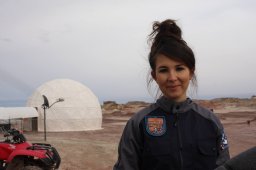 Victoria Da-Poian合作论文数NASA Goddard Space Flight Center5
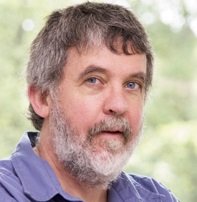 Paul R Mahaffy合作论文数Solar System Exploration Division, NASA Goddard Space Flight Center5Christopher P. Kempes合作论文数4Sarah Stewart Johnson合作论文数Department of Earth, Atmospheric, and Planetary Sciences, Massachusetts Institute of Technology4
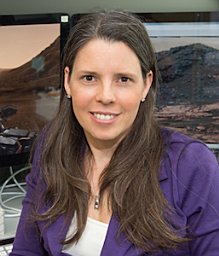 Jennifer L Eigenbrode合作论文数Planetary Environments Laboratory, Solar System Exploration Division, Goddard Space Flight Center, NASA4
 Christian H. Fritsen合作论文数Division of Earth and Ecosystem Sciences, Desert Research Institute4
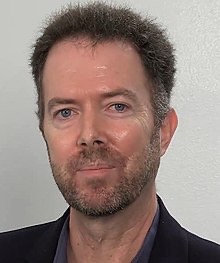 Peter Doran合作论文数Department of Geology & Geophysics, College of Science, Louisiana State University4
 Alison E Murray合作论文数Desert Research Institute4Kimberly R. Trent合作论文数3
 Maxime Rizzo合作论文数3Kathryn Steakley合作论文数3
 J. D. Tarnas合作论文数NASA Jet Propulsion Laboratory, California Institute of Technology3
 matthew marcus合作论文数College Pk, Univ Maryland3
 Bethany Theiling合作论文数Goddard Space Flight Center3Shawn Brueshaber合作论文数3
 Neveu Marc合作论文数School of Earth and Space Exploration, Arizona State University3
 Barbara Sherwood Lollar合作论文数Department of Earth Sciences, University of Toronto;Institut de Physique du Globe de Paris, Université Paris Cité;Department of Chemical Engineering and Applied Chemistry, University of Toronto3
 Siegfried Eggl合作论文数Department of Aerospace Engineering, The Grainger College of Engineering, University of Illinois at Urbana-Champaign3
 Ricardo Arevalo Jr.合作论文数Department of Geology, College of Computer, Mathematical, and Natural Sciences, University of Maryland3
 William B Brinckerhoff合作论文数NASA Goddard Space Flight Center3C. J. Budney合作论文数2Amber V. Young合作论文数2Jordan McKaig合作论文数2Jennifer G. Blank合作论文数2
 Pritvik Sinhadc合作论文数2Kamil B. Stelmach合作论文数2eric lyness合作论文数2
 Chinmayee Govinda Raj合作论文数Georgia Institute of Technology2
 Tristan Caro合作论文数Department of Geological Sciences, University of Colorado Boulder2
 Kaizad V. Raimalwala合作论文数Mission Control Space Serv2Monica Vidaurri合作论文数Dept Phys & Astron, Howard Univ2
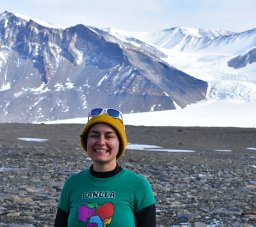 Schuyler Borges合作论文数Northern Arizona University2
 Ziqin Ni合作论文数2
 Lena Vincent合作论文数Wisconsin Inst Discovery, Univ Wisconsin2
 Kevin D. Webster合作论文数Emergency Med, Univ Arizona2Stephanie M. Colón-Santos合作论文数2
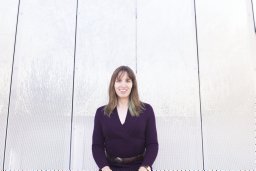 Theresa Mason Fisher合作论文数Sch Earth & Space Explorat, Arizona State Univ2
 John J Blalock合作论文数2
 Stamenković Vlada合作论文数Space Biology Institute, ETHZ2
 Chester E. Harman合作论文数Department of Geosciences, Pennsylvania State University2
 G. Matthew Fricke合作论文数University of New Mexico2
 Gareth Trubl合作论文数2
 Enrico Catalano合作论文数Laboratory of Biomedical Materials, University of Piemonte Orientale "A. Avogadro", Via Solaroli 17, 28100, Novara, NO, Italy.;Laboratory of Biomedical Materials, University of Piemonte Orientale "A. Avogadro"2
 Shiladitya Dassarma合作论文数Center of Marine Biotechnology;University of Maryland Biotechnology Institute;Biotechnology Institute, University of Maryland2
 Andrew Ellington合作论文数Center for Systems and Synthetic Biology, University of Texas at Austin;Department of Molecular Biosciences, University of Texas at Austin;Department of Integrative Biology, College of Natural Sciences, University of Texas at Austin2
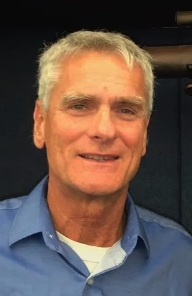 Chris McKay合作论文数NASA Ames Research Center2




