Very few studies have quantified the wave friction factor, fw, for coarse sediments at field-scale. To address this shortcoming, high-frequency measurements of turbulence obtained within the boundary layer of irregular waves over gravel in the Delta Flume, have been used to calculate values of fw using different evaluation methods. In the field-scale laboratory experiments reported here, three velocimeters were deployed on the seaward side of a 4m-high, 5m-wide and 55m-long gravel barrier subject to a JONSWAP spectrum of waves with significant wave heights ranging from 0.8m to 1.3m, and peak periods of 3.0s to 10s and offshore water depths ranging from 1.75m to 3.75m. The deployment area was essentially flat, with little or no predicted or observed sediment movement under the wave conditions investigated. The turbulent kinetic energy method was found to be the most suitable approach for calculating the bed shear stress, which can be related to fw. Wave friction factor values under the conditions tested here fell in the range 0.01 and 0.27. Although fw predicted by an existing equation agrees well with the mean measured fw value, the application of a new predictor for fw is recommended for improved parameterisation of skin friction over the range of relative roughness values encountered in this study. This approach combines the wave Reynolds number, wave steepness and relative depth to provide a simple expression to assist assessments of coarse sediment transport by waves for uses within a range of practical engineering applications.
Environmental concern in light of anthropogenic climate change will impact the housing sector as one of the major energy-consuming and carbon dioxide producing sectors. For new housing, currently the most important policy to combat this issue is the Code for Sustainable Homes.The social housing sector is under obligation to comply with these standards, which entails a significant increase in the cost of housing delivery. The sector is also under pressure to increase much-needed housebuilding, without increased funding being available. The quandary facing the sector is how to achieve both aims. Therefore any policy, such as the Code, which impacts on the ability of the sector to deliver unit numbers must be truly effective at delivering its own main aim.This paper explores the current situation, with a preliminary analysis of how the Code may not be able to deliver its 'sustainable energy' goals due to the ways in which 'low and zero carbon technologies' are assessed and how they behave in real world situations. It demonstrates that further research and policy changes are needed to deliver sustainable energy for this sector and ensure the delivery of crucial new housing is not hampered whilst also failing to meet energy goals. (C) 2009 Elsevier Ltd. All rights reserved.
High resolution synchronous measurements of turbulence, waves and vertical suspended sediment (Ssed) concentration profiles have been obtained during a storm above a rippled bed comprising coarse/medium sand located close to the end of a large offshore sand bank in a water depth of approximately 20m. These data are utilised to study the temporal characteristics of sediments in suspension. Sediment resuspension 'events', exhibiting vertical coherence up to approximately 30cm above the sea bed, are observed to span a range of temporal scales encompassing half wave, wave and wave group periods. The vertical concentration of Ssea is shown to be enhanced significantly by wave groups. Average Ssed profiles are described using a simple Rouse-type and an new 'convective' model.
Although relatively common features, few laboratory studies have examined the dynamic response of gravel beaches and barriers to both tides and waves. To address this a prototype gravel barrier (5 in wide and 4 m high with seaward and lagoon facing slopes of 1:8 and 1:4) composed of sub-rounded gravel (D-50 = 10 mm) has been studied in the Delta flume. Detailed hydrodynamics and beach morphology were measured using video, buried PTs, ECMs and closely spaced bed location sensors on a scaffold frame spanning the entire barrier. Additional measurements were obtained from instruments on an offshore frame. A series of systematic tests were undertaken using pumps to change water levels on the seaward (h(s)) and lagoon (h(l)) sides of the barrier. These included: 1) hydraulic conductivity tests (h, and h, levels were varied): 2) tests to assess the impact of waves (h, = 2.5 m with variable h(l) and waves of 1 m and periods 5-7 s; 3) tests examining the effect of tides (tidal simulation by varying h(s) from 1.75 in to 3.25 m with h(l) at high, medium and low levels and 1 m random and regular waves with periods 3 s, 5 s and 7 s) and 4) overwash tests (tidal simulation with variable h, and random waves of height ca. 1 m and periods 4.5s, 6s, 7s and 8s). This paper is intended primarily to make the community aware of the experiments and to describe the objectives and methods used.
An experimental study has been undertaken within the U.K. Coastal Research Facility (CRF), located at HR Wallingford Ltd. Detailed measurements were made to examine the on-off shore spreading of a solute, mostly inside the surf zone, for shore normal waves combined with a longshore current. The results show that the on-off shore mixing is significantly increased by almost 70 times, when compared to current-only conditions. A theoretical advection-dispersion mixing mechanism has been postulated. Using suitable estimates for the turbulent diffusion and on-off shore wave-induced velocity, a theoretical approximation to the overall mixing within the surf zone can be obtained. This theoretical analysis suggests that the on-off shore mixing in the surf zone is proportional to H(b)(3/2), where H(b) is the breaker wave height. It is demonstrated that within the surf zone, the on-off shore mixing is dominated by the effects of the on-off shore velocity. Some previous experimental studies to determine the magnitude of the mixing within the surf zone have been performed. However, the mechanisms responsible for generating the mixing were neither fully investigated nor reported. The previous studies, together with the results obtained from the CRF, are compared to estimates for the theoretical description of mixing developed within this present study. A good agreement exists.
In studies of oscillatory flow above rippled beds, appreciable quantities of suspended sediment are reported up to 10 ripple heights,ηR, above the bed. The well‐known convective and diffusive processes alone cannot account for this phenomenon. Evidence from a flow visualisation study suggests that vortex pairs generated during flow separation over ripple crests can generate jet‐like flows capable of ejecting entrained sediments far from the bed. The present study examines this hitherto unrecognised flow phenomenon and uses a simple model to show that particles can attain velocities greater than the propagation speed of a vortex pair and flows between vortex pairs have a potential to eject particles more than 10ηR, from the bed. Once free, sediment velocity is quickly reduced by the forces of drag and gravity and particles settle back to the bed.
Experiments in a large‐scale wave flume using regular and irregular waves with periods between 4 s and 6 s and heights between 0.2 m and 1.55 m have examined the formation of wave‐generated ripples using sediment beds composed of four grain sizes (D50 = 0.349 mm, 0.329 mm, 0.220 mm, and 0.162 mm) in a water depth of approximately 4 m. Estimates of wave‐generated ripple height,η, and wavelength, λ, were obtained using zero down‐crossing analyses of bed profiles measured by acoustic means along a 4‐m transect normal to the ripple crests. Further information pertaining to λ was obtained from bed images obtained using scanning sonar. The analyses reported here focus on the sequence bedforms that evolved in response to stepwise increases and decreases in wave height. Results show that ripples for the most part are suborbital in nature and do not conform well to empirical equations used frequently to predict η and λ values in the field. On the basis of the present data, two new equations for prediction of η and λ are obtained and their use in field situations where hydrodynamic and sedimentary conditions favor development of suborbital bedforms is recommended.
In the past the amount of local disturbance to hydrodynamic and sediment processes by instrumented benthic frames has not been investigated. Here, in a series of tests on sandy beds in a large wave flume, measurements of wave-induced flows, turbulence, bedforms and suspended sediments have been obtained from the large tripod frame STABLE and from a control site away from the influence of the frame. Present measurements show surprisingly small modifications by the frame to local hydrodynamic conditions, bed morphology and vertical profiles of suspended sediment.
The investigations reported relate to a series of hydrodynamic and fluorometric tracing experiments carried out in the U.K. Coastal Research Facility, located at H. R. Wallingford Ltd. Detailed measurements were made to examine the cross-shore spreading of a solute mostly outside the surf zone for shore-normal waves combined with a long-shore current. Data arc presented that characterize the solute transport processes and quantify the contribution of wave activity to the mixing processes in the coastal zone. Results suggest that the mixing increases with the square of the wave height, H, but that this variation incorporates the effects of several mixing mechanisms. The location of the breaker point is shown to be important for near-shore mixing studies. Using analytical procedures, it has been shown that by incorporating the theoretical wave-induced velocity with realistic estimates of the turbulence, an overall cross-shore depth-averaged theoretical mixing coefficient can be determined. When compared with the measured solute concentration data, the model results show qualitative agreement.
Restrictions imposed by the physical size of testing facilities has limited the range of trials undertaken on field instruments and little is known about interactions between the observed processes and large frames used to deploy equipment in the sea. Further, limited information on the physical processes from the field leads to ambiguity in interpretation of field data. This paper describes tests of the autonomous multi-sensor instrument STABLE, and process studies conducted in the Deltaflume (230 m long, 5 m wide and 7 m deep) of the Delft Hydraulics Laboratory. Regular and random waves with a specified time history and height up to 1.5 m, were used to test instrument performance and to examine sediment processes under waves on beds of medium (D$o = 0.329 mm) and fine sand (Dso = 0.162 mm). Selected results from studies of hydrodynamics, bedforms and suspended sediments are presented.
High resolution synchronous measurements of turbulence, waves and vertical suspended sediment (Ssed) concentration profiles have been obtained during a storm above a rippled bed comprising coarse/medium sand located close to the end of a large offshore sand bank in a water depth of approximately 20 m. These data are utilized to study the temporal characteristics of sediments in suspension. Sediment resuspension ʻeventsʼ, exhibiting vertical coherence up to approximately 30 cm above the sea bed, are observed to span a range of temporal scales encompassing half wave, wave and wave group periods. The vertical concentration of Ssed is shown to be enhanced significantly by wave groups. Average Ssed profiles are described using a simple Rouse-type and an new ʻconvectiveʼ model.
Results are presented for cohesive sediment transport on a muddy inter-tidal zone at Portishead on the Severn estuary, U.K. Data for suspended solids concentration for calm and stormy conditions show the influence of waves in the surt zone, and further seaward. A turbulence model of the water column has been used to explain the turbulent transport mechanisms underlying a conceptual description of the vertical distribution of suspended solids concentration. The conceptual description for combined wave-current conditions proposes a near bed wave boundary layer dominated region, a region above the wave boundary layer controlled by turbulent diffusion effects and an upper region in which local bed generated turbulence is not of primary significance.
For laminar flow of a viscous fluid along a prismatic duct, the mean axial velocity is proportional to the pressure gradient driving the flow. The constant of proportionality includes a factor K which depends only on the geometry of the cross-section, Rehme1 has shown that the K factor for laminar flow may be used to determine the turbulent flow friction factor for non-circular sections. This has stimulated renewed interest in the computation of laminar flow. Closed form solutions are known for a number of special geometries (see e.g. Straub et al2). This paper is concerned with the calculation of K for arbitrary cross-sections.
Williams, J., Masselink, G., Buscombe, D., Turner, I., Matias, A., Ferreira, 6, Metje, N., Coates, L., Chapman, D., Bradbury, A., Thompson, C, Albers, A. & Pan, S., 2009. BARDEX (Barrier Dynamics Experiment): taking the beach into the laboratory. Journal of Coastal Research, SI 56 (Proceedings of the 10th International Coastal Symposium), 158 162. Lisbon, Portugal, ISSN 0749-0258. Although relatively common features, few laboratory studies have examined the dynamic response of gravel beaches and barriers to both tides and waves. To address this a prototype gravel barrier (5 m wide and 4 m high with seaward and lagoon facing slopes of 1:8 and 1:4) composed of sub-rounded gravel ( D50=10 mm) has been studied in the Delta flume. Detailed hydrodynamics and beach morphology were measured using video, buried PTs, ECMs and closely spaced bed location sensors on a scaffold frame spanning the entire barrier. Additional measurements were obtained from instruments on an offshore frame. A series of systematic tests were undertaken using pumps to change water levels on the seaward (hs) and lagoon (hj) sides of the barrier. These included: 1) hydraulic conductivity tests (hs and hj levels were varied); 2) tests to assess the impact of waves (hs = 2.5 m with variable hj and waves of lm and periods 5-7 s; 3) tests examining the effect of tides (tidal simulation by varying hs from 1.75 m to 3.25 m with hi at high, medium and low levels and 1 m random and regular waves with periods 3 s, 5 s and 7 s); and 4) overwash tests (tidal simulation with variable hi and random waves of height ca. 1 m and periods 4.5s, 6s, 7s and 8s). This paper is intended primarily to make the community aware of the experiments and to describe the objectives and methods used. ADITIONAL INDEX WORDS: gravel barrier, field-scale laboratory experiment, tidal simulation, overwash, morphodynamics._
 J.J. Williams合作论文数10
 Nicole Metje合作论文数School of Engineering, College of Engineering and Physical Sciences, University of Birmingham8s p moores合作论文数5J.D. Humphery合作论文数5
 Peter Thorne合作论文数National Oceanography Centre5
 Paul S. Bell合作论文数Proudman Oceanographic Laboratory;Joseph Proudman Building;Proudman Oceanographic Laboratory5J.R. West合作论文数4Pj Hardcastle合作论文数3
 Ian Guymer合作论文数Department of Civil and Structural Engineering, Faculty of Engineering, The University of Sheffield3
 Jonathan Pearson合作论文数School of Engineering, Faculty of Science, Engineering and Medicine, The University of Warwick3
 Charlie Thompson合作论文数Southampton Marine and Maritime Institute, Faculty of Engineering and Physical Sciences, University of Southampton3K. Trouw合作论文数2Cp Rose合作论文数2D.J. Wilson合作论文数2
 Ian Turner合作论文数Coastal Engineering at the Water Research Laboratory, School of Civil & Environmental Engineering, Faculty of Engineering, The University of New South Wales;NSW Department of Planning and Environment2
 Oscar Ferreira合作论文数Department of Marine, Earth and Environmental Sciences, University of Algarve2
 Ana Matias合作论文数Marine and Environmental Research Centre, University of Algarve2
 Shunqi Pan合作论文数School of Engineering, Cardiff University;Hydro-environmental Research Centre, Cardiff University2
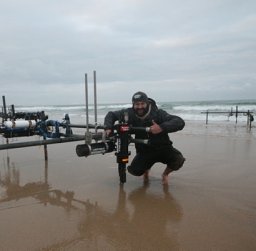 Daniel Buscombe合作论文数University of Plymouth2
 Andre Pacheco合作论文数1
 Mark Gaterell合作论文数Fac Technol, Univ Portsmouth1W. Roberts合作论文数1
 David Chapman合作论文数School of Civil Engineering, The University of Birmingham1
 Leo C Van Rijn合作论文数Utrecht University;Caen University;Delft University;Caen University, Delft University1Koen Trouw合作论文数1Gerhard Masselink合作论文数1D. P. Freeman合作论文数1M. C. Ockenden合作论文数1
 Phil Atkins合作论文数School of Engineering, College of Engineering and Physical Sciences, University of Birmingham1
 Thorsten Albers合作论文数1
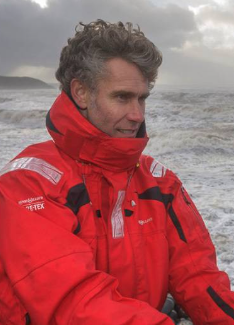 Gerd Masselink合作论文数School of Biological and Marine Sciences, Faculty of Science and Engineering, University of Plymouth1




