Using the HEXTE experiment on-board the RXTE satellite, we performed a search for hard X-ray tails in Sco X-1 spectra. We found strong evidence for the presence of such a non-thermal component on several occasions. Using the PCA/RXTE we were able to track the position of the source along the Z diagram, and we observed that the presence of the hard X-ray tail is not confined to a particular region. However, we found a correlation between the power law index of the non-thermal component and the position of the source in the Z diagram, suggesting that the hard X-ray spectrum (i.e., E > 50 keV) becomes flatter as the mass accretion rate increases. We were also able to study the temporal variation of the appearance/absence of the hard X-ray component. With our derived luminosities, we were also able to test the idea that X-ray luminosities can be used to distinguish between X-ray binary systems containing neutron stars and black holes.
The UCSD, WU, UCR and Nova collaboration has made significant progress on the necessary techniques for coded mask imaging of gamma-ray bursts: position sensitive CZT detectors with good energy resolution, ASIC readout, coded mask imaging, and background properties at balloon altitudes. Results on coded mask imaging techniques appropriate for wide field imaging and localization of gamma-ray bursts are presented, including a shadowgram and deconvolved image taken with a prototype detector/ASIC and MURA mask.
The spectrum of the diffuse isotropic component of cosmic X-rays over the 13-180 keV range was determined by the UCSD/MIT Hard X-Ray and Gamma-Ray instrument (HEAO 1 A-4) on board the High Energy Astronomical Observatory 1 (HEAO 1). The instrument consists of a complex of actively shielded and collimated scintillation counters, including the low-energy detector set from which the data reported here were obtained. These data join smoothly with the spectrum at lower energies reported by the GSFC HEAO 1 A-2 instrument and with that measured to 400 keV by the HEAO 1 A-4 medium-energy detectors. The HEAO 1 data set also joins the recent results from COMPTEL on the Compton Gamma Ray Observatory (CGRO) in the 1-10 MeV range, which failed to confirm the existence of an "MeV bump" in this range. Although the spectrum over the entire range 3 keV ≤ E ≤ 100 GeV can be fitted by a simple empirical analytic expression, the origin is likely due to a number of distinct source components. The prevailing idea for the origin is that the hard X-ray spectrum is due to X-rays from various active galactic nucleus components, particularly Seyfert galaxies extending to cosmological distances, and that the low-energy gamma rays may be due to emission from Type Ia supernovae, which is also integrated to cosmological distances. The higher energy gamma-ray spectrum defined by EGRET, also on the CGRO, may be due to unresolved gamma-ray-emitting blazars. Models of production by these source components, extrapolated to the present epoch, must reproduce the observationally derived spectrum.
The Rossi X-Ray Timing Explorer observed a number of X-ray emitting radio pulsars soon after launch on 30 Dec. 1995. These included two plerionic systems formed in recent supernova events, the Crab Nebula with its 33 ms pulsar PSR 0531+21 and MSH 15-52 with its 151 ms pulsar PSR 1509-58. Observations of these sources for 20–30 ksec with both the PCA and HEXTE allowed precision phase resolved spectroscopy for the Crab Nebula, confirmation of the light curve and pulsed spectrum for PSR 1509-58, and separation of the Nebular emissions from the pulsed X-rays over the 18–250 keV range for both sources. Within statistical uncertainties, a power law spectrum fits all the observations over this limited energy range. The nebular region for both sources has a photon index of about −2.1, while the pulsed spectra are considerably harder. Significant differences in spectral index are observed for the first pulse, the second pulse, and the interpulse of PSR 0531+21.
HEXIS is a MIDEX-class mission concept for X-ray astronomy. Its objectives are to improve our knowledge of the high energy X-ray sky by increasing the number of sources above 20 keV to >2,000, discovering transient sources such as X-ray novae and gamma-ray bursts, and making spectral and temporal studies of the sources. With mission life >3 years, a I-year all-sky survey sensitivity of similar to 0.3 mCrab (>20 keV), and continuous monitoring of the entire visible sky? HEXIS will provide unprecedented capabilities. Source positions will be determined to accuracies of a few arcmin or better. Spectra will be determined with an energy resolution of a few keV and source variability will be studied on time scales from <1 sec to years. In addition, 10 times more sensitive studies of limited fields will be performed at the same time. Gamma-ray bursts will be detected about 4 times/week at about the same sensitivity as BATSE and the sensitivity to nova-like X-ray transients will be similar to 6 mCrab in one day. HEXIS contains a set of coded mask imagers that use position-sensitive CZT detectors operating from similar to 5 keV to 200 keV. Detector planes are built with 41 cm(2) CZT detector modules which employ crossed-strip readout to obtain a pixel size of 0.5 mm. Nine modules are grouped in a 369 cm(2) array for each imager. In the past 2 years significant progress has been made on techniques required for HEXIS: position-sensitive CZT detectors and ASIC readout, coded mask imaging, and background properties at balloon altitudes. Scientific and technical details of HEXIS are presented together with results from tests of detectors and a coded mask imager.
The scientific objectives, status, and future instrumental requirements of high energy X-ray astronomy (20 to 200 keV) are discussed. Two particularly compelling requirements are: (1) an improvement in sensitivity to a level of about 5 microCrab and (2) a survey of the sky at a sensitivity of about 0.1 milliCrab, which will discover and characterize about 10,000 new sources. The first requirement can be fulfilled by imaging telescopes that use large-area focusing X-ray mirrors, which are effective over 5-30 arcminute fields, and the second requirement can be met by arrays of large area coded mask imagers with wide fields, about 50 deg. Multilayer mirror and CdZnTe detector technology now in development offers the potential to meet these objectives. Position-sensitive CdZnTe detectors are well-suited to both of these imaging techniques, and instrument concepts that use these detectors are described. Detectors with pixel readout are better suited for focusing telescopes, and those with crossed-strip readout are better suited for coded mask imagers. Technical aspects of these detectors are discussed. Recent work at UCSD and WU on CdZnTe strip detectors is described in detail. Studies with small, 40 micron, X-ray beams have mapped a crossed-strip detector's spatial response with fine spatial resolution.
We present the results of observations of the PSR B1509-58/MSH 15-52 system in X-rays (2-250 keV) by the Rossi X-Ray Timing Explorer. The spectra of the peak of the pulsed component (radio phase 0.17-0.53) is fitted by a power law of photon index 1.36±0.01, with no evidence of a high-energy spectral break seen up to ~200 keV. For the off-pulse spectral component, the spectrum from 2-250 keV is fitted by a power law of photon index 2.215±0.005. An iron emission line at 6.7 keV with an equivalent width of 129 eV improves the fit, but only at a marginal significance. Thermal bremsstrahlung and Raymond-Smith models produce much worse fits to the unpulsed data. The lack of a high-energy spectral break in the pulsed emission implies an efficiency of ≥3% in the conversion of pulsar spin-down energy to pulsed X-rays in the system.
The High Energy Astronomical Observatory 1 (HEAO 1) contained as one of its instruments the UCSD/MIT hard X-ray and gamma-ray instrument, a complex of actively shielded scintillation counters that operated over the nominal 10 keV to 10 MeV range. The two medium-energy detectors (MEDs) employed in this investigation covered the range 80 keV-2 MeV, had a geometrical area of 43 cm2, and were collimated to a circular field of view of 17° FWHM. During a period of operation starting in 1978 April, these detectors were operated in a manner designed to provide a precise measure of the diffuse cosmic background gamma-ray flux. Previous measurements of the spectrum in this range were not of sufficient precision to distinguish between various models explaining the hard X-ray background either as an ensemble of discrete sources or due to a global effect at cosmological distances. The detectors could be alternately blocked or unblocked with a moveable shutter of CsI, which could be operated in an active anticoincidence mode or as a passive shield. Data taken in these various modes and analyzed with respect to the varying radiation environment of the 23° inclination 400 km circular orbit permitted separation of various background effects that have plagued previous measurements of this radiation using scintillation spectrometers. Over the ~80-400 keV band, systematic errors were small and correctable, with a resulting spectrum fitted by a power law of dN/dE = (2.62 ± 0.05) × 10-3(E/100 keV)-(2.75±0.08 photons cm-2 s-1 keV-1 sr-1. This fit, in general agreement with previous results in this energy range, joins smoothly with measurements at lower energies, and when extrapolated to higher energies, it agrees with the recently reported COMPTEL results at energies above 2 MeV obtained on the Compton Gamma Ray Observatory. The accompanying demonstration of the experimental difficulties associated with scintillation spectrometer measurements of the diffuse cosmic background provides significant clarification of the observational status of this important measurement. When account is taken of measurements with possible local background estimation uncertainties, the spectrum between ~200 keV and ~50 MeV appears more simplified than previous estimates.
The Crab Nebula, the remnant of a nearby supernova in 1054, exhibits many phenomena of interest to high energy astrophysicists. The featureless optical continuum in the central region emits X-rays and gamma-ray energy with a spectrum possibly extending to 10(12) eV. This emission is believed due to the synchrotron radiation of relativistic electrons in a 6 x10(-4) gauss nebular field, which are still being accelerated. The nebula is apparently powered by the spin-down of the 33 ms rotating neutron star near the center of the nebula. This pulsar emits radiation over the entire radio, optical, X-ray and gamma-ray range. Although most of the basic discoveries were made in the 1960's and 1970's, recent data from ground based observatories, the Hubble Telescope, and the Compton Gamma Ray Observatory are providing significant new details of processes in the Crab.
The scientific objectives and future requirements of high energy x-ray astronomy are discussed and concepts for imaging instruments based on CdZnTe detectors and coded masks are reviewed. An instrument concept based on CdZnTe strip detectors, HEXIS, is described in detail. Technical requirements for large area CdZnTe strip detectors are discussed and recent work at UCSD and WU on the capabilities of CdZnTe strip detectors is described in detail. Studies with small, approximately 50 micron beams demonstrate that crossed strip detectors have good properties for both spatial and spectral measurements.
CHIP -- the continuous hard x-ray imager for astrophysics) -- is a powerful hard x ray imaging spectroscopy mission, an order of magnitude more sensitive to hard x rays than XTE, comprised of the large uniform coverage imager (LUCY) for all-sky coverage and the deep extragalactic survey imager (DESI) for more sensitive pointed observations. Both instrument complements will utilize the room temperature semiconductor CdZnTe in mosaiced arrays of position sensitive devices in conjunction with coded masks. Each unit will provide imaging from 2 - 100 keV with approximately 1 keV energy resolution throughout the entire energy range and few arcminute intrinsic spatial resolution. LUCY will provide (1) a complete flux- limited sample of the hard x-ray contents of our galaxy as well as of the extragalactic sky, (2) alarms and precise positions for transient phenomena on all timescales from seconds to days, and (3) continuous spectral/temporal studies of these objects over a vast range of timescales from seconds to days, to months, to years. DESI will extend LUCY's coverage even deeper by viewing a small portion of the hard x-ray sky (0.01 sr) for background limited studies of individual objects considerably deeper than present or future hard x-ray instruments.
The UCSD/MIT hard X-ray and gamma-ray instrument on the HEAO I surveyed the region near the Galactic center 3 times during its lifetime in 1977-1979. During the 1977 September-October scan, a gamma-ray source was detected south of the Galactic center. The source was below the threshold sensitivity in the spring and fall of 1978. The source was detected with the medium energy phoswich scintillation counters which operated over the 80 keV-2 MeV range, had an area of 42 cm(2) each, and a 17 degrees FWHM aperture. The error box for the source is centered on l = -2 degrees.4, b = -12 degrees.2, with a 90% confidence error circle of similar to 3 degrees.5 radius. The flux in the 333-635 keV range was (1.89 +/- 0.29) x 10(-5) photons (cm(2) s keV)(-1) and was constant within statistics during the 1 month period the source was in the field of view. The spectrum can be characterized as a Gaussian in the range 300 less than or equal to E less than or equal to 650 keV, with a FWHM of 249 +/- 51 keV centered on 461 +/- 22 keV. The flux of this broad Gaussian is (6.6 +/- 1.1) x 10(-3) photons (cm(2) s)(-1). The source is tentatively identified with the 5.57 hr period low-mass X-ray-emitting binary system 1H 1822-371. Assuming this is correct, the ratio of gamma-ray to X-ray luminosity during the outburst was about 5; at a distance of 8 kpc, the gamma ray luminosity is 4 x 10(37) ergs. The emission may be interpreted as a positron-pair plasma ejected from a compact object, possibly a black hole, and annihilating in a thick accretion disk surrounding the object.
The High Energy Astronomy program at UCSD consists of several elements, including laboratory development of detector systems, balloon flights to test detector concepts and to make basic observations of cosmic sources, space flights to make extended observations at high sensitivity, and data analysis. Since the start of the group in 1962, over 70 balloon flights have been made, mostly through the U.S. National Scientific Balloon Facility. Many of these flights were determine detector properties and background in the radiation environment at about 130,000 ft (40 km or 3 gm/cm2 depth), which is essentially the same as on a spacecraft in low earth orbit. Many fundamental observations have also been obtained, including spectral and time variations of X-ray sources over the 25–200 keV range, imaging of the Crab Nebula in hard X-rays, and detection of an extremely hot component in solar flares. More recently, efforts have been concentrated on obtaining high resolution (E/ΔE ≈ 300) observations of solar and cosmic gamma-rays in the 20 keV to 10 MeV range. The program, which involves faculty and research staff, graduate students, and technical support personnel will be described.
 J. L. Matteson合作论文数68
 William a Baity合作论文数28Wa Baity合作论文数26Wm. A. Wheaton合作论文数26De Gruber合作论文数23R. M. Pelling合作论文数23
 Hugh Hudson合作论文数School of Physics & Astronomy, University of Glasgow;University of California, Berkeley22
 Melville Ulmer合作论文数Department of Physics and Astronomy, Weinberg College of Arts and Sciences, Northwestern University20Richard E Rothschild合作论文数20W. A. Wheaton合作论文数17Jr Arnold合作论文数15
 Dan Schwartz合作论文数Center for Astrophysics, Harvard-Smithsonian Astrophysical Observatory;The Chandra X-Ray Center, Harvard-Smithsonian Astrophysical Observatory15Francis A. Primini合作论文数14W. H. G. Lewin合作论文数14William Adams Heindl合作论文数14Albert E. Metzger合作论文数13
 Jacob I. Trombka合作论文数13p l nolan合作论文数12F. K. Knight合作论文数12S. K. Howe合作论文数12Duane Gruber合作论文数12
 Robert C Reedy合作论文数11Paul L Hink合作论文数Washington University10A. Scheepmaker合作论文数10
 Dayton Datlowe合作论文数10FA Primini合作论文数9WHG LEWIN合作论文数9Jeffrey A. Hoffman合作论文数9
 Richard Mushotzky合作论文数Department of Astronomy, University of Maryland, College Park9
 C. A. Dobson合作论文数9Gilbert Vedrenne合作论文数9
 Kevin Hurley合作论文数Space Sciences Laboratory, University of California at Berkeley9
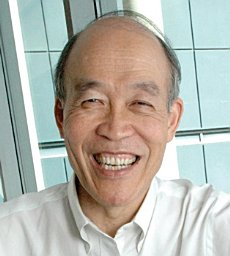 Robert P Lin (林伯中)合作论文数Space Sciences Laboratory, University of California, Berkeley9
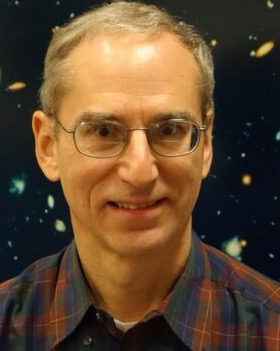 Alan Levine合作论文数Kavli Institute for Astrophysics and Space Research, Massachusetts Institute of Technology;School of Science, Massachusetts Institute of Technology8Richard E. Rothschild合作论文数8Michael R Pelling合作论文数8Michel Niel合作论文数7Richard H. Pehl合作论文数7robert t skelton合作论文数6
 Michael Briggs合作论文数Center for Space Physics and Aeronomic Research, University of Alabama in Huntsville6M. J. Elcan合作论文数6Wayne Coburn合作论文数6Ph Durouchoux合作论文数6P. Nolan合作论文数5I. Malet合作论文数5C. Chapuis合作论文数5Paul T Feffer合作论文数Space Sciences Laboratory, University of California5P. Von Ballmoos合作论文数5r h parker合作论文数4




