Aquatic animals live in an acoustic world, prone to pollution by globally increasing noise levels. Noisy human activities at sea have become widespread and continue day and night. The potential effects of this anthropogenic noise may be context-dependent and vary with the time of the day, depending on diel cycles in animal physiology and behaviour. Most studies to date have investigated behavioural changes within a single sound exposure session while the effects of, and habituation to, repeated exposures remain largely unknown. Here, we exposed groups of European seabass (Dicentrarchus labrax) in an outdoor pen to a series of eight repeated impulsive sound exposures over the course of two days at variable times of day/night. The baseline behaviour before sound exposure was different between day and night; with slower swimming and looser group cohesion observed at night. In response to sound exposures, groups increased their swimming speed, depth, and cohesion; with a greater effect during the night. Furthermore, groups also showed inter-trial habituation with respect to swimming depth. Our findings suggest that the impact of impulsive anthropogenic noise may be stronger at night than during the day for some fishes. Moreover, our results also suggest that habituation should be taken into account for sound impact assessments and potential mitigating measures.
In the eastern Dutch Wadden Sea an area was closed for anthropogenic bottom-disturbing activities in 2005. The ‘natural’ development of the fauna in gullies located within this area was monitored and compared with the development in gullies outside the closed area. Emphasis was put on sampling the benthic fauna (every autumn). Eleven years after closure (2016) the fish population was sampled again and additional benthic samples were taken, the sea floor was mapped and the fishing pressures were calculated. Preliminary results show that throughout the investigated period the open gullies were subject to moderate shrimp fishing pressures and that the closed gullies were not fished. Closure of the gullies has not yet led to the formation of biogenic structures on the seafloor, but has led to an increase in the species richness of small benthic fauna and to subtle changes in benthic species composition. Due to the limited availability of data it was not possible to detect statistically significant differences in the fish population.
In het kader van het vlootvervangingsprogramma van de Rijksrederij is het noodzakelijk om alternatieven aan te reiken voor de bemonsteringen die momenteel door RV Stern worden uitgevoerd. RV Stern zal binnen een aantal jaren niet meer beschikbaar zijn. Dit rapport beschrijft voor de verschillende monitoringen welke vereisten aan een vervangend schip gesteld worden en welke mogelijke alternatieven voorhanden zijn. Gezien de relatief ondiepe wateren waarin beide surveys plaatsvinden, verdient het vooralsnog de voorkeur met gieken te vissen om de schroefwaterimpact te minimaliseren. Begin 2017 wordt door Wageningen Marine Research een rapport gepubliceerd met daarin resultaten van een vergelijkende visserij tussen de Stern (gieken) en Navicula (A-frame achterover). Aan de hand van deze rapportage zal duidelijk worden wat de impact mogelijk is en welke methode de voorkeur heeft.
Since 1972, the Demersal Fish Survey (DFS) in the Wadden Sea has been carried out with the RV Stern. Within a few years this vessel will be replaced by another vessel as a result of the current ship replacement policy of Rijkswaterstaat Rijksrederij. It is not yet clear which vessel will replace RV Stern. In the search for a new vessel the main question is if fishing over the sides is needed, or if fishing over the stern is possible without a major effect on catch efficiency. Especially in shallow waters, catch efficiency may be affected by fishing over the stern, because of the current created by the ship’s propeller. To be able to continue the use of the long and valuable time-series the shift in vessel should not lead to a different gear efficiency.
In het kader van het vlootvervangingsprogramma van de Rijksrederij is het noodzakelijk om alternatieven aan te reiken voor de bemonsteringen die momenteel door RV Isis worden uitgevoerd. RV Isis zal vanaf 2017 niet meer beschikbaar zijn. Dit rapport beschrijft voor de verschillende monitoringen welke vereisten aan een vervangend schip gesteld worden en welke mogelijke alternatieven voorhanden zijn.
Surveys are often insufficient to accurately capture the distribution of a species in both space and time. Complementary to the use of research vessel data, platforms of opportunity can be a powerful strategy to monitor species distributions at high temporal and spatial resolution.In this study we use data from commercial fishing vessels, collecting - under the European Union data collection framework - biological data on all species that are caught and subsequently discarded. Using such discard data in combination with a systematic trawl survey, we model the spatial and temporal distribution of juvenile plaice (Pleuronectes platessa) in the central North Sea. There is a clear age-dependent difference between the commercial fishing vessel data and the research vessel data, with age 1 being the dominating age in the survey catches, while age 2 is the dominating age in the discards. The results show how immature plaice, slowly migrate from the nursery areas, westwards into the deeper regions of the North Sea. Also, the results show that during the study period, juvenile plaice gradually moved to deeper waters at an earlier age. Finally we discuss how the framework can be applied to similar opportunistic data to monitor seasonal and inter-annual migration of marine organisms, and to quantify how they may be influenced by biotic and abiotic gradients, such as temperature. (C) 2012 Elsevier B.V. All rights reserved.
In dit rapport worden de resultaten gepresenteerd van twaalf maandelijkse ichthyoplankton surveys, uitgevoerd van april 2010 tot maart 2011, in de zuidelijke Noordzee. Doel van dit onderzoek is het monitoren van de ruimtelijke en temporele verspreiding van viseieren en vislarven op het Nederlandse Continentale Plat (NCP). Maar, omdat viseieren en larven via reststromen naar het NCP getransporteerd worden is een groter gebied in de zuidelijke Noordzee bemonsterd. Vanwege technische problemen of slecht weer tijdens de surveys was het niet altijd mogelijk om alle geplande stations te bemonsteren. Vis eieren zijn in alle maanden van het jaar gevonden. Aantallen en soorten wisselden per maand. Hoogste aantallen viseieren zijn gevonden van januari tot mei. Van april tot juli zijn op bijna alle stations in het bemonsterde gebied viseieren gevonden. Van augustus tot november namen de aantallen viseieren snel af. Vanaf december namen de aantallen weer toe. Op de stations op het NCP zijn van januari tot juli viseieren gevonden. De aantallen namen af van augustus tot november. De aantallen viseieren namen weer toe vanaf december. In totaal zijn er van 35 verschillenden vissoorten eieren gevonden in de monsters. Vislarven zijn in alle maanden van het jaar gevonden. Maar net als bij viseieren is er variatie in de aantallen en soorten per maand. De hoogste aantallen vislarven zijn gevonden van in december en januari in het Engels Kanaal. In de zuidelijke Noordzee namen de aantallen vislarven toe van april tot juni, maar daarna namen de aantallen per maand geleidelijk af tot november. Na november namen de aantallen vislarven weer toe. Van mei tot september zijn op bijna alle bemonsterde stations vislarven gevonden. In oktober en november zijn, zowel in de zuidelijke Noordzee als op het NCP, op de helft van de stations vislarven aangetroffen. In december zijn nog steeds vislarven aanwezig op de helft van alle stations in de zuidelijke Noordzee, maar slecht op een kwart van de stations op het NCP. In februari en maart zijn weer op alle stations in de zuidelijke Noordzee en het NCP vislarven gevonden. In totaal zijn er van 74 verschillende soorten vislarven gevonden. Op de basis van een modelstudie, die het mogelijke effect van heien op de voedselbeschikbaarheid van vogels en zeezoogdieren in Natura 2000 gebieden heeft bestudeerd, is er een mitigerende maatregel ingesteld die het heien van palen voor de fundaties van wind turbines op zee verbied van januari tot juni. De resultaten van deze jaarronde survey tonen aan dat van april tot september vislarven aanwezig zijn in de gehele zuidelijke Noordzee, inclusief het NCP, in variabele aantallen en verschillenden soorten. Ook in oktober en november worden nog steeds op de helft van de stations vislarven aangetroffen in wisselende aantallen en soorten. Zelfs in december worden op een kwart van de stations op het NCP nog vislarven aangetroffen. De aantallen vislarven in oktober en november zijn laag in vergelijking met andere maanden, maar juist in oktober en november worden er soorten gevonden die in andere maanden niet aanwezig zijn. De resultaten van deze studie en de resultaten van de experimentele studie van het effect van heien op vislarven zouden moeten gecombineerd worden. Deze studie is een eerste maandelijkse studie van ichtyoplankton in de zuidelijke Noordzee. De data verzameld in deze surveys over de ruimtelijke en temporele verspreiding van viseieren en –larven zijn uniek en kunnen gebruikt worden in modelstudies om de mogelijke effecten van bepaalde vormen van menselijk ingrijpen op visbestanden in de zuidelijke Noordzee te bepalen.This report presents the results of twelve monthly ichthyoplankton surveys carried out from April 2010 until March 2011 in the southern North Sea. The aim of this study was to collect data on the temporal and spatial distribution of fish eggs and larvae on the Dutch Continental Shelf (NCP). However, since fish eggs and larvae are transported with the currents onto the NCP a larger area covering the majority of the southern North Sea was sampled during the surveys. Despite technical problems or bad weather conditions preventing the sampling of all planned stations during each survey, the coverage was good and the general trends in ichthyoplankton abundance became apparent. Fish eggs were found in all months but species and numbers varied per month across the southern North Sea. The highest abundance of fish eggs was found from January until May with fish eggs being found at all stations from April until July. Very few eggs were found between August and November. From December onwards abundance of eggs increased again. The pattern was the same on the NCP. In total 35 different species of fish eggs were found. Fish larvae were found in all months but species and numbers varied in a similar pattern to the fish eggs, except the highest abundance of larvae was found in December and January in the English Channel (mostly herring). Numbers of larvae in the southern North Sea increased from April until June and afterwards then gradually declined until November. After this the abundances increased again. Larvae were found at almost all stations from May until September. In October and November larvae were found at half of all the stations both in the whole sampling area and on the NCP. The patterns was the same on the NCP. In total 74 different species of fish larvae were found. Based on the results of a modelling study, a mitigating measure was issued by the Dutch authorities forbidding pile driving of offshore wind farm foundations from January to June, in order to ensure that negative effects on prey availability for birds and marine mammals within Natura 2000 areas are minimised. The results of the year-round monthly surveys show that from April until September fish larvae were found throughout the survey area, including the NCP, in varying numbers and varying species. Still in October and November larvae were found at half of the stations although at lower abundances. Even in December larvae were still found at a quarter of the stations on the NCP. Whilst the abundance of larvae was low in October and November, there are a few species with larvae present that are absent at other times of the year. These results on ichthyoplankton abundance and results of the experimental study on the effect of pile driving on fish larvae need to be combined. Ideally they should also be assessed with subsequent studies of ichthyoplankton transport and impact on the Natura 2000 sites. This unique study is the first to comprehensively sample and analyse the ichthyoplankton with monthly resolution in the southern North Sea. These data on spatial and temporal distribution of fish eggs and larvae can be used in modelling studies to assess the effects of human activities in the southern North Sea, on different fish stocks.
Vissen kunnen letale schade ondervinden aan de zwemblaas of andere organen door blootstelling aan harde impulsgeluiden zoals onderwater heigeluid. Er zijn echter nog vrijwel geen gedetailleerde dosisrespons studies beschikbaar, dit geldt m.n. voor de vroege levensstadia. Gezien de snelle uitbreiding van offshore windparken in de Noordzee, bestaat er een dringende noodzaak om meer kennis te verwerven over de effecten van het geluid veroorzaakt door heien. Deze studie richt zich op het effect van heigeluid op de overleving van vislarven.Fish can suffer lethal damage to their swim bladder or other organs due to loud impulse sounds such as pile driving noise. However, detailed dose-response studies are still scarce, especially for the early life stages. In view of the rapid extension of offshore wind farms in the North Sea, there is an urgent need to acquire more knowledge on the effects of noise caused by pile driving. This study focussed on the effect of piling noise on the survival of fish larvae.
Fish can suffer lethal damage to swimming bladder or other organs due to extreme loud impulse sounds caused by e.g. pile driving (Popper & Hastings 2009). Juvenile and adult fish can actively swim away from a sound source, but planktonic larvae are not able to do this. As a result, fish larvae may suffer more from underwater noise than the older life stages. Despite the many indications for adverse effects, detailed information on the effect of different sound levels on fish is still scarce, especially for the early life stages. Within the framework of the Appropriate Assessment of Dutch offshore wind farms, the effect of piling noise on the southern North Sea population of herring, sole, and plaice larvae was simulated (Prins et al. 2009). For this, an existing larval transport model (Bolle et al. 2005, 2009, Dickey-Collas et al. 2009, Erftemeijer et al. 2009) was expanded with crude assumptions on larval mortality caused by pile driving. The model results were extrapolated to other fish species and older life stages, based on “expertjudgment, in an attempt to assess the effect of offshore piling on the prey availability for birds and marine mammals in Natura 2000 areas (Bos et al. 2009). This assessment involved a large number of uncertainties. The first and most important uncertainty was the range around a piling site in which larval mortality occurs. It was assumed that 100% mortality occurs up to a distance of 1 km from the piling site. However, little is known about larval mortality rates in relation to the level of exposure to piling noise. In general, there is an urgent need to obtain more knowledge on the effect of sound on fish (survival, distribution, and behaviour) during different life stages. More particularly, in view of the rapid extension of offshore wind farms, there is an urgent need to fill the knowledge gap on lethal effects of loud impulse noises caused by pile driving. The broader aim of the current project is to examine the effect of piling noise on the survival of fish larvae. However, within the limited resources and time frame of the Shortlist research programme it is not possible to carry out field experiments, nor is it possible to execute elaborate series of experiments. The first goal within the Shortlist programme is to examine the feasibility of laboratory experiments with pile driving noise and fish larvae. The second goal is to use the laboratory set-up in a pilot study aiming at determining the threshold at which mortality of fish larvae occurs. This shortlist study is limited to laboratory experiments, lethal effects, larvae of 1 species (sole, Solea solea) and 3 series of experiments (trials). The study consists of exposure-effect experiments only; the effects of pile driving at the population level will not be modelled, nor will the results be extrapolated to other species or life stages. The progress to date has been documented in a series of memo’s. These memos are included in this report as Appendices and are summarised in the sections of the report.
Nederland neemt deel aan de ICES Planning Group on North Sea Cod and Plaice Egg Surveys (PGEGGS) en heeft een belangrijke bijdrage geleverd aan de internationale schol en kabeljauw eisurvey van 2004 (PLACES). De belangrijkste doelstellingen van deze survey waren het in kaart brengen van de paaigronden van schol en kabeljauw. Genetische technieken zijn gebruikt om onderscheid te maken tussen de eieren van kabeljauw, schelvis, wijting en koolvis, die overlappende eidiameter-verdelingen hebben. Schol paait in dezelfde gebieden als in het verleden gerapporteerd, maar de paaiactiviteit in de Duitse Bocht lijkt relatief te zijn toegenomen. Kabeljauw paait ook in de gebieden die voorheen bekend stonden als paaigronden, maar met een relatieve afname van de paaiactiviteit in de Zuidelijke Bocht. Er is geen toename in paaiactiviteit waargenomen in de noordelijke Noordzee, hetgeen in strijd is met de verwachting op grond van de verspreiding van volwassen vis zoals waargenomen in onderzoeksreizen.
In 2004 an international consortium comprising England, Scotland, Netherlands, Germany, Denmark and Norway conducted an ichthyoplankton survey covering the whole of the North Sea in order to comprehensively survey cod and plaice spawning areas. At each station, ‘cod-like’ eggs were pre-sorted at sea from the plankton sample and preserved in ethanol for subsequent analysis using species-specific genetic probes. The remainder of the plankton sample was fixed in formalin and ichthyoplankton subsequently sorted and identified using traditional visual methods. The results showed stage I plaice spawning to be located in the traditional areas reported from the literature although with evidence of a more northward extension up the eastern edge of the Dogger Bank compared to data from the 1930s. The distribution of stage I cod eggs also conformed to historical patterns being most abundant around the southern and eastern edge of the Dogger Bank, in the German Bight, off the Moray Firth and to the east of the Shetland Isles. ‘Cod-like’ eggs were also found in southern Bight but this area was not as well sub-sampled for genetic analyses. Most of the ‘cod-like’ eggs on stations that were sub-sampled adequately in this region were shown to be whiting or other species. Data was also produced on the distribution of haddock eggs which were found over a wider region of the north-western North Sea than shown in historical maps. Whiting eggs were found south of the Dogger Bank and to the east of the Shetland Isles but were absent from the central North Sea. These results are discussed in relation to historical patterns of spawning and recent changes in the abundance of the North Sea plaice, cod and haddock stocks.
 Cindy van Damme合作论文数7
 Mark Dickey-Collas合作论文数Agricultural and Environmental Sciences Division, Department of Agriculture and Rural Development, Newforge Lane, Belfast BT9 5PX, Northern Ireland, UK5
 Olvin A. Van Keeken合作论文数4T.L. Pasterkamp合作论文数3oskoomen van e合作论文数3
 Hendrik Volken Winter合作论文数3Z. Jager合作论文数3s w verver合作论文数2r e grift合作论文数2n daan合作论文数2s v tribuhl合作论文数2haan de d合作论文数2j a m wiegerinck合作论文数2i de boois合作论文数2uwe damm合作论文数2h j a dijkman dulkes合作论文数2Gerd Kraus合作论文数2
 Jan Jaap Poos合作论文数Department of Biological Oceanography;Netherlands Institute for Sea Research;Department of Biological Oceanography, Netherlands Institute for Sea Research2
 Clive James Fox合作论文数Centre for Environment2J.W Van Der Heul合作论文数2
 Peter Munk合作论文数2
 Sarah B M Kraak合作论文数Zoological Laboratory;University of Groningen;Zoologisches Institut;Zoologisches Institut, University of Groningen2Petter Fossum合作论文数2Elisabeth Debusschere合作论文数1R.A. Bol合作论文数1
 Kitty Groeneveld合作论文数1a t w g eltink合作论文数1g j rink合作论文数1m lohman合作论文数1k j perdon合作论文数1wilde de j w合作论文数1willigen van j a合作论文数1cathy e bakker合作论文数1barneveld van e合作论文数1S.T. Glorius合作论文数1K. Troost合作论文数1
 Vandemaele Sofie合作论文数1A.T.M. van Helmond合作论文数1Maaike Vercauteren合作论文数1
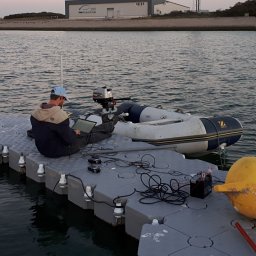 Jeroen Hubert合作论文数Corresponding author.1Bierman Stijn M合作论文数1Teal Lorna Rachel合作论文数1
 Hans Slabbekoorn合作论文数Instituut Biologie, Leiden University1
 Nigel Taylor合作论文数Department of Zoology, University of Cambridge;Lucy Cavendish College, University of Cambridge1
 Yik Yaw Neo合作论文数1
 Magda Vincx合作论文数Marine Biology Research Group, Faculteit Wetenschappen, Universiteit Gent1
 Andre Meijboom合作论文数1
 Steven Degraer合作论文数Ghent University;Biology Department;Marine Biology Section;Biology Department, Ghent University1Nick Bailey合作论文数1




