Smart sensors and AI are transforming healthcare by enabling precise diagnostics, continuous monitoring, personalized treatments, and minimally invasive procedures. These advances enhance patient outcomes, reduce risks, and improve accessibility. Using cardiac care as an example, we highlight emerging innovations driving the rapid evolution toward Medicine 3.0.
As GPUs have grown more popular and become commonplace in datacenters, GPU power consumption has become a more important metric than ever before. Power behavior should be a major consideration in all stages of GPU design, development, and deployment. However, accurate power evaluation is difficult because modern-day GPU workloads are large and complicated, and rapid advances in popular datacenter workloads means that the power profiles of these workloads change often. To solve this problem, we introduce Power Ranger, a GPU power benchmark generator that can replicate power behavior from any arbitrary workload using only a reference device and a trace of power over time. Power Ranger’s generated workloads replicate real workload behavior using simple kernel launches selected from a look-up table. Because Power Ranger only requires a power trace and device, and does not require any code from the target workload, it can also create real GPU workloads that match any desired power behavior. This capability enables the generation of custom power benchmarks and stress tests that can be executed on real GPU hardware. We evaluate Power Ranger using several real and synthetic workloads, and we find that Power Ranger is able to reproduce original power traces with a MAPE of $5 \%$ or less for all cases.
Large language model (LLM) inference workloads have emerged as a critical reliability challeoge for cloud GPU systems. Unlike traditional workloads, the highly structured execution of LLMs creates large power oscillations. These oscillations become a vulnerability when their frequency aligns with the resonant modes of a GPU's power delivery network (PDN), leading to excessive voltage droops and nnreliable operation. In this work, we present the first comprehensive profiling of LLM-induced power oscillations, revealing that many workloads generate oscillatory patterns in the MHz range-ritically aligning with typical GPU PDN resonant frequencies and leading to excessive voltage droops. To systematically investigate this phenomenon, we developed a novel stressmark framework that generates worklonds with controllable, high-frequency power oscillations and voltage droops. Our evaluation shows that operating at a resonant frequency induces voltage droops up to 2x targer than conventional workloads, execeding critical noise margins. Critically, we find that real LLM workloads operating even near these frequencies generate signilicant voltage droops greater than 100mV. Based on these findings, we propose a kernel staggering technique that mitigates this threat by shifting power oscillation frequencies away from resonance frequency, successfully reduciog voltage droops and reduciog reliability concerns. This work provides the first systematic understanding of LLM-PDN resonance and offers a practical solution to improve GPU reliability in AI cloud environments.
Compute-in-memory (PIM) mitigates the memory wall by performing computation within memory, reducing data movement and improving energy efficiency. DRAM-based PIM is particularly attractive due to its high density, mature manufacturing ecosystem, and compatibility with existing systems. Recent works exploit multiple levels of the DRAM hierarchy - including subarrays, banks, and 3D-stacked organizations - to enable in-memory computation using mechanisms such as multi-row activation, row-buffer operations, and near-bank compute units. However, these approaches introduce non-traditional current demand patterns that challenge the power delivery network (PDN). This paper surveys PDN challenges in DRAM-based PIM systems and proposes a unified taxonomy that characterizes PIM-induced current behavior along temporal (burst vs. sustained) and spatial (localized vs. distributed) dimensions. Using this framework, we analyze how representative PIM techniques stress the PDN through bursty activations, multi-row concurrency, and large-scale parallel execution, leading to voltage droop, IR drop, and thermal hotspots. We further discuss DRAM-specific mitigation strategies leveraging existing architectural and circuit-level mechanisms, including timing constraints, memory controller scheduling, data placement, and bank- and vault-level power management. This survey highlights the importance of PDN-aware design for scalable and reliable DRAM-based PIM systems and outlines key future research directions.
Federated Learning (FL) is plagued by two key challenges: high communication overhead and performance collapse on heterogeneous (non-IID) data. Analytic FL (AFL) provides a single-round, data distribution invariant solution, but is limited to linear models. Subsequent non-linear approaches, like DeepAFL, regain accuracy but sacrifice the single-round benefit. In this work, we break this trade-off. We propose SAFLe, a framework that achieves scalable non-linear expressivity by introducing a structured head of bucketed features and sparse, grouped embeddings. We prove this non-linear architecture is mathematically equivalent to a high-dimensional linear regression. This key equivalence allows SAFLe to be solved with AFL's single-shot, invariant aggregation law. Empirically, SAFLe establishes a new state-of-the-art for analytic FL, significantly outperforming both linear AFL and multi-round DeepAFL in accuracy across all benchmarks, demonstrating a highly efficient and scalable solution for federated vision.
Based on current developments in soft electronics, artificial intelligence, energy storage and harvesting strategies, and manufacturing technologies, this article presents how advances in several fields can unite to create an intelligent robotic system and predicts how close we are to the cognizant, socially aware robot.
In-DRAM Processing-In-Memory (DRAM-PIM) has emerged as a promising approach to accelerate memory-intensive workloads by mitigating data transfer overhead between DRAM and the host processor. Bit-serial DRAM-PIM architectures, further enhance efficiency by supporting runtime variable data precision, which is critical for emerging workloads, such as large language model (LLM) inference. However, existing works still have major limitations: lack of data reuse, significant amounts of redundant data transfer, and insufficient support for workload mapping. To address these issues, we propose RACAM, the first in-DRAM bit-serial architecture which uses dedicated locality buffers, bit-serial PEs, popcount reduction units and broadcast units to enable data reuse and alleviate redundant data transfers. Furthermore, a workload mapping mechanism is proposed to fully explore the massive parallelism of DRAM architecture and identify the best mapping scheme of a given workload. We evaluate RACAM against GPUs and the state-of-the-art, in-DRAM PIM system, Proteus, across end-to-end LLM inferences. RACAM achieves 9x to 102x speedup over GPUs and 233x higher performance per mm2 compared to Proteus in case of GPT3.
Transformers are set to become ubiquitous with applications ranging from chatbots and educational assistants to visual recognition and remote sensing. However, their increasing computational and memory demands is resulting in growing energy consumption. Building models with fast and energy-efficient inference is imperative to enable a variety of transformer-based applications. Look Up Table (LUT) based Weightless Neural Networks are faster than the conventional neural networks as their inference only involves a few lookup operations. Recently, an approach for learning LUT networks directly via an Extended Finite Difference method was proposed. We build on this idea, extending it for performing the functions of the Multi Layer Perceptron (MLP) layers in transformer models and integrating them with transformers to propose Quasi Weightless Transformers (QuWeiT). This allows for a computational and energy-efficient inference solution for transformer-based models. On I-ViT-T, we achieve a comparable accuracy of 95.64 approximately 55 a 2.2x energy efficiency. We also observe similar savings on experiments with the nanoGPT framework.
As Deep Neural Networks become more complex and computationally demanding, efficient models for inference at the edge, particularly multiplication-free ones, have gained significant attention. The Ultra Low-Energy Edge Neural Network (ULEEN) is a notable architecture optimized for feed-forward designs. ULEEN uniquely employs Bloom Filters with binary values to compute neuron activation, boasting better efficiency metrics than Binary Neural Networks (BNNs). This work uncovers a gradient back-propagation bottleneck within ULEEN's Bloom filters and introduces introduces a simplified version of it as a solution: the "Soon Filter". Both theoretically and empirically, we demonstrate that our approach improves gradient back-propagation efficiency. Tests on various UCI datasets and MNIST, which are standard benchmarks for feed-forward models, reveal that our method surpasses ULEEN, BNN, and DeepShift. Notably, with MNIST, we achieve 98.6% with only 98KiB, while ULEEN, BNN and DeepShift achieves 98.5% with 262KiB, 98.5% with 355KiB and 98.3% with 408KiB respectively. Furthermore, when using MLPerf Tiny datasets, which are typically more appropriate for CNNs, we consistently outperform other models when they are implemented as Multilayer Perceptrons. This results underscores the promising potential of our solution for efficient inference at the edge in applications that rely on feed-forward architectures.
Machine learning (ML) has been successfully employed to estimate power consumption for FPGAs using features derived from post High Level Synthesis (HLS). As a result, the power evaluation of the design bypasses time-consuming logic synthesis and implementation. However, such models have noticeable drawbacks. Firstly, the dataset preparation is time-consuming since researchers invest significant effort in constructing a sufficient dataset to train an accurate model for a target FPGA. Secondly, the model trained on one FPGA cannot be directly applied to another. Without prior knowledge about the architecture of the second FPGA, the model's power estimation on this new FPGA is of unknown confidence. To address these challenges, we propose a novel cross-FPGA power modeling methodology called XPNet that combines Transfer-Learning with an innovative data selection technique that enables efficient fine-tuning. We start by applying Transfer-Learning with our data selection methodology to adapt a GNN-based power model to a second FPGA using only 20 data samples, resulting in 6.53% error. We then explore if our approach works for lighter-weight ML-based models, such as multi-layer perception (MLP), and show less than a 1% degradation in accuracy. Additionally, we explore the impact of using Meta-Learning algorithm on our model and show that with only 40 data samples from the target FPGA, the model still manages an error of 6%.
As Deep Neural Networks become more complex and computationally demanding, efficient models for inference at the edge, particularly multiplication-free ones, have gained significant attention. The Ultra Low-Energy Edge Neural Network (ULEEN) is a notable architecture optimized for high throughput edge designs. ULEEN uniquely employs Bloom Filters with binary values to compute neuron activation, boasting better efficiency metrics than Binary Neural Networks (BNNs). This work uncovers a gradient back-propagation bottleneck within ULEEN's Bloom filters and introduces a simplified version of it as a solution: the "Soon Filter". Both theoretically and empirically, we demonstrate that our approach improves gradient back-propagation efficiency. Tests on MLPerf Tiny, MNIST and various UCI datasets reveal that our method surpasses ULEEN, BNN, and DeepShift. Notably, with MLPerf KWS (Key Word Spotting) dataset, we achieve 69.6% accuracy with only 101KiB, while ULEEN, BNN and DeepShift achieve only 67.4%, 55.9%, and 24.9% respectively. Remarkably, we also achieve 67.7% accuracy with only 50KiB, resulting in a 2x model size reduction compared to ULEEN while maintaining similar accuracy (+0.3%). This results underscores the promising potential of our solution for efficient inference at the edge in applications that rely on high throughput architectures.
Bit-serial Processing-In-Memory (PIM) is an attractive paradigm for accelerator architectures, for parallel workloads such as Deep Learning (DL), because of its capability to achieve massive data parallelism at a low area overhead and provide orders-of-magnitude data movement savings by moving computational resources closer to the data. While many PIM architectures have been proposed, improvements are needed in communicating intermediate results to consumer kernels, for communication between tiles at scale, for reduction operations, and for efficiently performing bit-serial operations with constants. We present PIMSAB, a scalable architecture that provides spatially aware communication network for efficient intra-tile and inter-tile data movement and provides efficient computation support for generally inefficient bit-serial compute patterns. Our architecture consists of a massive hierarchical array of compute-enabled SRAMs (CRAMs) and is codesigned with a compiler to achieve high utilization. The key novelties of our architecture are: (1) providing efficient support for spatially-aware communication by providing local H-tree network for reductions, by adding explicit hardware for shuffling operands, and by deploying systolic broadcasting, and (2) taking advantage of the divisible nature of bit-serial computations through adaptive precision, bit-slicing and efficient handling of constant operations. When compared against a similarly provisioned modern Tensor Core GPU (NVIDIA A100), across common DL kernels and an end-to-end DL network (Resnet18), PIMSAB outperforms the GPU by 3x, and reduces energy by 4.2x. We compare PIMSAB with similarly provisioned state-of-the-art SRAM PIM (Duality Cache) and DRAM PIM (SIMDRAM) and observe a speedup of 3.7x and 3.88x respectively.
Recounts the career and contributions of Mauricio Breternitz Jr.
Recently there have been efforts to solve difficult computation problems harnessing or drawing inspiration from nature. A prominent example is the use of Ising machines for solving NP-complete problems [1], [23]. Ising machines have evolved from quantum/optical annealers and oscillator-based designs [1] to the recent CMOS-based Von-Neumann [36]/in-memory designs [35]. While prior works have demonstrated the power of Ising machines to solve complex real-world problems, the state-of-the-art Ising accelerators are dedicated accelerators that are useful only for a class of problems, involve complex data converter circuits (ADCs/DACs), are unreliable compared to the rest of the CMOS SoC due to the use of process-variation sensitive/specific embedded memory technologies. In this paper, we present an all-digital Ising architecture realized using repurposing of L1 cache of a CPU. It relies on processing in-memory technology implemented in SRAM. SACHI solves the reliability problems of prior works such as BRIM, eliminates the need for ADCs/DACs, and provides Ising compute acceleration with minor hardware overhead over a CPU pipeline. The novelty of the proposed approach consists of (i) tightly coupled interfacing of the accelerator to the CPU, (ii) reuse/ repurposing of existing hardware to provide acceleration, (iii) ability to achieve higher parallelism than earlier Ising designs due to reuse-aware compute, and (iv) improved performance/energy for a wide variety of large-sized high precision real-life optimization problems using novel compute/mapping strategies. In comparison to BRIM, the proposed all-digital Ising accelerator achieves (i) 36x, 160x, 286x, 300x better performance, (ii) 72x, 79x, 80x, and 75x improved energy, (iii) reuse of 4x, 32x, 200x, and 4000x is observed for asset allocation, molecular dynamics, image segmentation, and traveling salesman respectively.
This paper proposes a technique for incorporating machine learning into a wearable medical patch by combining two key technologies: weightless neural networks (WNNs), known for their efficiency and low hardware overhead, and Flexible Integrated Circuits (FlexICs) - ultra low-cost circuits on flexible substrates. We develop a special WNN model called "arrWNN" for detecting arrhythmia events from ECG signals that has an average prediction accuracy of 89% over the MIT BIH Arrhythmia datasets. We, then, design and implement the arrWNN model in hardware, and fabricate it using Pragmatic's FlexIC technology. The arrWNN FlexIC contains 5,706 NAND2-equivalent gates with a core area of 24 mm(2) consuming less than 10 mW at 3V. Our wafer-level test and measurement results show the full functionality of the fabricated arrWNN FlexICs validated against the simulation.
Message queues are used widely in parallel processing systems for worker thread synchronization. When there is a throughput mismatch between the upstream and downstream tasks, the message queue buffer will often exist as either empty or full. Polling on an empty or full queue will affect the performance of upstream or downstream threads, since such polling cycles could have been spent on other computation. Non-blocking queue is an alternative that allow polling cycles to be spared for other tasks per applications' choice. However, application programmers are not supposed to bear the burden, because a good decision of what to do upon blocking has to take many runtime environment information into consideration. This paper proposes Blocking-Less Queuing Runtime (BLQ), a systematic solution capable of finding the proper strategies at (or before) blocking, as well as lightening the programmers' burden. BLQ collects a set of solutions, including yielding, advanced dynamic queue buffer resizing, and resource-aware task scheduling. The evaluation on high-end servers shows that a set of diverse parallel queuing workloads could reduce blocking and lower cache misses with BLQ. BLQ outperforms the baseline runtime considerably (with up to 3.8x peak speedup).
We introduce the Differentiable Weightless Neural Network (DWN), a model based on interconnected lookup tables. Training of DWNs is enabled by a novel Extended Finite Difference technique for approximate differentiation of binary values. We propose Learnable Mapping, Learnable Reduction, and Spectral Regularization to further improve the accuracy and efficiency of these models. We evaluate DWNs in three edge computing contexts: (1) an FPGA-based hardware accelerator, where they demonstrate superior latency, throughput, energy efficiency, and model area compared to state-of-the-art solutions, (2) a low-power microcontroller, where they achieve preferable accuracy to XGBoost while subject to stringent memory constraints, and (3) ultra-low-cost chips, where they consistently outperform small models in both accuracy and projected hardware area. DWNs also compare favorably against leading approaches for tabular datasets, with higher average rank. Overall, our work positions DWNs as a pioneering solution for edge-compatible high-throughput neural networks.
Machine learning (ML) techniques have been applied to high-level synthesis (HLS) flows for quality-of-result (QoR) prediction and design space exploration (DSE). Nevertheless, the scarcity of accessible high-quality HLS datasets and the complexity of building such datasets present great challenges to FPGA and ML researchers. Existing datasets either cover only a subset of previously published benchmarks, provide no way to enumerate optimization design spaces, are limited to a specific vendor, or have no reproducible and extensible software for dataset construction. Many works also lack user-friendly ways to add more designs to existing datasets, limiting wider adoption and sustainability of such datasets. In response to these challenges, we introduce HLSFactory, a comprehensive framework designed to facilitate the curation and generation of high-quality HLS design datasets. HLSFactory has three main stages: 1) a design space expansion stage to elaborate single HLS designs into large design spaces using various optimization directives across multiple vendor tools, 2) a design synthesis stage to execute HLS and FPGA tool flows concurrently across designs, and 3) a data aggregation stage for extracting standardized data into packaged datasets for ML usage. This tripartite architecture not only ensures broad coverage of data points via design space expansion but also supports interoperability with tools from multiple vendors. Users can contribute to each stage easily by submitting their own HLS designs or synthesis results via provided user APIs. The framework is also flexible, allowing extensions at every step via user APIs with custom frontends, synthesis tools, and scripts. To demonstrate the framework functionality, we include an initial set of built-in base designs from PolyBench, MachSuite, Rosetta, CHStone, Kastner et al.'s Parallel Programming for FPGAs, and curated kernels from existing open-source HLS designs. We report the statistical analyses and design space visualizations to demonstrate the completed end-to-end compilation flow, and to highlight the effectiveness of our design space expansion beyond the initial base dataset, which greatly contributes to dataset diversity and coverage. In addition to its evident application in ML, we showcase the versatility and multi-functionality of our framework through seven case studies: I) Building an ML model for post-implementation QoR prediction II) Using design space sampling in stage 1 to expand the design space covered from a small base set of HLS designs; III) Demonstrating the speedup from the fine-grained design parallelism backend; IV) Extending HLSFactory to target Intel's HLS flow across all stages; V) Adding and running new auxiliary designs using HLSFactory; VI) Integration of previously published HLS data in stage 3; VII) Using HLSFactory to perform HLS tool version regression benchmarking. Code available at https://github.com/sharc-lab/HLSFactory.
The exponential growth of the training dataset and the size of the large language model (LLM) significantly outpaces the incremental memory capacity increase in the graphics processing units (GPUs). Thousands of GPUs are needed to handle state-of-the-art models, which require building an expensive AI GPU cluster that is out of reach for most researchers. This not only makes the cost to train the model more costly but also signifies the environmental impact. To improve the efficiency and scalability of existing infrastructure to handle increasingly demanding training tasks, Microsoft released DeepSpeed, an open-source optimization library for PyTorch that can easily be integrated into existing training flow with minimal code changes. This paper presents a comprehensive third-party evaluation of DeepSpeed for training GPT-2-like LLM on mainstream GPU clusters that are more accessible to everyone. The evaluation includes memory usage analysis and bandwidth characterization in addition to the achieved model size and the attained compute throughput to help compare horizontal and vertical scaling. First, we examine the DeepSpeed ZeRO in single- and dual-node training against the popular distributed training libraries: PyTorch Distributed Data-Parallel (DDP) with data parallelism and Megatron-LM with data and model parallelism. While DDP achieves higher throughput due to less communication, the model size is limited to a single GPU memory capacity. In single-node training, Megatron-LM can fit a 4x larger model than the DDP, while ZeRO can handle a model with 0.8x-1.2x size of the Megatron-LM. Both Megatron-LM and ZeRO are reasonably competitive in terms of throughput. However, in dual-node training, Megatron-LM sees a significant drop in throughput due to the excessive inter-node communication, achieving only 25%-30% of the throughput offered by ZeRO. Secondly, we evaluate ZeRO-Offload to consolidate multi-node training into single-node. With CPU offloading, ZeRO-Offload allows single node to fit the largest model that can be handled on dual nodes with Megatron-LM while maintaining 57.8% higher throughput. Thirdly, we demonstrate that by using NVME offload on ZeRO-Infinity, we can fit model six times larger than previously possible in single node. Finally, we highlight the importance of NVME aggregate bandwidth as it significantly affects achieved throughput.
 Andreas Gerstlauer合作论文数38
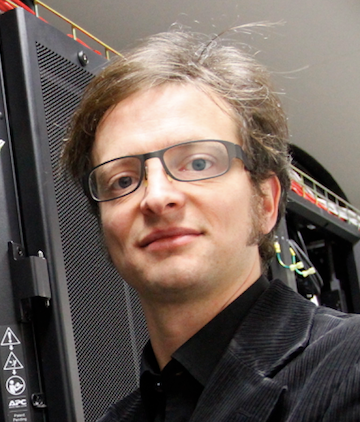 Lieven Eeckhout合作论文数Department of Electronics and Information Systems, Ghent University32
 Aman Arora合作论文数University of Texas at Austin30Reena Panda合作论文数at Austin, The University of Texas24
 Eugene B. John合作论文数Department of Electrical and Computer Engineering, College of AI, Cyber and Computing, The University of Texas at San Antonio22
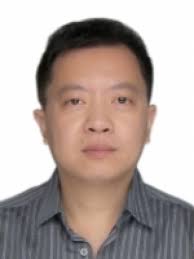 Tao Li合作论文数Department of Electrical and Computer Engineering, University of Florida21Zachary Susskind合作论文数UT Austin20
 Jee Ho Ryoo合作论文数at Austin, The University of Texas20
 Mauricio Breternitz, Jr.合作论文数Advanced Workstations Division, IBM-Austin20Shuang Song合作论文数19Qinzhe Wu合作论文数University of Texas at Austin17
 Priscila M. V. Lima合作论文数DEMAT, Universidade Federal Rural do Rio de Janeiro17
 Juan Rubio合作论文数WP Engine17
 Yue Luo合作论文数15Michael LeBeane合作论文数Univ Texas Austin14
 Ravi Bhargava合作论文数Laboratory for Computer Architecture;Department of Electrical and Computer Engineering;University of Texas at Austin;Laboratory for Computer Architecture, University of Texas at Austin14Robert H. Bell, Jr.合作论文数IBM14
 Bagus Hanindhito合作论文数The University of Texas at Austin13
 Aashish Phansalkar合作论文数13
 Alan T. L. Bacellar合作论文数Laboratory for Computer Architecture, Department of Electrical and Computer Engineering, University of Texas at Austin12
 Igor Miranda合作论文数Stellenbosch University12
 Vijaykrishnan Narayanan合作论文数School of Electrical Engineering and Computer Science, College of Engineering, Pennsylvania State University12W. Lloyd Bircher合作论文数The University of Texas at Austin12
 Diego Dutra合作论文数12
 Xinnian Zheng合作论文数at Austin, The University of Texas11
 Jian Chen合作论文数Department of Crop Science;University of Guelph;Department of Crop Science, University of Guelph11
 Dimitris Kaseridis合作论文数Department of Electrical and Computer Engineering, The University of Texas at Austin11Ciji Isen合作论文数11Ruihao Li合作论文数10Felipe M. França合作论文数Computer Science Department10Deependra Talla合作论文数10
 Ramesh Radhakrishnan合作论文数10Madhavi Valluri合作论文数10
 Muhammad Faisal Iqbal合作论文数University of Texas9
 Luis Villon合作论文数8
 Karthik Ganesan合作论文数Liverpool Women's Hospital8
 Leandro Santiago合作论文数Federal University of Rio de Janeiro7
 Zhigang Wei合作论文数7
 Ajay Joshi合作论文数Department of Electrical and Computer Engineering, College of Engineering, Boston University;Rafik B. Hariri Institute for Computing and Computational Science & Engineering, Boston University;Lightmatter Inc;CipherSonic Labs Inc.7
 Anand Sivasubramaniam合作论文数Department of Computer Science and Engineering, School of Electrical Engineering and Computer Science, College of Engineering, The Pennsylvania State University;Institute of Energy and the Environment, The Pennsylvania State University7
 Dam Sunwoo合作论文数Electrical and Computer Engineering;UT Austin;Electrical and Computer Engineering, UT Austin7Jeffrey Stuecheli合作论文数IBM Systems and Tech. Group, Austin, TX7
 Shane Greenstein合作论文数Harvard Business School, Harvard University7
 Byeong Kil Lee合作论文数Department of Electrical and Computer Engineering, University of Colorado at Colorado Springs7Richard Mateosian合作论文数6Kevin W Rudd合作论文数6Richard H Stern合作论文数6
 Tanmay Anand合作论文数6Thomas Conte合作论文数6




