M.M. Aggarwal, Z. Ahammed, A.L.S. Angelis, V. Antonenko, V. Arefiev, V. Astakhov, V. Avdeitchikov, T.C. Awes, P.V.K.S. Baba, S.K. Badyal, S. Bathe, B. Batiounia, C. Baumann, T. Bernier, K.B. Bhalla, V.S. Bhatia, C. Blume, D. Bucher, H. Büsching, L. Carlén, S. Chattopadhyay, M.P. Decowski, H. Delagrange, P. Donni, M.R. Dutta Majumdar, K. El Chenawi, A.K. Dubey, K. Enosawa, S. Fokin, V. Frolov, M.S. Ganti, S. Garpman, O. Gavrishchuk, F.J.M. Geurts, T.K. Ghosh, R. Glasow, B. Guskov, H. Å.Gustafsson, H. H.Gutbrod, I. Hrivnacova, M. Ippolitov, H. Kalechofsky, R. Kamermans, K. Karadjev, K. Karpio, B. W. Kolb, I. Kosarev, I. Koutcheryaev, A. Kugler, P. Kulinich, M. Kurata, A. Lebedev, H. Löhner, L. Luquin, D.P. Mahapatra, V. Manko, M. Martin, G. Mart́ınez, A. Maximov, Y. Miake, G.C. Mishra, B. Mohanty, M.-J. Mora, D. Morrison, T. Mukhanova, D. S. Mukhopadhyay, H. Naef, B. K. Nandi, S. K. Nayak, T. K. Nayak, A. Nianine, V. Nikitine, S. Nikolaev, P. Nilsson, S. Nishimura, P. Nomokonov, J. Nystrand, A. Oskarsson, I. Otterlund, S. Pavliouk, T. Peitzmann, D. Peressounko, V. Petracek, S.C. Phatak, W. Pinganaud, F. Plasil, M.L. Purschke, J. Rak, M. Rammler, R. Raniwala, S. Raniwala, N.K. Rao, F. Retiere, K. Reygers, G. Roland, L. Rosselet, I. Roufanov, C. Roy, J.M. Rubio, S.S. Sambyal, R. Santo, S. Sato, H. Schlagheck, H.-R. Schmidt, Y. Schutz, G. Shabratova, T.H. Shah, I. Sibiriak, T. Siemiarczuk, D. Silvermyr, B.C. Sinha, N. Slavine, K. Söderström, G. Sood, S.P. Sørensen, P. Stankus, G. Stefanek, P. Steinberg, E. Stenlund, M. Sumbera, T. Svensson, A. Tsvetkov, L. Tykarski, E.C.v.d. Pijll, N.v. Eijndhoven, G.J.v. Nieuwenhuizen, A. Vinogradov, Y.P. Viyogi, A. Vodopianov, S. Vörös, B. Wys louch, G.R. Young 2, 3, 4, 5, 6, 7, 8, 9, 10, 11, 12, 13, 14, 15, 16, 17, 18, 19, 20, 21, 22 (WA98 Collaboration) 21 University of Panjab, Chandigarh 160014, India 32 Variable Energy Cyclotron Centre, Calcutta 700064, India 43 University of Geneva, CH-1211 Geneva 4,Switzerland 54 RRC “Kurchatov Institute”, RU-123182 Moscow 65 Joint Institute for Nuclear Research, RU-141980 Dubna, Russia 76 Oak Ridge National Laboratory, Oak Ridge, Tennessee 37831-6372, USA 87 University of Jammu, Jammu 180001, India 98 University of Münster, D-48149 Münster, Germany 109 SUBATECH, Ecole des Mines, Nantes, France 1110 University of Rajasthan, Jaipur 302004, Rajasthan, India 1211 University of Lund, SE-221 00 Lund, Sweden 1312 MIT Cambridge, MA 02139 1413 Institute of Physics, Bhubaneswar 751005, India 1514 University of Tsukuba, Ibaraki 305, Japan 1615 Universiteit Utrecht/NIKHEF, NL-3508 TA Utrecht, The Netherlands 1716 KVI, University of Groningen, NL-9747 AA Groningen, The Netherlands 1817 Gesellschaft für Schwerionenforschung (GSI), D-64220 Darmstadt, Germany 1918 Nuclear Physics Institute, CZ-250 68 Rez, Czech Rep. 2019 Institute for Nuclear Studies, 00-681 Warsaw, Poland 2120 University of Tennessee, Knoxville, Tennessee 37966, USA Deceased (Dated: May 17, 2021)
Charged-particle production was studied in proton–proton collisions collected at the LHC with the ALICE detector at centre-of-mass energies 0.9 TeV and 2.36 TeV in the pseudorapidity range |η| < 1.4. In the central region (|η| < 0.5), at 0.9 TeV, we measure charged-particle pseudorapidity density dNch/dη = 3.02 ± 0.01(stat.) −0.05(syst.) for inelastic interactions, and dNch/dη = 3.58 ± 0.01(stat.) −0.12(syst.) for non-single-diffractive interactions. At 2.36 TeV, we find dNch/dη = 3.77 ± 0.01(stat.) −0.12(syst.) for inelastic, and dNch/dη = 4.43 ± 0.01(stat.) −0.12(syst.) for non-singlediffractive collisions. The relative increase in charged-particle multiplicity from the lower to higher energy is 24.7% ± 0.5%(stat.) −2.8%(syst.) for inelastic and 23.7% ± 0.5%(stat.) −1.1%(syst.) for nonsingle-diffractive interactions. This increase is consistent with that reported by the CMS collaboration for non-single-diffractive events and larger than that found by a number of commonly used models. The multiplicity distribution was measured in different pseudorapidity intervals and studied in terms of KNO variables at both energies. The results are compared to proton–antiproton data and to model
Due to its intrinsic physical properties, high density and atomic number, fast scintillation, high scintillation light yield and low ionization potential, liquid xenon is an excellent medium for the tracking and the accurate energy measurement of γ-rays in the MeV energy domain. The use of liquid xenon associated to a micro gap structure device to measure 511 keV γ-rays in PET tomograph is under investigation at Subatech. A GEANT3 simulation of a full PET design made of LXe-TPC modules has been developed and the first estimations of the performances from a realistic detector are very promising: good overall sensitivity to 511 keV γ-rays (~ 93% for a 9 cm depth LXe module), good three-dimensional spatial resolution (250 μm FWHM on the localization of the first interaction vertex). The measurement of the 3 coordinates of the interaction vertices and the energy loss associated allow to reconstruct the Compton sequence of correlated annihilation photons. Hence the capability to identify the first interaction vertex leads to major progresses in PET imaging: a parallax free PET tomograph with a high detection sensitivity of 190 kcps/kBq/ml and a 3-dimentionnal spatial resolution of 1.7 mm close to the physical intrinsic limits. The performances of the proposed LXe PET design are compared to a standard BGO PET camera operating in 3D acquisition mode.
M.M. Aggarwal, Z. Ahammed, A.L.S. Angelis, V. Antonenko, V. Arefiev, V. Astakhov, V. Avdeitchikov, T.C. Awes, P.V.K.S. Baba, S.K. Badyal, S. Bathe, B. Batiounia, T. Bernier, K.B. Bhalla, V.S. Bhatia, C. Blume, D. Bucher, H. Büsching, L. Carlén, S. Chattopadhyay, M.P. Decowski, H. Delagrange, P. Donni, M.R. Dutta Majumdar, K. El Chenawi, A.K. Dubey, K. Enosawa, S. Fokin, V. Frolov, M.S. Ganti, S. Garpman, O. Gavrishchuk, F.J.M. Geurts, T.K. Ghosh, R. Glasow, B. Guskov, H. Å.Gustafsson, H. H.Gutbrod, I. Hrivnacova, M. Ippolitov, H. Kalechofsky, K. Karadjev, K. Karpio, B. W. Kolb, I. Kosarev, I. Koutcheryaev, A. Kugler, P. Kulinich, M. Kurata, A. Lebedev, H. Löhner, L. Luquin, D.P. Mahapatra, V. Manko, M. Martin, G. Mart́ınez, A. Maximov, Y. Miake, G.C. Mishra, B. Mohanty, M.-J. Mora, D. Morrison, T. Mukhanova, D. S. Mukhopadhyay, H. Naef, B. K. Nandi, S. K. Nayak, T. K. Nayak, A. Nianine, V. Nikitine, S. Nikolaev, P. Nilsson, S. Nishimura, P. Nomokonov, J. Nystrand, A. Oskarsson, I. Otterlund, T. Peitzmann, D. Peressounko, V. Petracek, W. Pinganaud, F. Plasil, M.L. Purschke, J. Rak, R. Raniwala, S. Raniwala, N.K. Rao, F. Retiere, K. Reygers, G. Roland, L. Rosselet, I. Roufanov, C. Roy, J.M. Rubio, S.S. Sambyal, R. Santo, S. Sato, H. Schlagheck, H.-R. Schmidt, Y. Schutz, G. Shabratova, T.H. Shah, I. Sibiriak, T. Siemiarczuk, D. Silvermyr, B.C. Sinha, N. Slavine, K. Söderström, G. Sood, S.P. Sørensen, P. Stankus, G. Stefanek, P. Steinberg, E. Stenlund, M. Sumbera, T. Svensson, A. Tsvetkov, L. Tykarski, E.C.v.d. Pijll, N.v. Eijndhoven, G.J.v. Nieuwenhuizen, A. Vinogradov, Y.P. Viyogi, A. Vodopianov, S. Vörös, B. Wys louch, G.R. Young (WA98 Collaboration) 1 University of Panjab, Chandigarh 160014, India 2 Variable Energy Cyclotron Centre, Calcutta 700064, India 3 University of Geneva, CH-1211 Geneva 4,Switzerland 4 RRC “Kurchatov Institute”, RU-123182 Moscow 5 Joint Institute for Nuclear Research, RU-141980 Dubna, Russia 6 Oak Ridge National Laboratory, Oak Ridge, Tennessee 37831-6372, USA 7 University of Jammu, Jammu 180001, India 8 University of Münster, D-48149 Münster, Germany 9 SUBATECH, Ecole des Mines, Nantes, France 10 University of Rajasthan, Jaipur 302004, Rajasthan, India 11 University of Lund, SE-221 00 Lund, Sweden 12 MIT Cambridge, MA 02139 13 Institute of Physics, Bhubaneswar 751005, India 14 University of Tsukuba, Ibaraki 305, Japan 15 Universiteit Utrecht/NIKHEF, NL-3508 TA Utrecht, The Netherlands 16 KVI, University of Groningen, NL-9747 AA Groningen, The Netherlands 17 Gesellschaft für Schwerionenforschung (GSI), D-64220 Darmstadt, Germany 18 Nuclear Physics Institute, CZ-250 68 Rez, Czech Rep. 19 Institute for Nuclear Studies, 00-681 Warsaw, Poland and 20 University of Tennessee, Knoxville, Tennessee 37966, USA (Dated: February 14, 2014)
The production cross section of electrons from semileptonic decays of beauty hadrons was measured at mid-rapidity (vertical bar y vertical bar < 0.8) in, the transverse momentum range 1 < p(T) < 8 GeV/c with the ALICE experiment at the CERN LHC in pp collisions at a center of mass energy root s = 7 TeV using an integrated luminosity of 2.2 nb(-1). Electrons from beauty hadron decays were selected based on the displacement of the decay vertex from the collision vertex. A perturbative QCD calculation agrees with the measurement within uncertainties. The data were extrapolated to the full phase space to determine the total cross section for the production of beauty quark-antiquark pairs. (C) 2013 CERN. Published by Elsevier B.V. All rights reserved.
We report the first measurement of the net-charge fluctuations in Pb-Pb collisions at sqrt[sNN]=2.76 TeV, measured with the ALICE detector at the CERN Large Hadron Collider. The dynamical fluctuations per unit entropy are observed to decrease when going from peripheral to central collisions. An additional reduction in the amount of fluctuations is seen in comparison to the results from lower energies. We examine the dependence of fluctuations on the pseudorapidity interval, which may account for the dilution of fluctuations during the evolution of the system. We find that the fluctuations at the LHC are smaller compared to the measurements at the BNL Relativistic Heavy Ion Collider, and as such, closer to what has been theoretically predicted for the formation of a quark-gluon plasma.
The elliptic, v(2), triangular, v(3), and quadrangular, v(4), azimuthal anisotropic flow coefficients are measured for unidentified charged particles, pions, and (anti-)protons in Pb-Pb collisions at root S-NN = 2.76 TeV with the ALICE detector at the Large Hadron Collider. Results obtained with the event plane and four-particle cumulant methods are reported for the pseudo-rapidity range vertical bar eta vertical bar < 0.8 at different collision centralities and as a function of transverse momentum, p(T), out to p(T) = 20 GeV/c. The observed non-zero elliptic and triangular flow depends only weakly on transverse momentum for p(T) > 8 GeV/c. The small p(T) dependence of the difference between elliptic flow results obtained from the event plane and four-particle cumulant methods suggests a common origin of flow fluctuations up to p(T) = 8 GeV/c. The magnitude of the (anti-)proton elliptic and triangular flow is larger than that of pions out to at least p(T) = 8 GeV/c indicating that the particle type dependence persists out to high p(T). (c) 2013 CERN. Published by Elsevier B.V. All rights reserved.
Measurements of direct photon production in p+Pb and p+C collisions at $\sqrt{s_\mathrm{NN}} = 17.4\mathrm{GeV}$ are presented. Upper limits on the direct photon yield as a function of $p_\mathrm{T}$ are derived and compared to the results for Pb+Pb collisions at $\sqrt{s_\mathrm{NN}} = 17.3$ GeV. The production of the $\eta$ meson, which is an important input to the direct photon signal extraction, has been determined in the $\eta \rightarrow 2\gamma$ channel for p+C collisions at $\sqrt{s_\mathrm{NN}} = 17.4\mathrm{GeV}$.
Measurements of charge-dependent azimuthal correlations with the ALICE detector at the LHC are reported for Pb-Pb collisions at sqrt[s(NN)] = 2.76 TeV. Two- and three-particle charge-dependent azimuthal correlations in the pseudorapidity range |η| < 0.8 are presented as a function of the collision centrality, particle separation in pseudorapidity, and transverse momentum. A clear signal compatible with a charge-dependent separation relative to the reaction plane is observed, which shows little or no collision energy dependence when compared to measurements at RHIC energies. This provides a new insight for understanding the nature of the charge-dependent azimuthal correlations observed at RHIC and LHC energies.
The ALICE Collaboration has measured the inclusive production of muons from heavy-flavor decays at forward rapidity, 2.5<y<4, in pp and Pb-Pb collisions at sqrt[s(NN)]=2.76 TeV. The p(t)-differential inclusive cross section of muons from heavy-flavor decays in pp collisions is compared to perturbative QCD calculations. The nuclear modification factor is studied as a function of p(t) and collision centrality. A weak suppression is measured in peripheral collisions. In the most central collisions, a suppression of a factor of about 3-4 is observed in 6<p(t)<10 GeV/c. The suppression shows no significant p(t) dependence.
The first measurement of neutron emission in electromagnetic dissociation of ^{208}Pb nuclei at the LHC is presented. The measurement is performed using the neutron zero degree calorimeters of the ALICE experiment, which detect neutral particles close to beam rapidity. The measured cross sections of single and mutual electromagnetic dissociation of Pb nuclei at sqrt[s(NN)]=2.76 TeV with neutron emission are σ(singleEMD)=187.4 ± 0.2(stat)(-11.2)(+13.2) (syst) b and σ(mutualEMD) = 5.7 ± 0.1(stat) ± 0.4(syst) b, respectively. The experimental results are compared to the predictions from a relativistic electromagnetic dissociation model.
The ALICE experiment has measured low-mass dimuon production in pp collisions at root s = 7 TeV in the dimuon rapidity region 2.5 < y < 4. The observed dimuon mass spectrum is described as a superposition of resonance decays (eta, rho, omega, eta', phi) into muons and semi-leptonic decays of charmed mesons. The measured production cross sections for omega and phi are sigma(omega)(1 < p(t) < 5 GeV/c. 2.5 < y < 4) = 5.28 +/- 0.54(stat) +/- 0.49(syst) mb and sigma(phi)(1 < p(t) < 5 GeV/c. 2.5 < y < 4) = 0.940 +/- 0.084(stat) +/- 0.076(syst) mb. The differential cross sections d(2)sigma/dy dp(t) are extracted as a function of p(t) for omega and phi. The ratio between the rho and omega cross section is obtained. Results for the phi are compared with other measurements at the same energy and with predictions by models. (C) 2012 CERN. Published by Elsevier B.V. All rights reserved.
Abelev, B.; Quintana, A. Abrahantes; Adamova, D.; Adare, A. M.; Aggarwal, M. M.; Rinella, G. Aglieri; Agocs, A. G.; Agostinelli, A.; Aguilar Salazar, S.; Ahammed, Z.; Ahmad, N.; Masoodi, A. Ahmad; Ahn, S. U.; Akindinov, A.; Aleksandrov, D.; Alessandro, B.; AlfaroMolina, R.; Alici, A.; Alkin, A.; Almaraz Avina, E.; Alt, T.; Altini, V.; Altinpinar, S.; Altsybeev, I.; Andrei, C.; Andronic, A.; Anguelov, V.; Anson, C.; Anticic, T.; Antinori, F.; Antonioli, P.; Aphecetche, L.; Appelshaeuser, H.; Arbor, N.; Arcelli, S.; Arend, A.; Armesto, N.; Arnaldi, R.; Aronsson, T.; Arsene, I. C.; Arslandok, M.; Asryan, A.; Augustinus, A.; Averbeck, R.; Awes, T. C.; Aysto, J.; Azmi, M. D.; Bach, M.; Badala, A.; Baek, Y. W.
The production of K∗(892)0 and ϕ(1020) in pp collisions at \(\sqrt{s}=7~\mathrm{TeV}\) was measured by the ALICE experiment at the LHC. The yields and the transverse momentum spectra d2 N/dydp T at midrapidity |y|<0.5 in the range 0<p T<6 GeV/c for K∗(892)0 and 0.4<p T<6 GeV/c for ϕ(1020) are reported and compared to model predictions. Using the yield of pions, kaons, and Ω baryons measured previously by ALICE at \(\sqrt{s}=7\ \mathrm{TeV}\), the ratios K∗/K−, ϕ/K∗, ϕ/K−, ϕ/π −, and \((\Omega + \overline{\Omega })/\phi\) are presented. The values of the K∗/K−, ϕ/K∗ and ϕ/K− ratios are similar to those found at lower centre-of-mass energies. In contrast, the ϕ/π − ratio, which has been observed to increase with energy, seems to saturate above 200 GeV. The \((\Omega + \overline {\Omega })/\phi\) ratio in the p T range 1–5 GeV/c is found to be in good agreement with the prediction of the \(\mathrm{HIJING}/\mathrm{B}\overline{\mathrm{B}}\) v2.0 model with a strong colour field.
The ALICE Collaboration has studied J/ψ production in pp collisions at √s=7 TeV at the LHC through its muon pair decay. The polar and azimuthal angle distributions of the decay muons were measured, and results on the J/ψ polarization parameters λ(θ) and λ(φ) were obtained. The study was performed in the kinematic region 2.5<y<4, 2<p(t)<8 GeV/c, in the helicity and Collins-Soper reference frames. In both frames, the polarization parameters are compatible with zero, within uncertainties.
The production of the prompt charm mesons D0, D+, D*+, and their antiparticles, was measured with the ALICE detector in Pb-Pb collisions at the LHC, at a centre-of-mass energy \( \sqrt{{{s_{\mathrm{NN}}}}}=2.76\;\mathrm{TeV} \) per nucleon-nucleon collision. The p t-differential production yields in the range 2 < p t < 16 GeV/c at central rapidity, |y| < 0.5, were used to calculate the nuclear modification factor R AA with respect to a proton-proton reference obtained from the cross section measured at \( \sqrt{s}=7\;\mathrm{TeV} \) and scaled to \( \sqrt{s}=2.76\;\mathrm{TeV} \). For the three meson species, R AA shows a suppression by a factor 3–4, for transverse momenta larger than 5 GeV/c in the 20% most central collisions. The suppression is reduced for peripheral collisions.
Abelev, B.; Adam, J.; Adamova, D.; Adare, A. M.; Aggarwal, M. M.; Rinella, G. Aglieri; Agocs, A. G.; Agostinelli, A.; Salazar, S. Aguilar; Ahammed, Z.; Ahmad, N.; Masoodi, A. Ahmad; Ahn, S. A.; Ahn, S. U.; Akindinov, A.; Aleksandrov, D.; Alessandro, B.; Molina, R. Alfaro; Alici, A.; Alkin, A.; Almaraz Avina, E.; Alme, J.; Alt, T.; Altini, V.; Altinpinar, S.; Altsybeev, I.; Andrei, C.; Andronic, A.; Anguelov, V.; Anielski, J.; Anson, C.; Anticic, T.; Antinori, F.; Antonioli, P.; Aphecetche, L.; Appelshaeuser, H.; Arbor, N.; Arcelli, S.; Arend, A.; Armesto, N.; Arnaldi, R.; Aronsson, T.; Arsene, I. C.; Arslandok, M.; Asryan, A.; Augustinus, A.; Averbeck, R.; Awes, T. C.; Aysto, J.; Azmi, M. D. Published in: Physical Review Letters
Abelev, B.; Adam, J.; Adamova, D.; Adare, A. M.; Aggarwal, M. M.; Rinella, G. Aglieri; Agocs, A. G.; Agostinelli, A.; Aguilar Salazar, S.; Ahammed, Z.; Masoodi, A. Ahmad; Ahmad, N.; Ahn, S. U.; Akindinov, A.; Aleksandrov, D.; Alessandro, B.; Alfaro Molina, R.; Alici, A.; Alkin, A.; Almaraz Avina, E.; Alme, J.; Alt, T.; Altini, V.; Altinpinar, S.; Altsybeev, I.; Andrei, C.; Andronic, A.; Anguelov, V.; Anielski, J.; Anson, C.; Anticic, T.; Antinori, F.; Antonioli, P.; Aphecetche, L.; Appelshaeuser, H.; Arbor, N.; Arcelli, S.; Arend, A.; Armesto, N.; Arnaldi, R.; Aronsson, T.; Arsene, I. C.; Arslandok, M.; Asryan, A.; Augustinus, A.; Averbeck, R.; Awes, T. C.; Aystoe, J.; Azmi, M. D.; Bach, M.
The P-T-differential inclusive production cross section of the prompt charm-strange meson D-s(+) in the rapidity range vertical bar y vertical bar < 0.5 was measured in proton-proton collisions at root s = 7 TeV at the LHC using the ALICE detector. The analysis was performed on a data sample of 2.98 x 10(8) events collected with a minimum-bias trigger. The corresponding integrated luminosity is L-int = 4.8 nb(-1). Reconstructing the decay D-s(+) -> phi pi(+) with phi -> K-K+, and its charge conjugate, about 480 D-s(+/-) mesons were counted, after selection cuts, in the transverse momentum range 2 < P-T < 12 GeV/c. The results are compared with predictions from models based on perturbative QCD. The ratios of the cross sections of four D meson species (namely D-0, D+, D*+ and D-s(+)) were determined both as a function of p(T) and integrated over p(T)after extrapolating to full p(T) range, together with the strangeness suppression factor in charm fragmentation. The obtained values are found to be compatible within uncertainties with those measured by other experiments in e(+)e(-), ep and pp interactions at various centre-of-mass energies. (C) 2012 CERN. Published by Elsevier By. All rights reserved.
The first measurements of the invariant differential cross sections of inclusive pi(0) and eta meson production at mid-rapidity in proton-proton collisions root s = 0.9 TeV and root s = 7 TeV are reported. The pi(0) measurement covers the ranges 0.4 < p(T) < 7 GeV/c and 0.3 < p(T) < 25 GeV/c for these two energies, respectively. The production of eta mesons was measured at root s = 7 TeV in the range 0.4 < p(T) < 15 GeV/c. Next-to-Leading Order perturbative QCD calculations, which are consistent with the pi(0) spectrum at root s = 0.9 TeV, overestimate those of pi(0) and eta mesons at root s = 7 TeV, but agree with the measured eta/pi(0) ratio at root s = 7 TeV. (C) 2012 CERN. Published by Elsevier B.V. All rights reserved.
 Mikhail Ippolitov合作论文数National Research Nuclear University MEPhI;Quark Matter Laboratory, Kurchatov Institute85
 Yasuo Miake (三明康郎)合作论文数Institute of Physics, University of Tsukuba;Department of Pure and Applied Sciences, University of Tsukuba82
 Durga Mahapatra合作论文数Department of Physics, Utkal University82
 Tapan Kumar Nayak合作论文数Variable Energy Cyclotron Centre, Homi Bhabha National Institute;CERN;University of Houston79
 S. Nikolaev合作论文数79J. Nystrand合作论文数77M. R. Dutta Majumdar合作论文数77I. Hrivnacova合作论文数77
 Christoph Blume合作论文数Institut für Kernphysik, Goethe-Universität Frankfurt am Main75V. Manko合作论文数73
 Basanta Kumar Nandi合作论文数Department of Physics, Indian Institute of Technology Bombay73Terry Awes合作论文数Oak Ridge National Laboratory73B. Espagnon合作论文数72
 Thomas Peitzmann合作论文数Institute for Subatomic Physics, Science Faculty, Utrecht University;CERN72
 Roberto Preghenella合作论文数Istituto Nazionale di Fisica Nucleare, Bologna;CERN71H. Delagrange合作论文数70Anders Oskarsson合作论文数Division of Particle and Nuclear Physics, Department of Physics, Faculty of Science, Lund University69
 Tatsuya Chujo合作论文数Institute of Physics, University of Tsukuba;Division of Physics, Faculty of Pure and Applied Sciences, University of Tsukuba69Rashmi Raniwala合作论文数University of Rajasthan;ALICE Collaborator, European Organization for Nuclear Research68
 Zubayer Ahammed合作论文数Variable Energy Cyclotron Centre68a baldit合作论文数67Alfredo Musso合作论文数65
 Massimo Masera合作论文数Department of Physics, University of Turin64
 Teodor Siemiarczuk合作论文数High Energy Physics Division, Department of Fundamental Research, National Centre for Nuclear Research64
 David Silvermyr合作论文数Division of Particle Physics, Department of Physics, Lund University63Ingvar Otterlund合作论文数Division of Particle and Nuclear Physics, Department of Physics, Faculty of Science, Lund University63
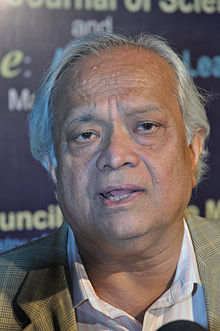 Bikash Sinha合作论文数Variable Energy Cyclotron Centre63
 Christelle Roy合作论文数France-Arizona Institute for Global Grand Challenges, The University of Arizona;European and International Division, CNRS62P. Foka合作论文数62
 Klaus Reygers合作论文数Physikalisches Institut, Universität Heidelberg62M. Gallio合作论文数62
 Jan Rak合作论文数Namitech;Jyvaskyla University62Vojtech Petracek合作论文数61
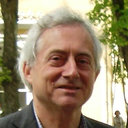 Jean-Yves Grossiord合作论文数61A. Masoni合作论文数59S. Fokin合作论文数59G. Shabratova合作论文数59R. Santo合作论文数58R. Kamermans合作论文数58
 Paolo Giubellino合作论文数Istituto Nazionale di Fisica Nucleare;Technische Universität Darmstadt;GSI Helmholtz Centre for Heavy Ion Research57Walter Sondheim合作论文数Los Alamos National Laboratory56Y. Schutz合作论文数56F. Manso合作论文数56
 Madan M. Aggarwal合作论文数Department of Physics, Panjab University56
 Fedor Guber合作论文数Institute for Nuclear Research, Russian Academy of Sciences;Department of Experimental Physics, Russian Academy of Sciences55
 Hans-Rudolf Schmidt合作论文数Physikalisches Institut, Mathematisch-Naturwissenschaftliche Fakultät, Eberhard Karls Universität Tübingen;GSI Helmholtzzentrum für Schwerionenforschung GmbH54Grzegorz Stefanek合作论文数Division of Nuclear Physics, Institute of Physics, Jan Kochanowski University53a piccotti合作论文数53Y. Le Bornec合作论文数52




