This paper examines ways in which cultural evolution theory can treat collective knowledge in human evolution, focusing on how collective knowledge complements high-fidelity copying. We distinguish between two schematic aspects of high-fidelity copying: (1) that cultural learning consists of transmission between individuals, and (2) that cumulative culture requires high-fidelity copying or imitation. After discussing these aspects and reviewing suggestions regarding the need to adapt them, we consider approaches to cultural adaptation that address the first aspect and go beyond high-fidelity copying-based social learning; in particular the notion of Distributed Adaptation (DA), in which knowledge is stored at the group level. We argue that DAs are a subset of collective knowledge phenomena, that they may take part in cumulative culture, and that high-fidelity copying is neither necessary nor sufficient for DA. Finally, we briefly discuss what collective knowledge adds to existing ideas on human evolution and the research avenues that it opens. We show that attention to collective knowledge affects the kinds of cognitive functions that are considered, specifically that it highlights cognitive functions that promote aggregation of information, and that it has the potential to affect the hypotheses about the timing and trajectory of human cultural evolution that are entertained.
Heyes presents a compelling account of how cultural evolutionary processes shape and create “rules,” or norms, of social behavior. She suggested that normativity depends on implicit, genetically inherited, domaingeneral processes and explicit, culturally inherited, domain-specific processes. Her approach challenges the nativist point of view and provides supporting evidence that shows how social interactions are responsible for creating mental processes that assist in understanding and behaving according to rules or norms. We agree. In our commentary, we suggest that it is not only that mental processes for grasping norms are recreated in each generation but also that social interactions shape the kinds of social groups that are recognized (for a more extensive discussion, see Kish Bar-On & Lamm, 2023). We highlight evidence showing that accounts of norm psychology thus require a richer notion of human groups. In her analysis of the characterization of norms and norm psychology in the literature, Heyes mentioned definitions of norms from several disciplines (e.g., Chudek & Henrich, 2011; Göckeritz et al., 2014; House, 2018) and critically prodded the relation between norms and rules. However, another concept reoccurs in almost every definition of norms, including the one she developed: the concept of human groups. A detailed picture of normative behavior must address the question of what human groups are, how they evolved, and how this affects normativity. According to Heyes, groups play a significant role in norm enforcement, compliance, and commentary. Within a group context, individuals learn which norms they should follow and which behaviors they should avoid and develop the ability to partake in commentary concerning what is appropriate, allowed, required, and forbidden in their groups. However, the types of evidence Heyes exploited in her discussion about the relation between implicit and explicit normativity are largely (although not entirely) based on experiments of economic games that, for the (justified) sake of simplicity, address groups as small, homogeneous, and stable. These types of evidence build on the hypothesis that small and noninteracting groups are appropriate models and represent the origins of human groups and norm psychology. However, this ignores a different evolutionary perspective supported by significant evidence, according to which human groups transitioned from closed social bands to open bands nested in a multilevel social community much earlier than was commonly thought—about 800,000 years ago (Layton & O’Hara, 2010; Sterelny, 2021; Stiner, 2002). The latter perspective, advocated by Kim Sterelny and others, urges researchers to reconsider work that takes groups to be simple and small and to consider the possibility that some economic experiments and other experimental and observational studies based their assumptions and results on an artifact, not on the natural phenomenon of groups. From the Pleistocene to the early Holocene, Sterelny’s (2021, pp. 57, 70–74) narrative demonstrates how Hominins exchanged the hierarchical social groups of their ancestors for more egalitarian bands, progressing from mutualistic cooperation centered around foraging and hunting to a more demanding framework of indirect reciprocation. Previous discussions have shown that social groups across species rapidly self-organize into hierarchies in which members vary in their level of power, influence, skill, or dominance (Gould, 2002; 1187391 PPSXXX10.1177/17456916231187391Kish Bar-On, LammPerspectives on Psychological Science research-article2023
Distributed adaptations are cases in which adaptation is dependent on the population as a whole: the adaptation is conferred by a structural or compositional aspect of the population; the adaptively relevant information cannot be reduced to information possessed by a single individual. Possible examples of human-distributed adaptations are song lines, traditions, trail systems, game drive lanes and systems of water collection and irrigation. Here we discuss the possible role of distributed adaptations in human cultural macro-evolution. Several kinds of human-distributed adaptations are presented, and their evolutionary implications are highlighted. In particular, we discuss the implications of population size, density and bottlenecks on the distributed adaptations that a population may possess and how they in turn would affect the population's resilience to ecological change. We discuss the implications that distributed adaptations may have for human collective action and the possibility that they played a role in colonization of new areas and niches, in seasonal migration, and in setting constraints for minimal inter-population connectivity.This article is part of the theme issue 'Human socio-cultural evolution in light of evolutionary transitions'.
Since the ENCODE project published its final results in a series of articles in 2012, there is no consensus on what its implications are. ENCODE's central and most controversial claim was that there is essentially no junk DNA: most sections of the human genome believed to be «junk» are functional. This claim was met with many reservations. If researchers disagree about whether there is junk DNA, they have first to agree on a concept of function and how function, given a particular definition, can be discovered. The ENCODE debate centered on a notion of function that assumes a strong dichotomy between evolutionary and non-evolutionary function and causes, prevalent in the Modern Evolutionary Synthesis. In contrast to how the debate is typically portrayed, both sides share a commitment to this distinction. This distinction is, however, much debated in alternative approaches to evolutionary theory, such as the EES. We show that because the ENCODE debate is grounded in a particular notion of function, it is unclear how it connects to broader debates about what is the correct evolutionary framework. Furthermore, we show how arguments brought forward in the controversy, particularly arguments from mathematical population genetics, are deeply embedded in their particular disciplinary contexts, and reflect substantive assumptions about the evolution of genomes. With this article, we aim to provide an anatomy of the ENCODE debate that offers a new perspective on the notions of function both sides employed, as well as to situate the ENCODE debate within wider debates regarding the forces operating in evolution.
Open AccessMoreSectionsView PDF ToolsAdd to favoritesDownload CitationsTrack Citations ShareShare onFacebookTwitterLinked InRedditEmail Cite this article Carmel Yohay, Shavit Ayelet, Lamm Ehud and Szathmáry Eörs 2023Correction to: Human socio-cultural evolution in light of evolutionary transitions: introduction to the theme issue (2022) by Carmel et al.Phil. Trans. R. Soc. B3782023000320230003http://doi.org/10.1098/rstb.2023.0003SectionOpen AccessCorrectionCorrection to: Human socio-cultural evolution in light of evolutionary transitions: introduction to the theme issue (2022) by Carmel et al. Yohay Carmel Yohay Carmel http://orcid.org/0000-0002-5883-0184 Google Scholar Find this author on PubMed Search for more papers by this author , Ayelet Shavit Ayelet Shavit Google Scholar Find this author on PubMed Search for more papers by this author , Ehud Lamm Ehud Lamm http://orcid.org/0000-0003-2980-7847 Google Scholar Find this author on PubMed Search for more papers by this author and Eörs Szathmáry Eörs Szathmáry http://orcid.org/0000-0001-5227-2997 Google Scholar Find this author on PubMed Search for more papers by this author Yohay Carmel Yohay Carmel http://orcid.org/0000-0002-5883-0184 Google Scholar Find this author on PubMed Search for more papers by this author , Ayelet Shavit Ayelet Shavit Google Scholar Find this author on PubMed Search for more papers by this author , Ehud Lamm Ehud Lamm http://orcid.org/0000-0003-2980-7847 Google Scholar Find this author on PubMed Search for more papers by this author and Eörs Szathmáry Eörs Szathmáry http://orcid.org/0000-0001-5227-2997 Google Scholar Find this author on PubMed Search for more papers by this author Published:20 February 2023https://doi.org/10.1098/rstb.2023.0003This article corrects the followingIntroductionHuman socio-cultural evolution in light of evolutionary transitions: introduction to the theme issuehttps://doi.org/10.1098/rstb.2021.0397 Yohay Carmel, Ayelet Shavit, Ehud Lamm and Eörs Szathmáry volume 378issue 1872Philosophical Transactions of the Royal Society B: Biological Sciences23 January 2023Phil. Trans. R. Soc. B378, 20210397. (Published 23 January 2023). (https://doi.org/10.1098/rstb.2021.0397)In the original version of this article, an affiliation was omitted for author Eörs Szathmáry. The correct affiliations are shown below.This has now been corrected on the publisher's website.Eörs Szathmáry5,6,75Institute of Evolution, Centre for Ecological Research, 1121 Budapest, Hungary6Parmenides Foundation, 82343 Pöcking, Germany7Department of Plant Systematics, Ecology and Theoretical Biology, Eötvös University, Budapest 1117, Hungary Previous Article VIEW FULL TEXT DOWNLOAD PDF FiguresRelatedReferencesDetailsRelated articlesHuman socio-cultural evolution in light of evolutionary transitions: introduction to the theme issue23 January 2023Philosophical Transactions of the Royal Society B: Biological Sciences This Issue10 April 2023Volume 378Issue 1874Discussion meeting ‘Collective behaviour through time’ issue organized and edited by Christos C. Ioannou and Kate L. Laskowski Article InformationDOI:https://doi.org/10.1098/rstb.2023.0003PubMed:36802790Published by:Royal SocietyPrint ISSN:0962-8436Online ISSN:1471-2970History: Manuscript received24/01/2023Manuscript accepted24/01/2023Published online20/02/2023Published in print10/04/2023 License:© 2023 The Authors.Published by the Royal Society under the terms of the Creative Commons Attribution License http://creativecommons.org/licenses/by/4.0/, which permits unrestricted use, provided the original author and source are credited. Citations and impact Subjectsbehaviour
People's attitudes towards social norms play a crucial role in understanding group behaviour. Norm psychology accounts focus on processes of norm internalization that influence people's norm-following attitudes but pay considerably less attention to social identity and group identification processes. Social identity theory in contrast studies group identity but works with a relatively thin and instrumental notion of social norms. We argue that to best understand both sets of phenomena, it is important to integrate the insights of both approaches. Social status, social identity and social norms are considered separate phenomena in evolutionary accounts. We discuss assumptions and views that support this separation, and suggest an integrated view of our own. We argue that we should be open to the early origins of human social complexity, and conjecture that the longer that the human social world involved multi-level societies the more probable it is that norm psychology and social identity interacted in rich ways. This article is part of the theme issue 'Human socio-cultural evolution in light of evolutionary transitions'.
Human societies are no doubt complex. They are characterized by division of labour, multiple hierarchies, intricate communication networks and transport systems. These phenomena and others have led scholars to propose that human society may be, or may become, a new hierarchical level that may dominate the individual humans within it, similar to the relations between an organism and its cells, or an ant colony and its members. Recent discussions of the possibility of this major evolutionary transition in individuality (ETI) raise interesting and controversial questions that are explored in the present issue from four different complementary perspectives. (i) The general theory of ETIs. (ii) The unique aspects of cultural evolution. (iii) The evolutionary history and pre-history of humans. (iv) Specific routes of a possible human ETI. Each perspective uses different tools provided by different disciplines: biology, anthropology, cultural evolution, systems theory, psychology, economy, linguistics and philosophy of science. Altogether, this issue provides a broad and rich application of the notion of ETI to human past, present and perhaps also future evolution. It presents important case studies, new theoretical results and novel questions for future research. This article is part of the theme issue 'Human socio-cultural evolution in light of evolutionary transitions'.
The “Encyclopedia of DNA Elements” (ENCODE) project was launched by the US National Human Genome Research Institute in the aftermath of the Human Genome Project (HGP). It aimed to systematically map the human transcriptome, and held the promise that identifying potential regulatory regions and transcription factor binding sites would help address some of the perplexing results of the HGP. Its initial results published in 2012 produced a flurry of high-impact publications as well as criticisms. Here we put the results of ENCODE and the work on epigenomics that followed in a broad theoretical and historical context, focusing on three strands of research. The first is the history of thinking about the organization of genomes, both physical and regulatory. The second is the history of ideas about gene regulation, primarily in eukaryotes. Finally, and connecting these two issues, we suggest how to think about the role of genetic material in physiology and development.
Species’ adaptation to their environments occurs via a range of mechanisms of adaptation. These include genetic adaptations as well as non-traditional inheritance mechanisms such as learned behaviors, niche construction, epigenetics, horizontal gene transfer, and alteration of the composition of a host’s associated microbiome. We propose to supplement these with another modality of eco-evolutionary dynamics: cases in which adaptation to the environment occurs via what may be called a “distributed adaptation,” in which the adaptation is not conferred via something carried by an individual of the adapted species (as with genes, behavior, or associated microbes), but by some structural or compositional aspect of the population. Put differently, the adaptively relevant information cannot be reduced to information possessed by a single individual, whether genetic or otherwise. Rather, the adaptively relevant information is distributed, and is found strictly at the population level. While human culture is presumably such a case, as may be cases found in social insects, we want to suggest that there are other cases that belong to this category and to explore its evolutionary implications. In particular, we discuss the factors that affect whether adaptive information is stored in a distributed way, to what degree, and what kinds of adaptive information are most likely to be found in this modality of adaptation.
A prevalent narrative locates the discovery of the statistical phenomenon of regression to the mean in the work of Francis Galton. It is claimed that after 1885, Galton came to explain the fact that offspring deviated less from the mean value of the population than their parents did as a population-level statistical phenomenon and not as the result of the processes of inheritance. Arguing against this claim, we show that Galton did not explain regression towards mediocrity statistically, and did not give up on his ideas regarding an inheritance process that caused offspring to revert to the mean. While the common narrative focuses almost exclusively on Galton's statistics, our arguments emphasize the anthropological and biological questions that Galton addressed. Galton used regression towards mediocrity to support the claim that some biological types were more stable than others and hence were resistant to evolutionary change. This view had implications concerning both natural selection and eugenics. The statistical explanation attributed to Galton appeared later, during the biometrician-mutationist debate in the early 1900s. It was in the context of this debate and specifically by the biometricians, that the development of the statistical explanation was originally attributed to Galton.
During the 1960s and 1970s population geneticists pushed beyond models of single genes to grapple with the effect on evolution of multiple genes associated by linkage. The resulting models of multiple interacting loci suggested that blocks of genes, maybe even entire chromosomes or the genome itself, should be treated as a unit. In this context, Richard Lewontin wrote his famous 1974 book The Genetic Basis of Evolutionary Change, which concludes with an argument for considering the entire genome as the unit of selection as a result of linkage. Why did Lewontin and others devote so much intellectual energy to the "complications of linkage" in the 1960s and 1970s? We argue that this attention to linkage should be understood in the context of research on chromosomal inversions and co-adapted gene complexes that occupied mid-century evolutionary genetics. For Lewontin, the complications of linkage were an extension of this chromosomal focus expressed in the new language of models for linkage disequilibrium.
The historiography of genetics has radically changed for the past few decades. Gregor Mendel’s Versuche uber Pflanzen-Hybriden is no longer simply regarded as a study of the problem of heredity (e.g. Olby 1979; Gliboff 1999; Muller-Wille and Orel 2007; Shan 2021). The so-called “great rediscovery” story has been greatly reshaped (e.g. Meijer 1985; Rheinberger 1995; Simunek, Hosfeld, and Breidbach 2011). The Mendelian-Biometrician controversy has been and is being re-examined (e.g. Sloan 2000; Radick 2005; Pence 2011; Shan 2020). The gene-centric narrative of the history of genetics has been seriously challenged (e.g. Keller 2000; Oyama 2000; Waters 2006). The significance and role of women in the history of genetics is being reassessed (e.g. Dietrich and Tambasco 2007; Richmond 2007; 2017). The history of developmental biology has been retold (e.g. Crowe et al. 2015). The role of non-Western geneticists and the networks they created is being established (e.g. Dietrich 2016). And there is an increasing interest in the role of the genome in the historiography of genetics (e.g. Lamm 2014; 2015). This special issue aims to explore and examine new approaches in the historiography of genetics by integrating the role of women, national and international peripheries and networks, development, genomics, and new frontiers in the methodologies now available to historians of biology.
The story of genetics typically omits the original discovery of the molecular nature of DNA: Friedrich Miescher's 1869 discovery of the substance he christened “nuclein”. The article explains how he came... In 1869, the young Swiss biochemist Friedrich Miescher discovered the molecule we now refer to as DNA, developing techniques for its extraction. In this paper we explain why his name is all but forgotten, and his role in the history of genetics is mostly overlooked. We focus on the role of national rivalries and disciplinary turf wars in shaping historical memory, and on how the story we tell shapes our understanding of the science. We highlight that Miescher could just as correctly be portrayed as the person who understood the chemical nature of chromatin (before the term existed), and the first to suggest how stereochemistry might serve as the basis for the transmission of hereditary variation.
In 1869, Johann Friedrich Miescher discovered a new substance in the nucleus of living cells. The substance, which he called nuclein, is now known as DNA, yet both Miescher's name and his theoretical ideas about nuclein are all but forgotten. This paper traces the trajectory of Miescher's reception in the historiography of genetics. To his critics, Miescher was a "contaminator," whose preparations were impure. Modern historians portrayed him as a "confuser," whose misunderstandings delayed the development of molecular biology. Each of these portrayals reflects the disciplinary context in which Miescher's work was evaluated. Using archival sources to unearth Miescher's unpublished speculations-including an analogy between the hereditary material and language, and a speculation that a series of asymmetric carbon atoms could account for hereditary variation-this paper clarifies the ways in which the past was judged through the lens of contemporary concerns. It also shows how organization, structure, function, and information were already being considered when nuclein was first discovered nearly 150 years ago.
Statistical reasoning is an integral part of modern scientific practice. In The Seven Pillars of Statistical Wisdom Stephen Stigler presents seven core ideas, or pillars, of statistical thinking and the historical developments of each of these pillars, many of which were concurrent with developments in biology. Here we focus on Stigler's fifth pillar, regression, and his discussion of how regression to the mean came to be thought of as a solution to a challenge for the theory of natural selection. Stigler argues that the purely mathematical phenomenon of regression to the mean provides a resolution to a problem for Darwin's evolutionary theory. Thus, he argues that the resolution to the problem for Darwin's theory is purely mathematical, rather than causal. We show why this argument is problematic.
This article describes how empirical discoveries in the 1930s–1950s regarding population variation for chromosomal inversions affected Theodosius Dobzhansky and Richard Goldschmidt. A significant fraction of the empirical work I discuss was done by Dobzhansky and his coworkers; Goldschmidt was an astute interpreter, with strong and unusual commitments. I argue that both belong to a mechanistic tradition in genetics, concerned with the effects of chromosomal organization and systems on the inheritance patterns of species. Their different trajectories illustrate how scientists’ commitments affect how they interpret new evidence and adjust to it. Dobzhansky was moved to revised views about selection, while Goldschmidt moved his attention to different genetic phenomena. However different, there are significant connections between the two that enrich our understanding of their views. I focus on two: the role of developmental considerations in Dobzhansky’s thought and the role of neutrality and drift in Goldschmidt’s evolutionary account. Dobzhansky’s struggle with chromosomal variation is not solely about competing schools of thought within the selectionist camp, as insightfully articulated by John Beatty, but also a story of competition between selectionist thinking and developmental perspectives. In contraposition, Goldschmidt emphasized the role of low penetrance mutations that spread neutrally and pointed out that drift could result from developmental canalization. This account adds to the dominant story about Goldschmidt’s resistance to the splitting of development from genetics, as told by Garland Allen and Michael Dietrich. The story I tell illustrates how developmental thinking and genetic thinking conflicted and influenced researchers with different convictions about the significance of chromosomal organization.
 Oren Harman合作论文数Bar-Ilan University6
 Eva Jablonka合作论文数Faculty of Humanities, Tel Aviv University5
 Sophie Juliane Veigl合作论文数University of Vienna4
 Ayelet Shavit合作论文数3
 Kati Kish Bar-On合作论文数2Adam Krashniak合作论文数2
 Yafeng Shan合作论文数Dept Philosophy, Univ Kent2Meir Finkel合作论文数2
 Oren Kolodny合作论文数Dept Biol, Stanford Univ2
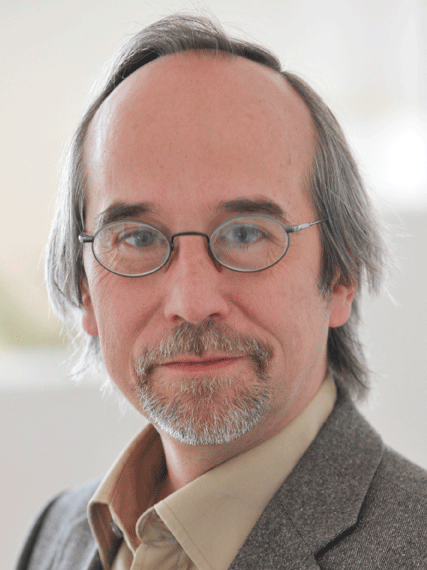 Eörs Szathmáry合作论文数Biological Institute, Eötvös Loránd University;Department of Plant Systematics, Ecology and Theoretical Biology, Eötvös Loránd University2
 Yohay Carmel合作论文数Faculty of Civil and Environmental Engineering, Technion-Israel Institute of Technology2
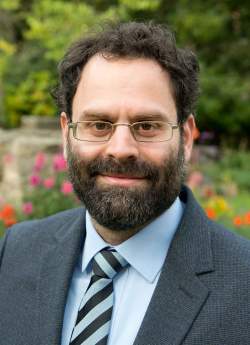 Ohad Kammar合作论文数School of Informatics, University of Edinburgh1Snait B. Gissis合作论文数1
 Michael R. Dietrich合作论文数Department of History and Philosophy of Science, The Dietrich School of Arts & Sciences, University of Pittsburgh1




