The 1T polytype of TaS2 has been studied extensively as a strongly correlated system. As 1T-TaS2 is thinned toward the 2D limit, its phase diagram shows significant deviations from that of the bulk material. Optoelectronic maps of ultrathin 1T-TaS2 have indicated the presence of nonequilibrium charge density wave phases within the hysteresis region of the nearly commensurate (NC) to commensurate (C) transition. We perform scanning tunneling microscopy on exfoliated ultrathin flakes of 1T-TaS2 within the NC-C hysteresis window, finding evidence that the observed nonequilibrium phases consist of intertwined, irregularly shaped NC-like and C-like domains. After applying lateral electrical signals to the sample, we image changes in the geometric arrangement of the different regions. We use a phase separation model to explore the relationship between electronic inhomogeneity present in ultrathin 1T-TaS2 and its bulk resistivity. These results demonstrate the role of phase competition morphologies in determining the properties of 2D materials.
We describe an experimental protocol to characterize magnetic field dependent microwave losses in superconducting niobium microstrip resonators. Our approach provides a unified view that covers two well-known magnetic field dependent loss mechanisms: quasiparticle generation and vortex motion. We find that quasiparticle generation is the dominant loss mechanism for parallel magnetic fields. For perpendicular fields, the dominant loss mechanism is vortex motion or switches from quasiparticle generation to vortex motion, depending on cooling procedures. In particular, we introduce a plot of the quality factor versus the resonance frequency as a general method for identifying the dominant loss mechanism. We calculate the expected resonance frequency and the quality factor as a function of the magnetic field by modeling the complex resistivity. Key parameters characterizing microwave loss are estimated from comparisons of the observed and expected resonator properties. Based on these key parameters, we find a niobium resonator whose thickness is similar to its penetration depth is the best choice for X-band electron spin resonance applications. Finally, we detect partial release of the Meissner current at the vortex penetration field, suggesting that the interaction between vortices and the Meissner current near the edges is essential to understand the magnetic field dependence of the resonator properties.
The topological insulator/superconductor heterostructure is one of the most promising platforms to create and manipulate Majorana bound states. Here, we used molecular beam epitaxy to grow high-quality (Bi_0.5Sb_0.5)_2Te_3 films on Nb surfaces. To promote proper (Bi_0.5Sb_0.5)_2Te_3 film nucleation in the early growth stage, we developed a two-step growth method. Bi, Sb, and Te clusters were first evaporated at a low temperature of 180 °C, which is below the typical growth temperature and then annealed to form a crystalized passivation layer. Second, a standard (Bi_0.5Sb_0.5)_2Te_3 film was grown under the normal deposition temperature of 280 °C. We used reflection high-energy electron diffraction, high-resolution transmission electron microscopy, X-ray photoelectron spectroscopy, and X-ray diffraction to further characterize the (Bi_0.5Sb_0.5)_2Te_3 film and passivation layer quality. Finally, the top Nb film was laid down by magnetron sputtering at room temperature. The hetero-Nb/epitaxial (Bi_0.5Sb_0.5)_2Te_3/Nb stacks were further fabricated into micro-Josephson junctions and showed clear Josephson currents demonstrating an excellent material quality.
The surface states of a topological insulator (TI) can be induced with superconductivity through proximity with a conventional s-wave superconductor (S). To study the coupling between two superconducting TI surfaces, we report the growth and fabrication of vertical Josephson junctions with the topological insulators (Bi0.5Sb0.5)(2)Te-3 sandwiched between Nb electrodes. We observed two Josephson critical currents on the I-V characteristic at 3.5 K, attributed to the bulk Nb and the proximity-induced superconducting (Bi0.5Sb0.5)(2)Te-3 surfaces, respectively. The enhancement of conductance at these two critical currents leads to a bump and a plateau on the differential conductance spectroscopy. By further cooling down to 300 mK, a zero bias conductance peak (ZBCP) appears on the plateau, which is taken as a feature from the unconventional paring at the (Bi0.5Sb0.5)(2)Te-3-Nb interface.
Die Belegung der unpolaren ZnO(100)-Oberfläche mit CO2 bei 95 K führt zur Bildung einer ungewöhnlichen dreizähnigen Carbonatspezies. Die Kombination experimenteller Techniken, wie der hochauflösenden Elektronenenergieverlustspektroskopie (HREELS, siehe Bild), mit einer präzisen theoretischen Analyse gibt einen detaillierten Einblick in die Aktivierung von CO2 auf der Zinkoxidoberfläche.
Greenhouse gas "al dente": Exposure of the nonpolar ZnO(100) surface to CO2 at 95 K leads to the formation of an unusual tridentate carbonate species (see picture; C green, O red, Zn gray). Use of several experimental techniques (for example, high-resolution electron energy loss spectroscopy (HREELS)) and theoretical calculations provides insight into the activation of CO2 on the surface.
Zur Hälfte dissoziiert: Experimentelle und rechnerische Befunde lassen den Schluss zu, dass Wasser auf defektfreien Oberflächen von Zinkoxid eine weitreichend geordnete Überstruktur bildet, in der jedes zweite Wassermolekül dissoziiert ist (siehe Bild). Die Ergebnisse sind von allgemeiner Relevanz für die heterogene Katalyse.
 Guo-Xing Miao (苗国杰)合作论文数Department of Electrical and Computer Engineering, University of Waterloo;Institute for Quantum Computing, University of Waterloo6
 George Nichols合作论文数Inst Quantum Comp, Univ Waterloo4
 Bernd Meyer合作论文数Department of Chemistry and Pharmacy, Faculty of Sciences, Friedrich-Alexander-Universitat Erlangen-Nurnberg4
 Xiaodong Ma合作论文数Medtronic Brain and Spine Therapies3
 David G. Cory合作论文数Department of Chemistry, University of Waterloo3
 Christof Wöll合作论文数Institute of Functional Interfaces, Karlsruher Institut fur Technologie3
 Hui Zhang (张汇)合作论文数Low-dimensional Material UHV-Cluster System Laboratory, University of Science and Technology of China;Hefei National Research Center for Physical Sciences at the Microscale, University of Science and Technology of China3
 Ivar Taminiau合作论文数2Shinyoung Lee合作论文数2Anita Fadavi Roudsari合作论文数2
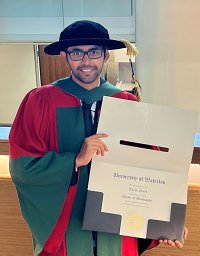 Tarun Patel合作论文数Inst Quantum Comp, Univ Waterloo2
 Lin Li (李林)合作论文数2
 Hengshan Qiu (邱恒山)合作论文数School of Chemical Engineering, Zhengzhou University2
 Adam W. Tsen合作论文数School of Applied and Engineering Physics,2Benningshof, O.W.B.合作论文数2Yong-Chao Tang合作论文数2Kwon Sangil合作论文数2
 Yuemin Wang合作论文数Inst Funct Interfaces, Karlsruhe Inst Technol2
 Martin Muhler合作论文数Lehrstuhl Für Technische Chemie, Ruhr-Universität Bochum2
 Ulrike Diebold合作论文数Department of Physics, Tulane University;Institute of Applied Physics, Vienna University of Technology2Dorothee Stodt合作论文数2
 Jonathan Baugh合作论文数Institute for Quantum Computing;University of Waterloo;Institute for Quantum Computing, University of Waterloo2Franziska Traeger合作论文数2Konstantinos Kotsis合作论文数2Martin Kunat合作论文数2Roman Kovacik合作论文数2Hamid Reza Mohebbi合作论文数Dept . of ECE;Univ . of Waterloo Waterloo;Dept . of ECE, Univ . of Waterloo Waterloo2Olga Dulub合作论文数2
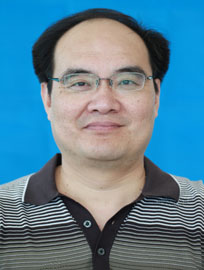 Yuping Sun (孙玉平)合作论文数Institute of Solid State Physics, Hefei Institutes of Physical Science, Chinese Academy of Sciences;High Magnetic Field Laboratory, Hefei Institutes of Physical Science, Chinese Academy of Sciences2
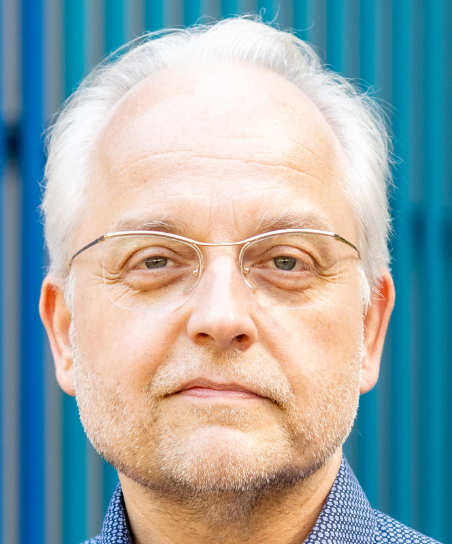 Dominik Marx合作论文数Center for Theoretical Chemistry, Ruhr-Universitat Bochum2Volker Staemmler合作论文数Lehrstuhl fur Theoretische Chemie, Ruhr-Universitat Bochum2Sean M. Walker合作论文数1E. Annelise Bergeron合作论文数1Peter Sprenger合作论文数1Marc Jaikissoon合作论文数Dept Elect Engn, Stanford Univ1Jingjing Gao合作论文数Chinese Acad Sci, Inst Solid State Phys, Key Lab Mat Phys, Hefei 230031, Peoples R China1Yutong Dai合作论文数1
 Julie Tournet合作论文数Dept Elect Mat Engn, Australian Natl Univ1
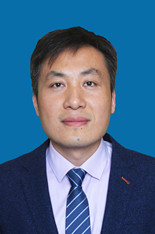 Wenjian Lu (鲁文建)合作论文数Hefei Institutes of Physical Science, Chinese Academy of Sciences;University of Chinese Academy of Sciences1
 Long Cheng (程龙)合作论文数School of Physics & Electronics, Hunan University1
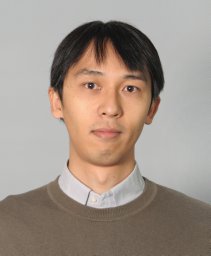 Okamoto Jun-Ichi合作论文数Department of Physics, Columbia University1
 Denise Gosselink合作论文数1Cheng Long合作论文数1
 He Ren合作论文数1
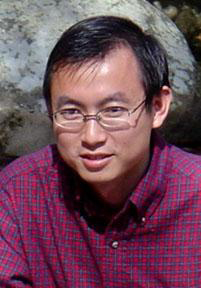 Changgan Zeng (曾长淦)合作论文数中国科学技术大学合肥微尺度物质科学国家研究中心/School of Physical Sciences, University of Science and Technology of China1
 Xuan Luo (罗轩)合作论文数Institute of Solid State Physics, Hefei Institutes of Physical Science, Chinese Academy of Sciences1
 Sean Walker合作论文数Department of Systems Design Engineering, University of Waterloo1
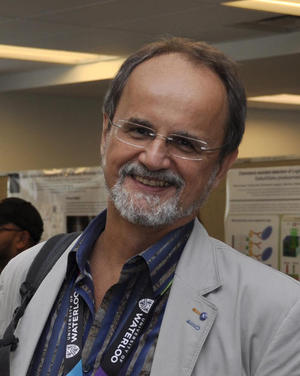 Zbigniew Wasilewski合作论文数Department of Physics and Astronomy, University of Waterloo1
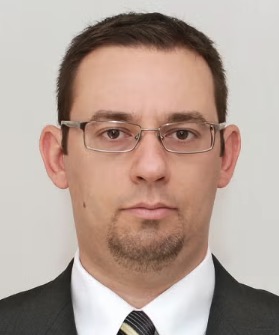 Matteo Mariantoni合作论文数Department of Physics and Astronomy, Faculty of Science, University of Waterloo;Institute for Quantum Computing, University of Waterloo1




