Minimizing the Gaussian Curvature of triangular meshes can have important applications in 3D computer vision and graphics. However, traditional explicit methods require solving high-order partial differential equations which makes them computationally demanding and impractical in many applications. This paper presents a very fast and efficient adaptive filtering technique termed Gaussian Curvature Filtering (GCF) which optimizes the Gaussian curvature of the triangular meshes through exploiting the properties of developable surfaces. By moving a vertex along its normal direction such that one of its 1-ring neighbors falls onto the vertex's tangent plane, GCF minimizes Gaussian curvature without explicitly computing the Gaussian curvature. A novel multi tangent plane projection strategy is developed to adaptively determine a vertex's moving distance which enables the GCF to achieve Gaussian curvature minimization while preserving important geometric features. We present extensive experiments to demonstrate that GCF outperforms state of the art methods in Gaussian curvature minimization and shape-preserving model smoothing, and that it is 7 similar to 50 times faster than previous explicit optimization methods.
The 3D Gaussian splatting method has drawn a lot of attention, thanks to its high performance in training and high quality of the rendered image. However, it uses anisotropic Gaussian kernels to represent the scene. Although such anisotropic kernels have advantages in representing the geometry, they lead to difficulties in terms of computation, such as splitting or merging two kernels. In this paper, we propose to use isotropic Gaussian kernels to avoid such difficulties in the computation, leading to a higher performance method. The experiments confirm that the proposed method is about {\bf 100X} faster without losing the geometry representation accuracy. The proposed method can be applied in a large range applications where the radiance field is needed, such as 3D reconstruction, view synthesis, and dynamic object modeling.
Offline imitation learning (IL) promises the ability to learn performant policies from pre-collected demonstrations without interactions with the environment. However, imitating behaviors fully offline typically requires numerous expert data. To tackle this issue, we study the setting where we have limited expert data and supplementary suboptimal data. In this case, a well-known issue is the distribution shift between the learned policy and the behavior policy that collects the offline data. Prior works mitigate this issue by regularizing the KL divergence between the stationary state-action distributions of the learned policy and the behavior policy. We argue that such constraints based on exact distribution matching can be overly conservative and hamper policy learning, especially when the imperfect offline data is highly suboptimal. To resolve this issue, we present RelaxDICE, which employs an asymmetrically-relaxed f -divergence for explicit support regularization. Specifically, instead of driving the learned policy to exactly match the behavior policy, we impose little penalty whenever the density ratio between their stationary state-action distributions is upper bounded by a constant. Note that such formulation leads to a nested min-max optimization problem, which causes instability in practice. RelaxDICE addresses this challenge by supporting a closed-form solution for the inner maximization problem. Extensive empirical study shows that our method significantly outperforms the best prior offline IL method in six standard continuous control environments with over 30% performance gain on average, across 22 settings where the imperfect dataset is highly suboptimal.
Blind pansharpening addresses the problem of generating a high spatial-resolution multi-spectral (HRMS) image given a low spatial-resolution multi-spectral (LRMS) image with the guidance of its associated spatially misaligned high spatial-resolution panchromatic (PAN) image without parametric side information. In this article, we propose a fast approach to blind pansharpening and achieve the state-of-the-art image reconstruction quality. Typical blind pansharpening algorithms are often computationally intensive since the blur kernel and the target HRMS image are often computed using iterative solvers and in an alternating fashion. To achieve fast blind pansharpening, we decouple the solution of the blur kernel and of the HRMS image. First, we estimate the blur kernel by computing the kernel coefficients with minimum total generalized variation that blur a downsampled version of the PAN image to approximate a linear combination of the LRMS image channels. Then, we estimate each channel of the HRMS image using local Laplacian prior (LLP) to regularize the relationship between each HRMS channel and the PAN image. Solving the HRMS image is accelerated by both parallelizing across the channels and by fast numerical algorithms for each channel. Due to the fast scheme and the powerful priors we used on the blur kernel coefficients (total generalized variation) and on the cross-channel relationship (LLP), numerical experiments demonstrate that our algorithm outperforms the state-of-the-art model-based counterparts in terms of both computational time and reconstruction quality of the HRMS images.
Predicting molecular conformations from molecular graphs is a fundamental problem in cheminformatics and drug discovery. Recently, significant progress has been achieved with machine learning approaches, especially with deep generative models. Inspired by the diffusion process in classical non-equilibrium thermodynamics where heated particles will diffuse from original states to a noise distribution, in this paper, we propose a novel generative model named GeoDiff for molecular conformation prediction. GeoDiff treats each atom as a particle and learns to directly reverse the diffusion process (i.e., transforming from a noise distribution to stable conformations) as a Markov chain. Modeling such a generation process is however very challenging as the likelihood of conformations should be roto-translational invariant. We theoretically show that Markov chains evolving with equivariant Markov kernels can induce an invariant distribution by design, and further propose building blocks for the Markov kernels to preserve the desirable equivariance property. The whole framework can be efficiently trained in an end-to-end fashion by optimizing a weighted variational lower bound to the (conditional) likelihood. Experiments on multiple benchmarks show that GeoDiff is superior or comparable to existing state-of-the-art approaches, especially on large molecules.
The acquisition function, a critical component in Bayesian optimization (BO), can often be written as the expectation of a utility function under a surrogate model. However, to ensure that acquisition functions are tractable to optimize, restrictions must be placed on the surrogate model and utility function. To extend BO to a broader class of models and utilities, we propose likelihood-free BO (LFBO), an approach based on likelihood-free inference. LFBO directly models the acquisition function without having to separately perform inference with a probabilistic surrogate model. We show that computing the acquisition function in LFBO can be reduced to optimizing a weighted classification problem, where the weights correspond to the utility being chosen. By choosing the utility function for expected improvement (EI), LFBO outperforms various state-of-the-art black-box optimization methods on several real-world optimization problems. LFBO can also effectively leverage composite structures of the objective function, which further improves its regret by several orders of magnitude.
Bayesian optimization (BO) is a popular method for efficiently inferring optima of an expensive black-box function via a sequence of queries. Existing information-theoretic BO procedures aim to make queries that most reduce the uncertainty about optima, where the uncertainty is captured by Shannon entropy. However, an optimal measure of uncertainty would, ideally, factor in how we intend to use the inferred quantity in some downstream procedure. In this paper, we instead consider the H-entropy, a generalization of Shannon entropy from work in statistical decision theory (DeGroot, 1962; Rao, 1984), which contains a broad class of uncertainty measures parameterized by a problem-specific loss function corresponding to a downstream task. We first show that special cases of the H-entropy lead to popular acquisition functions used in BO procedures such as knowledge gradient, expected improvement, and entropy search. We then show how alternative choices for the loss yield a flexible family of acquisition functions for a variety of specialized optimization tasks, including variants of top-k estimation, level set estimation, and multi-valued search. For special cases of the loss and design space, we develop gradient-based methods to efficiently optimize our proposed family of acquisition functions, and demonstrate that the resulting BO procedure shows strong empirical performance on a diverse set of optimization tasks.
Binary density ratio estimation (DRE), the problem of estimating the ratio $p_1/p_2$ given their empirical samples, provides the foundation for many state-of-the-art machine learning algorithms such as contrastive representation learning and covariate shift adaptation. In this work, we consider a generalized setting where given samples from multiple distributions $p_1, \ldots, p_k$ (for $k > 2$), we aim to efficiently estimate the density ratios between all pairs of distributions. Such a generalization leads to important new applications such as estimating statistical discrepancy among multiple random variables like multi-distribution $f$-divergence, and bias correction via multiple importance sampling. We then develop a general framework from the perspective of Bregman divergence minimization, where each strictly convex multivariate function induces a proper loss for multi-distribution DRE. Moreover, we rederive the theoretical connection between multi-distribution density ratio estimation and class probability estimation, justifying the use of any strictly proper scoring rule composite with a link function for multi-distribution DRE. We show that our framework leads to methods that strictly generalize their counterparts in binary DRE, as well as new methods that show comparable or superior performance on various downstream tasks.
Bayesian optimization (BO) is a popular method for efficiently inferring optima of an expensive black-box function via a sequence of queries. Existing information-theoretic BO procedures aim to make queries that most reduce the uncertainty about optima, where the uncertainty is captured by Shannon entropy. However, an optimal measure of uncertainty would, ideally, factor in how we intend to use the inferred quantity in some downstream procedure. In this paper, we instead consider a generalization of Shannon entropy from work in statistical decision theory (DeGroot 1962, Rao 1984), which contains a broad class of uncertainty measures parameterized by a problem-specific loss function corresponding to a downstream task. We first show that special cases of this entropy lead to popular acquisition functions used in BO procedures such as knowledge gradient, expected improvement, and entropy search. We then show how alternative choices for the loss yield a flexible family of acquisition functions that can be customized for use in novel optimization settings. Additionally, we develop gradient-based methods to efficiently optimize our proposed family of acquisition functions, and demonstrate strong empirical performance on a diverse set of sequential decision making tasks, including variants of top-k optimization, multi-level set estimation, and sequence search.
Weighted Gaussian curvature is an important smoothness measurement for images. However, its conventional computation scheme has low performance, low accuracy and requires that the input image must be second order differentiable. To tackle these three issues, we propose a novel discrete computation scheme for the weighted Gaussian curvature. Our scheme does not require the second order differentiability. Moreover, our scheme is more accurate, has smaller support region and computationally more efficient than the conventional schemes. Therefore, our scheme holds promise for a large range of applications where the weighted Gaussian curvature is needed, for example, image smoothing, cartoon texture decomposition, optical flow estimation, etc.
In many real-world applications where specifying a proper reward function is difficult, it is desirable to learn policies from expert demonstrations. Adversarial Inverse Reinforcement Learning (AIRL) is one of the most common approaches for learning from demonstrations. However, due to the stochastic policy, current computation graph of AIRL is no longer end-to-end differentiable like Generative Adversarial Networks (GANs), resulting in the need for high-variance gradient estimation methods and large sample size. In this work, we propose the Model-based Adversarial Inverse Reinforcement Learning (MAIRL), an end-to-end model-based policy optimization method with self-attention. By adopting the self-attention dynamics model to make the computation graph end-to-end differentiable, MAIRL has the low variance for policy optimization. We evaluate our approach thoroughly on various control tasks. The experimental results show that our approach not only learns near-optimal rewards and policies that match expert behavior but also outperforms previous inverse reinforcement learning algorithms in real robot experiments. Code is available at https://decisionforce.github.io/MAIRL/.
Manifold models consider natural-image patches to be on a low-dimensional manifold embedded in a high dimensional state space and each patch and its similar patches to approximately lie on a linear affine subspace. Manifold models are closely related to semi-local similarity, a well-known property of natural images, referring to that for most natural-image patches, several similar patches can be found in its spatial neighborhood. Many approaches to single image interpolation use manifold models to exploit semi-local similarity by two mutually exclusive parts: i) searching each target patch's similar patches and ii) operating on the searched similar patches, the target patch and the measured input pixels to estimate the target patch. Unfortunately, aliasing in the input image makes it challenging for both parts. A very few works explicitly deal with those challenges and only ad-hoc solutions are proposed. To overcome the challenge in the first part, we propose a carefully-designed adaptive technique to remove aliasing in severely aliased regions, which cannot be removed from traditional techniques. This technique enables reliable identification of similar patches even in the presence of strong aliasing. To overcome the challenge in the second part, we propose to use the aliasing-removed image to guide the initialization of the interpolated image and develop a progressive scheme to refine the interpolated image based on manifold models. Experimental results demonstrate that our approach reconstructs edges with both smoothness along contours and sharpness across profiles, and achieves an average Peak Signal-to-Noise Ratio (PSNR) significantly higher than existing model-based approaches.
We propose a novel theoretical framework to understand self-supervised learning methods that employ dual pairs of deep ReLU networks (e.g., SimCLR, BYOL). First, we prove that in each SGD update of SimCLR, the weights at each layer are updated by a \emph{covariance operator} that specifically amplifies initial random selectivities that vary across data samples but survive averages over data augmentations. We show this leads to the emergence of hierarchical features, if the input data are generated from a hierarchical latent tree model. With the same framework, we also show analytically that in BYOL, the combination of BatchNorm and a predictor network creates an implicit contrastive term, acting as an approximate covariance operator. Additionally, for linear architectures we derive exact solutions for BYOL that provide conceptual insights into how BYOL can learn useful non-collapsed representations without any contrastive terms that separate negative pairs. Extensive ablation studies justify our theoretical findings.
Multi-agent imitation learning aims to train multiple agents to perform tasks from demonstrations by learning a mapping between observations and actions, which is essential for understanding physical, social, and team-play systems. However, most existing works on modeling multi-agent interactions typically assume that agents make independent decisions based on their observations, ignoring the complex dependence among agents. In this paper, we propose to use copula, a powerful statistical tool for capturing dependence among random variables, to explicitly model the correlation and coordination in multi-agent systems. Our proposed model is able to separately learn marginals that capture the local behavioral patterns of each individual agent, as well as a copula function that solely and fully captures the dependence structure among agents. Extensive experiments on synthetic and real-world datasets show that our model outperforms state-of-the-art baselines across various scenarios in the action prediction task, and is able to generate new trajectories close to expert demonstrations.
Energy-based models (EBMs) offer flexible distribution parametrization. However, due to the intractable partition function, they are typically trained via contrastive divergence for maximum likelihood estimation. In this paper, we propose pseudo-spherical contrastive divergence (PS-CD) to generalize maximum likelihood learning of EBMs. PS-CD is derived from the maximization of a family of strictly proper homogeneous scoring rules, which avoids the computation of the intractable partition function and provides a generalized family of learning objectives that include contrastive divergence as a special case. Moreover, PS-CD allows us to flexibly choose various learning objectives to train EBMs without additional computational cost or variational minimax optimization. Theoretical analysis on the proposed method and extensive experiments on both synthetic data and commonly used image datasets demonstrate the effectiveness and modeling flexibility of PS-CD, as well as its robustness to data contamination, thus showing its superiority over maximum likelihood and f-EBMs.
This paper presents a quarter Laplacian filter that can preserve corners and edges during image smoothing. Its support region is $2\times 2$, which is smaller than the $3\times 3$ support region of the classical Laplacian filter. Thus, it is more local. Moreover, this filter can be implemented via the classical box filter, leading to high performance for real time applications. Finally, we show its edge preserving property in several image processing tasks, including image smoothing, texture enhancement, and low-light image enhancement. The proposed filter can be adopted in a wide range of image processing applications.
Autoregressive models use chain rule to define a joint probability distribution as a product of conditionals. These conditionals need to be normalized, imposing constraints on the functional families that can be used. To increase flexibility, we propose autoregressive conditional score models (AR-CSM) where we parameterize the joint distribution in terms of the derivatives of univariate log-conditionals (scores), which need not be normalized. To train AR-CSM, we introduce a new divergence between distributions named Composite Score Matching (CSM). For AR-CSM models, this divergence between data and model distributions can be computed and optimized efficiently, requiring no expensive sampling or adversarial training. Compared to previous score matching algorithms, our method is more scalable to high dimensional data and more stable to optimize. We show with extensive experimental results that it can be applied to density estimation on synthetic data, image generation, image denoising, and training latent variable models with implicit encoders.
Although Shannon theory states that it is asymptotically optimal to separate the source and channel coding as two independent processes, in many practical communication scenarios this decomposition is limited by the finite bit-length and computational power for decoding. Recently, neural joint source-channel coding (NECST) (Choi et al. 2018) is proposed to sidestep this problem. While it leverages the advancements of amortized inference and deep learning (Kingma and Welling 2013; Grover and Ermon 2018) to improve the encoding and decoding process, it still cannot always achieve compelling results in terms of compression and error correction performance due to the limited robustness of its learned coding networks. In this paper, motivated by the inherent connections between neural joint source-channel coding and discrete representation learning, we propose a novel regularization method called Infomax Adversarial-Bit-Flip (IABF) to improve the stability and robustness of the neural joint source-channel coding scheme. More specifically, on the encoder side, we propose to explicitly maximize the mutual information between the codeword and data; while on the decoder side, the amortized reconstruction is regularized within an adversarial framework. Extensive experiments conducted on various real-world datasets evidence that our IABF can achieve state-of-the-art performances on both compression and error correction benchmarks and outperform the baselines by a significant margin.
Although Shannon theory states that it is asymptotically optimal to separate the source and channel coding as two independent processes, in many practical communication scenarios this decomposition is limited by the finite bit-length and computational power for decoding. Recently, neural joint source-channel coding (NECST) (Choi et al. 2018) is proposed to sidestep this problem. While it leverages the advancements of amortized inference and deep learning (Kingma and Welling 2013; Grover and Ermon 2018) to improve the encoding and decoding process, it still cannot always achieve compelling results in terms of compression and error correction performance due to the limited robustness of its learned coding networks. In this paper, motivated by the inherent connections between neural joint source-channel coding and discrete representation learning, we propose a novel regularization method called Infomax Adversarial-BitFlip (IABF) to improve the stability and robustness of the neural joint source-channel coding scheme. More specifically, on the encoder side, we propose to explicitly maximize the mutual information between the codeword and data; while on the decoder side, the amortized reconstruction is regularized within an adversarial framework. Extensive experiments conducted on various real-world datasets evidence that our IABF can achieve state-of-the-art performances on both compression and error correction benchmarks and outperform the baselines by a significant margin.
 Stefano Ermon合作论文数Department of Computer Science, Stanford University;Woods Institute for the Environment, Stanford University;Inception13
 Weinan Zhang (张伟楠)合作论文数School of Computer Science, Shanghai Jiao Tong University11
 Yong Yu (俞勇)合作论文数APEX Data & Knowledge Management Lab, Department of Computer Science and Engineering, Shanghai Jiao Tong University10
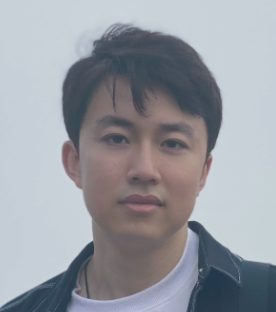 Yuxuan Song (宋宇轩)合作论文数Department of Computer Science and Technology, Tsinghua University;Institute for Artificial Intelligence Industry Research, Tsinghua University7
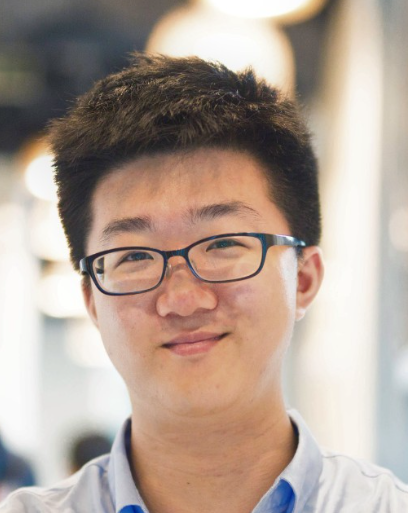 Jiaming Song (宋佳铭)合作论文数Luma AI6
 Jun Wang (汪军)合作论文数Department of Computer Science, University College London;MediaGamma Limited6
 Michael Orchard合作论文数Department of Electrical and Computer Engineering, George R. Brown School of Engineering and Computing, Rice University5
 Yang Song (宋飏)合作论文数4
 Zhiming Zhou (周志明)合作论文数Department of Computer Science, School of Information Management & Engineering, Shanghai University of Finance and Economics4
 Yuanhao Gong (龚元浩)合作论文数Guangdong Key Laboratory of Intelligent Information Processing, College of Electronics and Information Engineering, Shenzhen University;University of Chinese Academy of Sciences4
 Willie Neiswanger合作论文数Thomas Lord Department of Computer Science, Viterbi School of Engineering, University of Southern California;School of Advanced Computing, University of Southern California4
 Minkai Xu (徐民凯)合作论文数Department of Computer Science, Stanford University3
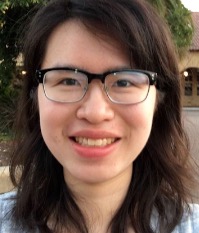 Chenlin Meng合作论文数Stanford University3
 Hao Zhou (周浩)合作论文数Institute for AI Industry Research, Tsinghua University3
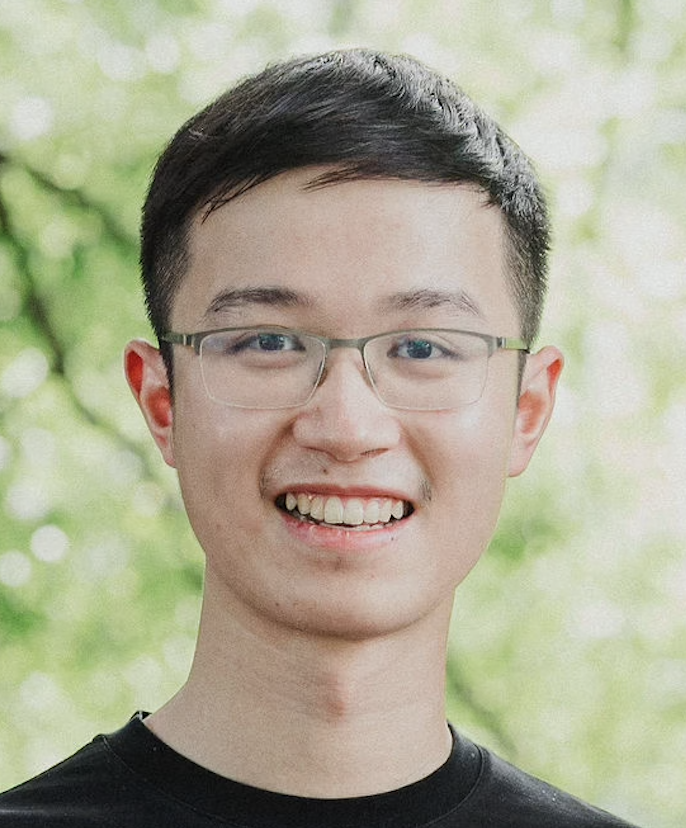 Tianhe (Kevin) Yu合作论文数Meta3
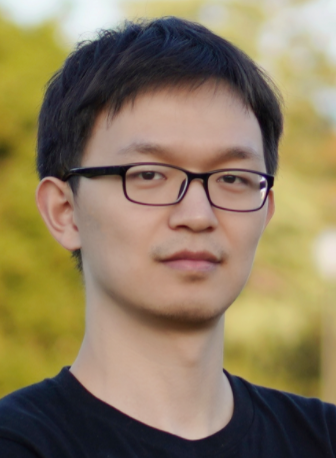 Hongwei Wang (王鸿伟)合作论文数Meta3
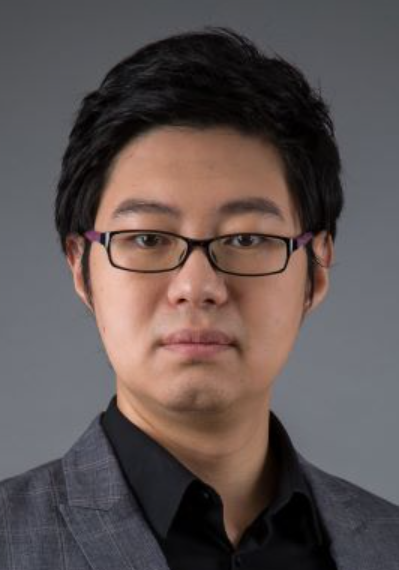 Shuo Shao (邵硕)合作论文数School of Information and Electronic Engineering, East China Normal University3
 Fei Fang合作论文数Department of Software and Societal Systems, School of Computer Science, Carnegie Mellon University3
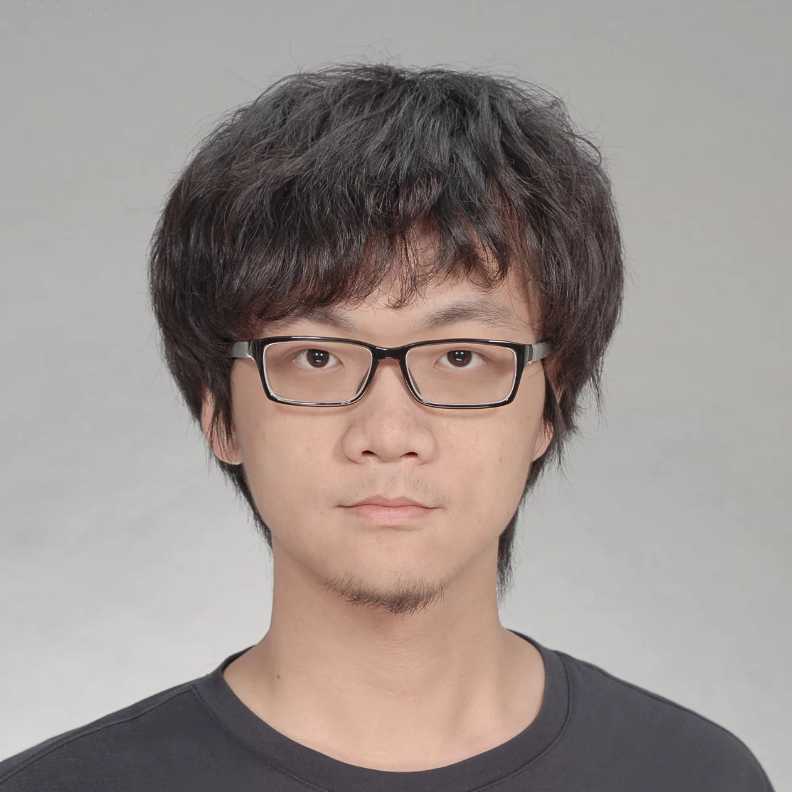 Sidi Lu合作论文数Department of Computer Science, William & Mary2
 Lebin Zhou合作论文数2Wenming Tang合作论文数College of Electronics and Information Engineering, Shenzhen University, Shenzhen, China2
 Chelsea Finn合作论文数Department of Computer Science and Electrical Engineering, Stanford University;Physical Intelligence2
 Yaoming Zhu合作论文数ByteDance AI Lab2
 Zhangjie Cao (曹张杰)合作论文数Department of Computer Science, Stanford University2Rohit Singh合作论文数World Wide Fund for Nature2
 Guoping Qiu (邱国平)合作论文数College of Electronics and Information Engineering, Shenzhen University;University of Nottingham Ningbo China;Fotor2
 Shengjia Zhao (赵盛佳)合作论文数Meta Superintelligence Labs2
 Zhihua Zhang (张志华)合作论文数School of Mathematical Sciences, Peking University2
 Yi Wu (吴翼)合作论文数2
 Lucas Joppa合作论文数Haveli Investments;School of Public Health, Yale University2
 Petros T. Boufounos合作论文数Mitsubishi Electric Research Laboratories2
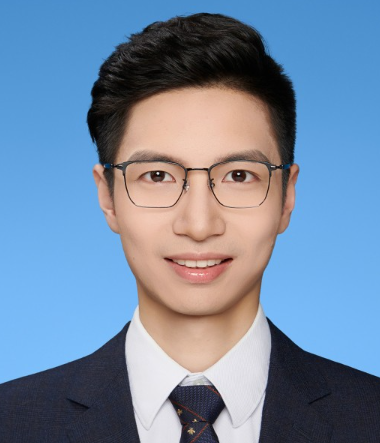 Siyuan Feng合作论文数Shanghai Innovation Institute;The Apache Software Foundation2Dehong Liu合作论文数2
 Hassan Mansour合作论文数Mitsubishi Electric Research Laboratories2
 Bo Lu (陆波)合作论文数School of Mechanical and Electrical Engineering, Soochow University1
 Swaminathan Gurumurthy合作论文数Robotics Institute, Carnegie Mellon University1
 Yinghui Xu (徐盈辉)合作论文数Artificial Intelligence Innovation and Incubation Institute of Fudan University1Jin Yongchao合作论文数1
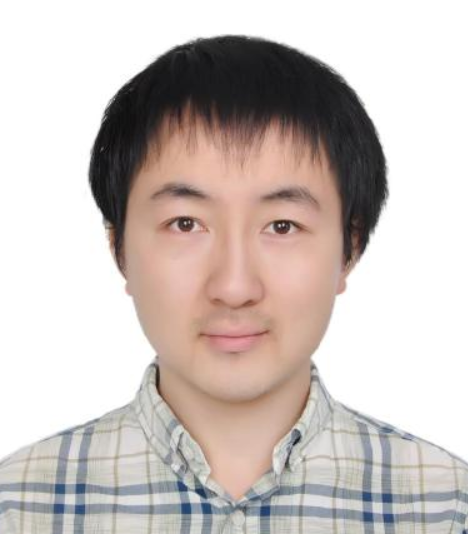 Ning Miao (苗宁)合作论文数Department of Statistics, University of Oxford1
 Yufei Wang合作论文数Dept Comp Sci, Carnegie Mellon Univ1Jiadong Liang合作论文数1Guanyu Tao合作论文数ULU Technologies Inc., Beijing, China1Chenyan Zhang合作论文数1Xuejian WANG (王学健)合作论文数1
 Sergey Levine合作论文数Department of Electrical Engineering and Computer Sciences, University of California, Berkeley1
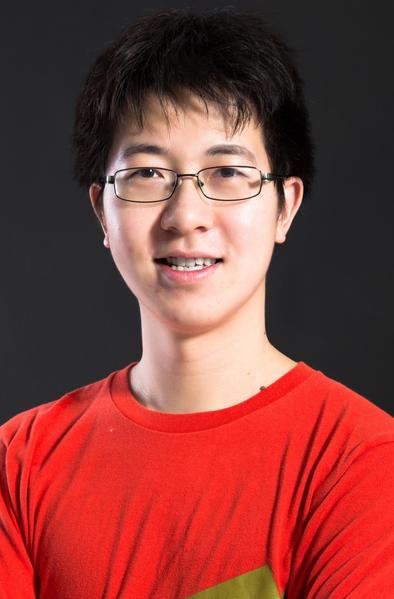 Kan Ren (任侃)合作论文数Visual and Data Intelligence Center, School of Information Science and Technology, ShanghaiTech University1
 Yu Gong (龚禹)合作论文数Alibaba Group1
 Jian Tang (唐建)合作论文数Department of Decision Sciences, HEC Montreal;Mila - Quebec Artificial Intelligence Institute;BioGeometry1
 Benyou Wang合作论文数School of Data Science, Chinese University of Hong Kong, Shenzhen1