We present DistillKac, a fast image generator that uses the damped wave equation and its stochastic Kac representation to move probability mass at finite speed. In contrast to diffusion models whose reverse time velocities can become stiff and implicitly allow unbounded propagation speed, Kac dynamics enforce finite speed transport and yield globally bounded kinetic energy. Building on this structure, we introduce classifier-free guidance in velocity space that preserves square integrability under mild conditions. We then propose endpoint only distillation that trains a student to match a frozen teacher over long intervals. We prove a stability result that promotes supervision at the endpoints to closeness along the entire path. Experiments demonstrate DistillKac delivers high quality samples with very few function evaluations while retaining the numerical stability benefits of finite speed probability flows.
Diffusion models can effectively generate high-quality images. However, as they scale, rising memory demands and higher latency pose substantial deployment challenges. In this work, we aim to accelerate diffusion models by quantizing their weights and activations to 4 bits. At such an aggressive level, both weights and activations are highly sensitive, where existing post-training quantization methods like smoothing become insufficient. To overcome this limitation, we propose *SVDQuant*, a new 4-bit quantization paradigm. Different from smoothing, which redistributes outliers between weights and activations, our approach *absorbs* these outliers using a low-rank branch. We first consolidate the outliers by shifting them from activations to weights. Then, we use a high-precision, low-rank branch to take in the weight outliers with Singular Value Decomposition (SVD), while a low-bit quantized branch handles the residuals. This process eases the quantization on both sides. However, naively running the low-rank branch independently incurs significant overhead due to extra data movement of activations, negating the quantization speedup. To address this, we co-design an inference engine *Nunchaku* that fuses the kernels of the low-rank branch into those of the low-bit branch to cut off redundant memory access. It can also seamlessly support off-the-shelf low-rank adapters (LoRAs) without re-quantization. Extensive experiments on SDXL, PixArt-$\Sigma$, and FLUX.1 validate the effectiveness of SVDQuant in preserving image quality. We reduce the memory usage for the 12B FLUX.1 models by 3.5×, achieving 3.0× speedup over the 4-bit weight-only quantization (W4A16) baseline on the 16GB laptop 4090 GPU with INT4 precision. On the latest RTX 5090 desktop with Blackwell architecture, we achieve a 3.1× speedup compared to the W4A16 model using NVFP4 precision. Our quantization library and inference engine are available at https://github.com/mit-han-lab/deepcompressor/ and https://github.com/mit-han-lab/nunchaku/, correspondingly.
Video detailed captioning is a key task which aims to generate comprehensive and coherent textual descriptions of video content, benefiting both video understanding and generation. In this paper, we propose AuroraCap, a video captioner based on a large multimodal model. We follow the simplest architecture design without additional parameters for temporal modeling. To address the overhead caused by lengthy video sequences, we implement the token merging strategy, reducing the number of input visual tokens. Surprisingly, we found that this strategy results in little performance loss. AuroraCap shows superior performance on various video and image captioning benchmarks, for example, obtaining a CIDEr of 88.9 on Flickr30k, beating GPT-4V (55.3) and Gemini-1.5 Pro (82.2). However, existing video caption benchmarks only include simple descriptions, consisting of a few dozen words, which limits research in this field. Therefore, we develop VDC, a video detailed captioning benchmark with over one thousand carefully annotated structured captions. In addition, we propose a new LLM-assisted metric VDCscore for bettering evaluation, which adopts a divide-and-conquer strategy to transform long caption evaluation into multiple short question-answer pairs. With the help of human Elo ranking, our experiments show that this benchmark better correlates with human judgments of video detailed captioning quality.
Language models demonstrate both quantitative improvement and new qualitative capabilities with increasing scale. Despite their potentially transformative impact, these new capabilities are as yet poorly characterized. In order to inform future research, prepare for disruptive new model capabilities, and ameliorate socially harmful effects, it is vital that we understand the present and near-future capabilities and limitations of language models. To address this challenge, we introduce the Beyond the Imitation Game benchmark (BIG-bench). BIG-bench currently consists of 204 tasks, contributed by 450 authors across 132 institutions. Task topics are diverse, drawing problems from linguistics, childhood development, math, common-sense reasoning, biology, physics, social bias, software development, and beyond. BIG-bench focuses on tasks that are believed to be beyond the capabilities of current language models. We evaluate the behavior of OpenAI's GPT models, Google-internal dense transformer architectures, and Switch-style sparse transformers on BIG-bench, across model sizes spanning millions to hundreds of billions of parameters. In addition, a team of human expert raters performed all tasks in order to provide a strong baseline. Findings include: model performance and calibration both improve with scale, but are poor in absolute terms (and when compared with rater performance); performance is remarkably similar across model classes, though with benefits from sparsity; tasks that improve gradually and predictably commonly involve a large knowledge or memorization component, whereas tasks that exhibit "breakthrough" behavior at a critical scale often involve multiple steps or components, or brittle metrics; social bias typically increases with scale in settings with ambiguous context, but this can be improved with prompting.
Diffusion models have recently achieved success in solving Bayesian inverse problems with learned data priors. Current methods build on top of the diffusion sampling process, where each denoising step makes small modifications to samples from the previous step. However, this process struggles to correct errors from earlier sampling steps, leading to worse performance in complicated nonlinear inverse problems, such as phase retrieval. To address this challenge, we propose a new method called Decoupled Annealing Posterior Sampling (DAPS) that relies on a novel noise annealing process. Specifically, we decouple consecutive steps in a diffusion sampling trajectory, allowing them to vary considerably from one another while ensuring their time-marginals anneal to the true posterior as we reduce noise levels. This approach enables the exploration of a larger solution space, improving the success rate for accurate reconstructions. We demonstrate that DAPS significantly improves sample quality and stability across multiple image restoration tasks, particularly in complicated nonlinear inverse problems.
Video inpainting, which aims to fill missing regions with visually coherent content, has emerged as a crucial technique for creative applications such as editing. While existing approaches achieve visual consistency or text-guided generation, they often struggle to balance coherence and creative diversity. In this work, we introduce VideoRepainter, a two-stage framework that allows users to inpaint a keyframe using established image-level techniques, then propagate the changes to other frames. Our approach can leverage state-of-the-art image models for keyframe manipulation, thereby easing the burden of the video-inpainting process. To this end, we integrate an image-to-video model with a symmetric condition mechanism to address ambiguity caused by direct mask downsampling. We further explore efficient strategies for mask synthesis and parameter tuning to reduce costs in data processing and model training. Evaluations demonstrate our method achieves superior results in both visual fidelity and content diversity compared to existing approaches, providing a practical solution for creative video manipulation. See our Project Page for more details.
Despite their groundbreaking performance for many generative modeling tasks, diffusion models have fallen short on discrete data domains such as natural language. Crucially, standard diffusion models rely on the well-established theory of score matching, but efforts to generalize this to discrete structures have not yielded the same empirical gains. In this work, we bridge this gap by proposing score entropy, a novel discrete score matching loss that is more stable than existing methods, forms an ELBO for maximum likelihood training, and can be efficiently optimized with a denoising variant. We scale our Score Entropy Discrete Diffusion models (SEDD) to the experimental setting of GPT-2, achieving highly competitive likelihoods while also introducing distinct algorithmic advantages. In particular, when comparing similarly sized SEDD and GPT-2 models, SEDD attains comparable perplexities (normally within $+10\%$ of and sometimes outperforming the baseline). Furthermore, SEDD models learn a more faithful sequence distribution (around $4\times$ better compared to GPT-2 models with ancestral sampling as measured by large models), can trade off compute for generation quality (needing only $16\times$ fewer network evaluations to match GPT-2), and enables arbitrary infilling beyond the standard left to right prompting.
Welcome to the SIGGRAPH 2024 Course on Generative Models for Visual Content Editing and Creation! In this course, you will embark on an exciting journey into the realm of generative models and their groundbreaking applications in computer graphics. Over the duration of this course, you will gain a comprehensive understanding of generative models and diffusion models, explore fundamental machine learning and deep learning techniques, and discover cutting-edge applications for high-fidelity image synthesis, video generation, 3D content creation, and more. Here's what you can expect to learn:
Small farms contribute to a large share of the productive land in developing countries. In regions such as sub-Saharan Africa, where 80% of farms are small (under 2 ha in size), the task of mapping smallholder cropland is an important part of tracking sustainability measures such as crop productivity. However, the visually diverse and nuanced appearance of small farms has limited the effectiveness of traditional approaches to cropland mapping. Here we introduce a new approach based on the detection of harvest piles characteristic of many smallholder systems throughout the world. We present HarvestNet, a dataset for mapping the presence of farms in the Ethiopian regions of Tigray and Amhara during 2020-2023, collected using expert knowledge and satellite images, totaling 7k hand-labeled images and 2k ground-collected labels. We also benchmark a set of baselines, including SOTA models in remote sensing, with our best models having around 80% classification performance on hand labelled data and 90% and 98% accuracy on ground truth data for Tigray and Amhara, respectively. We also perform a visual comparison with a widely used pre-existing coverage map and show that our model detects an extra 56,621 hectares of cropland in Tigray. We conclude that remote sensing of harvest piles can contribute to more timely and accurate cropland assessments in food insecure regions. The dataset can be accessed through https://figshare.com/s/45a7b45556b90a9a11d2, while the code for the dataset and benchmarks is publicly available at https://github.com/jonxuxu/harvest-piles
Diffusion models have exhibit exceptional performance in text-to-image generation and editing. However, existing methods often face challenges when handling complex text prompts that involve multiple objects with multiple attributes and relationships. In this paper, we propose a brand new training-free text-to-image generation/editing framework, namely Recaption, Plan and Generate (RPG), harnessing the powerful chain-of-thought reasoning ability of multimodal LLMs to enhance the compositionality of text-to-image diffusion models. Our approach employs the MLLM as a global planner to decompose the process of generating complex images into multiple simpler generation tasks within subregions. We propose complementary regional diffusion to enable region-wise compositional generation. Furthermore, we integrate text-guided image generation and editing within the proposed RPG in a closed-loop fashion, thereby enhancing generalization ability. Extensive experiments demonstrate our RPG outperforms state-of-the-art text-to-image diffusion models, including DALL-E 3 and SDXL, particularly in multi-category object composition and text-image semantic alignment. Notably, our RPG framework exhibits wide compatibility with various MLLM architectures (e.g., MiniGPT-4) and diffusion backbones (e.g., ControlNet). Our code is available at: https://github.com/YangLing0818/RPG-DiffusionMaster
Recent methods such as Score Distillation Sampling (SDS) and Variational Score Distillation (VSD) using 2D diffusion models for text-to-3D generation have demonstrated impressive generation quality. However, the long generation time of such algorithms significantly degrades the user experience. To tackle this problem, we propose DreamPropeller, a drop-in acceleration algorithm that can be wrapped around any existing text-to-3D generation pipeline based on score distillation. Our framework generalizes Picard iterations, a classical algorithm for parallel sampling an ODE path, and can account for non-ODE paths such as momentum-based gradient updates and changes in dimensions during the optimization process as in many cases of 3D generation. We show that our algorithm trades parallel compute for wallclock time and empirically achieves up to 4.7x speedup with a negligible drop in generation quality for all tested frameworks. Our implementation can be found here.
Diffusion models have achieved state-of-the-art results on many modalities including images, speech, and video. However, existing models are not tailored to support remote sensing data, which is widely used in important applications including environmental monitoring and crop-yield prediction. Satellite images are significantly different from natural images -- they can be multi-spectral, irregularly sampled across time -- and existing diffusion models trained on images from the Web do not support them. Furthermore, remote sensing data is inherently spatio-temporal, requiring conditional generation tasks not supported by traditional methods based on captions or images. In this paper, we present DiffusionSat, to date the largest generative foundation model trained on a collection of publicly available large, high-resolution remote sensing datasets . As text-based captions are sparsely available for satellite images, we incorporate the associated metadata such as geolocation as conditioning information. Our method produces realistic samples and can be used to solve multiple generative tasks including temporal generation, multi-spectral superrresolution and in-painting. Our method outperforms previous state-of-the-art methods for satellite image generation and is the first large-scale _generative_ foundation model for satellite imagery. The project website can be found here: https://samar-khanna.github.io/DiffusionSat/
Flow matching (FM) is a general framework for defining probability paths via Ordinary Differential Equations (ODEs) to transform between noise and data samples. Recent approaches attempt to straighten these flow trajectories to generate high-quality samples with fewer function evaluations, typically through iterative rectification methods or optimal transport solutions. In this paper, we introduce Consistency Flow Matching (Consistency-FM), a novel FM method that explicitly enforces self-consistency in the velocity field. Consistency-FM directly defines straight flows starting from different times to the same endpoint, imposing constraints on their velocity values. Additionally, we propose a multi-segment training approach for Consistency-FM to enhance expressiveness, achieving a better trade-off between sampling quality and speed. Preliminary experiments demonstrate that our Consistency-FM significantly improves training efficiency by converging 4.4x faster than consistency models and 1.7x faster than rectified flow models while achieving better generation quality. Our code is available at: https://github.com/YangLing0818/consistency_flow_matching
Existing digital sensors capture images at fixed spatial and spectral resolutions (e.g., RGB, multispectral, and hyperspectral images), and each combination requires bespoke machine learning models. Neural Implicit Functions partially overcome the spatial resolution challenge by representing an image in a resolution-independent way. However, they still operate at fixed, pre-defined spectral resolutions. To address this challenge, we propose Spatial-Spectral Implicit Function (SSIF), a neural implicit model that represents an image as a function of both continuous pixel coordinates in the spatial domain and continuous wavelengths in the spectral domain. We empirically demonstrate the effectiveness of SSIF on two challenging spatio-spectral super-resolution benchmarks. We observe that SSIF consistently outperforms state-of-the-art baselines even when the baselines are allowed to train separate models at each spectral resolution. We show that SSIF generalizes well to both unseen spatial resolutions and spectral resolutions. Moreover, SSIF can generate high-resolution images that improve the performance of downstream tasks (e.g., land use classification) by 1.7%-7%.
Diffusion models have been successfully used in various applications such as text-to-image generation, 3D assets generation, controllable image editing, video generation, natural language generation, audio synthesis, and motion generation. The rate of progress on diffusion models is astonishing. In the year 2022 alone, diffusion models have been applied to many large-scale text-to-image foundation models, such as DALL-E 2 [Ramesh et al. 2022], Imagen [Saharia et al. 2022], Stable Diffusion [Rombach et al. 2022], and eDiff-I [Balaji et al. 2022]; video generation models such as Imagen Video [Ho et al. 2022] and Make-a-video [Singer et al. 2022]; 3D asset generation models such as Magic3D [Lin et al. 2022] and DreamFusion [Poole et al. 2022]. This course covers the advances in diffusion models over the last few years and will be tailored to the computer graphics community. We will first cover the fundamental machine learning and deep learning techniques relevant to diffusion models. Next, we will present state-of-the-art techniques for the application of diffusion models to high-fidelity image synthesis, controllable image generation, compositional representation learning, and 3D asset generation. Finally, we will conclude with a discussion on the future application of this technology, societal impact and open research problems. After the course, the attendees will learn basic knowledge about diffusion models and how such models can be applied to different applications such as image generation, image editing, and 3D asset generation.
Common image-to-image translation methods rely on joint training over data from both source and target domains. The training process requires concurrent access to both datasets, which hinders data separation and privacy protection; and existing models cannot be easily adapted for translation of new domain pairs. We present Dual Diffusion Implicit Bridges (DDIBs), an image translation method based on diffusion models, that circumvents training on domain pairs. Image translation with DDIBs relies on two diffusion models trained independently on each domain, and is a two-step process: DDIBs first obtain latent encodings for source images with the source diffusion model, and then decode such encodings using the target model to construct target images. Both steps are defined via ordinary differential equations (ODEs), thus the process is cycle consistent only up to discretization errors of the ODE solvers. Theoretically, we interpret DDIBs as concatenation of source to latent, and latent to target Schrodinger Bridges, a form of entropy-regularized optimal transport, to explain the efficacy of the method. Experimentally, we apply DDIBs on synthetic and high-resolution image datasets, to demonstrate their utility in a wide variety of translation tasks and their inherent optimal transport properties.
Building coverage statistics provide crucial insights into the urbanization, infrastructure, and poverty level of a region, facilitating efforts towards alleviating poverty, building sustainable cities, and allocating infrastructure investments and public service provision. Global mapping of buildings has been made more efficient with the incorporation of deep learning models into the pipeline. However, these models typically rely on high-resolution satellite imagery which are expensive to collect and infrequently updated. As a result, building coverage data are not updated timely especially in developing regions where the built environment is changing quickly. In this paper, we propose a method for estimating building coverage using only publicly available low-resolution satellite imagery that is more frequently updated. We show that having a multi-node quantile regression layer greatly improves the model's spatial and temporal generalization. Our model achieves a coefficient of determination (R^2) as high as 0.968 on predicting building coverage in regions of different levels of development around the world. We demonstrate that the proposed model accurately predicts the building coverage from raw input images and generalizes well to unseen countries and continents, suggesting the possibility of estimating global building coverage using only low-resolution remote sensing data.
The stunning qualitative improvement of recent text-to-image models has led to their widespread attention and adoption. However, we lack a comprehensive quantitative understanding of their capabilities and risks. To fill this gap, we introduce a new benchmark, Holistic Evaluation of Text-to-Image Models (HEIM). Whereas previous evaluations focus mostly on text-image alignment and image quality, we identify 12 aspects, including text-image alignment, image quality, aesthetics, originality, reasoning, knowledge, bias, toxicity, fairness, robustness, multilinguality, and efficiency. We curate 62 scenarios encompassing these aspects and evaluate 26 state-of-the-art text-to-image models on this benchmark. Our results reveal that no single model excels in all aspects, with different models demonstrating different strengths. We release the generated images and human evaluation results for full transparency at https://crfm.stanford.edu/heim/v1.1.0 and the code at https://github.com/stanford-crfm/helm, which is integrated with the HELM codebase.
Classifier-free guided diffusion models have recently been shown to be highly effective at high-resolution image generation, and they have been widely used in large-scale diffusion frameworks including DALL.E 2, Stable Diffusion and Imagen. However, a downside of classifier-free guided diffusion models is that they are computationally expensive at inference time since they require evaluating two diffusion models, a class-conditional model and an unconditional model, tens to hundreds of times. To deal with this limitation, we propose an approach to distilling classifier-free guided diffusion models into models that are fast to sample from: Given a pre-trained classifier-free guided model, we first learn a single model to match the output of the combined conditional and unconditional models, and then we progressively distill that model to a diffusion model that requires much fewer sampling steps. For standard diffusion models trained on the pixel-space, our approach is able to generate images visually comparable to that of the original model using as few as 4 sampling steps on ImageNet $64\times 64$ and CIFAR-10, achieving FID/IS scores comparable to that of the original model while being up to 256 times faster to sample from. For diffusion models trained on the latent-space (e.g., Stable Diffusion), our approach is able to generate high-fidelity images using as few as 1 to 4 denoising steps, accelerating inference by at least 10-fold compared to existing methods on ImageNet $256\times 256$ and LAION datasets. We further demonstrate the effectiveness of our approach on text-guided image editing and inpainting, where our distilled model is able to generate high-quality results using as few as 2–4 denoising steps.
Guided image synthesis enables everyday users to create and edit photo-realistic images with minimum effort. The key challenge is balancing faithfulness to the user input (e.g., hand-drawn colored strokes) and realism of the synthesized image. Existing GAN-based methods attempt to achieve such balance using either conditional GANs or GAN inversions, which are challenging and often require additional training data or loss functions for individual applications. To address these issues, we introduce a new image synthesis and editing method, Stochastic Differential Editing (SDEdit), based on a diffusion model generative prior, which synthesizes realistic images by iteratively denoising through a stochastic differential equation (SDE). Given an input image with user guide of any type, SDEdit first adds noise to the input, then subsequently denoises the resulting image through the SDE prior to increase its realism. SDEdit does not require task-specific training or inversions and can naturally achieve the balance between realism and faithfulness. SDEdit significantly outperforms state-of-the-art GAN-based methods by up to 98.09% on realism and 91.72% on overall satisfaction scores, according to a human perception study, on multiple tasks, including stroke-based image synthesis and editing as well as image compositing.
 Stefano Ermon合作论文数Department of Computer Science, Stanford University;Woods Institute for the Environment, Stanford University;Inception40
 Jiaming Song (宋佳铭)合作论文数Luma AI12
 David Lobell合作论文数Department of Earth System Science, Doerr School of Sustainability, Stanford University12
 Marshall Burke合作论文数Department of Environmental Social Science, Doerr School of Sustainability, Stanford University;Center on Food Security and the Environment, Stanford University11
 Yang Song (宋飏)合作论文数10
 Jun-Yan Zhu合作论文数Robotics Institute, School of Computer Science, Carnegie Mellon University5
 Yutong (Kelly) He (何雨桐)合作论文数Machine Learning Department, School of Computer Science, Carnegie Mellon University4
 Burak Uzkent合作论文数Amazon Prime Video4
 William Zhang合作论文数3
 Patrick Liu合作论文数Yale Sch Med, New Haven, CT USA3
 Evan Sheehan合作论文数Amazon3
 Lantao Yu合作论文数Computer Science Department, Stanford University3
 Shengjia Zhao (赵盛佳)合作论文数Meta Superintelligence Labs3
 Linqi (Alex) Zhou合作论文数OpenAI3
 Kristy Choi合作论文数Meta Gen AI3
 Willie Neiswanger合作论文数Thomas Lord Department of Computer Science, Viterbi School of Engineering, University of Southern California;School of Advanced Computing, University of Southern California3
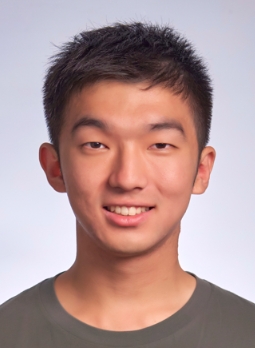 Yuwei Guo合作论文数Multimedia Laboratory, The Chinese University of Hong Kong2
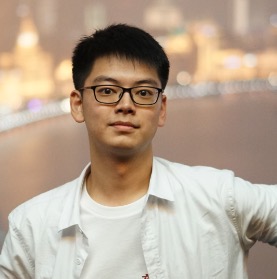 Minkai Xu (徐民凯)合作论文数Department of Computer Science, Stanford University2
 Renjie Liao (廖仁杰)合作论文数Department of Electrical and Computer Engineering, Faculty of Applied Science, The University of British Columbia;Google Brain2
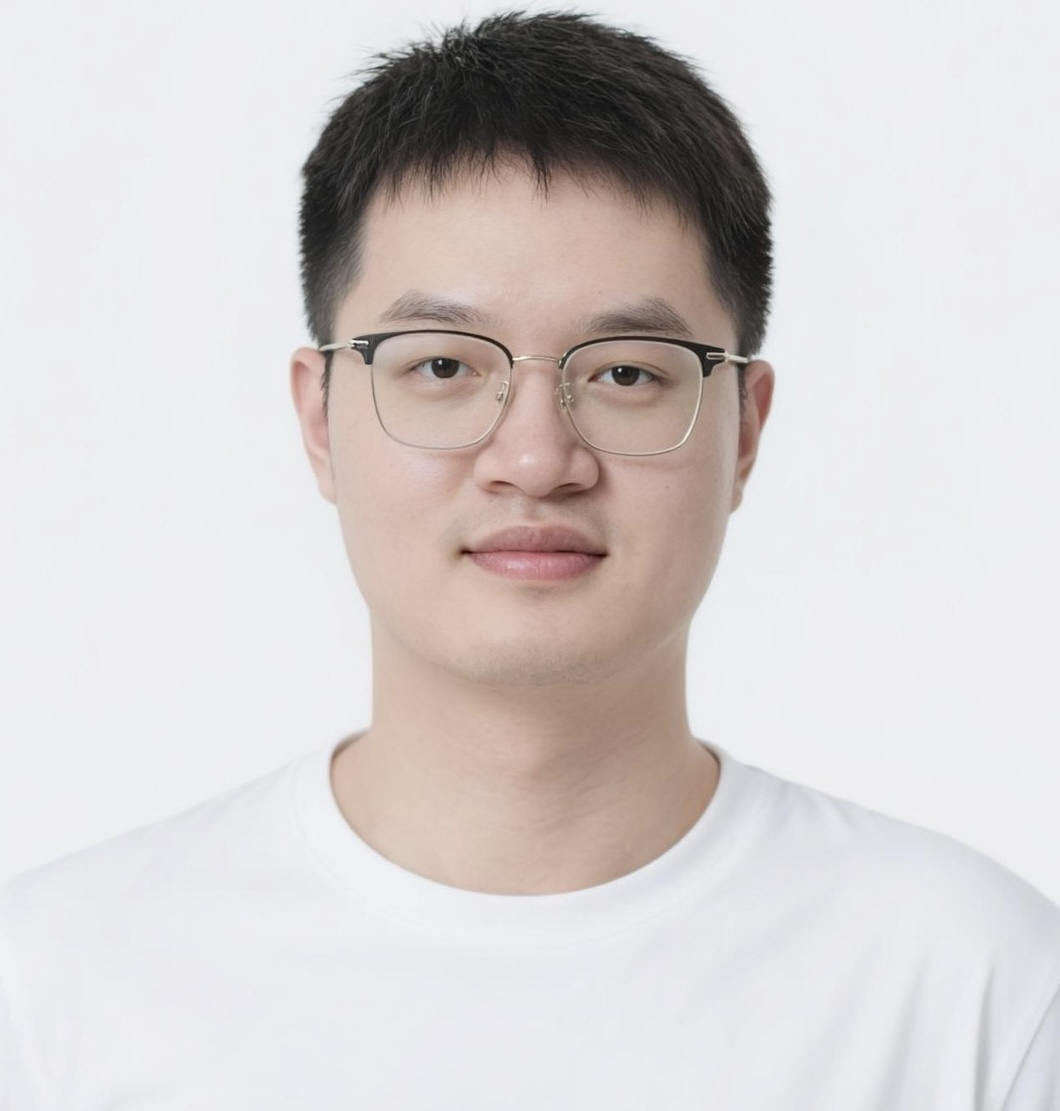 Ling Yang (杨灵)合作论文数Department of Electrical and Computer Engineering, School of Engineering and Applied Science, Princeton University2
 Samar Khanna合作论文数Inception Labs2
 Muyang Li (李沐阳)合作论文数Stealth Startup2
 Michihiro Yasunaga合作论文数Stanford University2
 Erik Rozi合作论文数2Zhongyi Tang合作论文数Stanford Univ, Stanford, CA 94305 USA2Enci Liu合作论文数2
 Jiajun Wu (吴佳俊)合作论文数Computer Science Department, Stanford University2
 Anyi Rao (饶安逸)合作论文数Division of Arts and Machine Creativity, Hong Kong University of Science and Technology;Division of Emerging Interdisciplinary Areas, Hong Kong University of Science and Technology2
 Maneesh Agrawala合作论文数Computer Science Department, Stanford University;Department of Electrical Engineering, Stanford University2
 Song Han (韩松)合作论文数Electrical Engineering & Computer Science Department, School of Engineering, Massachusetts Institute of Technology;NVIDIA2
 Christopher Manning合作论文数Department of Linguistics, Stanford University;Department of Computer Science, Stanford University;AIX Ventures2
 Bin Cui (崔斌)合作论文数School of Computer Science, Faculty of Informatics, Peking University2
 Robin Rombach合作论文数Black Forest Labs;Ludwig-Maximilians-Universität München2
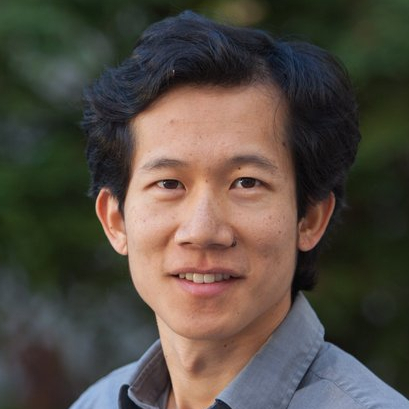 Percy Liang合作论文数Department of Computer Science, School of Engineering, Stanford University2Jenq-Neng Hwang合作论文数1Vashisht Madhavan合作论文数1Enze Xie合作论文数1Junxian Guo合作论文数1Bingliang Zhang合作论文数1Omer Bar-Tal合作论文数1Richard Lee合作论文数1
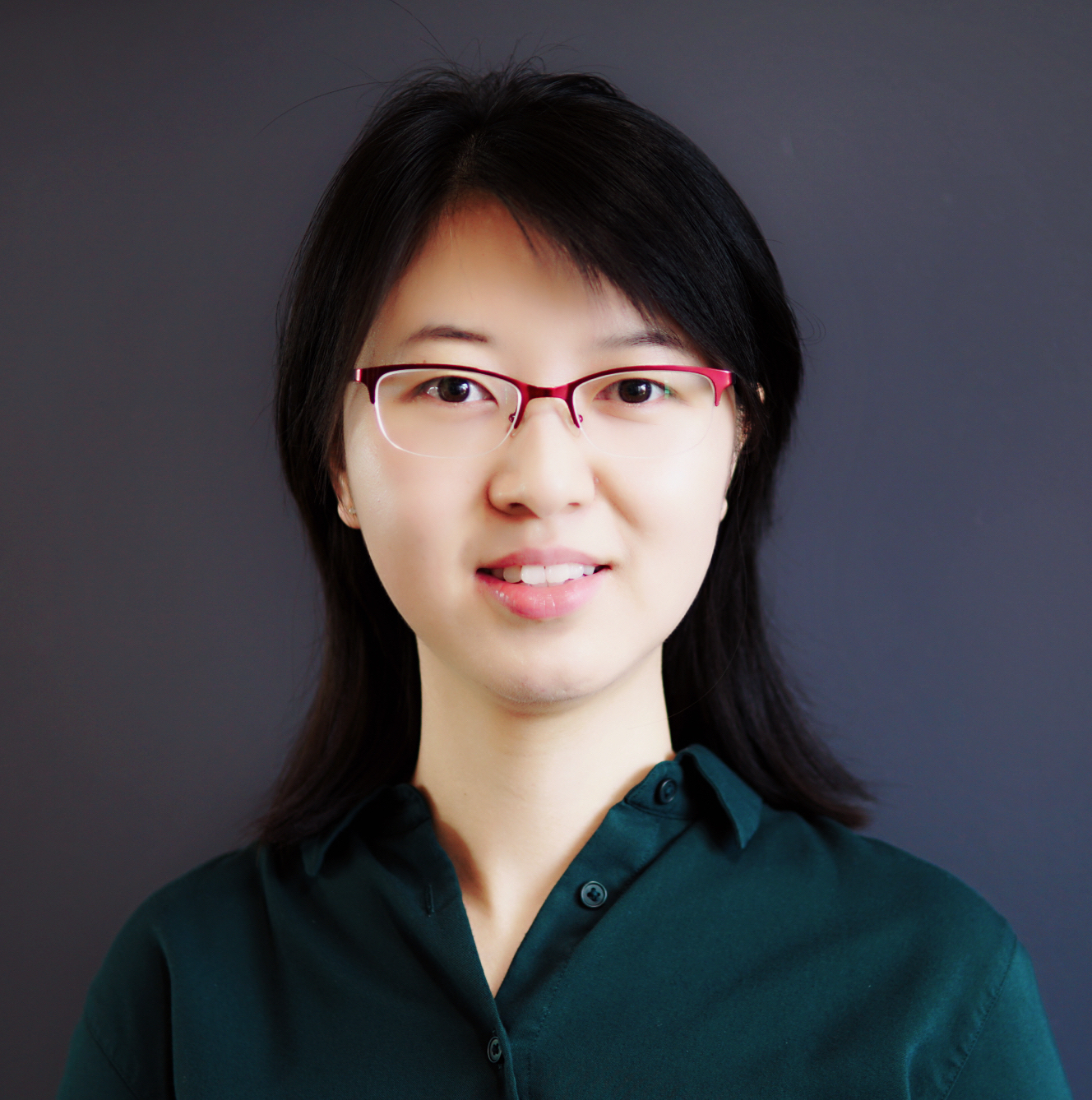 Shuang Li合作论文数Google DeepMind;University of Toronto;The Canadian Institute for Advanced Research1
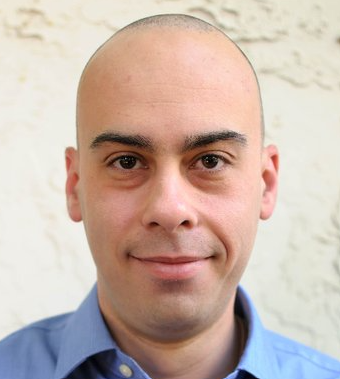 Guy Gur-Ari合作论文数Augment1
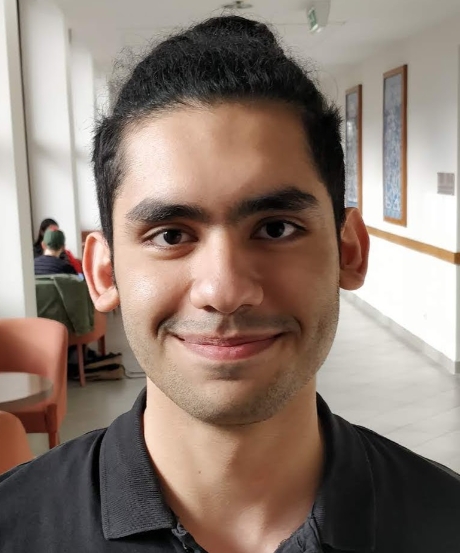 Shadi Hamdan合作论文数ShallowAI;KUIS AI Lab;KUIS AI Center, Koc University1Asher Mullokandov合作论文数1
 Jesujoba Oluwadara Alabi合作论文数Department of Language Science & Technology, Saarland University;Saarbrücken Graduate School of Computer Science, Saarland University1
 X. (Xiaoyu) Tong合作论文数Institute for Logic, Language and Computation, Faculty of Science, University of Amsterdam1Hongxu Ma合作论文数1




