An adventive population of the exotic parasitoid wasp, Trissolcus japonicus (Ashmead) (Hymenoptera: Scelionidae), discovered in Michigan in 2018, is a promising biological control agent of the invasive Halyomorpha halys (Stål) (Hemiptera: Pentatomidae). Following its discovery, field releases of Tr. japonicus were conducted over 2 yr in southern Michigan, to test how release size or release frequency impacts establishment. Sentinel eggs of H. halys and of the native Podisus maculiventris (Say) (Hemiptera: Pentatomidae) were used alongside yellow sticky cards to monitor parasitoids. In 2019 and 2020, 7,200 Tr. japonicus were released at 16 sites. Monitoring between 2019 and 2021 yielded only 49 individuals. The captures suggest reproductive activity and overwintering success in the field but do not allow for evaluation of best release methods. Parasitism by native parasitoids was below 7%, which is similar to other states and unlikely to provide sufficient control of H. halys. The placement of sentinel eggs or sticky traps either in the lower or middle canopy of trees did not influence parasitoid capture rates. Frozen and fresh H. halys sentinel eggs were attacked at the same rate, but more native parasitoids emerged from frozen eggs. We did not find signs of nontarget effects on P. maculiventris thus parasitism rates overall were very low. These results could indicate dispersal of Tr. japonicus from the release sites or slow population growth. The latter may be due to the relatively low densities of H. halys in Michigan or may stem from the small founding size of our laboratory colony.
Male Cydia pomonella (L.) (Lepidoptera: Tortricidae) dispersion has largely been studied in nonmating disrupted orchards due to synthetic pheromone interference with capture in monitoring traps. Little is known about female dispersion. This study aimed to characterize male and female dispersion in mating disrupted commercial apple orchards. Sterile C. pomonella recapture data from single-trap multiple-release experiments using PHEROCON CM-DA COMBO + AA Lure-baited orange Pherocon VI delta traps was interpreted to determine pheromone-kairomone lure-baited trap effective area, trap deployment density for effective monitoring, and absolute male and female C. pomonella density in mating disrupted Washington commercial apple orchards. The maximum plume reach of the pheromone-kairomone lure in mating disrupted orchards was <5 m from the baited trap for both sexes. Maximum dispersive distances for 95% of the released C. pomonella in mating disrupted orchards were 106 and 135 m for males and females, yielding trapping areas of 3.87 and 6.16 ha, respectively. Estimates were consistent across 3 growing seasons and represent the first records of male and female dispersal distance and monitoring trap efficacy from commercial C. pomonella mating disrupted apple orchards. With relevance to commercial monitoring programs and economic thresholds in mating disrupted orchards, traps should be deployed at a density of 1 per 3-6 ha. Capture of a single male or female C. pomonella corresponds to at least 82-104 C. pomonella within the 3-6 ha trapping area. This refined C. pomonella capture interpretation in pheromone-kairomone baited traps in mating disrupted commercial apple orchards yields more precise damage estimates and assists in insecticide-use decision making.
Fungicides are commonly applied to prevent diseases in eastern North American cherry orchards at the same time that honey bees (Apis mellifera L. (Hymenoptera: Apidae)) are rented for pollination services. Fungicide exposure in honey bees can cause negative health effects. To measure fungicide exposure, we sampled commercial honey bee colonies during orchard bloom at two commercial tart cherry orchards and one holding yard in northern Michigan over two seasons. Nurse bees, foragers, larvae, pollen, bee bread, and wax were screened for captan, chlorothalonil, and thiophanate-methyl. We also looked at the composition of pollens collected by foragers during spring bloom. We found differences in fungicide residue levels between nurse bees and foragers, with higher captan levels in nurse bees. We also found that residue levels of chlorothalonil in workers were significantly increased during tart cherry bloom, and that nurse bees from hives adjacent to orchards had significantly higher chlorothalonil residues than nurse bees from hives kept in a holding yard. Our results suggest that fungicide exposure of individual honey bees depends greatly on hive location in relation to mass-flowering crops, and worker role (life stage) at the time of collection. In some pollen samples, captan and chlorothalonil were detected at levels known to cause negative health effects for honey bees. This study increases our understanding of exposure risk for bees under current bloom time orchard management in this region. Further research is needed to balance crop disease management requirements with necessary pollination services and long-term pollinator health.
The long‐term health of pollinators is a critical issue for the functioning of natural habitats and for agricultural production. In response to widespread public concern about the future of these ecologically and economically important animals, in 2015 the US Government released a national strategy to support pollinators, including research priorities, directives for funding, and timelines for achieving three overarching goals. Five years after this strategic plan was released, we evaluate progress toward the national targets for improved honey bee (Apis mellifera) overwintering survival, expanded pollinator habitat, and larger monarch butterfly (Danaus plexippus) populations, and find that the three goals of the plan have not yet been reached. Our research and extension programs to improve the health of honey bees, wild bees, and monarch butterflies in the US state of Michigan are described, providing opportunities to contribute to the national pollinator goals.
Trap captures of obliquebanded leafroller, Choristoneura rosaceana (Harris) to pheromone blends in ratios approximating those reported in pheromone glands and a novel blend based on a volatile headspace collection from live virgin females were evaluated in field experiments in Michigan apple orchards. In an initial field trapping study, pheromone lures composed of either a three- or four-component blend approximation of the blend present in female pheromone glands at doses ranging from 0.1 to 20 mg/lure were compared. The four-component blend was a combination of (Z)-11-tetradecenyl acetate (Z11-14:Ac), (E)-11-tetradecenyl acetate (E11-14:Ac), (Z)-11-tetradecen-1-ol (Z11-14:OH), and (Z)-11-tetradecenal (Z11-14:Al) in a ratio of 96.5:1.8:1.4:0.2, respectively, while the three-component blend lacked Z11-14:Al. Pheromone emissions by groups of virgin females and commercial lures were collected in the laboratory and analyzed by gas chromatography. These data were used to formulate a new pheromone lure that was compared to a commercial lure in a second trapping study. In the first field study, traps baited with 10 mg pheromones or above captured significantly more moths than traps baited with 1 mg or less, regardless of the blend. Surprisingly, groups of virgin females only emitted two detectable pheromone components, Z11-14:Ac and Z11-14:OH in a ratio of 37:63 which was substantially different from the blends detected in pheromone glands in the literature. The newly formulated pheromone lure based on females’ emission was more than twice as attractive as the commercial lure which emitted a 74:5:21 three-component blend of Z11-14:Ac, E11-14:Ac, and Z11-14:OH. Our results suggested that the actual pheromones released by females may not translate directly to the content of pheromone glands.
Abstract BACKGROUND Invasive species threaten the productivity and stability of natural and managed ecosystems. Predicting the spread of invaders, which can aid in early mitigation efforts, is a major challenge, especially in the face of climate change. While ecological niche models are effective tools to assess habitat suitability for invaders, such models have rarely been created for invasive pest species with rapidly expanding ranges. Here, we leveraged a national monitoring effort from 543 sites over 3 years to assess factors mediating the occurrence and abundance of brown marmorated stink bug (BMSB, Halyomorpha halys), an invasive insect pest that has readily established throughout much of the United States. RESULTS We used maximum entropy models to estimate the suitable habitat of BMSB under several climate scenarios, and generalized boosted models to assess environmental factors that regulated BMSB abundance. Our models captured BMSB distribution and abundance with high accuracy, and predicted a 70% increase in suitable habitat under future climate scenarios. However, environmental factors that mediated the geographical distribution of BMSB were different from those driving abundance. While BMSB occurrence was most affected by winter precipitation and proximity to populated areas, BMSB abundance was influenced most strongly by evapotranspiration and solar photoperiod. CONCLUSION Our results suggest that linking models of establishment (occurrence) and population dynamics (abundance) offers a more effective way to forecast the spread and impact of BMSB and other invasive species than simply occurrence‐based models, allowing for targeted mitigation efforts. Implications of distribution shifts under climate change are discussed. © 2022 The Authors. Pest Management Science published by John Wiley & Sons Ltd on behalf of Society of Chemical Industry.
Drosophila suzukii Matsumura (Drosophilidae) is a devasting invasive pest affecting berry crops and cherry production throughout North America, South America, and Europe. This species has two different morph phenotypes, winter and summer morphs, which are temperature dependent. Chemical control is the most widely used management approach for managing the spotted wing drosophila, D. suzukii. Little is known regarding the differential response of the two seasonal morphs to insecticides. In this study, we identified a high number of differentially expressed genes likely involved in phase I, II, and III of detoxification pathways and other cuticular proteins in winter morphs as compared to summer morphs. Specifically, several detoxification genes (phase I: Cyp4e3, Cyp4s3, Cyp6d5, Cyp49a1, Cyp318a1; phase II: GstD10, Ugt35Bb, Ugt37b1, Ugt58Fa; phase III: Mdr65) were overexpressed more than two-fold in winter morph. Additionally, we determined the median lethal concentration, LC50, values of Malathion, Cyantraniliprole, Imidan, Zeta-cypermethrin, and Spinetoram insecticides to compare the insecticide susceptibility against two seasonal morphs of D. suzukii. For most of the pesticides tested, there were no differences between the LC50 values, between summer and winter morphs, however, we found that winter morph exhibited an LC50 value of Spinetoram 3.7-fold, significantly higher than that of the summer morph. Overall, we demonstrated that seasonally induced different morphological phenotypes may result in different transcriptional response of phases I, II, and III of the detoxification pathways and other cuticular proteins. However, we found different responses to at least one insecticide, Spinetoram. It remains to be determined what are underlying physiological differences that lead to these changes in response to Spinetoram.
Drosophila suzukii (Matsumura, 1931) (Diptera: Drosophilidae) is a vinegar fly native to East Asia that has rapidly expanded its range to become a pest of sweet cherry (Prunus avium, L. 1753 [Rosales: Rosaceae]) and tart cherry (P. cerasus, L. 1753) in North America and Europe. The goal of the research presented herein was to improve the decision-making process for managing D. suzukii in tart cherry. Knowing that D. suzukii females are attracted to ripening fruit, we measured fruit infestation by D. suzukii as it relates to an existing fruit development model that uses full bloom as a biofix, calculating accumulated growing degree days (GDD) with a lower threshold of 4°C. Increasing larval infestation was highly correlated with fruit development expressed as GDD post-bloom with very few larvae developing in fruit subjected to no-choice assays prior to 530 GDD (base 4°C) and no larvae detected in naturally infested fruit prior to 800 GDD. Our findings provide the first quantification of the relationship between fruit development and D. suzukii infestation that allows for pinpointing the timing of fruit susceptibility and that could be used as the basis for a more sustainable management program for this pest in tart cherry orchards.
Trap captures of obliquebanded leafroller, Choristoneura rosaceana (Harris), to pheromone blends in ratios approximating those reported in pheromone glands and a novel blend based on a volatile headspace collection from live virgin females were evaluated in field experiments in Michigan apple orchards. In an initial field trapping study, pheromone lures composed of either a three- or four-component blend approximation of the blend present in female pheromone glands at doses ranging from 0.1 to 20 mg/lure were compared. The four-component blend was a combination of ( Z )-11-tetradecenyl acetate ( Z 11-14:Ac), ( E )-11-tetradecenyl acetate ( E 11-14:Ac), ( Z )-11-tetradecenol ( Z 11-14:OH) and ( Z )-11-tetradecenal ( Z 11-14:Al) in a ratio of 96.5:1.8:1.4:0.2, respectively, while the three-component blend lacked Z 11-14:Al. Pheromone emissions by groups of virgin females and commercial lures were collected in the laboratory and analysed by gas chromatography. These data were used to formulate a new pheromone lure that was compared to a commercial lure in a second trapping study. In the first field study, traps baited with 10 mg pheromones or above captured significantly more moths than traps baited with 1 mg or less, regardless of the blend. Surprisingly, groups of virgin females only emitted two detectable pheromone components, Z 11-14:Ac and Z 11-14:OH in a ratio of 37:63, which was substantially different from the blends detected in pheromone glands in the literature. The newly formulated pheromone lure based on females’ emission was more than twice as attractive as the commercial lure which emitted a 74:5:21 three-component blend of Z 11-14:Ac, E 11-14:Ac and Z 11-14:OH. Our results suggested that the actual pheromones released by females may not translate directly to the content of pheromone glands.
Seventy five percent of the world's food crops benefit from insect pollination. Hence, there has been increased interest in how global change drivers impact this critical ecosystem service. Because standardized data on crop pollination are rarely available, we are limited in our capacity to understand the variation in pollination benefits to crop yield, as well as to anticipate changes in this service, develop predictions, and inform management actions. Here, we present CropPol, a dynamic, open, and global database on crop pollination. It contains measurements recorded from 202 crop studies, covering 3,394 field observations, 2,552 yield measurements (i.e., berry mass, number of fruits, and fruit density [kg/ha], among others), and 47,752 insect records from 48 commercial crops distributed around the globe. CropPol comprises 32 of the 87 leading global crops and commodities that are pollinator dependent. Malus domestica is the most represented crop (32 studies), followed by Brassica napus (22 studies), Vaccinium corymbosum (13 studies), and Citrullus lanatus (12 studies). The most abundant pollinator guilds recorded are honey bees (34.22% counts), bumblebees (19.19%), flies other than Syrphidae and Bombyliidae (13.18%), other wild bees (13.13%), beetles (10.97%), Syrphidae (4.87%), and Bombyliidae (0.05%). Locations comprise 34 countries distributed among Europe (76 studies), North America (60), Latin America and the Caribbean (29), Asia (20), Oceania (10), and Africa (7). Sampling spans three decades and is concentrated on 2001-2005 (21 studies), 2006-2010 (40), 2011-2015 (88), and 2016-2020 (50). This is the most comprehensive open global data set on measurements of crop flower visitors, crop pollinators and pollination to date, and we encourage researchers to add more datasets to this database in the future. This data set is released for non-commercial use only. Credits should be given to this paper (i.e., proper citation), and the products generated with this database should be shared under the same license terms (CC BY-NC-SA).
Residue profiling was used to determine the degradation curves of four key insecticides registered for use in US tart cherries. Single and multiple application treatment regimens with minimum and maximum seasonal applications were tested for their effects on residue levels at harvest. The effects of the cherry washing procedure were also tested. The residue profiles suggest that fenpropathrin, cyantraniliprole, phosmet, and spinetoram would be relatively low risk for US tart cherry growers to use when exporting from the US to most prospective international markets. Fenpropathrin exceeded the European Union's MRL at harvest for single or multiple applications and unwashed or washed treatments, making fenpropathrin a moderate risk for export to the EU.
Drosophila suzukii (Matsumura) (Diptera: Drosophilidae) also known as spotted-wing drosophila (SWD), is a pest native to Southeast Asia. In the last few decades, the pest has expanded its range to affect all major European and American fruit production regions. SWD is a highly adaptive insect that is able to disperse, survive, and flourish under a range of environmental conditions. Infestation by SWD generates both direct and indirect economic impacts through yield losses, shorter shelf life of infested fruit, and increased production costs. Fresh markets, frozen berries, and fruit export programs have been impacted by the pest due to zero tolerance for fruit infestation. As SWD control programs rely heavily on insecticides, exceedance of maximum residue levels (MRLs) has also resulted in crop rejections. The economic impact of SWD has been particularly severe for organic operations, mainly due to the limited availability of effective insecticides. Integrated pest management (IPM) of SWD could significantly reduce chemical inputs but would require substantial changes to horticultural management practices. This review evaluates the most promising methods studied as part of an IPM strategy against SWD across the world. For each of the considered techniques, the effectiveness, impact, sustainability, and stage of development are discussed.
Background odors produced by plants in the environment can interfere with the response of insects to a point-releasing attractant, especially when their compositions overlap. In this study, a series of binary choice tests was conducted in a wind tunnel to investigate whether background odors emitted from cherry, blueberry, blackberry, or raspberry fruits would affect the level of Drosophila suzukii (Matsumura) attraction to its symbiotic yeast, Hanseniaspora uvarum (Niehaus) (Saccharomycetales: Saccharomycetaceae). Whether an increase in the intensity of background odors would affect the attractiveness of H. uvarum to D. suzukii was also investigated, either by increasing the number of cherry or raspberry fruit per cup or by increasing the number of fruit cups surrounding the cup baited with the yeast. In wind tunnel assays, background fruit odors interfering with D. suzukii attraction to the yeast varied among fruit types. Raspberry odor inhibited the attractiveness of H. uvarum to the fly the most, followed by blackberry odor, whereas cherry and blueberry odors had no significant impact on the attraction. An increase in the intensity of odors by adding more cherry or raspberry fruit per cup did not increase the impact of fruit odor on the attraction; however, adding more raspberry cups around H. uvarum linearly decreased its attractiveness, suggesting that background host fruit abundance and likely increase in host odor may influence D. suzukii attraction to yeast odor depending on host species.
 John C. Wise合作论文数150Ryan Vander Poppen合作论文数65
 Lukasz Stelinski合作论文数Citrus Research and Education Center, University of Florida47Kevin Schoenborn合作论文数44
 Rufus Isaacs合作论文数Department of Entomology;Michigan State University;Department of Entomology, Michigan State University28
 Peter Scott McGhee合作论文数Entomology Department, Michigan State University25Anthony H. Vanwoerkom合作论文数24j c wise合作论文数23
 Jay F Brunner合作论文数18Epstein David L合作论文数16
 James R. Miller合作论文数Department of Marine and Coastal Sciences, School of Environmental and Biological Sciences, Rutgers, The State University of New Jersey14Nikki Rothwell合作论文数13
 Matthew Grieshop合作论文数Kansas State University;Department of Entomology;Department of Entomology, Kansas State University12Julianna K. Wilson合作论文数11
 Juan Huang合作论文数10k schoenborn合作论文数9Celeste E Wheeler合作论文数9Gary Thornton合作论文数9Luís A. F. Teixeira合作论文数8
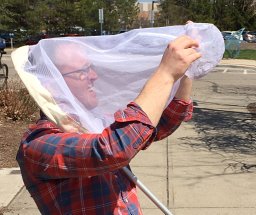 Jason Gibbs合作论文数York University8Peter H. Westigard合作论文数7
 Mark E Whalon合作论文数7
 Danielle Kirkpatrick合作论文数Trece Inc6
 David Biddinger合作论文数6
 Il'Ichev A L合作论文数Department of Primary Industries, Primary Industries Research Victoria6
 Peter Witzgall合作论文数Department of Crop Science;Swedish University of Agricultural Sciences;Department of Crop Science, Swedish University of Agricultural Sciences6Mike Haas合作论文数5
 Don Thomson合作论文数5
 Nielsen Anne L合作论文数Department of Nematology, University of California, Davis5Neelendra K. Joshi合作论文数5G. C. Adams合作论文数4Cc Rebeiz合作论文数4
 Julia Brokaw合作论文数Dept Entomol, Univ Minnesota4
 John Pote合作论文数Dept Entomol, Rutgers State Univ4
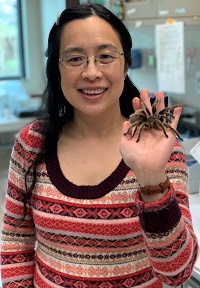 Jana C. Lee合作论文数Horticultural Crops Research Unit, Agricultural Research Service, U.S. Department of Agriculture4
 Neal M. Williams合作论文数Department of Entomology and Nematology, University of California, Davis4
 Oscar E. Liburd合作论文数Department of Entomology and Nematology, University of Florida4W. J. Liss合作论文数4
 Marco Tasin合作论文数SafeCrop Center, Agricultural Research Station4
 John A Juvik合作论文数Division of Nutritional Sciences, College of Agricultural, Consumer and Environmental Sciences, University of Illinois at Urbana-Champaign4
 Elizabeth Beers合作论文数4
 Keith S Mason合作论文数3
 Joseph Bigirimana合作论文数Rwanda Agriculture and Animal Resources Development Board (RAB), Rwanda, P. O Box 5016, Kigali, Rwanda3
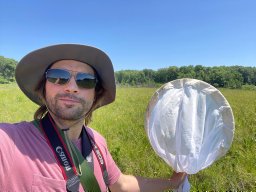 Logan Rowe合作论文数Dept Entomol, Michigan State Univ3Kim A. Hoelmer合作论文数3
 Kent M. Daane合作论文数Department of Environmental Science, Policy and Management, College of Natural Resources, University of California, Berkeley3
 Gregory Loeb合作论文数Cornell AgriTech, College of Agriculture and Life Sciences, Cornell University3
 Rachael Winfree合作论文数Department of Ecology, Evolution, and Natural Resources, School of Environmental and Biological Sciences, Rutgers, The State University of New Jersey3




