Quantifying energy expenditure of cetacean mother-calf pairs is essential for modelling population-level responses to environmental change and anthropogenic disturbance, especially for capital breeders where mothers face the compounding demands of fasting while lactating. Technological advances in biologging and unoccupied aerial system (UAS; drone) photogrammetry help overcome challenges in translating respirometry methods from animals under human care to the field, creating better energy-use estimates in large cetaceans. We quantified energy expenditure of humpback whale (Megaptera novaeangliae) mothers and calves on their winter breeding ground in Hawai'i using 51 biologging suction-cup tag deployments paired with simultaneous UAS-photogrammetric measurements (n = 20 mothers, n = 31 calves) from 2020 to 2025. We used two independent methods, Thrust Power and Breathing Frequency, to calculate per-second energy expenditure, divided deployments into resting dives and other behavioural states and modelled state-specific energy use and daily energy expenditure for mothers and calves. Calves spent more time in resting dives as they aged, and energy expenditure was on average 44% and 35% lower during resting dives for mothers and calves, respectively, compared to other behaviour. Simulated daily energy expenditure for calves ranged from 92 MJ for the smallest and youngest (3.5 m, 1 day) to 452 MJ for the largest and oldest (7.7 m, 110 days), and for mothers from 817 MJ for small females (10 m, 15 000 kg) to 2013 MJ for large females (14 m, 50 000 kg). To illustrate the conservation implications of these energy savings, we simulated the energetic cost of vessel-disturbance-induced reductions in resting behaviour for a representative mother-calf pair. Under a realistic daytime disturbance scenario, daily pair energy expenditure increased by 64 MJ day-1, accumulating to an additional 150 kg of maternal blubber catabolized over 60 days of disturbance. Our findings provide best estimates of humpback whale mother-calf daily and behavioural state-specific energy expenditure, enabling improved quantification of the energetic consequences of disturbance.
Understanding the acoustic communication of the endangered main Hawaiian Islands insular population of false killer whales (Pseudorca crassidens) is essential for effective management. In this study, biologging tags were deployed on four individuals, recording 26.2 h of acoustic data. A total of 5940 high-quality possible focal pulsed calls were analysed and 52 stereotyped call types were characterized. The fundamental frequency contour ranged from a mean minimum frequency of 7.22 +/- 0.78 to 9.28 +/- 0.80 kHz (mean maximum frequency) with a mean duration of 0.32 +/- 0.08 s. Predominant call types and call rates across dive states varied by individual. Probability of calling was higher during the descent and bottom phase compared with the surface. Four types of nonlinear phenomena (NLP) were documented including biphonation (call + clicks, 78% of all NLP), secondary sidebands, chaos and frequency jumps. Frequency jumps were commonly produced by two animals from the same group (13-19%). Most calls contained NLP (80%). The average call rate recorded by the tags on two individuals was 17.5 calls m-1 (hourly average) and call rates decreased as swim speed increased. Our findings suggest high repertoire diversity and high signal complexity informing future passive acoustic monitoring efforts.
Movement is energetically expensive, and locomotor efficiency depends on body size and morphology. Humpback whales Megaptera novaeangliae exhibit a remarkable ontogenetic size range and experience periods of intense fasting coinciding with energetically demanding migration, lactation, and growth. To quantify how propulsive costs scale with body size, we combined accelerometry data and aerial photogrammetry collected from 62 humpback whales ranging from calves to adults (4.4-14.1 m) on their Hawaiian breeding ground. Using a hydrodynamic model incorporating swimming kinematics and morphology, we found that mass-specific propulsive costs declined with increasing body length, representing a 62% reduction between a 4 m calf and a 14 m adult. Elevated activity levels and higher mass-specific propulsive costs in calves energetically burden lactating females, whose energy reserves must support both calf activity and rapid somatic growth. These energetic demands are buffered by the female’s own reduced activity and mass-specific propulsive costs. We estimate that propulsion accounts for approximately 21% of a lactating female’s daily energetic expenditure while on the breeding grounds. Our approach highlights the disproportionately higher cost of displacement in smaller individuals, ranging from approximately 4 kJ m -1 in calves to 25 kJ m -1 in adults, providing a scalable framework to quantify the energetic consequences of disturbance. These findings underscore the importance of large body size in baleen whales, refine understanding of how activity costs scale across body size in humpback whales on their breeding grounds, and provide an energetic baseline to predict consequences of environmental and anthropogenic disturbance.
Body condition is a critical indicator of health and nutritional status in cetaceans, particularly for small, endangered populations facing ecological stressors. We used aerial photogrammetry to evaluate body size and condition of the endangered false killer whale Pseudorca crassidens population resident in the main Hawaiian Islands. From 2019 to 2025, 68 individuals were assessed across 142 photogrammetric measurements. Relative body width declined with age class, particularly across the mid-body region, indicating early-life lipid accumulation followed by increased energetic demands in adulthood. Photogrammetric volume estimates were validated against 3D-scanned individuals, providing estimates within 3% of scanned volumes. Standardized major axis regression revealed significant differences in the body length-volume relationship across social clusters. Body condition index (BCI) varied across years, with the lowest values in 2020, coinciding with the largest single-year population decline and record sea surface temperatures from a marine heatwave, suggesting that environmental stressors may have contributed to reduced body condition during this period. Individual-level trajectories further highlighted substantial fluctuations in BCI, including one case of 28% estimated body mass loss over a 2.5 mo period, and pronounced variability within one cluster, potentially reflecting higher energetic costs and nutritional stress associated with broader ranging behavior. These findings underscore the influence of spatial ecology and local prey availability on the health of this declining population, while providing a foundation for long-term monitoring of the energetic stressors shaping their viability.
Several legal acts mandate that management agencies regularly assess biological populations. For species with distinct markings, these assessments can be conducted noninvasively via capture-recapture and photographic identification (photo-ID), which involves processing considerable quantities of photographic data. To ease this burden, agencies increasingly rely on automated identification (ID) algorithms. Identification algorithms present agencies with an opportunity-reducing the cost of population assessments-and a challenge-propagating misidentifications into abundance estimates at a large scale. We explored several strategies for generating capture histories with an ID algorithm, evaluating trade-offs between labor costs and estimation error in a hypothetical population assessment. To that end, we conducted a simulation study informed by 39 photo-ID datasets representing 24 cetacean species. We fed the results into a custom optimization tool to discern the optimal strategy for each dataset. Our strategies included choosing between truly and partially automated photo-ID and, in the case of the latter, choosing the number of suggested matches to inspect. True automation was optimal for datasets for which the algorithm identified individuals well. As identification performance declined, the optimization recommended that users inspect more suggested matches from the ID algorithm, particularly for small datasets. False negatives (i.e., individual was resighted but erroneously marked as a first capture) strongly predicted estimation error. A 2% increase in the false negative rate translated to a 5% increase in the relative bias in abundance estimates. Our framework can be used to estimate expected error of the abundance estimate, project labor effort, and find the optimal strategy for a dataset and algorithm. We recommend estimating a strategy's false negative rate before implementing the strategy in a population assessment. Our framework provides organizations with insights into the conservation benefits and consequences of automation as conservation enters a new era of artificial intelligence for population assessments.
Diving is one of the most important behaviors undertaken by marine mammals. Pilot whales (Globicephala spp.) are oceanic dolphins that regularly forage at extreme depths (∼600-1000 m) and maintain body sizes similar to beaked whales. They are also listed as data deficient, with little known about their population dynamics. To help fill this knowledge gap, we estimated their energetic demands through a combination of multiple data streams (e.g. unoccupied aerial systems photogrammetry, high-resolution accelerometry tag data, stomach content analysis and long-duration dive data from satellite tags) from short-finned pilot whales (Globicephala macrorhynchus) in Hawaiian waters. We estimated and compared pilot whale field metabolic rates from breathing frequency against a more granular cost of transport method developed from morphometrics and swimming kinematics, finding that these methods gave similar estimates of energetic expenditure during foraging dives. We then combined expenditure and intake estimates into an exploratory model of daily net energetic balance. Using an estimate of prey size derived from squid beaks collected from a stranded animal, we found that an average of 142±59.8 squid day-1 (52,000±21,800 squid year-1) is enough for an average adult short-finned pilot whale to reach a neutral net energetic balance. This species has an estimated population abundance of ∼8000 individuals in Hawaiian waters, suggesting that the population as a whole would require 416±175 million squid (at an average of 559±126 kJ squid-1) or approximately 88,000±37,000 tonnes of squid annually, assuming similar energetic requirements for each animal.
Maneuverability in cetaceans is facilitated by pectoral flippers, flukes and spinal flexibility, features that are pronounced in humpback whales (Megaptera novaeangliae). Humpback whales exhibit several foraging tactics requiring high maneuverability not seen in other baleen whales, including bubble-net feeding. We hypothesized that the significant lift force produced by the humpback whale's uniquely large pectoral flippers will result in them being the only species observed executing the tight, high-speed, sustained turns characteristic of solitary bubble-net feeding. To test this hypothesis, we used a combination of inertial sensor tag data and unoccupied aerial systems (UAS; drone) photogrammetry to quantify the turning performance of solitary bubble-net feeding humpback whales, and compared this to similar data from six other mysticete species. We found that solitary bubble-net feeding humpback whales exhibited centripetal accelerations (0.46 m s-2) that exceeded the upper limit quantified in comparable turns by all six other mysticetes. This enhanced turning performance can be attributed to a substantial lift force generated by the humpback whale's pectoral flippers (7800±85 N), which contributes to centripetal acceleration and facilitates faster roll rates, allowing humpback whales to more quickly bank inwards and utilize their spinal flexibility to decrease their turning radius. Our findings demonstrate how humpback whales are uniquely adapted to exploit prey patches that might otherwise be insufficient for capture by animals of such a large size.
Spinner dolphins (Stenella longirostris subsp.) in Hawai'i face the highest documented human activity exposure rates of any dolphin species worldwide, raising concerns about long-term impacts. Fundamental to any appropriate management action for a protected species is the availability of reliable information on their abundance and distribution. Currently, abundance estimates are only available for one of the six designated stocks of spinner dolphins in Hawai'i. To address this information gap, small-boat line-transect surveys for spinner dolphins were conducted around the island of O'ahu between October 2020 and May 2022. A total of 73 survey days were achieved, resulting in 3098 km of transects surveyed around the O'ahu coastline. We used a novel method utilizing opportunistically collected unoccupied aerial system data to assess dolphin availability at the surface. We also investigated the potential for responsive movement of animals, for which no evidence was found. Estimated abundance of spinner dolphins for O'ahu was 594 animals (95% CI [360, 980], CV = 0.26). Our findings represent the first circum-island abundance estimate of O'ahu's spinner dolphins, allowing management to explore strategies aimed at minimizing human-dolphin interactions in the region and assess long-term impacts. 'O ka nai'a wiliwili (Stenella longirostris lalo l & amacr;hui) o Hawai'i ka lalo l & amacr;hui nai'a ho'okahi a puni ka honua i nui ai ka hui 'ana me ke kanaka wahi a ka noi'i, a ma muli ho'i o ia k & umacr;lana i 'upu ai ka minamina i n & amacr; hopena hiki & amacr;loa o ia p & amacr; 'ana. 'O ke kahua ho'i o kekahi 'ano papa hana m & amacr;lama no ia mau lalo l & amacr;hui, 'o ia ho'i ka loa'a o ka 'ike i hiki ke kauka'i 'ia no ko l & amacr;kou heluna a no ko l & amacr;kou laulaha 'ana. I k & emacr;ia manawa, 'o n & amacr; helu i kuhi 'ia no ka heluna o ia lalo l & amacr;hui, ua pili wale n & omacr; i ho'okahi wale n & omacr; 'ano o n & amacr; 'ano 'eono i ho'okohu 'ia o n & amacr; nai'a wiliwili ma Hawai'i. I mea e pani ai i ia k & omacr;& amacr; 'ike, ua m & amacr;lama 'ia he mau ana laina-holo moku-li'ili'i no n & amacr; nai'a wiliwili a puni 'o O'ahu i waena o 'Okakopa 2020 me Mei 2022. He 73 ka nui o n & amacr; l & amacr; ana kai m & amacr;lama 'ia, a 'o ka hopena ho'i he 3098 km ka loa o n & amacr; laina i holo 'ia a puni ko O'ahu mau 'aekai. He ki'ina hou k & amacr; m & amacr;kou i ho'ohana aku i ka 'ike o kekahi moku holo lewa kanaka 'ole (UAS) i mea e 'ike ai i ka nai'a ma ka 'ili kai. Ua noi'i p & umacr; m & amacr;kou i ka papaha o ka nene'e h & amacr;pane o n & amacr; holoholona, 'a'ohe na'e 'ike h & omacr;'oia mai. 'O ka heluna i kuhi 'ia no ka nui o ka nai'a wiliwili no O'ahu he 594 i'a (95% CI [360, 980], CV = 0.26). 'O ka 'ike i loa'a mai k & amacr; m & amacr;kou noi'i puni mokupuni ka mua o n & amacr; heluna kuhi no ko O'ahu mau nai'a wiliwili, a e 'ae ana ho'i ia 'ike i ka po'e maka'ala a alaka'i ho'i e 'imi aku i n & amacr; ki'ina e ki'i ana i ka ho'& emacr;mi i ka hui 'ana o ke kanaka me ka nai'a ma ia wahi a e loiloi ho'i i n & amacr; hopena hiki & amacr;loa o ia hui 'ana.
The main Hawaiian Islands insular false killer whale (Pseudorca crassidens) population is endangered due to anthropogenic stressors; therefore, understanding the acoustic behavior of this social species is imperative to conservation. Previous studies have used satellite telemetry tags to track movement, distribution, and diving behavior but provide little information on behavioral context related to acoustic communication and foraging behavior. Suction cup multi-sensor Customized Animal Tracking Solutions (CATS) tags and a digital acoustic recording tag (DTAG) containing hydrophones (SR 96 and 240 kHz, respectively) and a camera (CATS) were deployed off the main Hawaiian Islands in 2011 and 2023–2024 (n = 4). Cumulatively, 21 h of acoustic data were recorded. Calls were manually detected/classified using Raven Pro and features extracted using PAMGuard ROCCA. Individuals predominantly produced rarely documented pulsed calls and repertoires consisted of >10 previously undescribed stereotyped calls. Call types were associated with dive phase and call rates varied across individuals. Nonlinear phenomena were common including biphonation, frequency jumps, and deterministic chaos. This study marks the first-time concurrent audio/video tags have been deployed on odontocetes in Hawaiʻi and provides high-resolution insight into call function and behavioral states to supplement passive acoustic monitoring efforts and inform species management and conservation.
Photo-identification (photo-ID) is a widely used, non-invasive method for monitoring individual animals, including humpback whales (Megaptera novaeangliae; HBWs), and has provided valuable insights into their population dynamics, movement patterns, and social structures. Traditional identification relies on the trailing edge and ventral pigment patterns of the tail fluke (fluke-ID); however, not all whales present their flukes, limiting identification and re-sighting opportunities. We developed a novel aerial-identification (aerial-ID) approach using drone imagery to identify individual HBWs based on the arrangement of two features, tubercles (TB) and cookiecutter shark scars (CCS). Between January and March 2022, we sampled 1498 HBWs, including repeated individuals, capturing fluke-ID images for 772 and aerial-ID images for 1437. Fluke-ID yielded 164 re-sightings (76 lactating females, 88 others), while aerial-ID yielded 372 (249 and 123, respectively), representing a 227% increase for lactating females and 40% for others. We extended this approach to a multi-year, cross-regional dataset (2018-2025) of 54 individuals verified with fluke-ID. All were matched using aerial-ID, with the longest re-sight spanning 2737 days (6.5 years), representing the maximum interval within our study period. Aerial-ID thus offers a powerful complement to fluke-ID, expanding demographic coverage, increasing re-sighting rates, and enabling long-term, cross-regional monitoring. He 'ano hana laha a ho'oluhi 'ole ka h & omacr;'oia ki'i no ke kilo 'ana i n & amacr; holoholona, e like me ke kohol & amacr; (Megaptera novaeangliae), a h & omacr;'ike n & omacr; i ko l & amacr;kou 'ano lehulehu, k & amacr; lakou holo 'ana, me n & amacr; pilina 'ohana. Kauka'i ka h & omacr;'oia laha i ke 'ano o ke ka'e o ka hi'u a me ka waiho'olu'u i lalo o ka hi'u (h & omacr;'oia hi'u); ak & amacr; na'e, 'a'ole 'ike 'ia ka hi'u o n & amacr; kohol & amacr; a pau, e ho'& emacr;mi ana i n & amacr; h & omacr;'oia a me n & amacr; 'ike hou. Ua ho'okumu 'ia kekahi 'ano hana h & omacr;'oia lani e m & amacr;kou e ho'ohana ana i ka pa'i ki'i 'ana o ka helekopa uila li'i i mea e h & omacr;'oia ai i n & amacr; kohol & amacr; ma o ke 'ano o 'elua mea, n & amacr; pu'u a me n & amacr; '& amacr;lina man & omacr; cookiecutter. Ma waena o 'Ianuali me Malaki 2022, 'ike 'ia 1498 mau kohol & amacr;, me n & amacr; 'ike hou, a pa'i ki'i 'ia 772 ki'i h & omacr;'oia hi'u me 1437 ki'i h & omacr;'oia lani. Ua loa'a 164 'ike hou (76 w & amacr;hine e h & amacr;nai ana, 88 koholo & amacr; '& emacr; a'e) mai ka h & omacr;'oia hi'u, a loa'a 372 (249 a me 123) mai ka h & omacr;'oia lani, he ho'onui 227% no n & amacr; w & amacr;hine e h & amacr;nai ana a 40% no n & amacr; kohol & amacr; '& emacr; a'e. Ho'ohana n & omacr; ho'i m & amacr;kou i k & emacr;ia 'ano hana ma kekahi papa 'ike o 54 mau kohol & amacr; i h & omacr;'oia 'ia e ka h & omacr;'oia hi'u mai 2018-2025 he nui n & amacr; wahi. Ho'oh & amacr;likelike 'ia n & amacr; kohol & amacr; a pau e ka h & omacr;'oia lani, a 2737 l & amacr; (6.5 makahiki) ka w & amacr; 'ike hou l & omacr;'ihi loa, ka w & amacr; nui loa ma k & amacr; m & amacr;kou noi'i. He hui maika'i n & omacr; ka h & omacr;'oia lani me ka h & omacr;'oia hi'u, e ho'onui ana i ka 'ike 'ana o n & amacr; 'ano kohol & amacr; 'oko'a a me ka 'ike hou 'ana o kekahi kohol & amacr;. No laila, 'oi aku ke kilo 'ana no ka w & amacr; l & omacr;'ihi a'e a me n & amacr; wahi '& emacr;.
Anthropogenic impacts on marine systems are increasing in frequency, geographic range and severity. While changes in climate will likely lead to the greatest impacts at the system-level, for marine megafauna, entanglement in marine debris also constitutes a pernicious threat. For baleen whales, in regions where high productivity and prolific fisheries overlap, entanglement is emerging as a component of their life history: In some of these regions, entanglement comprises the leading cause of serious injury and mortality. Additionally, up to 80% of whales carry scars indicative of entanglement, and associated declines in long-term health are reducing fecundity. Here, we describe behavioral traits seen in humpback whales during entanglement incidents. Specifically, we focus on reports of humpback whales that have remained in association with entangled whales during these incidents and apply the term "companion whales" in reference to these whales. Reports reviewed include a detailed account of a recent incident observed in Hawaiian waters, a compilation of 62 accounts of similar behavior extracted from 414 reports of entanglement events provided by regional entanglement response networks, and a series of six reports associated with whaling activities. The similarities between the current behavior of companion whales and behaviors observed during whaling activities suggest that this may be an example of behavioral plasticity, underscoring the expanding behavioral repertoire exhibited by baleen whales, and highlighting their potential resilience as they respond to the changing marine environment.
Hawaiian monk seals (HMS; Neomonachus schauinslandi) are endemic and endangered with a population of approximately 1600 individuals. While research has provided extensive information on HMS biology, movements and population ecology, its underwater vocal behaviour remains largely undocumented, with previous descriptions limited to two individuals in human care. To broaden our understanding of sound production in free-ranging seals, we deployed passive acoustic recorders at five sites across the Hawaiian archipelago. From >4500 h of recordings, we manually detected and classified >23 000 underwater vocalizations. A discriminant function analysis of 10 call types yielded an average correct classification rate of 63%. We identified 25 call types, including five published elemental calls and 20 novel calls. Nineteen of the novel call types were combinational calls—an undocumented communication strategy in pinnipeds. The novel Whine, captured via biologging tag- and citizen-scientist videos, provided a rare example of context-specific call use in pinnipeds. Vocalizations were low frequency (<1 kHz), short–medium duration (<7 s), with 66% occurring in bouts. Calls were detected throughout the day at three of five sites, with peaks at night and late afternoon. These findings establish a baseline for HMS vocal behaviour and emphasize the importance of acoustic communication in future research and conservation efforts.
Hawaiian monk seals (HMS; Neomonachus schauinslandi) are among the most endangered and evolutionarily distinct phocid species. Until recently, their underwater acoustic behavior was poorly understood. Since 2017, our research efforts have aimed to characterize HMS sound production in both managed care and wild contexts. Initial studies documented the first underwater vocalizations from two mature male seals in human care, revealing six low-frequency (<1 kHz) call types produced seasonally. Building on this, over 4500 h of passive acoustic recordings from five sites across the Hawaiian Archipelago revealed an expanded repertoire of 27 call types from free-ranging seals. Using paired video–audio data from biologging tags and citizen-science videos, vocalizations were associated with five behavioral states (swimming, resting, social, foraging, and other). A novel ForagingCall was identified, providing a rare example of context-specific call use in pinnipeds, along with evidence of non-social vocal production by females. Complementary soundscape analyses within HMS critical habitats quantified broadband noise levels (range: 108–123 dB re 1 μPa) and revealed diel patterns driven by biological and anthropogenic sources. This research has informed a deep-learning-based detector and classifier, providing tools for long-term passive acoustic monitoring and advancing understanding of acoustic communication in HMS behavioral ecology and conservation.
Studying underwater soundscapes of critical habitats of marine mammals can provide valuable information on the acoustic environment utilized by sound-reliant animals. For the endangered Hawaiian monk seal Neomonachus schauinslandi (HMS), the acoustic scene of their aquatic habitats is poorly understood. We measured ambient noise levels and characterized sound sources at 4 shallow critical habitats of the HMS. Broadband levels ranged from 107.8-123.4 dB re 1 µPa. Octave band levels showed diel patterns associated with biological and anthropogenic sources that mask HMS vocalizations. Biological sources dominated the soundscape at all sites. We opportunistically recorded 2 large-scale geophonic events: Hurricane Douglas (Category 4) and a 6.2 magnitude earthquake. This study provides the first description of underwater soundscapes at critical habitats of the HMS across its expansive range. These measurements serve as a baseline for future studies to understand the impacts of human activities on underwater soundscapes.
Given recent declines in North Pacific humpback whale (Megaptera novaeangliae) reproductive output and calf survival, there is additional urgency to better understand how mother-calf pairs allocate energy resources across their migratory cycle. Here, unoccupied aerial system (UAS; or drone) photogrammetry was used to quantify the body size and condition (BC) of humpback whales on their Hawai'i (HI) breeding and Southeast Alaska (SEAK) feeding grounds. Between 2018 and 2022, we collected 2410 measurements of 1659 individuals. Rates of change in body volume (BV) and length (BL) were quantified using 803 repeat measurements of 275 individuals. On average, HI mothers lost 0.106 m3 or 96.84 kg day-1 while fasting, equivalent to 2641 MJ day-1 or 830 kg of krill and 424 kg of Pacific herring daily. HI calf BV and BL increased by 0.035 m3 and 2.6 cm day-1, respectively. In SEAK, maternal BV increased by 0.015 m3 or 14.54 kg day-1 (367 MJ day-1), while calf BV and BL increased by 0.039 m3 and 0.93 cm day-1, respectively. Maternal investment in calf growth correlated with both female BL and BC, with larger females producing larger, faster-growing calves. Finally, using 330 measurements from 156 females, we quantified differences in BC increase over four feeding seasons. Lactating females exhibited an average BC increase of 6.10%, half that of unclassified females (13.51%) and six times lower than pregnant females (37%). These findings represent novel insights into the life history of humpback whales across their migratory cycle, providing key baseline data for bioenergetic models elucidating the effects of anthropogenic disturbance and rapidly changing ocean ecosystems. KEY POINTS: On average, Hawai'i (HI) mothers lost 0.106 m3 or 96.84 kg day-1, equivalent to 2641 MJ day-1. Over a 60 day period, this corresponded to an estimated mean energetic cost of 158 GJ, or ≈50 tons of krill or ≈25 tons of Pacific herring, surpassing the total energetic cost of gestation estimated for humpback whales of similar length. In Southeast Alaska (SEAK), maternal body volume (BV) increased by just 0.015 m3 or 14.54 kg day-1 (367 MJ day-1). Further, SEAK lactating females showed the slowest rates of growth in body width and condition over a 150 day period compared to non-lactating females. Maternal investment in calf growth correlated with both maternal length and body condition, with larger females producing larger, faster-growing calves. In HI, however, the ratio between maternal BV lost and calf BV gained (conversion efficiency) was relatively low compared to other mammals.
Several animal species use tools for foraging; however, very few manufacture and/or modify those tools. Humpback whales, which manufacture bubble-net tools while foraging, are among these rare species. Using animal-borne tag and unoccupied aerial system technologies, we examine bubble-nets manufactured by solitary humpback whales (Megaptera novaeangliae) in Southeast Alaska while feeding on krill. We demonstrate that the nets consist of internally tangential rings and suggest that whales actively control the number of rings in a net, net size and depth and the horizontal spacing between neighbouring bubbles. We argue that whales regulate these net structural elements to increase per-lunge prey intake by, on average, sevenfold. We measured breath rate and swimming and lunge kinematics to show that the resulting increase in prey density does not increase energetic expenditure. Our results provide a novel insight into how bubble-net tools manufactured by solitary foraging humpback whales act to increase foraging efficiency.
Improving our understanding of energy allocation in reproduction is key for accurately parameterizing bioenergetic models to assess population responses to environmental perturbations and anthropogenic disturbance. We quantified the energetic cost of gestation in humpback whales (Megaptera novaeangliae) using historical whaling records, non-invasive unoccupied aerial system (UAS) photogrammetry and post mortem tissue samples. First, we estimated relative birth size using body length measurements of 678 mother-fetus pairs from historical whaling records and 987 mother-calf pairs measured in situ using UAS-photogrammetry. The total energetic cost of gestation includes fetal growth (FG), heat increment of gestation and placental tissue development. FG was modelled from conception to birth, with fetal volume and mass estimated using the volume-to-length relationship of perinatal calves and published humpback whale tissue composition estimates. Tissue-specific energy content was quantified using post mortem bone, muscle, viscera and blubber samples from a neonatal humpback whale. Placental tissue development was estimated using humpback whale placental tissue and published equations. Relative birth length was found to be 33.75% (95% CI: 32.10-34.61) of maternal length. FG rates and absolute birth size increased with maternal length, with exponential growth in fetal length, volume and mass resulting in minimal energetic costs over the first two quadmesters (0.01-1.08%) before increasing significantly in the final quadmester (98.92%). Gestational heat constituted the greatest energetic cost (90.42-94.95%), followed by fetal (4.58-7.76%) and placental (0.37-1.83%) tissue growth. Our findings highlight the energetic costs endured by capital breeding females preceding parturition, with the most substantial energetic costs of gestation coinciding with migration and fasting. KEY POINTS: We quantified the energetic cost of gestation using body length measurements of mother-fetus pairs from historical whaling records, length estimates of mother-calf pairs measured in situ using aerial photogrammetry and post mortem tissue samples. Fetal growth rates and birth size increased with maternal length, with fetal length, volume and mass increasing exponentially over gestation. Energetic costs over the first two quadmesters were negligible (0.01-1.08%) before increasing significantly in the final quadmester (98.92%). Though larger females incur nearly twice the energetic cost of smaller females, they are likely buffered by greater absolute energy reserves, suggesting smaller females may be less resilient to perturbations in energy balance. We demonstrate the significant energetic costs incurred by pregnant humpback whales, with most of the energetic expenditure occurring over the final 100 days of gestation. Late-pregnant females are, therefore, particularly vulnerable to disruptions in energy balance, given periods of greatest energetic stress coincide with fasting and migration.
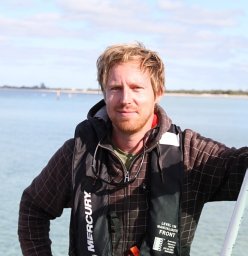 Christiansen Fredrik合作论文数School of Life and Environmental Sciences, Deakin University;Foundation for Marine Environment Research (ORES), Basel, Switzerland.;School of Life and Environmental Sciences, Deakin University33
 Tyne Julian A合作论文数Murdoch University, Murdoch University29
 Simon J. Allen合作论文数29
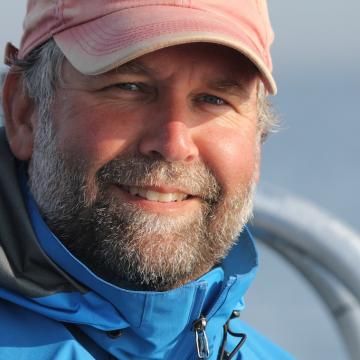 David Johnston合作论文数Marine Science & Conservation, Nicholas School of the Environment, Duke University26
 Michael Krutzen合作论文数University of Zurich;Ecological Processes Group;Anthropological Institute;Anthropological Institute, University of Zurich23
 Janet Mann合作论文数23Hugh Finn合作论文数22
 N. R. Loneragan合作论文数School of Environmental and Life Sciences, Murdoch University22
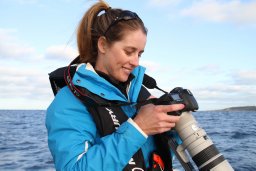 Kate R Sprogis合作论文数Harry Butler Inst, Murdoch Univ21
 Peter Teglberg Madsen合作论文数Arctic Research Centre, Aarhus University;Department of Biology, Aarhus University21
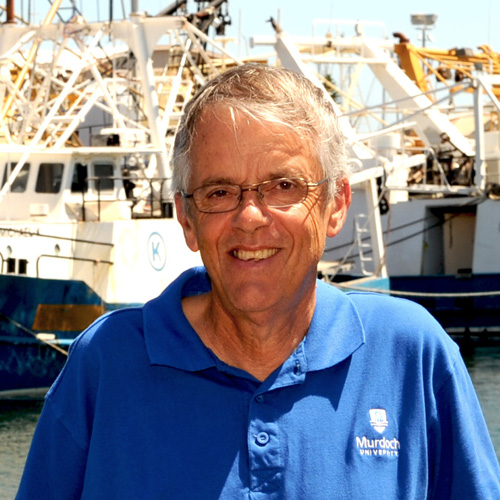 Kenneth Hugh Pollock (Kenneth H. Pollock)合作论文数Department of Biology, North Carolina State University19
 David Lusseau合作论文数National Institute of Aquatic Resources, Technical University of Denmark18
 Jens Currie合作论文数Pacific Whale Fdn16
 Guido J. Parra合作论文数School of Veterinary Science;University of Queensland;School of Veterinary Science, University of Queensland15
 Frants H. Jensen合作论文数Department of Ecoscience, Aarhus University14
 Kobryn Halina T合作论文数Murdoch University, Murdoch University13
 Magnus Wahlberg合作论文数Fjord&Bælt13
 William Sherwin合作论文数School of Biological, Earth & Environmental Sciences, University of New South Wales13
 James E. S. Higham合作论文数Department of Tourism, University of Otago13
 Celine Frere合作论文数School of the Environment, Faculty of Science, The University of Queensland;Centre for Marine Science, Faculty of Science, The University of Queensland12
 Richard C. Connor合作论文数Biology Department;University of Massachusetts at Dartmouth;Biology Department, University of Massachusetts at Dartmouth12
 Stack Stephanie H合作论文数11
 Holly Raudino合作论文数10
 Heather Heenehan合作论文数NOAA, Natl Marine Fisheries Serv10
 Rob Williams合作论文数Oceans Initiative, 117 E Louisa St #135, Seattle, WA 98102, USA10
 Cagnazzi Daniele合作论文数School of Environment, Science and Engineering, Southern Cross University10c holyoake合作论文数9
 d chabanne合作论文数Evolutionary Genet Grp, Univ Zurich9J.E.S. Higham合作论文数9
 Valeria Senigaglia合作论文数Institute of Biological and Environmental Sciences, University of Aberdeen8Anna M. Kopps合作论文数8Andrew Szabo合作论文数7
 Martin van Aswegen合作论文数7
 Fabien Vivier合作论文数7
 Krista Nicholson合作论文数7
 Michael Heithaus合作论文数Department of Biological Sciences, College of Arts, Sciences & Education, Florida International University7
 Padraig J. Duignan合作论文数Institute of Veterinary, Animal and Biomedical Sciences, Massey University7
 Ari S. Friedlaender合作论文数Marine Laboratory, Duke University7
 Randall Wells合作论文数Center for Marine Mammal, Mote Marine Laboratory7robert h williams合作论文数6
 Oliver Manlik合作论文数School of Biological Earth and Environmental Science, University of New South Wales6
 Robert William Rankin合作论文数Murdoch University6
 Aude Pacini合作论文数6
 Robin W. Baird合作论文数Cascadia Research Collective;Institute of Marine Biology, University of Hawai‘i6
 Joshua N Smith合作论文数Murdoch University, Murdoch University6Chapla Hill Marie合作论文数6
 John Calambokidis合作论文数Cascadia Res Collect, Olympia, WA USA6
 Jeremy Goldbogen合作论文数Hopkins Marine Station, Stanford University;Department of Biology, School of Humanities and Sciences, Stanford University6




