CO2 activation is the primary step for CO2 reduction to C2 products. To understand the reactivity of bimetallic catalysts toward CO2 and, in particular, the role of dopant elements, we experimentally studied CO2 adsorption on pure and vanadium-doped cationic cobalt clusters. Doped and pristine clusters are reacted with CO2 in a flow tube-like reaction channel, and resulting cluster-CO2 products are characterized by free-electron laser-based infrared (IR) spectroscopy. The spectra for CO2 adsorbed on pure Con+ clusters are highly similar for each cluster size studied, and they indicate that CO2 is mostly physisorbed on the cluster. However, substituting a Co atom with a single V atom results in strongly varying IR spectra for VCon-1+·CO2 adducts, indicative for size-selective activation, dissociation, and even cluster oxidation. An absolute localized molecular orbital-based energy-decomposition analysis and decomposition into complementary occupied-virtual pairs reveals that charge transfer from the cluster into the CO2 antibonding π* lowest unoccupied molecular orbital is the dominant factor in activation, combined with an overall more positive charge on the vanadium atom and a strong dative V-O bond in the dissociated product. The size selectivity demonstrates how a fine interplay between dopant element and cluster size could be made instrumental in tuning the reactivity of catalyst materials.
Hydrogenation of CO2 to valuable products is an attractive method to mitigate the greenhouse effect. Palladium-zinc-based nanomaterials are stable and selective catalysts in the methanol formation process. For a better understanding of the catalytic reaction mechanisms, here, we investigate hydrogen activation and carbon dioxide hydrogenation on Pd x Zn x (x = 2-4) and Pd6 clusters using systematic density functional theory analysis, selected on the basis of high-level benchmarks. We show that alloying palladium with zinc makes the H2 adsorption and dissociation less favored and increases the energies of the highest lying transition states, while zinc strongly stabilizes the formate intermediate, by binding one of its oxygen atoms through a (partial) ionic bond.
The interaction of CO2 with copper oxide clusters of different size, composition, and charge is investigated via infrared multiple-photon dissociation (IR-MPD) spectroscopy and density functional theory (DFT) calculations. Laser ablation of a copper target in the presence of an O-2/He mixture leads to the preferred formation of oxygen-rich copper oxide cluster cations, CuxOy+ (y > x; x <= 8), while the anionic cluster distribution is dominated by stoichiometric (x = y) and oxygen-deficient (y < x; x <= 8) species. Subsequent reaction of the clusters with CO2 in a flow tube reactor results in the preferred formation of near-stoichiometric CuxOy(CO2)+/- complexes. IR-MPD spectroscopy of the formed complexes reveals the non-activated binding of CO2 to all cations while CO2 is activated by all anions. The great resemblance of spectra for all sizes investigated demonstrates that CO2 activation is largely independent of cluster size and Cu/O ratio but mainly determined by the cluster charge state. Comparison of the IR-MPD spectra with DFT calculations of the model systems Cu2O4(CO2)- and Cu3O4(CO2)- shows that CO2 activation exclusively results in the formation of a CO3 unit. Subsequent CO2 dissociation to CO appears to be unfavorable due to the instability of CO on the copper oxide clusters indicating that potential hydrogenation reactions will most likely proceed via formate or bicarbonate intermediates.
P-Functional phosphanylated tetrathiafulvalenes 3a-f were synthesised via stepwise lithiation and phosphanylation of TTF derivatives, and then reacted with PCl3 to form the related P-chloro compounds 4a-f. Reactions of 4c-f with LDA resulted in the formation of the corresponding 1,4-dihydro-1,4-diphosphinines 5c-f. As a case in point, P-oxidation reactions of 5d,f with elemental chalcogens were performed, and the former were also converted into 1,4-dichloro-1,4-dihydro-1,4-diphosphinine 9f. The latter was reduced to form the related 1,4-diphosphinine 10f which could not be isolated but formed the corresponding 1,4-diphosphabarrelene 11f in a [4 + 2]-cycloaddition with 1-hexene. All compounds were characterised by multinuclear NMR spectroscopy and mass spectrometry and also by single crystal X-ray diffraction studies in some cases. Intensive cyclic voltammetry studies were performed for all isolated compounds with the special focus on using TTF units as sensors to study the substituent effects on oxidation potentials and, hence, the degree of electronic communication between redox active moieties in the bis-TTF species. E.g., 5d possesses four quasi-reversible one-electron oxidation steps thus forming a tetracation species at highest potential (+0.54 V vs. Fc+/0). Additionally, high level DFT calculations were undertaken to get a deeper understanding of various aspects of this novel combination of phosphorus and TTF chemistry.
Here we systematically investigate the CO2 and H2 activation and dissociation on small Cun Zn0/+ (n=3-6) clusters using Density Functional Theory. We show that Cu6 Zn is a superatom, displaying an increased HOMO-LUMO gap and is inert towards CO2 or H2 activation or dissociation. While other neutral clusters weakly activate CO2 , the cationic clusters preferentially bind the CO2 in monodentate nonactivated way. Notably, Cu4 Zn allows for the dissociation of activated CO2 , whereas larger clusters destabilize all activated CO2 binding modes. Conversely, H2 dissociation is favored on all clusters examined, except for Cu6 Zn. Cu3 Zn+ and Cu4 Zn, favor the formation of formate through the H2 dissociation pathway rather than CO2 dissociation. These findings suggest the potential of these clusters as synthetic targets and underscore their significance in the realm of CO2 hydrogenation.
The reduction of 1,1-dichloro-2,5-bistrimethylsilyl-3,4-diphenylsilole to silolide dianion by alkali metals was investigated. As previously demonstrated, the outcome of the reaction depends strongly on the applied alkali metal, solvent, reaction conditions, and substituent pattern. We showed that lithium is a powerful reducing agent in THF or DME solvents, the reaction is even faster than the same reaction with sodium. The X-ray structures of the corresponding dilithio and disodium silolide dianion were investigated, interestingly recrystallization of the dilithio salt results in a coordination polymer. In order to support the synthetic work DFT calculations were performed.
An entry from the Cambridge Structural Database, the world’s repository for small molecule crystal structures. The entry contains experimental data from a crystal diffraction study. The deposited dataset for this entry is freely available from the CCDC and typically includes 3D coordinates, cell parameters, space group, experimental conditions and quality measures.
Anionic 1,4-dihydro-1,4-diphosphinines were synthesized from tricyclic 1,4-diphosphinines and isolated as blue powdery salts M[2a-2c]. Reaction of solutions of these monoanions with iodomethane led to P-methylated compounds 3a-3c. An oxidation/reduction cycle was examined, starting from solutions of K[2a] via P-P coupled product 4a and back to K[2a], and the recyclability and redox chemistry of this cycle were confirmed by experimental and simulated cyclic voltammetry analysis, which is proposed as a potential 2-electron cathode for rechargeable cells. TD-DFT studies were used to examine species that might be involved in the process.
[3]ferrocenophanes with X-E-X ansa moieties containing a low coordinated center E stabilized by adjacent donor units X were studied by density functional theory methods. The cyclopentadienyl (Cp) rings favor an eclipsed position in most cases and exhibit a shortened C(1)-C(1 ') distance compared to parent ferrocene. In case of bridges with the second row elements, the tilt of the Cp rings is more significant than that in case of third row elements; however, the estimated strain does not exceed 6 kcal/mol. The ansa unit has similar structural characteristics to the X-E-X-fragment in a six-membered saturated ring, with bond angles larger than that in the well-known heterocycles featuring five-membered cyclic systems. For compounds with X = PMe and E = C, Si, Ge, the non-planar coordination of the phosphorus atoms yields two symmetric minimum structures that are distinguished by trans and cis alignment of the PMe groups and are connected by a low-energy asymmetric transition structure with one planarized and one highly pyramidal phosphorus. In case of the analogous species with E = P+, this asymmetric structure was located as the sole minimum. A detailed analysis of the Kohn-Sham orbitals and the analysis of the electron density show that the electronic system of the ferrocene fragment is not mixing considerably with that of the low coordinated center of the ansa unit.
Ferrocene-1,1 '-dithiol reacts with PCl3 and P(NMe2)(3) to give [3]ferrocenophanes with SPS-ansa-bridges comprising potentially reactive P-Cl and P-N bonds at the central bridge atom. The products were characterized by NMR data and single-crystal XRD studies. The P-chloro-derivative exists both in the solid state and in solution as a mixture of two energetically nearly degenerate conformers with different stereochemical disposition of the ansa-bridge. Activation parameters for the dynamic equilibration between both isomers in solution were determined by dynamic NMR spectroscopy. Computational studies suggest that the isomerization proceeds via a torsional motion of the bridging SPS-unit rather than via configuration inversion at the phosphorus atom.
A novel bis-CF3-substituted diazaphosphole was synthesized selectively from hexafluoro-2-butyne and a 3H-1,2,3,4-triazaphosphole derivative. The [4+2] cycloaddition and subsequent cycloreversion reaction under elimination of pivaloyl nitrile affords the product in high yield. The heterocycle coordinates via the phosphorus atom to a W(CO)5-fragment and shows stronger π-accepting properties than the triazaphosphole.
Topologically divers PAHs with planar, twisted and negatively curved topologies were obtained from polycyclic phospholes using pericyclic reactions.
Synthesis of the tricyclic 1,3-dithiole-2-thione-derived 1,4-dihydro-1,4-diphosphinine is presented using a base-induced ring formation protocol and chloro(diethylamino)(1,3-dithiole-2-thion-4-yl)phosphane as the starting point. P-oxidation reactions of dihydrodiphosphinine by chalcogens led to bis(P-oxide), bis(P-sulfide), or bis(P-selenide), respectively; all tricyclic compounds were obtained as cis/trans mixtures. 1,4-Dihydro-1,4-diphosphinine was converted into 1,4-dichloro-1,4-dihydro-1,4-diphosphinine. This compound is almost insoluble in organic solvents, furnished selectively the trans-bis(amino) derivative upon a 2-fold P-substitution reaction with the weak nucleophile potassium bis(trimethylsilyl)amide, and reacted also with alcohols ROH (R = nBu, iPr, tBu) to give cis/trans mixtures of the corresponding bis(alkoxy) derivatives. Furthermore, the dichloro derivative could be reduced to a 1,4-diphosphinine using PnBu3, but, unfortunately, the stubbornly insoluble product could be neither purified nor crystallized. Despite this, we achieved a thermal [4 + 2] cycloaddition reaction of this first CPS-ternary compound with diethylacetylene dicarboxylate to obtain the corresponding diphosphabarrelene, thus providing indirect evidence for the aromatic tricyclic diphosphinine. Detailed density functional theory studies on the formation of 1,4-diphosphinine provided insights into formation pathways as well as NMR, IR, and UV/vis data.
Az elmúlt két évtizedben a diverzitás orientált szintézisek (DOS) alkalmazása széles körben elterjedt háromdimenziós kismolekulákból álló molekulakönyvtárak létrehozására.A múlt évtized óta a szerkezetileg és funkcionálisan változatos molekulák előállítására nagyobb figyelem irányul szemben a molekulaméret növeléssel [1][2][3]
Under conditions typically effective to achieve a catalytic aryl-aryl bond during palladium Suzuki-Miyaura (SM) coupling reactions of ArB(OH)(2) and ArBr, reactions of p-tolylboronic acid and 2-(BrC6H4)-1,3-benzoxaphosphole (BrC6H4-BOP, 1) failed to provide the anticipated product of CC bond coupling, 2-(p-CH3C6H4-C6H4)-1,3-benzoxaphosphole. An analysis of reaction mixtures by H-1 and P-31{H-1} NMR spectroscopic methods showed the presence of numerous broad resonances, suggesting the formation of labile metal complexes with 1. This possibility was confirmed by determinations of the solid-state structures of [((Bu3P)-Bu-t)(Ph-BOP)M](2) (M = Pt, 5; M = Pd, 6) from the reaction of Ph-BOP and [M((Bu3P)-Bu-t)(2)] (M = Pt, Pd). The structures of 5 and 6 are isomorphous and reveal unusual bridging mu(2)-P-BOP bonding modes. Computational studies have explored the structures and relative energies and indicate that dimeric complexes of this form can dissociate easily. Surprisingly, even when P=C double bonds of Ar-BOPs are sheltered by coordination to tungsten pentacarbonyl, the Ar-BOP units resist yielding products of CC coupling under similar SM conditions but instead yield unusual products whereby CsOH adds across the P=C bonds in [(CO)(5)W{2-Ar-BOP}]. Computational studies are consistent with ready addition of hydroxide to the tungsten-protected P=C bond.
A mass spectrometric study of the reactions of vanadium cationic clusters with methanol in a low-pressure collision cell is reported. For comparison, the reaction of methanol with cobalt cationic clusters was studied. For vanadium, the main reaction products are fully dehydrogenated species, and partial dehydrogenation and non-dehydrogenation species are observed as minors, for which the relative intensities increase with cluster size and also at low cluster source temperature cooled by liquid nitrogen; no dehydrogenation products were observed for cobalt clusters. Quantum chemical calculations explored the reaction pathways and revealed that the fully dehydrogenation products of the reaction between Vn + and methanol are Vn (C)(O)+ , in which C and O are separated owing to the high oxophilicity of vanadium. The partial dehydrogenation and non-dehydrogenation species were verified to be reaction intermediates along the reaction pathway, and their most probable structures were proposed.
A phosphanido-type bridged bis(imidazolium) salt, readily prepared in two steps via reductive deselenization of a tricyclic 1,4-diphosphinine diselone, affords access to a novel anionic P-functional tricyclic bis (NHC) via deprotonation. The former also offers a P-functionalization/deprotonation sequence to access the first mixed P-substituted tricyclic bis(NHCs), as well as coordination of the phosphorus centers to rhodium(I) fragments.
Activation of CO2 is the first step towards its reduction to more useful chemicals. Here we systematically investigate the CO2 activation mechanism on Cu3X (X is a first-row transition metal atom) using density functional theory computations. The CO2 adsorption energies and the activation mechanisms depend strongly on the selected dopant. The dopant electronegativity, the HOMO-LUMO gap and the overlap of the frontier molecular orbitals control the CO2 dissociation efficiency. Our calculations reveal that early transition metal-doped (Sc, Ti, V) clusters exhibit a high CO2 adsorption energy, a low activation barrier for its dissociation, and a facile regeneration of the clusters. Thus, early transition metal-doped copper clusters, particularly Cu3Sc, may be efficient catalysts for the carbon capture and utilization process.
 Tamás Veszprémi合作论文数Department of Inorganic Chemistry, Technical University of Budapest57
 Kelemen Zsolt合作论文数Department of Inorganic and Analytical Chemistry, Budapest University of Technology and Economics40Denes Szieberth合作论文数29
 Muriel Hissler合作论文数Department of Chemistry, University of Rochester25
 Zoltán Benkő合作论文数Department of Inorganic and Analytical Chemistry, Budapest University of Technology and Economics25
 Dietrich Gudat合作论文数Institut für Anorganische Chemie, Universität Stuttgart23
 John F. Nixon合作论文数Department of Chemistry, University of Sussex22
 Martin Nieger合作论文数Department of Chemistry, Faculty of Science, University of Helsinki21Peter B. Hitchcock合作论文数Department of Chemistry, University of Sussex19
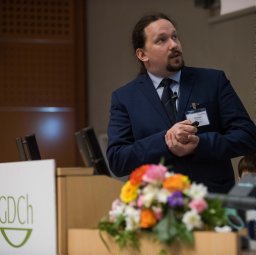 Hollóczki Oldamur合作论文数Mulliken Ctr Theoret Chem, Univ Bonn18
 Rainer Streubel合作论文数16J REFFY合作论文数16Tamás Kárpáti合作论文数15Gregor Schnakenburg合作论文数15Pierre-Antoine Bouit合作论文数Laboratoire de Chimie et Biochimie des Complexes Moléculaires, Université Pierre et Marie Curie15
 Szűcs Rózsa合作论文数14Manfred Regitz合作论文数Universität Kaiserslautern14Edgar Niecke合作论文数14
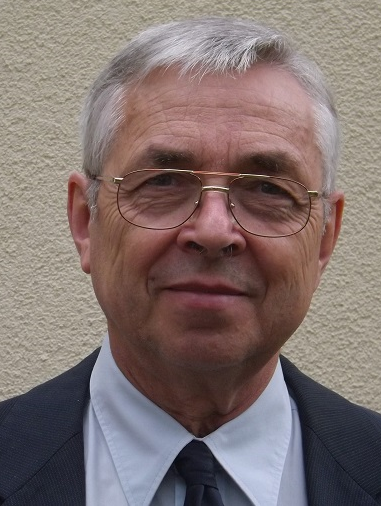 Joachim W. Heinicke合作论文数Institut Für Biochemie, Universität Greifswald13
 Ilona Kovács合作论文数Institute of Economics;Hungarian Academy of Sciences;Institute of Economics, Hungarian Academy of Sciences13
 Régis Réau合作论文数Laboratoire De Chimie De Coordination, CNRS/l'université De Rennes12
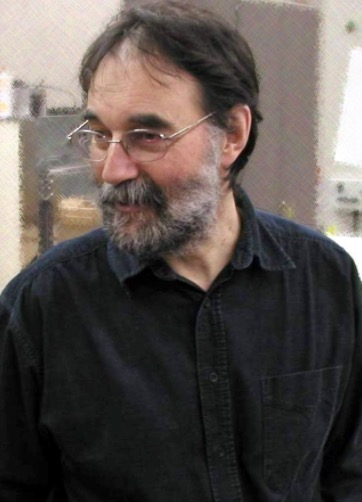 P. G. Jones合作论文数Institut fur Anorganische und Analytische Chemie, Technische Universitat Braunschweig11
 Rudolf Pietschnig合作论文数Department of Chemistry;Division Inorganic Chemistry;Department of Chemistry|Division Inorganic Chemistry10
 Christian Muller合作论文数Bijvoet Center for Biomolecular Research;Dept . of Crystal and Structural Chemistry;Utrecht University;Bijvoet Center for Biomolecular Research, Utrecht University10Dániel Buzsáki合作论文数and ELKH-BME Computation Driven Chemistry Research Group, University of Technology and8
 Manuel Sebastian合作论文数Departamento de Psicología Básica II, Universidad Nacional de Educación a Distancia8Réka Mokrai合作论文数7
 Thierry Roisnel合作论文数Centre de Diffractométrie X, Institut des Sciences Chimiques de Rennes, Université de Rennes7
 Gyorgy Zsombok合作论文数7Stefan Weller合作论文数6
 Kristijan Krekic合作论文数6Denis Kargin合作论文数6
 Abhishek Koner合作论文数Dept Chem, Saarland Univ6
 György Keglevich合作论文数Department of Organic Chemistry and Technology, Faculty of Chemical Technology and Biotechnology, Budapest University of Technology and Economics6Dorcet Vincent合作论文数6Könczöl László合作论文数Department of Inorganic and Analytical Chemistry, Budapest University of Technology and Economics6
 Clemens Bruhn合作论文数6René T. Boeré合作论文数6
 Tibor Holtzl合作论文数Department of Inorganic and Analytical Chemistry, Budapest University of Technology and Economics6
 Martin H. Maurer合作论文数6Wolf-W. Du Mont合作论文数6Sebastian Burck合作论文数6PéTer Terleczky合作论文数6Istvan Bakk合作论文数6Stefan Isenberg合作论文数5Christoph M. Feil合作论文数5
 Gábor István Csonka合作论文数Department of Physics and Engineering Physics, School of Science & Engineering, Budapest University of Technology and Economics5
 F. Geoffrey N. Cloke合作论文数Department of Chemistry, University of Sussex5Tibor Pasinszki合作论文数Department of Inorganic Chemistry, Technical University of Budapest5




