This Scientific and Technical Report (STR) presents the findings of the IWA Task Group on River Water Quality Modelling (RWQM). The task group was formed to create a scientific and technical base from which to formulate standardized, consistent river water quality models and guidelines for their implementation. This STR presents the first outcome in this effort: River Water Quality Model No. 1 (RWQM1).As background to the development of River Water Quality Model No.1, the Task Group completed a critical evaluation of the current state of the practice in water quality modelling. A major limitation in model formulation is the continued reliance on BOD as the primary state variable, despite the fact BOD does not include all biodegradable matter. A related difficulty is the poor representation of benthic flux terms. As a result of these limitations, it is impossible to close mass balances completely in most existing models. These various limitations in current river water quality models impair their predictive ability in situations of marked changes in a river's pollutant load, streamflow, morphometry, or other basic characteristics.RWQM 1 is intended to serve as a framework for river water quality models that overcome these deficiencies in traditional water quality models and most particularly the failure to close mass balances between the water column and sediment. In addition, the model is intended to be compatible with the existing IWA Activated Sludge Models (STR 9: Activated Sludge Models ASM1, ASM2, ASM2d and ASM3; ISBN: 1900222248) so that it can be straightforwardly linked to them.To these ends, the model incorporates fundamental water quality components and processes to characterise carbon, oxygen, nitrogen, and phosphorus (C, O, N, and P) cycling instead of biochemical oxygen demand as used in traditional models.The model is presented in terms of process and components represented via a ‘Petersen stoichiometry matrix’, the same approach used for the IWA Activated Sludge Models. The full RWQM1 includes 24 components and 30 processes. The report provides detailed examples on reducing the numbers of components and processes to fit specific water quality problems. Thus, the model provides a framework for both complicated and simplified models. Detailed explanations of the model components, process equations, stoichiometric parameters, and kinetic parameters are provided, as are example parameter values and two case studies.The STR is intended to launch a participatory process of model development, application, and refinement. RWQM1 provides a framework for this process, but the goal of the Task Group is to involve water quality professionals worldwide in the continued work developing a new water quality modelling approach.This text will be an invaluable reference for researchers and graduate students specializing in water resources, hydrology, water quality, or environmental modelling in departments of environmental engineering, natural resources, civil engineering, chemical engineering, environmental sciences, and ecology. Water resources engineers, water quality engineers and technical specialists in environmental consultancy, government agencies or regulated industries will also value this critical assessment of the state of practice in water quality modelling.Key Featurespresents a unique new technical approach to river water quality modellingprovides a detailed technical presentation of the RWQM1 water quality process modelgives an informative critical evaluation of the state of the practice in water quality modelling, and problems with those practicesprovides a step by step procedure to develop a water quality modelThis title belongs to Scientific and Technical Report SeriesISBN: 9781900222822 (Print)ISBN: 9781780402789 (eBook)
In the early nineties the region of Central and Eastern Europe (CEE, more than 1 million km² and 100 million inhabitants) went through fundamental political, economic and social changes which eventually led to the European integration process. This positively influenced urban water and wastewater management , which had an unbalanced structure and rather low level of development. The paper outlines first the 1990 situation (water supply, sewerage and wastewater treatment (WWT)) and the infrastructure development of the last two decades, on the basis of a comprehensive data collection for six countries (Bulgaria, the Czech Republic, Hungary, Poland, Romania and Slovakia). Austria serves as a reference basis. Alterations of some of the drivers such as GDP (Gross Domestic Product), water tariff, investment funding and legislation are studied in detail. Then, the paper focuses on WWT by analyzing data of 20 large plants. Influent and effluent quality is evaluated. Technology indicators are estimated and assessed. They include plant removal rates and violation ratios assuming the application of the Urban Wastewater Directive, primary clarifier removal rates, actual anoxic volume and sludge age in comparison with the recommendations of the ATV guideline, criteria of secondary settling tanks and energy consumption. Finally, nutrient removal rates and upgrading options are outlined.
Lake Balaton--due to its remarkable shallowness--is deemed to be sensitive to climatic variations. Historical records suggest, that the water level naturally fluctuated within significantly broader boundaries than the present regulation interval. We made a detailed, dynamic water balance simulations relying on a watershed model and two climatic scenarios. A periodic ARMA model simulated the natural water balance of the lake. The results confirmed, that the lake is not endangered under the expected climate changes. The probability of low levels may increase in the future by up to an order of magnitude. Uneven distribution and increased deviation of precipitation was found to be an important climatic factor from the aspect of low waters. A sensitivity analysis showed, that the sensitivity of the lake increases with the amplitude of climate change. The parameter uncertainty analysis revealed, that even with so long history of observations, the uncertainty of statistical estimates has larger effect than the anticipated climate change. Unfortunately, the time horizon of climate change is not far enough to make up for the necessary data collection, so possible interventions must dispense with a sound scientific justification.
Aspects of municipal wastewater management in the Danube Basin are discussed with particular focus to the needs of Central and Eastern European transition countries of much lower infrastructure and economic development than Germany and Austria. The present situation of infrastructure development and nutrient emissions are discussed, which cover countries, point- and non-point sources, retentions and loads carried by the Danube to the Black Sea. Removal rates and costs of seven state-of-the-art technologies are outlined which are one of the important tools of nutrient emission reduction in the Basin. Development needs are evaluated under the assumption of approaching infrastructure levels of Germany and Austria, and nutrient emission reduction goals of the North-East Black Sea. Capital and annualized costs are estimated and the issue of affordability is addressed by analyzing different strategies and conditions of financing. Two indicators are used: total annual cost per GDP and head specific total annual cost related to the net household expenditure. The second one can be critically high which under the present modest economic growth can be balanced primarily by the increase of the implementation period of investments. The paper is completed by Hungarian strategic experiences of the past fifteen years in wastewater management, implementation and financing.
The paper presents an overview about recovery of shallow Lake Balaton from eutrophication by assessing quantitative and qualitative changes in phytoplankton, zooplankton, and chironomids as a function of load reduction. The aim was to update the present water quality targets. The proposed targeting scheme supplements the existing one with a range of lake-specific ecological criteria. We conclude that simple targets (desired phytoplankton biomass and permissible load) are the best choice during the initial stage of eutrophication management, but more complex schemes including ecological criteria are needed to trace recovery when re-organization of the ecosystem takes place.
Successful river water quality modelling requires the specification of an appropriate model structure and process formulation. Both must be related to the compartment structure of running water ecosystems including their longitudinal, vertical, and lateral zonation patterns. Furthermore, the temporal variability of abiotic boundary conditions may be important and must be incorporated by an appropriate choice of model parameters. A six-step decision procedure is proposed to achieve these objectives. The steps address the determination of the following model features: 1. temporal representation (dynamic or steady-state); 2. model dimensionality; 3. mixing; 4. advection; 5. reaction terms; and 6. boundary conditions. Numerical criteria based on process time constants and length scales provide a basis for these decisions.
Most parts of the world are facing escalating difficulties in meeting the growing demand for freshwater, while at the same time they are confronted by a deteriorating supply of this precious resource. Decisions and attitudes concerning human development, institutional frameworks, water and wastewater infrastructure, and other technological issues—given economic and social constraints and environmental and social imperatives—present challenges with no simple answers. The water issue involves much more than just irrigation, hydropower, the environment, water supply, and sanitation. Besides science and engineering, it encompasses political, social, environmental, economic, and institutional dimensions. Therefore, more of a focus is needed on the multidisciplinary and integrated nature of the water sector, and freshwater should be considered in closer connection to these many dimensions for more effective policymaking. In order to do so, comparative, cross-sectoral work is essential. Coping with these interdisciplinary issues and the accompanying uncertainty and complexity presents methodological challenges. This paper discusses major freshwater-related challenges such as availability and vulnerability, water quality and groundwater impacts on various scales, extremes, and shared water resource issues. Also, driving forces such as economic underdevelopment, poverty, low human development, food insecurity, unbalanced globalization, and others are analyzed. Some of the important tools of integrated and sustainable policies are discussed, and recommendations are made from the perspective of recent international agreements, with a focus on opportunities as well as the many shortcomings and barriers involved.
Balaton is the largest shallow lake in Central Europe and the most important recreational area in Hungary. Water balance of the lake is positive, while natural water level fluctuation has been significant. In 2000, an extreme drought period started. Until 2003, water level dropped about 70 cm (about 20% of the average depth). Public concern grew and the idea of water transfer from the Rába River was raised. To examine possible impacts a comprehensive study was prepared. The main question was whether water transfer was really needed and what criterion should be applied. For developing the methodology, three pillars were used: the potential climate change, the precautionary principle and the EU Water Framework Directive. The study covered impacts of the planned water transfer on the Rába-Balaton system in terms of changes of the water regime, water demands and quality, nutrient loads and ecosystems. The Thomas-Fiering ARMA model was used for characterizing monthly change of the natural water resources of the lake. A Monte Carlo generator was developed to analyze the occurrence of extreme events, uncertainties, possible climate change impacts and water level control strategies.
19.1 IntroductionMan-made (or artificial) eutrophication has been considered as one of the most serious water quality problems of lakes during the last 20-plus years. Increasing discharges of domestic and industrial waste water and the intensive use of crop fertilizers—all leading to growing nutrient loads of the recipients—can be mentioned among the major causes of this undesirable phenomenon. The typical symptoms of eutrophication are, among others, sudden algal blooms, water coloration, floating water plants and debris, excreation of toxic substances causing taste and odor problems of drinking water, and fish kills. These symptoms can easily result in limitations of water use for domestic, agricultural, industrial, or recreational purposes.One of the major features of artificial eutrophication is that although the consequences appear within the lake, the cause—the gradual increase of nutrients (various phosphorous and nitrogen compounds) reaching the lake—and most of the possible control measures lie in the region. Consequently, eutrophication management requires analysis of complex interactions between the water body and its surrounding region. In the lake, different biological, chemical, and hydrophysical processes—all being time and space dependent, furthermore nonlinear—are important, while in the region one must take into account human activities generating nutrient, residuals, and control measures determining that portion of the emission which reaches the water body.Eutrophication management requires a sound understanding of all these processes and activities which, in fact, belong to quite diverse disciplines.
Nutrient loads to large, shallow Lake Balaton have been reduced by 45–50% since mid-1980s. While a delayed, but still surprisingly fast recovery was observed in the hypertrophic western areas of the lake, eutrophication followed sewage diversion from the mesotrophic northern basins. We assessed factors that could lead to this unusual response. The prime reason of the observed biomass increase might be a trend of increasing mean water temperature during late summers and the concurrent invasion of the subtropical cyanobacterium, Cylindrospermopsis raciborskii with superior light and nutrient utilisation capabilities. In the mesotrophic areas, the prerequisite of the unforeseen success of C. raciborskii was the exceptionally high potential of this species to generate internal P load. Specific morphometric features of the lake rather than nutrient loads might substantiate the increasing dominance of the cyanobacterium in these areas. Our results stress the need to consider individual characteristics of aquatic ecosystems during eutrophication management.
Lake Balaton is a large, shallow, and calcareous lake that was subject to a rapid eutrophication during the 1970s. Management measures taken from the mid-1980s decreased the phosphorus load to the lake from 0.5 to 0.3 g P m−2 yr−1. Using long-term load and water quality data, we analyse the response of the formerly hypertrophic Basin 1 of the lake by the means of simple empirical models. Several factors that are commonly neglected during studies of lake recovery modified the apparent settling velocity of total P and consequently, the biomass of the phytoplankton. These factors included the loads of calcium and suspended solids, the loading ratio of the dissolved to particulate phosphorus, and blooming of the dominant cyanobacterium, Cylindrospermopsis raciborskii. Due to the rapid immobilisation of the mobile phosphorus in the surface sediments, moderate reduction (45–50%) in the external load resulted in a surprisingly fast and significant improvement of the water quality in the hypertrophic southwestern basins of the lake.
In this paper, biochemical process equations are presented as a basis for water quality modelling in rivers under aerobic and anoxic conditions. These equations are not new, but they summarise parts of the development over the past 75 years. The primary goals of the presentation are to stimulate communication among modellers and field-oriented researchers of river water quality and of wastewater treatment, to facilitate practical application of river water quality modelling, and to encourage the use of elemental mass balances for the derivation of stoichiometric coefficients of biochemical transformation processes. This paper is part of a series of three papers. In the first paper, the general modelling approach is described; in the present paper, the biochemical process equations of a complex model are presented; and in the third paper, recommendations are given for the selection of a reasonable submodel for a specific application.
Water (including increasing use relative to availability, and deteriorating quality) may be one of the most severe stresses on the exponentially growing human population in the forthcoming decades. Problems are becoming increasingly complex and diverse and require more and more specific knowledge from both a technical and non-technical perspective. These complexities create the need to understand and comprehend the more detailed technical components as well as broader managerial and societal issues. These non-complementary elements will increasingly demand the efficient integration of various disciplines, sectors, countries, and societies. The major challenges addressed are whether we are capable of and prepared to realize the needed integration and whether we can resolve the large amounts of existing gaps and barriers. The paper analyzes major past and desired future trends in fresh water management. There is an attempt to draw from the three main socio-economic regions: the developed world, Central and Eastern Europe (including countries of the former USSR) and the developing world. A number of issues are selected with regards to integrated freshwater management: (1) Identification, occurrence, and perception of various problems (e.g. eutrophication, acidification, global warming, salinization, groundwater contamination, eco-system degradation, land cover changes, vulnerability); current integration of methodologies; their strengths and weaknesses; (2) Large scale projects; dams, irrigation schemes and water transfers; (3) Global urbanization; (4) Wastewater treatment and pollution control types (considering also consumption emissions); (5) Modeling and monitoring; (6) Planning and environmental impact assessment; (7) Legislation and institutions; (8) Education and public awareness; (9) Sustainable development and time preference; (10) The role of science and engineering. The past two decades showed tremendous developments in the management of water as seen from many different perspectives. In spite of these advancements there is still room for improvement. The focus of the present discussion lays mostly on the dissemination of lessons and questions which are crucial to likely future problems and desired improvements.
The new River Water Quality Model no. 1 introduced in the two accompanying papers by Shanahan et al. and Reichert et al. is comprehensive. Shanahan et al. introduced a six-step decision procedure to select the necessary model features for a certain application. This paper specifically addresses one of these steps, i.e. the selection of submodels of the comprehensive biochemical conversion model introduced in Reichert et al. Specific conditions for inclusion of one or the other conversion process or model component are introduced, as are some general rules that can support the selection. Examples of simplified models are presented.
 L. Koncsos合作论文数Budapest University of Technology9I MASLIEV合作论文数7Wolfgang Rauch合作论文数7
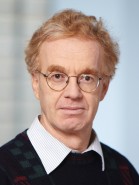 Peter Reichert合作论文数Department of Systems Analysis, Integrated Assessement and Modelling, Swiss Federal Institute for Environmental Science and Technology7
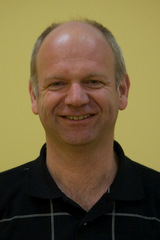 Peter A. Vanrolleghem合作论文数Faculty of Science and Engineering, Universite Laval7M Henze合作论文数6Vera Istvanovics合作论文数Institute of Limnology;Uppsala University;Limnological Research Institute;Limnological Research Institute, Uppsala University6P. Shanahan合作论文数6Peter Shanahan合作论文数5
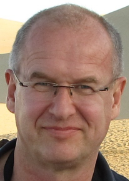 Olli Varis合作论文数Department of Built Environment, Aalto University5
 János Pintér合作论文数Pintér Consulting Services, Inc.5
 Adrienne Clement合作论文数Department of Civil and Environmental Engineering Műegyetem rkp. 3., Budapest University of Technology and Economics5G. Van Straten合作论文数4
 Dietrich Borchardt合作论文数IAG Gewässerforschung und Gewässerschutz, Universität4Hans C. Bjornsson合作论文数3klas cederwall合作论文数3Marek Makowski合作论文数International Institute for Applied Systems Analysis3
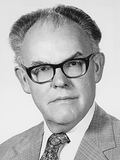 Donald R. F. Harleman合作论文数Massachusetts Institute of Technology3Gabriela K. Meyer合作论文数2z kaczmarek合作论文数2
 ferenc szilagyi合作论文数Partium Christian Univ2Bengt Lindberg合作论文数2
 Roger J-B Wets合作论文数Department of Mathematics, University of California, Davis2
 Vladimir Novotny合作论文数Institute for Urban Environmental Risk Management;Marquette University;Institute for Urban Environmental Risk Management, Marquette University2J. G Boon合作论文数2
 Ari Jolma合作论文数AFRY2
 Kenneth Strzepek合作论文数Department of Civil;Architectural Engineering , and Environment and Behavior Program;Institute for Behavioral Science;University of Colorado;Institute for Behavioral Science, University of Colorado2Carlo De Marchi合作论文数2Mark Honti合作论文数Department of Sanitary and Environmental Engineering, Budapest University of Technology and Economics2
 Alan J. King合作论文数IBM Thomas J Watson Research Center2Lambertus Lijklema合作论文数2
 Hans F. Burcharth合作论文数2
 David W Watkins合作论文数Department of Civil Engineering, The University of Texas at Austin2Rjb Wets合作论文数1v priazhinskaya合作论文数1Bjc Perera合作论文数1P IVANOV合作论文数1Drf Harleman合作论文数1Mark Smith合作论文数1environmental action programme for central合作论文数1Patziger M合作论文数Mélyépterv Komplex Zrt1
 Judit Padisak合作论文数Department of Earth and Environmental Science, University of Pannonia1Zoltan Melicz合作论文数1
 Paul H. Brunner合作论文数Vienna University of Technology;Institut fur Wassergute und Ressourcenmanagement, Technische Universitat Wien1
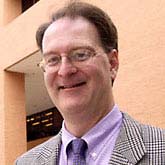 Bruce Rittmann合作论文数School of Sustainable Engineering and the Built Environment, Arizona State University;Ira A. Fulton Schools of Engineering, Arizona State University;Global Institute of Sustainability and Innovation, Arizona State University1
 Willy Verstraete合作论文数Center for Microbial Ecology and Technology, Ghent University;Laboratory of Microbial Ecology and Technology, Faculty of Bioscience Engineering, Ghent University1Eastern Europe合作论文数1
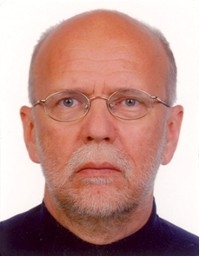 Zbigniew Kundzewicz合作论文数Laboratory of Climate and Water Resources, Institute For Agricultural and Forest Environment, Polish Academy of Sciences1
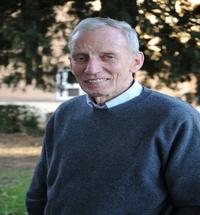 Daniel Pete Loucks (Daniel P. Loucks)合作论文数Civil and Environmental Engineering, Cornell University1




