The current research examined the meaning of well-being for Arab Americans by using an etic-emic approach to develop the Arab American Well-Being Scale. Item development was carried out with the feedback of experts knowledgeable about Arab mental health and members of the Arab American community that participated in two previous studies. Responses from 380 Arab Americans were subjected to an exploratory factor analysis, followed by a confirmatory factor analysis with a distinct sample of 224 Arab Americans. Results revealed that the Arab American Well-Being Scale was composed of six-factors: positive experiences, spirituality, collective decision making, growth fostering encounters, economic security, and safety in identity. Psychologists are recommended to use this measure with Arab American clients to understand the influence of their culture on their well-being, rather than relying on primarily Western instruments. Notably, psychologists should consider the widespread impact interpersonal relationships have in the construal of well-being for Arab Americans, as this was a prominent theme identified in the new scale. This may involve considering how processes of collective decision making contribute to or inform clients' well-being. An added element to the assessment process includes exploring clients' relationship with their faith or spirituality and how this connects to finding a purpose in life. Psychologists can also administer the Arab American Well-Being Scale to Arab American clients pre- and postintervention to investigate the effect of treatment on their clients' well-being.
On November 21, 2024, we had the great honor, privilege, and pleasure to conduct a highly revealing, engaging, and intimate interview with Professor Rebecca L. Toporek about their lifelong investment in social justice and action work. Professor Toporek serves as a faculty member in the Department of Counseling at San Francisco State University. They have been a psychologist and counselor educator for 20 years after serving as a community college counselor and associate dean. Their scholarship has focused on social justice advocacy and activism, backlash, racism, economic justice, and college and career counseling. They have written or co-written over 70 journal articles and book chapters, were co-editor and co-founder of the Journal for Social Action in Counseling and Psychology, co-developer of the American Counseling Association Advocacy Competencies, and co-edited five books on multicultural practice and social justice including Taking Action: Creating Social Change through Strength, Solidarity, Strategy and Sustainability. They co-produced the video, Helping counselors and psychologists as advocates and activists. They are also a daughter, sister, partner, and mother of two awesome 20-somethings. Our interview with Professor Toporek addressed their long-standing experiences that led to their social justice and action work, their role models and mentors, and their challenges and opportunities. Professor Toporek also shared their thoughts on how counseling and psychology have evolved in terms of social justice and action work, and where the fields were heading. Finally, Professor Toporek reflected on the 18-year history of the Journal for Social Action in Counseling and Psychology, and they presented recommendations to strengthen the journal.
Recognizing the influence culture plays in shaping our understanding of various phenomena, scholars have posed questions about how well-being might be differentially defined across diverse racial/ethnic groups. In the field of psychology, frequently used instruments of well-being are grounded in individualistic cultural frameworks that assume factors such as greater autonomy/independence are associated with improved well-being. For minoritized groups in the United States, such as Arab Americans, who ascribe to collectivist values, these instruments may not be culturally relevant. The purpose of the present study was to use an etic–emic approach to identify what well-being means for Arab Americans. In doing so, Arab Americans responded to open-ended questions about their experiences and understandings of well-being. Thematic analysis of these responses captured how well-being connects to living incongruence with Arab cultural values, including centrality of family, community, and spirituality/religion as well as the establishment of basic needs and safety within one’s identity. Mental health providers are encouraged to use the results to support their Arab American clients by tending to these determinants of well-being in culturally relevant ways. Specifically, clinicians can critically consider how their treatment approaches may cater to Western assumptions of what it means to be well and healthy. In doing so, they can consider ways of incorporating the unique experiences of Arab Americans into treatment by understanding the impact racial–ethnic trauma has on well-being and considering how the emphasis on relationships, religion, and the mind–body connection may impact their clients.
Purpose: We used systems theory with the structural, attitudinal, and transactional (SAT) model of peace building to explore coaches' process and content of change after receiving sport for development and peace (SDP) training in Tajikistan. Research methods: Six Tajik grassroots youth coaches from the Sport for Social Change Tajikistan (SSC-T) program participated in data collection over a four-year span. A longitudinal participatory approach utilizing interviews, journals, and guided discussion was analyzed using content analysis. Results and Findings: Data indicated that in early stages of the program, micro-attitudinal changes were being made by the participants, with more transactional changes over time with a hint of structural, macro-level changes in the schools and community at the four-year mark. More specifically, we identified five themes across time: (1) girls' involvement, (2) positive coaching approaches, (3) incorporation of peaceful living skills, (4) cultural awareness, and (5) collaboration and community impact.
Objectives: Like other racial and ethnic minority groups in the United States, discrimination has contributed to health disparities for Arab Americans and placed them at increased risk for health concerns that have only persisted with the COVID-19 pandemic. The purpose of the present study was to identify how the wellbeing of Arab Americans was impacted during the peak of the COVID-19 pandemic in the United States. Method: Using a qualitative approach, we gathered responses from 604 Arab Americans to open-ended questions. Relying on coders and thematic analysis, common patterns were identified in the data. Results: Themes and subthemes that focused on the impact of COVID-19 were identified in the data set. The themes of negative outcomes included depression, interpersonal loss, and anxiety. The theme of positive outcomes included time with family, heightened reflection, and strengthened faith. The theme of challenging adjustments included disrupted routine and change in plans. Conclusions: As Arab Americans in this study reported numerous mental health outcomes due to the COVID-19 pandemic, the conclusion that this group warrants attention in the health disparities discourse was further reinforced. The themes discovered in this study can be used to develop culturally relevant health interventions for Arab Americans as a means of beginning to make health care more accessible for this population.
This research investigated whether emotion regulation can be determined by one's desired affective state (i.e., ideal affect). Study 1 explored whether ideal affect could explain differences in two emotion regulation strategies (cognitive reappraisal and expressive suppression) between cultural groups (European Americans vs. Hong Kong Chinese; N = 300). Results revealed that ideal high arousal positive states correlated positively with cognitive reappraisal. Study 2 further tested the causal impact of ideal affect on emotion regulation (N = 101). To manipulate their ideal low/high arousal positive states, participants were randomly assigned to either a 'peaceful meeting' or an 'exciting party' condition. The participants' strategies to regulate negative emotions were assessed. Results showed that, regardless of cultural background, participants in the party condition employed more cognitive reappraisal than those in the meeting condition. These findings indicated that what we want to feel partly determines how we regulate our emotions.
Researchers interviewed 27 youth sport coaches and physical education teachers from Jordan and Tajikistan who previously participated in a sport for development and peace (SDP) train-the-trainer program. The purpose was to gain an understanding of the lived experiences of participants and how they used sports activities in their positions of leadership to foster conditions that conceptually correspond to a culture of positive peace. Using an inductive-coding analysis, researchers identified two main dimensions discussed in this paper: (a) Changes in Everyday Lived Realities and (b) Practical Strategies for Fostering Nonviolence. Participants mentioned changes in their attitudes and behaviors as well as in youth athletes' attitudes and behaviors on and off the field. New strategies involved peace education, conflict resolution skills, and lessons learned on the field. Findings from this study provide a better understanding of some of the lived experiences of sport coaches and physical education teachers as stakeholders promoting a positive peace years after being trained in SDP work. Implications of the present findings call for supporting SDP stakeholders' vital involvement in social initiatives that work to address both observable and unobservable factors which threaten to divide youth.
This article expands on the author's invited presentation given in Minneapolis in August 2022 as the recipient of the 2020 Leona Tyler Award. Four phases (New York, Georgia, Illinois, and Indiana) of the author's life are described. Challenges and opportunities of the author's pursuit of research and other activities on impression management, loneliness, Employee Assistance Programs, social justice, cross-cultural psychology, and peacebuilding are discussed. Further, the importance of counseling psychologists demonstrating cross-cultural validity and equivalence and reducing bias in the science and application of psychology, and educating students is deemed a social justice imperative. Given the polarization and lack of civility in societies worldwide, the need for more counseling psychologists to function as bridge or peace builders in addition to advocates and activists also is highlighted. Lessons learned, recommendations to move the counseling psychology discipline forward, and appreciation to individuals' instrumental in the author's life are discussed as well.
The importance of cross-cultural validity, equivalence, and bias when engaged in cross-cultural and cultural activities (e.g., research, practice, training, supervision, consultation, teaching) are discussed. Two new forms of equivalence (Theory; Intervention) and bias (Theory; Intervention) also are introduced, as is an adaptation of the Systematic Test of Equivalence Procedure (STEP; Gerstein, L.H. 2018 . Systematic test of equivalence procedure: New method to investigate cross-cultural validity. Revista de Cercetare si Interventie Sociala, 62, 278–293), which was originally created to enhance equivalence and reduce bias when conducting cross-cultural or cultural studies. Assuming future research supports the validity and relevance of the modified STEP approach, this strategy could offer researchers, clinicians, and others a tool to examine theory and intervention equivalence and bias in their professional activities. Recommendations for conducting projects to investigate the validity of employing STEP when examining the equivalence or bias of existing and future theories and intervention strategies are presented as well.
Syrian refugees comprise the largest population of internally displaced people in the world, with about 18,000 Syrian refugees resettled in the United States from 2011 to 2016. Although many of these individuals experience trauma that can lead to different mental health problems, most are quite resilient. This qualitative study explores themes of resilience in Syrian refugees, and how these themes differ from Western ideas of resilience. Eight in-depth, semi-structured interviews were conducted with Syrian adults in the United States. Questions focused on three experiences: preflight, flight, and postflight. Interviews were conducted in Arabic with a bilingual translator. Thematic analysis was used to identify concepts of resilience. Themes that emerged included: life in Syria outside of conflict, life in Syria during war, seeking refuge, life in the United States, hardships and challenges, systemic failure, comparison between cultures, health and well-being, external sources of resilience, and internal sources of resilience. We discuss research and counseling implications of these results.
Practitioners and researchers have implemented a host of programs to decrease youth conflict and violence, counter and prevent violent extremism and radicalintion, and increase youth's conflict prevention and resolution skills. This article overviews 1 such program, titled Sport for Social Change, that has been implemented with sports professionals and youth in India, Tajikistan, and Jordan to increase conflict prevention and resolution skills through sporting activities. The conceptual model of this sport for development "train-the-trainer" program is grounded in the contact hypothesis and theory, as well as systems, social-cognitive, self-determination, empowerment, transformative mediation, and intergroup contact theories and research. This model along with the curricula, educational strategies, challenges, limitations, and outcomes of this peace education program are articulated. Further, the article presents lessons learned, a couple of suggestions for future research, and strategies to expand the inclusion of conflict prevention and resolution skills in sport for development programs along with ideas about how to encourage the involvement of more peace psychologists in these programs.
 Stefania Aegisdottir合作论文数30
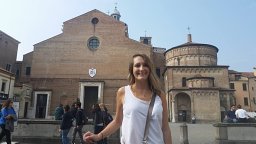 Ashley N. Hutchison合作论文数Dept Counseling Psychol Social Psychol & Counseli, Ball State Univ17
 Annis Lai Chu Fung (馮麗姝)合作论文数Department of Social and Behavioural Sciences, City University of Hong Kong17
 Erica Hurley合作论文数11Yuichung Chan合作论文数9Chan Jacob Yuichung合作论文数9
 Lindsey Blom合作论文数8P. Heppner合作论文数6Juno Park合作论文数6Sue C. Jacobs合作论文数6Seung-Ming Leung合作论文数5
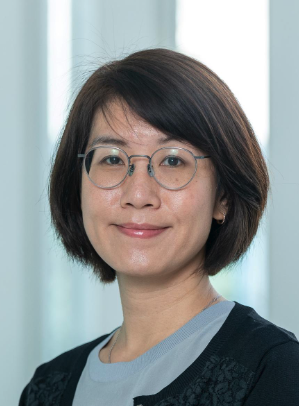 Dannii Yeung (楊婉蘭)合作论文数Department of Social and Behavioural Sciences, College of Liberal Arts and Social Sciences, City University of Hong Kong5Gregory A. Bayer合作论文数5
 Kathryn L. Norsworthy合作论文数Department of Graduate Studies in Counseling Rollins College USA5Rebecca Kinsey合作论文数4
 Mark Leach合作论文数B Museum4william valutis合作论文数3Rawan Atari-Khan合作论文数3Paul J. Sturmer合作论文数3
 Sharon L. Bowman合作论文数3
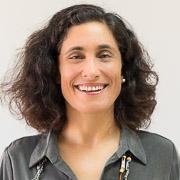 Rachel Gali Cinamon合作论文数School of Education, Tel Aviv University3
 Lawrence W Judge合作论文数3Kim Duffey合作论文数3Kathleen L. Niegocki合作论文数2charles r barke合作论文数2betty e gridley合作论文数2Courtney M. Ryan合作论文数2Björg S. Hermannsdóttir合作论文数2Harry D. Bates合作论文数2Sung-Kyung Yoo合作论文数2
 Rachael Collins合作论文数2Ej Ginter合作论文数2Tae Sun Kim合作论文数2M REINDL合作论文数2Bryan Shurigar合作论文数2Ashley Millner合作论文数2Kara B. Wettersten合作论文数2TaeSun Kim合作论文数2Yuri Choi合作论文数2
 Meredith A. Whitley合作论文数Dept Hlth & Sport Sci, Adelphi Univ2
 Nadya A. Fouad合作论文数Department of Educational Psychology,
School of Education, University of Wisconsin-Milwaukee2
Nadya A. Fouad合作论文数Department of Educational Psychology,
School of Education, University of Wisconsin-Milwaukee2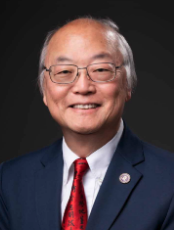 Frederick Leong合作论文数Division of Applied Psychology, School of Humanities and Social Science, The Chinese University of Hong Kong,Shenzhen2Kwan Kwong-Liem Karl合作论文数2David Feldman合作论文数2
 Joaquim Armando Gomes Ferreira合作论文数CPP and IPC, Universidade de Coimbra2Richard Besenhofer合作论文数2Earl J. Ginter合作论文数2Thomas G. Gaber合作论文数2
 Deniz Canel-Cınarbas合作论文数2




