Some gauge invariant atomic orbitals-coupled-perturbed Hartree–Fock (GIAO-CPHF) calculations were performed for seven indolizine derivatives and their monoprotonated forms. Chemical shift, molecular geometry, and charge distribution data are reported for each molecule. The calculations support the results of nuclear magnetic resonance (NMR) spectroscopy measurements showing that protonation occurs preferentially at N1. The good agreement between the calculated and observed 13C and 15N chemical shifts show that such calculations can be used for chemical shift assignment purposes. Cation structures and probable sites for electrophilic reaction or second protonation are also discussed.
Some nitrogen and carbon chemical shifts and ab initio Gauge Invariant Atomic Orbitals - Coupled-Perturbed Hartree-Fock (GIAO-CPHF) calculations are reported for benzotriazole 1, 5-nitrobenzimidazole 2, 5-nitrobenzotriazole 3, 4-nitrobenzotriazole 4, and N-methyl derivatives of compounds 1-3. A good correlation is found between the calculated and observed C-13 and N-15 chemical shifts. Two methods were employed for calculation of equilibrium constants. The prototropic equilibria exhibited by the system studied are found to be controlled by enthalpy rather than entropy.
AbstractChemInform is a weekly Abstracting Service, delivering concise information at a glance that was extracted from about 100 leading journals. To access a ChemInform Abstract of an article which was published elsewhere, please select a “Full Text” option. The original article is trackable via the “References” option.
The syntheses of 5-pyridyl-3(beta-D-galactopyranosyl)-1,3,4-oxadiazole-2-thiones 3a-3c and 5-pyridyl-2(beta-D-galactopyranosyl)-4-benzyl-1,2, 4-triazole-3-thiones 6a-6c are reported. The existence of N-galactosides--not S-galactosides--was proven by IR and 15N NMR spectroscopy. The structures of the final products and the intermediates were elucidated by IR, 1H, 13C and 15N NMR spectroscopy and mass spectrometry.
15N chemical shifts are reported for some mesoionic tetrazoles containing a 1,3-diphenyltetrazolium ring and their derivatives. The signals of the tetrazolium ring nitrogen atoms lie within the range from −20 to −170ppm for the compounds studied. The nitrogen chemical shifts are sensitive to changes in the exocyclic group bonded to C5. The variations of the 15N chemical shifts reach values of 50ppm for N1 and N4, 35ppm for N2 and 20ppm for N3. Nevertheless, nitrogen chemical shifts are characteristic for the class of compound studied and can be used for compound identification.14N NMR measurements show that the nitrogen ring positive charge is largely located on the N3 atom for compounds 2–10. Positive charge in compound 1 is located on both the N3 and N1 atoms.
The dynamic stereochemistry of amphiphilic derivatives of α-, β-, and γ-cyclodextrins (1–3) has been investigated by means of variable temperature 1H and 13C NMR spectroscopy in DMF-d7 solutions. The most significant spectral changes were detected for the smallest hexakis(6-thiophenyl-6-deoxy)-α-cyclodextrin (1) and they decrease with the increase of the macrocycle size. On the basis of ROESY measurements, these changes reflecting restricted movements of thiophenyl groups upon the temperature decrease were interpreted in terms of self-inclusion of at least one thiophenyl group. Molecular modeling of these compounds is consistent with these findings.
N-15 chemical shifts are reported for 10 mesoionic oxadiazoles and thiadiazoles. Some supporting N-14 acid C-13 NMR data are also reported, together with some ab initio molecular orbital calculations and x-ray diffraction data. The relation between compound structure and N-15 chemical shifts is discussed. N-14 NMR measurements and ab initio molecular orbital calculations are employed to identify the charge distributions within the molecules studied. Some (1)J(C4,C5), (2)J(N-15,C-13) and (1)J(N-15,C-13) spin coupling data for mesoionic oxadiazoles, thiadiazoles and acetylosydnonimines are given. X-ray diffraction data for the picrate of acetylsydnonimine and a 3,1,2,-thiadiazole are reported. The bond lengths within the mesoionic backbone are intermediate between the values for single and double bonds, suggesting a conjugated bond system. The arrangement of the exocyclic group observed in the solid state for acetylosydnonimine corresponds to the arrangement predicted by solution NMR studies. Copyright (C) 2000 John Wiley & Sons, Ltd.
Pyridofuroxan ([1,2,5]oxodiazolo[3,4-b]pyridine 1-oxide) undergoes isomerization between the N1-oxide and N3-oxide forms which can be observed by the H-1, C-13 and N-15 NMR spectroscopy but not by N-14 and O-17 NMR at ambient and low temperatures. The rearrangement becomes slower at low temperatures and at 233 K H-1 NMR signals for the two structures become observable. H-1, C-13 and N-15 chemical shifts and H-1-H-1, C-13-H-1 and C-13-C-13 coupling constants are used to characterize both forms in the equilibrium mixture. From the H-1 NMR integrals at 233 K equilibrium constants are calculated. Protonation studies using trifluoroacetic acid as a solvent showed the favoured site of protonation to be the pyridine N4 nitrogen atom. DFT shielding calculations are reported for the C-13, N-15 and O-17 nuclei which support the assignments given. From the point of view of structural changes, (1)J(CC) data for 8-nitrotetrazolo[1,5-a]pyridine and o-nitroaminopyridine as precursors of the pyridofuroxans are given for comparison purposes. X-ray diffraction data on 5-methoxypyridofuroxan support the structural results obtained from the NMR investigations. Copyright (C) 2000 John Wiley & Sons, Ltd.
We report a H-1, C-13 and N-15 NMR investigation of one symmetrically substituted 2,7-dichloro and two unsymmetrically substituted 2-chloro and 4-bromo DMAN [1,8-bis(dimethylamino)naphthalene] proton sponges and their protonated salts. From a consideration of the NMR data reported we conclude, that the most sensitive parameters for investigating compounds of this kind are (1)J(N-15-H-1) and N-15 and H-1 chemical shifts for the nuclei in the [N-8-H-N1](+) bridge. A further significant NMR parameter is (3)J(H-1-H-1) for the bridging proton and the N(CH3)(2) protons. An analysis of the values of (1)J (N-15-H-1) for the studied compounds is consistent with the view that in the investigated system equilibrium between two tautomeric forms occurs. A study at temperatures between 27 and -40 degrees C, and a change of solvent, show that the values of the N-15 chemical shifts and couplings (1)J (N-15-H-1) and (3)J (H-1-H-1) for the [N8-H-N1](+) bridge are essentially unchanged. This shows that the bonding arrangements of the bridge atoms are stable under these experimental conditions. Copyright (C) 2000 John Wiley & Sons, Ltd.
13C, 15N and 17O NMR data are reported for a series of substituted benzofuroxans in aprotic and acidic solutions and for a potassium salt of a substituted benzofuroxan. Some of the title compounds can exhibit fast furoxan valence equilibrium at room temperature regardless of a solvent used, whereas for the others no evidence of above-mentioned process exists. The NMR parameters most sensitive to salt formation are the chemical shifts of the C7, N1, N3 and all of the oxygen nuclei. Hence these are reported as the most satisfactory chemical shifts to be used in distinguishing between the salt and non-ionic forms of the substituted benzofuroxans studied. Calculated energies at the self-consistent field (SCF) level of theory for both tautomeric forms (N1- and N3-oxide) of some compounds studied are used for predicting the tautomeric equilibrium constants. Absolute 17O shieldings are employed in the reversal of the assignments of 17O NMR signals existing in the literature.
AbstractChemInform is a weekly Abstracting Service, delivering concise information at a glance that was extracted from about 100 leading journals. To access a ChemInform Abstract of an article which was published elsewhere, please select a “Full Text” option. The original article is trackable via the “References” option.
Two mesoionic compounds with oxygenous exocyclic groups: 3-phenyl-1,2,3,4-thiatriazolium-5-olate 1 and its ethylated derivative 2 were investigated by means of 15N, 17O NMR and X-ray diffraction techniques. The exocyclic C5–O6 bond of thiatriazole 1 [1.224(3) Å] has a strong double bond character. Bond lengths in the thiatriazole ring are intermediate between single and double bond values except for S1–C5 [1.800(2) Å] which is close to a single Csp3–S bond. The C5–O6 bond is significantly longer for the ethylated derivative 2 [1.314(4) Å]. The ethyl group attached to O6 is located in the trans position in relation to the ring S1 atom. The experimental data are compared with the results of ab initio molecular orbital calculations. The calculated absolute nuclear shieldings, chemical shifts and charge densities, in spite of some limitations, can be useful as an aid to signal assignments and for an understanding of the NMR parameters.
H-1,C-13, N-14, and N-15 NMR data are presented for two amidine derivatives and their complexes with TFA in 1:1 and 1:2 molar ratios. The protonation site at the N5 atom was established based upon the observed coupling constants, NOE interactions, and chemical shift change. The GIAO-CHF calculations were also performed for the free bases and their N5 cations.
1H, 13C and 15N NMR parameters and ab initio molecular orbital calculations were used to characterise some alkylated and arylated tetrazolo[1,5-a]pyridines. We have found that tetrazolo[1,5-a]pyridine (1) and its substituted derivatives undergo alkylation and this reaction results in mixtures of the N1- and N2-alkyl compounds (a, c and b, d) in different ratios, depending on the position and nature of substituents. NMR spectral parameters for N3-aryltetrazolo[1,5-a]pyridine (e) obtained by cyclization of 2-pyridyl-aryltriazenes are also presented.
H-1, C-13, N-14, N-15, O-17, and F-19 NMR data are presented for HTFMQ and its complexes with DMAN in 2 : 1 and 1 : 1 molar ratios. GIAO-CHF molecular orbital calculations for the [1H] and [4H] forms of the free molecule and its anion are also performed. The results show that the [4H] form of HTFMQ predominates in acetonitrile solutions. In both complexes with DMAN, HTFMQ forms a semi-anion containing an intermolecular hydrogen bond.
H-1, C-13 and N-15 NMR data are reported for nine azoloazines. From the results obtained it is found that the N-15 chemical shifts are particularly well placed to provide reliable data on both the structures of the compounds studied and on their potential to undergo valence and prototropic tautomerism. Of particular note is the high sensitivity of the N-15 chemical shifts to changes in the nitrogen electronic environment. In the present work up to seven inequivalent nitrogen atoms may occur in a given molecule and they are readily distinguishable by means of their different N-15 chemical shifts. Some ab initio calculated molecular properties (C-13 and N-15 shieldings, partial charges and total SCF energies) were used in the confirmation of the NMR signal assignments, in the prediction of the protonation site and also in the estimation of the most stable tautomers of the compounds studied. Copyright (C) 1999 John Wiley & Sons, Ltd.
A series of phosphoric amidodiesters, diamidoesters and triamides was prepared and their 31P and15 N NMR spectra were recorded in order to evaluate the major structural factors that determine the chemical shifts and coupling contants values. Considering the equation expressing the structural effects on shielding[1].
The 1H, 13C, and 15N NMR data reported for compounds 1–4 show that in DMSO solutions all of them exist in the azo form only and do not participate in the azo–hydrazoimine equilibrium. The NMR data for compounds 1 and 2 show the presence of a weak hydrogen bond for the non-protonated forms, between N10 and the 2-NHCH3 proton. All compounds have also been studied in TFA solutions in which they are protonated. The site of protonation of 1, 2 and 3 is determined to be at N10 in TFA solutions. These results are supported by some ab initio GIAO-CHF molecular orbital calculations.
Two mesoionic compounds with oxygenous exocyclic groups: 3-phenyl-1,2,3,4-thiatriazolium-5-olate 1 and its ethylated derivative 2 were investigated by means of 15N, 17O NMR and X-ray diffraction techniques. The exocyclic C5–O6 bond of thiatriazole 1 [1.224(3)Å] has a strong double bond character. Bond lengths in the thiatriazole ring are intermediate between single and double bond values except for S1–C5 [1.800(2)Å] which is close to a single Csp3–S bond. The C5–O6 bond is significantly longer for the ethylated derivative 2 [1.314(4)Å]. The ethyl group attached to O6 is located in the trans position in relation to the ring S1 atom.
 G. A. Webb合作论文数141Michal Witanowski合作论文数91Jerzy Sitkowski合作论文数33Jaroslaw Jazwinski合作论文数24Jw Wiench合作论文数19Henryk Januszewski合作论文数19W. Schilf合作论文数18Eugeniusz Grech合作论文数17
 Wiktor Kozminski合作论文数Department of Chemistry, Warsaw University17
 Helena Dodziuk合作论文数Institute of Physical Chemistry, Polish Academy of Sciences12Wojciech Bocian合作论文数11J Wojcik合作论文数9
 Jakub Klimkiewicz合作论文数9S Szymański合作论文数9E BOJARSKAOLEJNIK合作论文数8Piotr Bernatowicz合作论文数8
 Wojciech Domalewski合作论文数Institute of Organic Chemistry, Polish Academy of Sciences8
 Piotr Cmoch合作论文数8Bohdan Kamienski合作论文数7Graham A. Webb合作论文数7O. Staszewska合作论文数7
 Janusz S. Lipkowski合作论文数Institute of Physical Chemistry, Polish Academy of Sciences6
 Janusz Jurczak合作论文数Institute of Organic Chemistry, Polish Academy of Sciences5Wanda Sicinska合作论文数5
 Bogumil Brzezinski合作论文数Faculty of Chemistry, Adam Mickiewicz University in Poznań5Danuta Sybilska合作论文数5
 Stanisław Biernat合作论文数5Piotr Dobrowolski合作论文数Department of Comparative Anatomy and Anthropology, Maria Curie-Skłodowska University5
 Lukasz Szymon Kaczmarek合作论文数4Rauf Ahmad合作论文数4
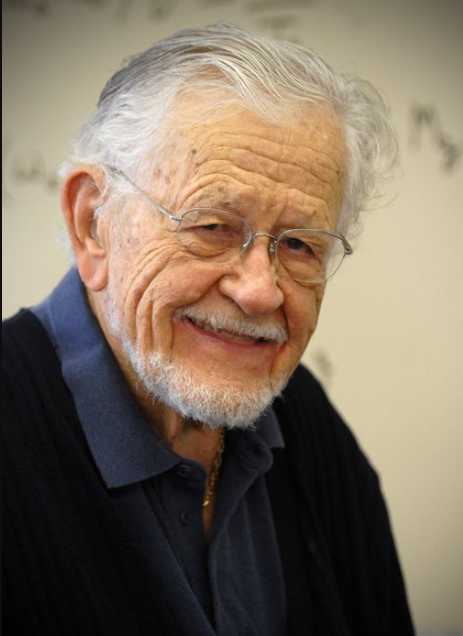 John D. Roberts合作论文数Division of Chemistry and Chemical Engineering, California Institute of Technology4Wojciech Schilf合作论文数4J. Nowicka-Scheibe合作论文数4Teresa Dziembowska合作论文数4Tadeusz Urbanski合作论文数4I Ando合作论文数3Ta Modro合作论文数3H Yoshimizu合作论文数3Z. Grabowski合作论文数3
 Iwona Wawer合作论文数3
 Lucjan Sobczyk合作论文数Institute of Chemistry, University of Wrocław3
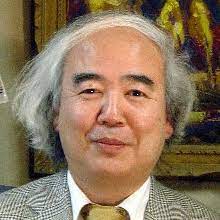 Isao Ando (安藤勲)合作论文数Department of Polymer Chemistry, Graduate School of Science and Engineering, Chemistry and Materials Science, Tokyo Institute of Technology3Tomasz A. Modro合作论文数3Helmut Duddeck合作论文数Institut für Organische Chemie, Gottfried Wilhelm Leibniz Universität3Z. Dega-Szafran合作论文数3B. T. Hamdi合作论文数3Janusz Skolimowski合作论文数3Jarosław Jaźwiński合作论文数3




