Viacheslav P. Belavkin was born in Lvov on 30 May 1946. A 1970 graduate of Physics Department of Moscow State University, he received his PhD in 1973. His thesis, entitled Optimal Estimation and Measurements in Quantum Systems, written under the supervision of Professor Ruslan Stratonovich, was a pioneering work that would lay the foundations for the new field of quantum optimal filtering and control. As a student and then a collaborator of Stratonovich, Slava learnt very well stochastic calculus along with the theory of nonlinear filtering. His scientific programme included an extension of the ideas of filtering and control from classical to the quantum domain. In this area of research Slava worked on the development of quantum Markov models and quantum stochastic processes, dynamical nondemolition principle for quantum continuous measurements and, finally, on the formulation of quantum filtering theory. During his life Slava obtained a number of remarkable and highly original results in mathematical physics and quantum probability, and there are theorems and equations named after him. One of such results is the Belavkin quantum filtering equation — the evolution equation (an analog of the Schrodinger equation) for observed quantum systems. Overall Professor Belavkin published more than 200 papers. His doctoral dissertation (habilitation) was presented and defended at the Steklov Institute of Mathematical Science in Moscow in 1991. In 1996, Belavkin shared the Main State Prize of the Russian Federation with R. Stratonovich. In 1978/79 Slava spent one year visiting quantum probability group of Professor Roman S. Ingarden in Torun. It was the origin of his long standing
We present the Belavkin filtering equation for the intense balanced heterodyne detection in a unitary model of an indirect observation. The measuring apparatus modelled by a Bose field is initially prepared in a coherent state and the observed process is a diffusion one. We prove that this filtering equation is relaxing: any initial square-integrable function tends asymptotically to a coherent state with an amplitude depending on the coupling constant and the initial state of the apparatus. The time-development of a squeezed coherent state is studied and compared with the previous results obtained for the measuring apparatus prepared initially in the vacuum state.
The majority of phylogenetic comparative methods assume that the underlying phylogeny is known without error. Despite the increasing quantity and quality of molecular data this is still a simplification as there are many possible sources of error. Therefore we need somehow to connect models of tree growth with models of phenotype evolution. The framework of conditioned (on the number of contemporary species) branching processes which has evolved in the past decade offers possibilities in this direction. In the talk we will concentrate on the conditioned Yule process, characterize a Brownian motion process evolving on it and discuss how this allows us to construct second order phylogenetic confidence intervals for the ancestral state.
A stochastic model for a continuous photon counting and heterodyne measurement of a coherent source is proposed. A nonlinear filtering equation for the posterior state of a single-mode field in a cavity is derived by using the methods of quantum stochastic calculus. The posterior dynamics is found for the observation of a Bose field being initially in a coherent state. The filtering equations for counting and diffusion processes are given.
The time evolution of a squeezed coherent state conditioned by the results of a single and double heterodyne measurement is discussed. The mean values of quadratures as well as the dynamics of quadrature uncertainties have been obtained within the framework of the theory of continuous measurements based on filtration equations. It has been found that while the mean values depend on the measured noise, the uncertainties in the optical quadratures are deterministic. Explicit solutions for the latter have been provided. Finally, a time development of the squeeze parameter for the posterior squeezed coherent state has been found.
The extension of molecular mechanics to reactive systems, metals, and covalently bonded clusters with variable coordination numbers requires new functional forms beyond those popular for organic chemistry and biomolecules. Here we present a new scheme for reactive molecular mechanics, which is denoted as the valence-bond order model, for approximating reactive potential energy surfaces in large molecules, clusters, nanoparticles, solids, and other condensed-phase materials, especially those containing metals. The model is motivated by a moment approximation to tight binding molecular orbital theory, and we test how well one can approximate potential energy surfaces with a very simple functional form involving only interatomic distances with no explicit dependence on bond angles or dihedral angles. For large systems the computational requirements scale linearly with system size, and no diagonalizations or iterations are required; thus the method is well suited to large-scale simulations. The method is illustrated here by developing a force field for particles and solids composed of aluminum and hydrogen. The parameters were optimized against both interaction energies and relative interaction energies. The method performs well for pure aluminum clusters, nanoparticles, and bulk lattices and reasonably well for pure hydrogen clusters; the mean unsigned error per atom for the aluminum-hydrogen clusters is 0.1 eV/atom.
Empirical scaling functions of the type suggested by Lee et al. [M.-T. Lee, I. Iga, L.E. Machado, L.M. Brescansin, E.A. y Castro, I.P. Sanches, G.L.C. Souza, J. Electron Spectrosc. Relat. Phenom. 155 (2007) 14] for the quasifree-scattering model are tested. The parameters of the scaling function have been fitted by using the genetic algorithm to reproduce the experimental data for the elastic scattering of electrons by helium, neon and argon atoms at impact energies 20–3000eV. The results confirm the effectiveness of the model.
A possibility of obtaining local, effective, energy-dependent polarization and absorption potentials from experimental cross-sections for electron scattering is investigated. Potentials have been fitted with the help of the genetic algorithm on large sets of experimental data for e–He, e–Ne and e–Ar elastic scattering at impact energies 20–3000 eV. The obtained potentials reproduce the cross-sections within experimental errors.
Several recently proposed modifications and improvements of the quasifree-scattering model for absorption potentials have been tested and compared. The possibility of obtaining energy-dependent polarization potentials from these absorption potentials by the dispersion relation is investigated. Numerical calculations for the elastic scattering of electrons by neon atoms at impact energies 20–3000eV are performed and the results are compared with experimental data.
A new, parametrized many-body tight-binding model is proposed for calculating the potential energy surface for aluminum nanoparticles. The parameters have been fitted to reproduce the energies for a variety of aluminum clusters (Al{sub 2}, Al{sub 3}, Al{sub 4}, Al{sub 7}, Al{sub 13}) calculated recently by the PBE0/MG3 method as well as the experimental face-centered-cubic cohesive energy, lattice constant, and a small set of Al cluster ionization potentials. Several types of parametrization are presented and compared. The mean unsigned error per atom for the best model is less than 0.03 eV.
Nineteen analytic potential energy functions (PEFs) for aluminum (three pairwise additive ones, six nonpairwise additive ones with three-body terms, and ten embedded atom-type PEFs) were obtained from the literature. The PEFs were tested and reparametrized using a diverse training set that includes 20 potential energy curves and a total of 224 geometries for five aluminum clusters Al N (N = 2, 3, 4, 7, and 13) computed using hybrid density functional theory, as well as the experimental face-centered cubic cohesive energy and lattice constant. The best PEFs from the literature have mean unsigned errors (MUEs) over the clusters in the data set of ∼0.12 eV/atom. The best reparametrized PEFs from the literature have MUEs of 0.06 eV/atom. The data set is also used to develop, parametrize, and systematically study the effectiveness of several functional forms designed specifically to model many-body effects in clusters, including bond angle, screening, and coordination number effects; a total of eighteen new PEFs are proposed and tested. The best potential overall has an MUE of 0.05 eV/atom, explicitly includes screening and coordination number effects, features linear scaling, and incorporates the accurate two-body and bulk limits.
We calculated the atomization energy of aluminum clusters (Al-2-Al-7) with several multilevel methods, including MCG3/3 and G3X, that have been previously shown to provide high accuracy for atomization energies. We used the results to test a number of hybrid density functional theory (HDFT) methods and found that the PBE0 method is in best agreement with the accurate methods. We then used the PBE0/MG3 method to develop a more extensive data set for the energies of small aluminum clusters (Al-2-Al-13), and this was used to test a number of semiempirical methods, in particular Austin model 1 (AM1), modified neglect of differential overlap (MNDO), modified symmetric-orthogonalized intermediate neglect of differential overlap (MSINDO) with and without d-functions, parametrized model 3 (PM3), and the tight-binding total energy (TBTE) method, for geometries, energies, and multiplicities of At clusters. The AMI model and MSINDO model are the most accurate of the semiempirical methods for energetics, and PM3 is the most accurate method for geometries.
It is shown that there exists a continuous nondemolition observation (in Belavkin's sense) preserving a coherent state of an open harmonic oscillator. The condition for such measurement, requiring a joint observation of position and momentum, is given.
Transient phenomena that occur when a free quantum particle undergoes a continuous nondemolition observation of its position are discussed. Independently of a particular case of observation (specified by particle mass, the strength of coupling, and the value of initial dispersion of the Gaussian wave packet) the dispersion of the posterior Guassian wave packet always decreases in the beginning of observation, then (after some time) takes the form of oscillations decaying to the asymptotic value (ħ/2mλ)1/2. We say that the quantum particle is frightened when observation begins, then it is trembling, and finally relaxes. The discussion is preceded by a brief presentation of basic ideas of the theory of continuous in time quantum measurements.
A semiclassical non-Hamiltonian model of a spontaneous collapse of unstable quantum system is given. The time evolution of the system becomes non-Hamiltonian at random instants of transition of pure states to reduced ones, η⟼Cη, given by a contraction C. The counting trajectories are assumed to satisfy the Poisson law. A unitary dilation of the concractive stochastic dynamics is found. In particular, in the limit of frequent detection corresponding to the large number limit we obtain the Itô–Schrödinger stochastic unitary evolution for the pure state of unstable quantum system providing a new stochastic version of the quantum Zeno effect.
Two mesoionic compounds with oxygenous exocyclic groups: 3-phenyl-1,2,3,4-thiatriazolium-5-olate 1 and its ethylated derivative 2 were investigated by means of 15N, 17O NMR and X-ray diffraction techniques. The exocyclic C5–O6 bond of thiatriazole 1 [1.224(3) Å] has a strong double bond character. Bond lengths in the thiatriazole ring are intermediate between single and double bond values except for S1–C5 [1.800(2) Å] which is close to a single Csp3–S bond. The C5–O6 bond is significantly longer for the ethylated derivative 2 [1.314(4) Å]. The ethyl group attached to O6 is located in the trans position in relation to the ring S1 atom. The experimental data are compared with the results of ab initio molecular orbital calculations. The calculated absolute nuclear shieldings, chemical shifts and charge densities, in spite of some limitations, can be useful as an aid to signal assignments and for an understanding of the NMR parameters.
Recently, the stochastic nonlinear wave equation describing the dynamics of an observed quantum system has been solved for a free particle [Phys. Rev. A 45, 1347 (1992)]. In this paper, transient effects that occur during a continuous observation of the particle position are discussed. It is shown that the dispersion of the Gaussian wave packet of the particle always decreases in the beginning of the observation, then takes the form of oscillations which, after a short time, decay rapidly to the asymptotic value.
 Grazyna Staszewska合作论文数Nicholas Copernicus University Institute of Physics15
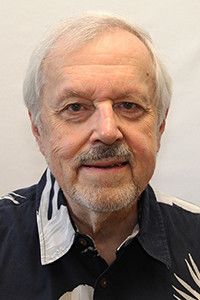 Donald G. Truhlar合作论文数Truhlar Research Group, Department of Chemistry, College of Science and Engineering, University of Minnesota;Inorganometallic Catalyst Design Center, University of Minnesota;Nanoporous Materials Genome Center, University of Minnesota7
 V.P. Belavkin合作论文数5Ne Schultz合作论文数4
 Anita Dabrowska合作论文数Department of Theoretical Foundations of Biomedical Sciences and Medical Informatics, Nicolaus Copernicus University4Lech Stefaniak合作论文数3G. A. Webb合作论文数3Krzysztof Żebrowski合作论文数3Nathan E. Schultz合作论文数3O. Staszewska合作论文数3Jw Wiench合作论文数2Ahren W. Jasper合作论文数Chemical Sciences and Engineering Division, Argonne National Laboratory2J. Jaźiwińsk合作论文数2
 Bartoszek Krzysztof合作论文数1
 Dariusz Hilary Chruściński合作论文数Institute of Physics, Division of Mathematical Physics, Nicolaus Copernicus University1
 Meiyu Zhao (赵美玉)合作论文数School of Chemistry and Chemical Engineering, Harbin Institute of Technology1
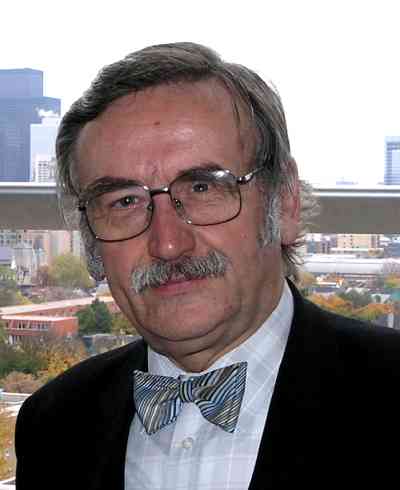 Janusz S. Lipkowski合作论文数Institute of Physical Chemistry, Polish Academy of Sciences1Zofia Urbanczyk-Lipkowska合作论文数Institute of Organic Chemistry, Polish Academy of Sciences1Wojciech Bartoszek合作论文数1
 Marian Grabowski合作论文数Institute of Physics, Nicholas Copernicus University1Jaroslaw Jazwinski合作论文数1
 Viacheslav Pavlovich Belavkin合作论文数Department of Applied Mathematics, University of Nottingham1
 Rosendo Valero合作论文数Department of Chemistry;Supercomputing Institute;UniVersity of Minnesota;Supercomputing Institute, UniVersity of Minnesota1A. Jamiołkowski合作论文数1
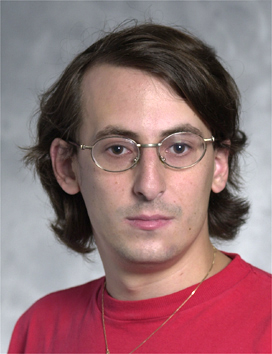 Mark A. Iron合作论文数Department of Chemical Research Support, Weizmann Institute of Science1




