AbstractSeabirds adjust their foraging behaviour to cope with changing environmental conditions by changing prey choice, foraging locations and trip characteristics. We studied the foraging ecology of zooplanktivorous little auks (Alle alle) during chick-rearing in SW Spitsbergen across seven years (2011–2024), using GPS tracking, oceanographic data and diet analyses. Across years, little auks consistently foraged within the same core and home ranges over the continental shelf and its break, within a 150-km buffer around the colony. However, within this range, they demonstrated plasticity by adjusting their foraging strategies in response to environmental conditions. Birds adopted a consistent foraging strategy under optimal conditions and shifted to a flexible strategy when conditions became suboptimal, primarily by changing local foraging sites. These shifts resulted in interannual variation in habitat niche size: under favourable conditions (low sea surface temperature and intermediate chlorophyll-a), birds utilized a narrow niche, whereas in warmer, high-productivity years, they broadened it. Despite environmental variability, diet remained dominated by cold-water copepods (Calanus glacialis, 74.6%–89.7%). In suboptimal years, as in warm 2023, they supplemented chick diets with 16% furcilia larvae of Euphausiacea sp. Our results suggest that, in seabirds, habitat niche breadth is a valuable indicator of ocean-related conditions.
Some seabirds, such as alcids exhibit sexual monomorphism, often displaying intersexual variation in parental investment and breeding ecology. In the Brünnich’s Guillemot (Uria lomvia), both sexes contribute to incubation and chick rearing. However, it has been found that females provide more meals to chicks older than two weeks, while males spend more time defending the nest and exclusively take care of fledglings after leaving the colony. In this study combining GPS-tracking and remote sensing, we investigated sex-specific foraging ecology of the chick-rearing Brünnich’s Guillemots breeding in the High Arctic (where sex differences are poorly recognized). We found that although both sexes performed foraging trips of similar characteristics, males foraged significantly closer to the colony (mean ± SD: 41.8 ± 23.11 km) in shelf zone with optimal foraging conditions (low sea surface temperature) compared to females exploring further located suboptimal foraging areas (high sea surface temperature, greater depths) (54.2 ± 20.85 km). By utilising more diverse habitats, females exploited a broader foraging habitat niche (defined by sea surface temperature, sea depth, and distance from the colony) than males. This study illustrates how females and males of monomorphic seabird species may adopt different foraging strategies to balance their investment during the chick-rearing period.
In a rapidly warming Arctic, seabirds serve as sentinels of ecosystem change, reflecting shifts in oceanographic conditions and prey dynamics. The Little Auk Alle alle is a High-Arctic zooplanktivorous seabird that forages mainly on cold-water Calanus spp. during the breeding period. To assess its response to high interannual variability in environmental conditions and prey availability, we investigated the foraging ecology of chick-rearing adults breeding in one colony on Spitsbergen over a period of five hydrographically contrasting years. Based on previous studies we considered three potential foraging strategies adopted by Little Auks: optimal (optimal foraging conditions), effort (unfavorable conditions) and reactive (intermediate conditions). To investigate Little Auks foraging behavior we used Temperature-Depth Recorders (TDRs) combined with Global Positioning System (GPS) loggers. To assess prey availability, we used Laser Optical Plankton Counter (LOPC) coupled with a conductivity–temperature–depth (CTD) sensor to collect at-sea high resolution zooplankton distribution data across bird’s feeding grounds. Based on those data we modelled Calanus spp. abundance between and within years at different combinations of depth and temperature to show variability of foraging condition within the water column. We characterized diving patterns of Little Auks using a Self-Organizing Map, an artificial neural network, based on 10 TDR-based parameters of dives. We distinguished three diving modes differing in dive duration, depth and shape: short, shallow dives (SSM), intermediate dives (IIU), and deep long dives (DLV). Little Auks adopted two primary strategies: optimal-foraging, dominated by SSM targeting the preferred prey; and reactive-foraging, combining SSM and DLV and supplementing the preferred food with alternative prey. Birds switched between both foraging strategies across years depending on hydrographic conditions which influence the availability of preferred prey. Surprisingly, the optimal-foraging occurred in environmentally contrasted years: in the coldest (2021), the warmest (2023) and the mixed-regime (2024) year. The reactive-foraging prevailed in warm (2018) and mixed-regime (2022) years. In all years, the preferred prey Calanus glacialis was supplemented in various proportions by other prey items like Calanus finmarchicus, larvae of Euphausiacea or larvae of hermit crab Pagurus spp. Our study indicates foraging flexibility of Little Auks in a changing High Arctic environment.
The foraging ecology of seabirds depends on both external and internal factors. Seabirds can modify their feeding strategy depending on current food availability to maintain optimal energy levels provisioned to the offspring. Here, we investigated inter- and intra-annual variability of the foraging ecology of the Brünnich’s guillemot (Uria lomvia) breeding in a High Arctic colony on Spitsbergen (Svalbard) combining GPS tracking and remote sensing. Despite different environmental conditions in the studied years, covered distances and duration of foraging trips were similar. The studied individuals generally foraged in cold waters at shelf and shelf break zones located up to 100 km from the colony (median 51 km). They foraged at colder waters with lower primary productivity in colder 2015 compared with warmer 2016 but still used areas of similar depth. They explored a narrower foraging habitat niche (described by sea surface temperature, chlorophyll a concentration, sea depth and seabed slope in foraging locations) in warmer 2016, suggesting a lower variety of microhabitats where the preferred prey was available. With progress of the chick-rearing period, they foraged further from the colony, suggesting temporal prey depletion halo effect. Our findings provide valuable insight into spatio-temporal variability of seabird foraging ecology in the rapidly changing High Arctic.
Colonial seabirds have adopted certain strategies to minimize breeding losses during fledging. This review focuses on the most numerous high-Arctic auks: Little Auk Alle alle and Brünnich’s Guillemot Uria lomvia . Colonies of Little Auks are usually situated farther from the sea than cliff-nesting guillemots. On departing the nest, Little Auk chicks are more advanced and can fly, while guillemot chicks, lacking flight feathers, jump from the cliff ledges and glide to the sea. Little Auk chicks lose weight before departure, thus improving their flight efficiency. In both species, fledglings have strong legs and a thick layer of feathers on the underside to prevent injury from hard landings. Some chicks reach the sea on foot. The fathers care for their fledglings, with whom they are in vocal contact. On land, chicks are hunted by Arctic foxes Vulpes lagopus and gulls Larus sp. When attacked by gulls at sea, young auks dive. In the air, however, only young Little Auks perform a characteristic nose-diving manoeuvre to confuse the predator. Guillemot parents can effectively counteract gull attacks on their young, while Little Auk parents do not directly defend their chicks. Unlike Little Auks, several adult guillemots usually accompany chicks during gliding and landing at sea. Adult guillemots gather near the colony during the fledging period and call loudly, thus indicating a safe landing place. In both species, fledging is highly synchronized and condensed into a few days and night-time hours, thus causing a swamping effect that reduces total losses among fledglings.
The gelada (Theropithecus gelada) and the Ethiopian wolf (Canis simensis) are considered, respectively, the only graminivorous monkey and the rarest canid worldwide. Endemic to Ethiopian alpine grasslands, both species have very limited ranges and are threatened by agricultural expansion, shrinking habitats, and poaching. The wolves are further imperiled by rabies transmitted by feral dogs. While grazing in large herds, geladas are sometimes joined by wolves, which are more successful at hunting rodents in the presence of geladas than in their absence (J Mammal 2015; doi.org/10.1093/jmammal/gyu013). The geladas and wolves appear to be indifferent to one another. The rodents, likely accustomed to the geladas’ presence and feeling safer among them, leave their burrows and spend more time aboveground. Wolves benefit from this, as the rodents cannot predict wolf presence among the geladas. Whether the geladas themselves benefit from the wolves’ presence is unknown; what is known is that the wolves are unable to deter two monkey predators: leopards (Panthera pardus) and feral dogs (Canis familiaris). Until additional observations confirm otherwise, the wolf–gelada relationship is likely a commensal one. The wolves specialize in hunting rodents, but occasionally kill antelope calves, and potentially also baby geladas. On approaching a group of geladas (composed of both adults and young), wolves seemingly ignore the monkeys, which appear to be alert but neither flee nor attack the wolves. In contrast, the appearance of feral dogs, despite their resemblance to wolves, makes the geladas flee in panic. It seems more profitable for wolves not to hunt young geladas, closely guarded by the family group, and thus gain the latter's tolerance while successfully preying upon rodents among them. Is the commensalism between a wolf and a troop of geladas a learned behavior that is passed down from generation to generation?
The purpose of the present study was to determine the link between planktivorous little auks ( Alle alle ) and their soil fertilization, the concentration of total, and different forms of phosphorus in the surface layer of the High Arctic soils and the vascular plant composition of the tundra vegetation. Samples of the surface soil layer (0–10 cm) were collected along three pairs of transects (affected and unaffected by little auks) at different locations in Spitsbergen (Svalbard). The surface layer of soils affected by little auks was characterized by a significantly higher mean concentration of Ptot (1.02–1.44 g kg −1 ) compared to those not affected by seabirds (0.58–0.77 g kg −1 ). The mean concentration of different forms of P was also generally higher in soils affected by seabirds (i.e., labile P: 0.13–0.34 g kg −1 , moderately labile P: 0.31–0.90 g kg −1 , stable P: 0.27–0.39 g kg −1 ) than in unaffected soils (labile P: 0.04–0.18 g kg −1 , moderately labile P: 0.30–0.37 g kg −1 , stable P: 0.12–0.24 g kg −1 ); however, the differences were not always significant, most likely due to the high heterogeneity of specific environmental conditions at the local scale such as soil type, soil chemical composition, and vegetation type. Vascular plant cover was significantly and positively related to the concentration of the P forms studied in the soil. The phosphorus gradient significantly altered the composition of the vascular plants and explained 58.4% of its variation. Little auks are an important source of soil phosphorus in terrestrial ecosystems in the High Arctic that significantly affect the cover and composition of vascular plants.
In the High Arctic, nutrients are the most limiting resources, so terrestrial vegetation is of low complexity and grows slowly. However, locally, large seabird colonies increase soil fertility by deposition of faeces, supporting the development of rich and fast-growing plant communities. Here, we assessed how seabird colonies affected ecological niche segregation of plants, across the fertilisation gradient. Study sites were located near five little auk colonies, distributed longitudinally across the Svalbard archipelago. We described vascular plant composition and identified 13 environmental variables, based on which, we calculated and tested the niche overlap (NO) between the 18 most frequent species. Based on the hierarchical classification of the NO matrix, we distinguished typical High Arctic Vegetation (HAV), and Bird-Cliff Vegetation (BCV). The BCV was characterised by higher average NO and soil δ 15 N compared to HAV. The highest NO values across the fertilisation gradient were found on the border between the distinguished communities and were positively correlated with species diversity. We suggest that in the High Arctic, seabirds-delivered nutrients lead to the development of separate plant communities through the mechanism of avoiding inter-species competition, while simultaneous high species diversity and NO are related to high facilitation between plants on the border between the communities.
Seabirds constitute an important link between marine and terrestrial ecosystems, one of its manifestations being the transport of organic matter from the sea to breeding grounds.The main aim of our study was to determine the impact of gregarious and planktivorous little auks on the quantity and chemistry of soil organic matter along the western coast of Spitsbergen, Svalbard archipelago.Samples from the vicinity of four breeding colonies and respective controls were investigated using the elemental analyzers as well as the Fourier transform infrared spectrometer with attenuated total reflection module.The results clearly indicate that soils affected by little auks are characterized by significantly higher content of soil organic carbon, total nitrogen, waterextractable organic carbon, and water-extractable total nitrogen in comparison with those unaffected by the birds.The size of the local population of little auks appears to be the crucial factor here.The chemistry of soil organic matter in soils affected by little auks is significantly different from that in soils unaffected by the birds.This is associated with fertilization of soils via guano deposition as well as differences in the quantity and quality of vegetation cover related to aforementioned process.
The most visible effect of climate warming in the Arctic is arguably the decline of ice cover. In Arctic fjords, this is being manifested by rapid melting and retreat of glaciers. In Hornsund Fjord (southwest Spitsbergen, an island in the Svalbard archipelago), this process has accelerated substantially in recent years, with approximate average annual retreat rates of 3 km2 (by area) and 70 m (by linear distance). The disappearance of ice is generally considered to have negative consequences for a variety of ice-associated organisms, from bacteria and algae, to fish and seals, to polar bears (Ursus maritimus). Nonetheless, intensive glacial melting leads to considerable freshwater runoff, giving rise to strong subglacial discharges into the bays at the terminus of tidewater glaciers. In such areas, large amounts of sediment, nutrients, and zooplankton are raised to and condensed in surface waters, thus becoming easily accessible to seabirds. This creates small but highly attractive foraging hotspots, exploited by surface-feeding birds such as kittiwakes (Rissa tridactyla) (https://bit.ly/3rP00Hm); at one subglacial discharge, over 10,000 birds have been observed feeding simultaneously. In contrast, pursuit divers like little auks (Alle alle) avoid the turbid waters produced by subglacial discharges as they cannot forage efficiently within them. Glacier bays are also frequented by seals and belugas (Delphinapterus leucas), along with the polar bears that follow them (Climatic Change 2017; doi.org/10.1007/s10584-016-1853-4). This photo shows a polar bear, four belugas, and several kittiwakes in a tidewater glacier bay. Such bays have become the last refuge for many Arctic fauna. This may only be a temporary scenario, however. Will these feeding hotspots cease to exist with the disappearance of the tidewater glaciers that create them?
Hornsund is a typical high-Arctic fjord, with the usual predominance of water masses of the Arctic origin, and associated lipid-rich zooplankton, which is an important food source for many seabird species. The fjord hosts one of the largest concentrations of breeding little auks worldwide, as well as several large colonies of blacklegged kittiwakes, Br?nnich?s guillemots and northern fulmars. However, in summer 2014, for the first time in the history of almost two-decades long, comprehensive hydrographic studies, the large-scale advection of a relatively warm and saline Atlantic Water was observed in the fjord. These changes in the properties of water masses were associated with significant inter-annual changes in seabird community numbers and composition in the fjord. The advection of Atlantic water masses to Hornsund in 2014 clearly promoted the domination of Boreal black-legged kittiwakes, while rather cold summer seasons of 2015 and 2016 were characterised by the significant proportion of the Arctic little auks. Also, the use of different foraging habitats by seabirds changed between the studied years, with the higher importance of the land-based glacier bays and non-glaciated coastline for the kittiwake in 2014. Our results suggest that with the progressing warming in the Arctic, significant changes in the numbers and structure of seabird community are expected, which in turn will influence the functioning of the high-Arctic fjordic ecosystems.
The polar bear Ursus maritimus is one of the species most endangered by the rapidly declining sea–ice cover in the Arctic, which they use as a platform to hunt fatty, high-energy seals. In recent decades, more polar bears have been forced to remain longer on land, so their access to seals is limited. The importance of terrestrial food to polar bears is disputable, and more data are needed. Terrestrial ungulates could be an attractive substitute prey for them. Svalbard reindeer Rangifer tarandus platyrhynchus are prevalent and their distribution is completely within the range of polar bears. They constitute an attractive potential prey offering a significant energy return. Pre-2000 sources state that polar bears do not attack Svalbard reindeer. This report is the first description and documentation of the complete course of a polar bear hunt for adult reindeer in Hornsund, SW Spitsbergen, and also of the bear’s hunting behaviour and the reindeer’s response. Further, we report several other recent instances of bear–reindeer interactions in Svalbard, suggesting that polar bears now hunt reindeer more frequently than they used to. This increase in hunting is probably linked to the reduced ice cover, with bears spending more time on land, and a growing reindeer population. This study adds to earlier papers on how polar bears in Svalbard have increasingly shifted to a more terrestrial diet, and indicates that they may have an enhanced role as an apex predator in the terrestrial ecosystem.
Phosphorus (P) is a very important constituent in both natural and managed ecosystems, which is responsible for plant growth and vegetation cover development. While numerous ecological studies concerning the impact of planktivorous seabirds on terrestrial ecosystems in the Arctic have been performed, no data are currently available about phosphorus forms occurring in soils fertilized by seabirds and their relationship with tundra vegetation. The aim of the present study was to determine the link between planktivorous seabirds little auks ( Alle alle ) and their soil fertilization contribution, concentration of different forms of phosphorus in the surface layer of High Arctic soils and vascular plant composition of tundra vegetation. The surface layer of soils affected by little auks is characterized by a significantly higher mean concentration of Ptot and all of the herein studied P forms in comparison with those unaffected by the seabirds. The mean concentration of Ptot and all of the studied P forms is almost two times greater in soils affected by the birds versus unaffected soils. All the herein studied P forms are significantly and positively correlated with concentration of the stable nitrogen isotope (δ 15 N) in soil indicating that its origin is related to seabird-related soil fertilization. Additionally, the concentration of Ptot and all of the studied P forms in the studied soils is significantly and positively related to TOC concentration in soil indicating that most of P in the studied soils is found in organic form. Vascular plant cover is significantly and positively related to the concentration of the studied P forms in the soil. The phosphorus gradient significantly alters vascular plant composition and explains 58.4% of its variation.
Assessment of the impact of climate change on the Arctic nearshore ecosystems requires knowledge of the “reference points”, that is, the state of things before the effects of the warming become pronounced. For parasites, which play an essential role in the nearshore ecosystems, this knowledge is scarce and fragmentary. This study, based on the materials collected at Franz Josef Land (FJL) in 1990–1993, partly fills this gap. We present the first data on the diet of the common eider Somateria mollissima at FJL, the transmission of helminths in its population and the infection of nearshore invertebrates with helminth larvae. We found that gastrointestinal helminth communities were impoverished (only ten species) and dominated by cestodes and acanthocephalans. This is associated with the prevalence of nearshore crustaceans, the intermediate hosts of these helminths, in the diet of the eiders. The absence of the vulnerable free-living larvae also facilitates transmission of helminths parasitizing eiders at FJL. Infection with helminths and the diet were different in ducklings and in adult birds as well as in eiders from different parts of the archipelago. The infection distribution of molluscs and crustaceans with helminth larvae was patchy and higher in the vicinity of the eider colonies. A high-infection intensity of FJL eiders with cestodes and acanthocephalans recorded in our study seems to have a certain negative effect on the bird population. Its significance is likely to grow considering that the transmission of helminths is promoted by the climate warming in the Arctic.
To monitor the rapid changes occurring in Arctic ecosystems and predict their direction, basic information about the current number and structure of the main components of these systems is necessary. Using boat-based surveys, we studied the numbers and distribution of seabirds foraging in Hornsund (SW Spitsbergen) during three summer seasons. The average number of seabirds foraging concurrently in the whole fjord was estimated at 28,000. Little Auks Alle alle were the most numerous, followed by Northern Fulmars Fulmarus glacialis , Brünnich’s Guillemots Uria lomvia and Black-legged Kittiwakes Rissa tridactyla . The pelagic zone was exploited by some 75% of the birds. Their density was the highest (> 400 ind. km −2 ) in the tidewater glacier bays, where kittiwakes were predominant, and the lowest in the coastal glacier bays. The seabirds in Hornsund daily consumed c. 12.7 tons of food, i.e. c. 0.2% of the summer mesozooplankton and fish standing stocks available in the fjord. This food consisted primarily of copepods, amphipods and molluscs (c. 70%), whereas fish made up < 15%. More than 50% of this biomass was ingested by pursuit divers, while surface feeders took c. 29% and benthophages c. 13%. About three-quarters of the food biomass was taken from the pelagic zone. This paper describes, for the first time in quantitative terms, the structure and function of a seabird community foraging in an Arctic fjord. It also provides a baseline for future studies on climate-induced changes in the importance of seabirds in the Arctic food web.
The Little Auk Alle alle is a small planktivorous auk breeding colonially in the High Arctic. Owing to its large population size and bi-environmental lifestyle, resulting in the large-scale transport of matter from sea to land, the Little Auk is one of the most important components of the marine and terrestrial ecosystems in the Arctic. As a result of globalization, which facilitates access to remote areas of the Earth, a growing number of studies is being dedicated to this endemic Arctic seabird. Research has focussed primarily on the importance of the Little Auk as an ecological indicator reacting to the climatic and oceanological changes that are particularly evident in the Arctic as a result of Arctic amplification (warming is more rapid in the Arctic than in any other region on Earth). Importantly, the species is also used as a model to investigate matter and energy flow through the ecosystem, mate choice, parental care and biological rhythms. Here, we review the natural history of the Little Auk, highlighting studies with the potential to provide answers to universal questions regarding the response of seabirds to climate variability and avian reproductive behaviour, e.g. threshold of foraging flexibility in response to environmental variability, carry-over effects between the breeding and non-breeding periods, the reasons for the transition from bi- to uni-parental care, parental coordination mechanisms.
Using GPS-tracked individuals, we compared foraging ecology and reproductive output of a High-Arctic zooplanktivorous seabird, the little auk Alle alle, between three years differing in environmental conditions (sea surface temperature). Despite contrasting environmental conditions, average foraging fights distance and duration were generally similar in all studied years. Also, in all years foraging locations visited by the little auk parents during short trips (ST, for chick provisioning) were significantly closer to the colony compared to those visited during long trips (LTs, mainly for adults' self-maintenance). Nevertheless, we also found some differences in the little auk foraging behaviour: duration of LTs was the longest in the coldest year suggesting more time for resting for adults compared to warmer years. Besides, birds foraged closer to the colony and in significantly colder water in the coldest year. Interestingly, these differences did not affect chick diet: in all the years, the energy content of food loads was similar, with the Arctic copepod, Calanus glacialis copepodite stage V being the most preferred prey item (>73% of items by number and >67% by energy content). Also chick survival was similar in all the study years. However, when examining chicks growth rate we found that their peak body mass was lower in warmer years suggesting that overall conditions in the two warm years were less favourable. While our results, demonstrate a great foraging flexibility by little auks, they also point out their vulnerability to changing environmental conditions.
 Dariusz Jakubas合作论文数Department of Vertebrate Ecology and Zoology;University of Gdansk;Department of Vertebrate Ecology and Zoology, University of Gdansk29
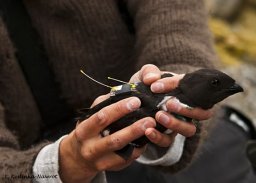 Katarzyna Wojczulanis-Jakubas合作论文数Department of Vertebrate Ecology and Zoology;University of Gdansk;Department of Vertebrate Ecology and Zoology, University of Gdansk25
 Adrian Zwolicki合作论文数Department of Vertebrate Ecology and Zoology, University of Gdańsk20
 Lech Iliszko合作论文数19
 Dorota Kidawa合作论文数Department of Vertebrate Ecology and Zoology, University of Gdańsk18Katarzyna Zmudczyńska-Skarbek合作论文数16
 Jan Marcin Węsławski合作论文数Department of Ecology, The Institute of Oceanology, Polish Academy of Sciences13
 Katarzyna Blachowiak-Samolyk合作论文数Institute of Oceanology Powstancow, Polish Academy of Sciences9Mateusz Barcikowski合作论文数9
 Slawomir Kwasniewski合作论文数Institute of Oceanology, Sopot, Poland8Rafał Boehnke合作论文数Inst Oceanol, Polish Acad Sci6
 Nina Karnovsky合作论文数5
 Marta Gluchowska合作论文数Institute of Oceanology, Polish Academy of Sciences (IO PAN),5Michał Goc合作论文数4
 Emilia Trudnowska合作论文数Polish Acad Sci, Inst Oceanol, PL-81712 Sopot, Poland4
 Sylwia Zielinska合作论文数4Marcin Los合作论文数4Miroslaw Darecki合作论文数4m goc合作论文数3Adam Barcikowski合作论文数3Liliana Keslinka-Nawrot合作论文数3
 Wojciech Szymanski合作论文数3Strøm Hallvard合作论文数3
 Peter Convey合作论文数British Antarctic Survey, Natural Environment Research Council3
 Geir Gabrielsen合作论文数Norsk Polarinstitutt3Malgorzata Cisek合作论文数3Bronislaw Wojtun合作论文数3
 Børge Moe合作论文数Department of Biology;Norwegian University of Science and Technology;Department of Biology, Norwegian University of Science and Technology3
 Wojciech Walkusz合作论文数Institute of Oceanology, Polish Academy of Sciences Powstańców Warszawy3
 Claus Bech合作论文数Department of Biology;Norwegian University of Science and Technology;Department of Biology, Norwegian University of Science and Technology3
 Jan Matuła合作论文数2elin noreen合作论文数2
 Mateusz Stolarczyk合作论文数2
 Frank Hanssen合作论文数Norwegian Institute for Nature Research2
 Jimmy de Fouw合作论文数2Oudman Thomas合作论文数Department of Marine Ecology, Royal Netherlands Institute for Sea Research (NIOZ),2
 Johannes Lang合作论文数2Pierre RICHARD合作论文数2Jorg Welcker合作论文数2
 Waldemar Walczowski合作论文数2
 Sveinn Are Hanssen合作论文数Norwegian Institute for Nature Research2
 Agata Weydmann合作论文数Institute of Oceanology, Polish Academy of Sciences2Ingunn M. Tombre合作论文数2Jacek A. Urbański合作论文数2
 Sophie Bourgeon合作论文数Department of Biological Sciences, Simon Fraser University2
 Bernt Rønning合作论文数Department of Biology, Norwegian University of Science and Technology2
 Jouke Prop合作论文数2
 Jon Aars合作论文数2
 Benoit Sittler合作论文数2




