Effective treatments for neurodegenerative diseases remain elusive and are critically needed since the burden of these diseases increases across an aging global population. Nitric oxide (NO) is a gasotransmitter that binds to soluble guanylate cyclase (sGC) to produce cyclic guanosine monophosphate (cGMP). Impairment of this pathway has been demonstrated in neurodegenerative diseases. Normalizing deficient NO-cGMP signaling could address multiple pathophysiological features of neurodegenerative diseases. sGC stimulators are small molecules that synergize with NO, activate sGC, and increase cGMP production. Many systemic sGC stimulators have been characterized and advanced into clinical development for a variety of non-central nervous system (CNS) pathologies. Here, we disclose the discovery of CY6463, the first brain-penetrant sGC stimulator in clinical development for the treatment of neurodegenerative diseases, and demonstrate its ability to improve neuronal activity, mediate neuroprotection, and increase cognitive performance in preclinical models. In several cellular assays, CY6463 was demonstrated to be a potent stimulator of sGC. In agreement with the known effects of sGC stimulation in the vasculature, CY6463 elicits decreases in blood pressure in both rats and mice. Relative to a non-CNS penetrant sGC stimulator, rodents treated with CY6463 had higher cGMP levels in cerebrospinal fluid (CSF), functional-magnetic-resonance-imaging-blood-oxygen-level-dependent (fMRI-BOLD) signals, and cortical electroencephalographic (EEG) gamma-band oscillatory power. Additionally, CY6463 improved cognitive performance in a model of cognitive disruption induced by the administration of a noncompetitive N-methyl-D-aspartate (NMDA) receptor antagonist. In models of neurodegeneration, CY6463 treatment increased long-term potentiation (LTP) in hippocampal slices from a Huntington's disease mouse model and decreased the loss of dendritic spines in aged and Alzheimer's disease mouse models. In a model of diet-induced obesity, CY6463 reduced markers of inflammation in the plasma. Furthermore, CY6463 elicited an additive increase in cortical gamma-band oscillatory power when co-administered with donepezil: the standard of care in Alzheimer's disease. Together, these data support the clinical development of CY6463 as a novel treatment for neurodegenerative disorders.
Soluble guanylate cyclase (sGC) is a clinically validated therapeutic target in the treatment of pulmonary hypertension. Modulators of sGC have the potential to treat diseases that are affected by dysregulation of the NOsGC-cGMP signal transduction pathway. This letter describes the SAR efforts that led to the discovery of CYR715, a novel carboxylic acid-containing sGC stimulator, with an improved metabolic profile relative to our previously described stimulator, IWP-051. CYR715 addressed potential idiosyncratic drug toxicity (IDT) liabilities associated with the formation of reactive, migrating acyl glucuronides (AG) found in related carboxylic acid-containing analogs and demonstrated high oral bioavailability in rat and dose-dependent hemodynamic pharmacology in normotensive Sprague-Dawley rats.
A HTS screen for CCR1 antagonists afforded a novel sub-micromolar hit 5 containing a pyrazole core. In this report the design, optimization, and SAR of novel CCR1 antagonists based on a pyrazole core motif is presented. Optimization led to the advanced candidate compounds (S)-16q and (S)-16r with 250-fold improved CCR1 potency, excellent off-target selectivity and attractive drug-like properties.
Discovery of IWP-051, a novel orally bioavailable soluble guanylate cyclase stimulator with sustained and dose-dependent hemodynamic effects Takashi Nakai, Nicholas R Perl, Rajesh R Iyengar, Ara Mermerian, G-Yoon J Im, Thomas W-H Lee, Glen R Rennie, James Jia, Paul A Renhowe, Timothy C Barden, James E Sheppeck II, Karthik Iyer, Joon Jung, G Todd Milne, Chrissie Segal, Kimberly Long, Joy Miyashiro, Sylvie Bernier, Sarah Jacobson, Jenny Tobin, Courtney Shea, Peter Germano, Yueh-tyng Chien, Daniel Zimmer
A series of nonsteroidal "dissociated" glucocorticoid receptor agonists was optimized for drug-like properties such as cytochrome P450 inhibition, metabolic stability, aqueous solubility, and hERG ion channel inhibition. This effort culminated in the identification of the clinical candidate compound ( R )-39.
We report on the nuclear receptor binding affinities, cellular activities of transrepression and transactivation, and anti-inflammatory properties of a quinol-4-one and other A-ring mimetic containing nonsteroidal class of glucocorticoid agonists.
Abstract N‐Benzylidene‐p‐anisidine Trans‐1‐(4‐Methoxyphenyl)‐4‐phenyl‐3‐(phenylthio)azetidin‐2‐one S‐Phenyldiazothioacetate Hexamethyldisilazane Butyllithium 2,2,2‐Trifluoroethyl trifluoroacetate
AbstractFor Abstract see ChemInform Abstract in Full Text.
The cationic chiral Lewis acids 1 and 2, generated by triflic acid protonation of the corresponding neutral oxazaborolidines, serve as excellent catalysts for Diels-Alder addition of cyclopentadiene to a wide variety of dienophiles. Adducts have been obtained in excellent yield and enantioselectivity from alpha,beta-unsaturated esters, lactones, and cyclic ketones. The absolute facial selectivity for each of these substrates follows a common pattern which differs from that observed with alpha,beta-enals. The different reaction channels can be understood in terms of pathways via complexes 3 (for alpha,beta-enals) and 4 (for alpha,beta-enones and esters).
An enantioselective, stereocontrolled total synthesis of eunicenone A (1) is described starting from geranylgeranylacetylene (9) in 14 steps via intermediates 10-20. The most critical construction in the synthesis is the highly effective Diels-Alder combination of the achiral components 2-bromoacrolein and diene 13 in the presence of the chiral Lewis acid catalyst 14 to form 15 (85% yield, 97% ee, >98:2 endo-exo ratio). The synthesis utilizes a novel reagent (12) for introduction of silicon, which serves to activate and direct the diene 13 for Diels-Alder reaction and to provide for eventual oxygen functionality of homoallylic alcohol 17 under mild conditions. Other noteworthy steps include the position selective and diastereoselective epoxidation 17 --> 18, the methoxycarbonylation with allylic transposition 19 --> 20, and the alpha,beta-enone unmasking 20 --> 1.
[structure: see text]. The new silyllithium reagent 1 and the corresponding cyanocuprate 3 are readily generated under optimal conditions and are useful for the formation of C-Si bonds. Tamao-Fleming oxidation of such C-Si bonds can be effected under very mild conditions.
X-Ray crystallographic studies have provided experimental evidence for the existence of intramolecular formyl C-H hydrogen bonds to oxygen or fluorine ligands in complexes of aldehydes and boron Lewis acids. This type of hydrogen bond can be regarded as 'induced' or 'cooperative' in the sense that its strength can be expected to increase as the bonding between the formyl oxygen and the Lewis acid becomes stronger. Coplanarity of the formyl group and the metal-X subunit to which it is bound in a five-membered ring effectively restricts rotation about the donor-acceptor bond between the formyl oxygen and the metal center of the Lewis acid, thus creating an additional organizing element in these complexes. This organizing element provides a simple and logical basis for understanding the mechanistic basis for enantioselectivity in many reactions of achiral aldehydes which are catalyzed by chiral Lewis acids. These reactions include aldol, allylation and ene addition to the formyl C=O group and Diels-Alder reactions of alpha,beta -unsaturated aldehydes with 1,3-dienes. The idea of the induced formyl C-H hydrogen bond can serve as a guide in the design of new enantioselective catalysts as well as a mechanistic principle for understanding preferred transition state assemblies.
AbstractChemInform is a weekly Abstracting Service, delivering concise information at a glance that was extracted from about 100 leading journals. To access a ChemInform Abstract of an article which was published elsewhere, please select a “Full Text” option. The original article is trackable via the “References” option.
The occurrence of formyl CH--O hydrogen bonding in enantioselective allylation, aldol and Diels-Alder reactions of aldehydes with chiral Lewis acid catalysts is a key to the understanding of absolute stereochemistry.
A logically derived mechanistic model is presented for the Mikami enantioselective ene reaction which correctly describes the absolute and relative stereochemistry resulting from transition-state structures such as 3 and 5.
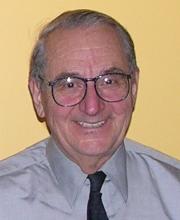 E. J. Corey合作论文数Department of Chemistry and Chemical Biology, Faculty of Arts and Sciences, Harvard University11
 David S. Thomson合作论文数7Daniel Kuzmich合作论文数5
 Younes Bekkali合作论文数5Renée Zindell合作论文数5Abdelhakim Hammach合作论文数4David Barnes-Seeman合作论文数Department of Chemistry and Chemical Biology, Harvard University4Pingrong Liu合作论文数4Hossein Razavi合作论文数Medicinal Chemistry Department, Boehringer Ingelheim Pharmaceuticals4Thomas M. Kirrane合作论文数Department of Medicinal Chemistry, Boehringer Ingelheim Pharmaceuticals Inc.4Paul A Renhowe合作论文数3Sylvie G Bernier合作论文数3Donald Souza合作论文数3Joon Jung合作论文数3Mark Ralph合作论文数3Harcken Christian合作论文数3
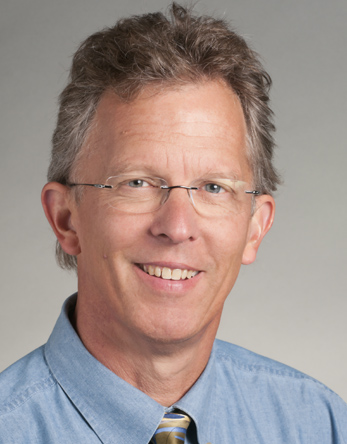 Richard Nelson合作论文数Department of Medicine and Epidemiology, School of Veterinary Medicine, University of California3Germano Peter合作论文数3
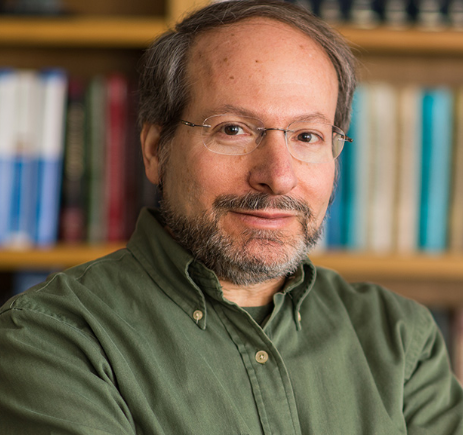 Rick Lane Danheiser合作论文数Department of Chemistry, Massachusetts Institute of Technology3Glen R. Rennie合作论文数3Rajesh R. Iyengar合作论文数3John R. Proudfoot合作论文数3Alison Kukulka合作论文数3
 John Regan合作论文数3Jenny Tobin合作论文数3Timothy C Barden合作论文数2Andrew Carvalho合作论文数2G-Yoon J Im合作论文数2Ara Mermerian合作论文数2Gerald H. Nabozny合作论文数2Takashi Nakai合作论文数2
 Mita Patel合作论文数2can mao合作论文数2j proudfoot合作论文数2John Lord合作论文数2Jacobson Sarah合作论文数2Do Hyun Ryu合作论文数Life Science Research Center, SK Chemicals2Alan D. Swinamer合作论文数2Doris Riether合作论文数2Michael D. Lawlor合作论文数2Daniel P Zimmer合作论文数2Nicholas R. Perl合作论文数2Jörg Bentzien合作论文数2Usha R. Patel合作论文数2brian christopher raudenbush合作论文数1brian nicholas cook合作论文数1christopher ronald sarko合作论文数1Chad D. Schwartzkopf合作论文数1Renee Deming合作论文数1




