Inspired by the success of imitation and inverse reinforcement learning in replicating expert behavior through optimal control, we propose a learning based approach to safe controller synthesis based on control barrier functions (CBFs). We consider the setting of a known nonlinear control affine dynamical system and assume that we have access to safe trajectories generated by an expert - a practical example of such a setting would be a kinematic model of a self-driving vehicle with safe trajectories (e.g. trajectories that avoid collisions with obstacles in the environment) generated by a human driver. We then propose and analyze an optimization-based approach to learning a CBF that enjoys provable safety guarantees under suitable Lipschitz smoothness assumptions on the underlying dynamical system. A strength of our approach is that it is agnostic to the parameterization used to represent the CBF, assuming only that the Lipschitz constant of such functions can be efficiently bounded. Furthermore, if the CBF parameterization is convex, then under mild assumptions, so is our learning process. We end with extensive numerical evaluations of our results on both planar and realistic examples, using both random feature and deep neural network parameterizations of the CBF. To the best of our knowledge, these are the first results that learn provably safe control barrier functions from data.
The wide availability of data coupled with the computational advances in artificial intelligence and machine learning promise to enable many future technologies such as autonomous driving. While there has been a variety of successful demonstrations of these technologies, critical system failures have repeatedly been reported. Even if rare, such system failures pose a serious barrier to adoption without a rigorous risk assessment. This article presents a framework for the systematic and rigorous risk verification of systems. We consider a wide range of system specifications formulated in signal temporal logic (STL) and model the system as a stochastic process, permitting discrete-time and continuous-time stochastic processes. We then define the STL robustness risk as the risk of lacking robustness against failure . This definition is motivated as system failures are often caused by missing robustness to modeling errors, system disturbances, and distribution shifts in the underlying data generating process. Within the definition, we permit general classes of risk measures and focus on tail risk measures such as the value-at-risk and the conditional value-at-risk. While the STL robustness risk is in general hard to compute, we propose the approximate STL robustness risk as a more tractable notion that upper bounds the STL robustness risk. We show how the approximate STL robustness risk can accurately be estimated from system trajectory data. For discrete-time stochastic processes, we show under which conditions the approximate STL robustness risk can even be computed exactly. We illustrate our verification algorithm in the autonomous driving simulator CARLA and show how a least risky controller can be selected among four neural network lane-keeping controllers for five meaningful system specifications.
We take the first step in using vehicle-to-vehicle (V2V) communication to provide real-time on-board traffic predictions. In order to best utilize real-world V2V communication data, we integrate first principle models with deep learning. Specifically, we train recurrent neural networks to improve the predictions given by first principle models. Our approach is able to predict the velocity of individual vehicles up to a minute into the future with improved accuracy over first principle-based baselines. We conduct a comprehensive study to evaluate different methods of integrating first principle models with deep learning techniques. The source code for our models is available at https://github.com/Rose-STL-Lab/V2V-traffic-forecast .
In this paper, we evaluate the ability of connected roadside infrastructure to provide traffic predictions on highways based on the motion of connected vehicles. In particular, we establish metrics to quantify the amount of traffic prediction that is available from roadside units via vehicle-to-infrastructure (V2I) communication. We utilize analytical and numerical tools to evaluate these metrics as a function of (i) the location of the roadside units along the road, (ii) the communication range of the roadside units, and (iii) the penetration rate of connected vehicles on the road. We show that considerable amount of traffic predictions can be achieved even with sparsely distributed roadside units as distant as two thousand meters and with connected vehicle penetration rate as low as 2%. Based on the proposed metrics, we develop strategies for deploying roadside units along highways so that traffic prediction efficiency is maximized. Ultimately, the results of this paper may serve as a guideline for evaluation and deployment of connected roadside infrastructure.
 Lars Lindemann合作论文数Department of Computer Science, University of Southern California2
 Nikolai Matni合作论文数Department of Electrical and Systems Engineering, School of Engineering and Applied Science, University of Pennsylvania2
 Gábor Orosz合作论文数Department of Mechanical Engineering, University of Michigan;Department of Civil and Environmental Engineering, University of Michigan2
 Tamas G. Molnar合作论文数Safe Autonomy & Nonlinear Dynamics Lab, Wichita State University;Department of Mechanical Engineering, Wichita State University2
 Satyajeet Das合作论文数1
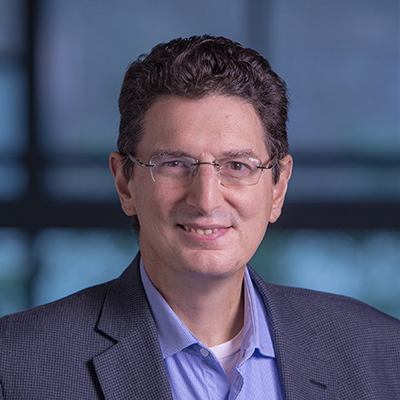 George J. Pappas合作论文数Department of Electrical & Systems Engineering, School of Engineering and Applied Science, University of Pennsylvania1
 Robin Walters合作论文数Geometric Learning Lab, Northeastern University;Khoury College of Computer Sciences, Northeastern University1
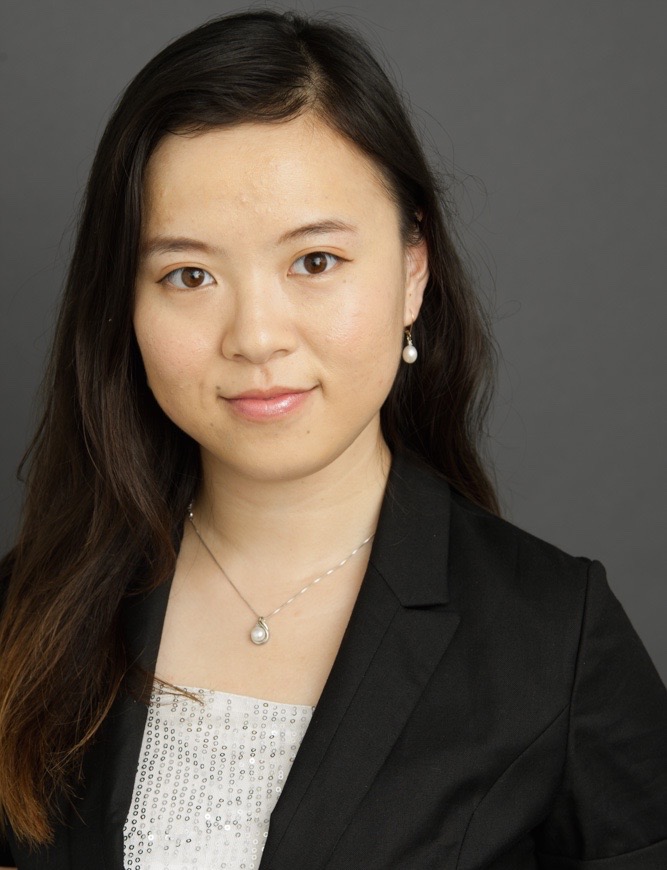 Rose Yu (虞琦)合作论文数Department of Computer Science and Engineering, Jacobs School of Engineering, University of Californ, San Diego1
 Stephen Tu合作论文数Ming Hsieh Department of Electrical and Computer Engineering, Viterbi School of Engineering, University of Southern California1
 Alex Robey合作论文数Carnegie Mellon University;Gray Swan AI1




