We measure the time-integrated CP asymmetry in D-0 -> (KSKS0)-K-0 decays reconstructed in e(+)e(-) -> c (c) over bar events collected by the Belle and Belle II experiments. The corresponding data samples have integrated luminosities of 980 and 428 fb(-1), respectively. The D-0 decays are required to originate from the D*(+) -> D-0 pi(+) decay, which determines the charm flavor at production time. A control sample of D-0 -> K+K- decays is used to correct for production and detection asymmetries. The result, (-1.4 +/- 1.3(stat) +/- 0.1(syst))%, is consistent with previous determinations and with CP symmetry.
We present measurements of B → K*(892)γ decays using 365 fb−1 of data collected from 2019 to 2022 by the Belle II experiment at the SuperKEKB asymmetric-energy e+e− collider. The data sample contains (387 ± 6) × 106 Υ(4S) events. We measure branching fractions ( ℬ ) and CP asymmetries ( 𝒜_CP ) for both B0 → K*0γ and B+ → K*+γ decays. The difference in CP asymmetries ( Δ𝒜_CP ) and the isospin asymmetry (∆0+) between these neutral and charged channels are also measured. We obtain the following branching fractions and CP asymmetries: ℬ(B^0→K^*0γ)=(4.14± 0.10± 0.11)×10^-5 , ℬ(B^+→K^*+γ)=(4.04±0.13_-0.15^+0.13)×10^-5 , 𝒜_CP(B^0→K^*0γ)=(-3.3± 2.3± 0.4)% , and Δ𝒜_CP(B^+→K^*+γ)=(-0.7± 2.9± 0.5)% . The measured difference in CP asymmetries is Δ𝒜_CP=(+2.6±3.8± 0.6)% , and the measured isospin asymmetry is ∆0+ = (+4.8 ± 2.0 ± 1.8)
We perform the first search for CP violation in D_(s)^+→K_S^0K^-π^+π^+ decays. We use a combined data set from the Belle and Belle II experiments, which study e+e− collisions at center-of-mass energies at or near the Υ(4S) resonance. We use 980 fb−1 of data from Belle and 428 fb−1 of data from Belle II. We measure six CP-violating asymmetries that are based on triple products and quadruple products of the momenta of final-state particles, and also the particles’ helicity angles. We obtain a precision at the level of 0.5 D^+→K_S^0K^-π^+π^+ decays, and better than 0.3 D_s^+→K_S^0K^-π^+π^+ decays. No evidence of CP violation is found. Our results for the triple-product asymmetries are the most precise to date for singly-Cabibbo-suppressed D+ decays. Our results for the other asymmetries are the first such measurements performed for charm decays.
We present measurements of B+ -> rho(+) gamma and B-0 -> rho(0) gamma. decays using a combined data sample of 772 x 10(6) B (B) over bar pairs collected by the Belle experiment and 387 x 10(6) B (B) over bar pairs collected by the Belle II experiment in e(+) e(-) collisions at the Upsilon(4S) resonance. After an optimized selection, a simultaneous fit to the Belle and Belle II datasets yields 114 +/- 12 B+ -> rho(+) gamma. and 99 +/- 12 B-0 -> rho(0) gamma decays. The measured branching fractions are (13.1(-1.9-1.2)(+2.0+1.3)) x 10(-7) and (7.6 +/- 1.3(-0.8)(+1.0)) x 10(-7) for B+ -> rho(+) gamma. and B-0 -> rho(0) gamma. decays, respectively, where the first uncertainty is statistical and the second is systematic. We also measure the isospin asymmetry A(I)(B -> rho gamma) = (10.9(-11.7-7.3)(+11.2+7.8))% and the direct CP asymmetry A(CP)(B+ -> rho(+) gamma) = (-8.2 +/- 15.2(-1.3)(+2.0))%.
Abstract We report measurements of the absolute branching fractions $$\mathcal{B}\left({B}_{s}^{0}\to {D}_{s}^{\pm }X\right)$$ , $$\mathcal{B}\left({B}_{s}^{0}\to {D}^{0}/{\overline{D} }^{0}X\right)$$ , and $$\mathcal{B}\left({B}_{s}^{0}\to {D}^{\pm }X\right)$$ , where the latter is measured for the first time. The results are based on a 121.4 fb −1 data sample collected at the Υ(10860) resonance by the Belle detector at the KEKB asymmetric-energy e + e − collider. We reconstruct one $${B}_{s}^{0}$$ meson in $${e}^{+}{e}^{-}\to \Upsilon\left(10860\right)\to {B}_{s}^{*}{\overline{B} }_{s}^{*}$$ events and measure yields of $${D}_{s}^{+}$$ , D 0, and D + mesons in the rest of the event. We obtain $$\mathcal{B}\left({B}_{s}^{0}\to {D}_{s}^{\pm }X\right)=\left(68.6\pm 7.2\pm 4.0\right)\%$$ , $$\mathcal{B}\left({B}_{s}^{0}\to {D}^{0}/{\overline{D} }^{0}X\right)=\left(21.5\pm 6.1\pm 1.8\right)\%$$ , and $$\mathcal{B}\left({B}_{s}^{0}\to {D}^{\pm }X\right)=\left(12.6\pm 4.6\pm 1.3\right)\%$$ , where the first uncertainty is statistical and the second is systematic. Averaging with previous Belle measurements gives $$\mathcal{B}\left({B}_{s}^{0}\to {D}_{s}^{\pm }X\right)=\left(63.4\pm 4.5\pm 2.2\right)\%$$ and $$\mathcal{B}\left({B}_{s}^{0}\to {D}^{0}/{\overline{D} }^{0}X\right)=\left(23.9\pm 4.1\pm 1.8\right)\%$$ . For the $${B}_{s}^{0}$$ production fraction at the Υ(10860), we find $${f}_{s}=\left({21.4}_{-1.7}^{+1.5}\right)\%$$ .
This paper presents the first measurement of $$\psi {(2S)}$$ ψ ( 2 S ) and $$\chi _{c1}(3872)$$ χ c 1 ( 3872 ) meson production within fully reconstructed jets. Each quarkonium state (tag) is reconstructed via its decay to the $${{J \hspace{-1.66656pt}/\hspace{-1.111pt}\psi }} $$ J / ψ ( $$\rightarrow $$ → $$\mu ^+\mu ^-$$ μ + μ - ) $$\pi ^+\pi ^-$$ π + π - final state in the forward region using proton-proton collision data collected by the LHCb experiment at the center-of-mass-energy of $$13\text {TeV} $$ 13 TeV in 2016, corresponding to an integrated luminosity of $$1.64\,\text {\,fb} ^{-1} $$ 1.64 \,fb - 1 . The fragmentation function, presented as the ratio of the quarkonium-tag transverse momentum to the full jet transverse momentum ( $$p_{\textrm{T}} (\text {tag})/p_{\textrm{T}} (\text {jet})$$ p T ( tag ) / p T ( jet ) ), is measured differentially in $$p_{\textrm{T}} (\text {jet})$$ p T ( jet ) and $$p_{\textrm{T}} (\text {tag})$$ p T ( tag ) bins. The distributions are separated into promptly produced quarkonia from proton-proton collisions and quarkonia produced from displaced b -hadron decays. While the displaced quarkonia fragmentation functions are in general well described by parton-shower predictions, the prompt quarkonium distributions differ significantly from fixed-order non-relativistic QCD (NRQCD) predictions followed by a QCD parton shower.
We present a measurement of the branching fraction and time-dependent charge-parity (CP) decay-rate asymmetries in B0→J/ψπ0 decays. The data sample was collected with the Belle II detector at the SuperKEKB asymmetric e+e− collider in 2019–2022 and contains (387±6)×106 BB¯ meson pairs from ϒ(4S) decays. We reconstruct 392±24 signal decays and fit the CP parameters from the distribution of the proper-decay-time difference of the two B mesons. We measure the branching fraction to be (B0→J/ψπ0)=(2.00±0.12±0.09)×10−5 and the direct and mixing-induced CP asymmetries to be CCP=0.13±0.12±0.03 and SCP=−0.88±0.17±0.03, respectively, where the first uncertainties are statistical and the second are systematic. We observe mixing-induced CP violation with a significance of 5.0 standard deviations for the first time in this mode. Published by the American Physical Society 2025
We report measurements of time-dependent CP asymmetries in B^{0}→K_{S}^{0}π^{0}γ decays based on a data sample of (388±6)×10^{6} BB[over ¯] events collected at the ϒ(4S) resonance with the Belle II detector. The Belle II experiment operates at the SuperKEKB asymmetric-energy e^{+}e^{-} collider. We measure decay-time distributions to determine CP -violating parameters S and C. We determine these parameters for two ranges of K_{S}^{0}π^{0} invariant mass: m(K_{S}^{0}π^{0})∈(0.8,1.0) GeV/c^{2}, which is dominated by B^{0}→K^{*0}(→K_{S}^{0}π^{0})γ decays, and a complementary region m(K_{S}^{0}π^{0})∈(0.6,0.8)∪(1.0,1.8) GeV/c^{2}. Our results have improved precision as compared to previous measurements and are consistent with theory predictions.
A search for hidden-charm pentaquark states decaying to a range of ΣcD¯ and Λc+D¯ final states, as well as doubly charmed pentaquark states to ΣcD and Λc+D, is made using samples of proton-proton collision data corresponding to an integrated luminosity of 5.7 fb−1 recorded by the LHCb detector at s=13 TeV. Since no significant signals are found, upper limits are set on the pentaquark yields relative to that of the Λc+ baryon in the Λc+→pK−π+ decay mode. The known pentaquark states are also investigated, and their signal yields are found to be consistent with zero in all cases. © 2024 CERN, for the LHCb Collaboration 2024 CERN
We search for the rare decay B+ -> K+ v (v) over bar in a 362 fb(-1) sample of electron-positron collisions at the Upsilon(4S) resonance collected with the Belle II detector at the SuperKEKB collider. We use the inclusive properties of the accompanying B meson in Upsilon(4S) -> B (B) over bar events to suppress background from other decays of the signal B candidate and light-quark pair production. We validate the measurement with an auxiliary analysis based on a conventional hadronic reconstruction of the accompanying B meson. For background suppression, we exploit distinct signal features using machine learning methods tuned with simulated data. The signal-reconstruction efficiency and background suppression are validated through various control channels. The branching fraction is extracted in a maximum likelihood fit. Our inclusive and hadronic analyses yield consistent results for the B+ -> K+ v (v) over bar branching fraction of [2.7 +/- 0.5(stat) +/- 0.5(syst)] x 10(-5) and [1.1(-0.8)(+0.9)(stat)(-0.5)(+0.8)(syst)] x 10(-5), respectively. Combining the results, we determine the branching fraction of the decay B+ -> K+ v (v) over bar to be [2.3 +/- 0.5_stat)(-0.4)(+0.5)(syst)] x 10(-5), providing the first evidence for this decay at 3.5 standard deviations. The combined result is 2.7 standard deviations above the standard model expectation.
For accurate determination of particle masses accurate knowledge of the momentum scale of the detectors is crucial. The procedure used to calibrate the momentum scale of the LHCb spectrometer is described and illustrated using the performance obtained with an integrated luminosity of $1.6~ fb^{-1}$ collected during 2016 in $pp$ running. The procedure uses large samples of $J/\psi \rightarrow \mu^+ \mu^-$ and $B^+ \rightarrow J/\psi K^+$ decays and leads to a relative accuracy of $3 \times 10^{-4}$ on the momentum scale.
A comprehensive study of the angular distributions in the bottom-baryon decays Λ^0_b→Λ_c^+ h^-(h=π, K), followed by Λ_c^+→Λ h^+ with Λ→pπ^- or Λ_c^+→pK^0_S decays, is performed using a data sample of proton-proton collisions corresponding to an integrated luminosity of 9 fb^-1 collected by the LHCb experiment at center-of-mass energies of 7, 8 and 13 Te -0.1em V. The decay parameters and the associated charge-parity (CP) asymmetries are measured, with no significant CP violation observed. For the first time, the Λ^0_b →Λ_c^+ h^- decay parameters are measured. The most precise measurements of the decay parameters α, β and γ are obtained for Λ_c^+ decays and an independent measurement of the decay parameters for the strange-baryon Λ decay is provided. The results deepen our understanding of weak decay dynamics in baryon decays.
Abstract The Λ b 0 $$ {\Lambda}_b^0 $$ → D + D − Λ decay is observed for the first time using proton-proton collision data collected by the LHCb experiment at a center-of-mass energy of 13 TeV, corresponding to an integrated luminosity of 5.3 fb −1. Using the B 0 → D + D − K S 0 $$ {D}^{+}{D}^{-}{K}_S^0 $$ decay as a reference channel, the product of the relative production cross-section and decay branching fractions is measured to be R = σ Λ b 0 σ B 0 = B Λ b 0 → D + D − Λ B B 0 → D + D − K S 0 = 0.179 ± 0.022 ± 0.014 , $$ \mathcal{R}=\frac{\sigma_{\Lambda_b^0}}{\sigma_{B^0}}=\frac{\mathcal{B}\left({\Lambda}_b^0\to {D}^{+}{D}^{-}\Lambda \right)}{\mathcal{B}\left({B}^0\to {D}^{+}{D}^{-}{K}_{\textrm{S}}^0\right)}=0.179\pm 0.022\pm 0.014, $$ where the first uncertainty is statistical and the second is systematic. The known branching fraction of the reference channel, B B 0 → D + D − K S 0 $$ \mathcal{B}\left({B}^0\to {D}^{+}{D}^{-}{K}_{\textrm{S}}^0\right) $$ , and the cross-section ratio, σ Λ b 0 / σ B 0 $$ {\sigma}_{\Lambda_b^0}/{\sigma}_{B^0} $$ , previously measured by LHCb are used to derive the branching fraction of the Λ b 0 $$ {\Lambda}_b^0 $$ → D + D − Λ decay B Λ b 0 → D + D − Λ = 1.24 ± 0.15 ± 0.10 ± 0.28 ± 0.11 × 10 − 4 , $$ \mathcal{B}\left({\Lambda}_b^0\to {D}^{+}{D}^{-}\Lambda \right)=\left(1.24\pm 0.15\pm 0.10\pm 0.28\pm 0.11\right)\times {10}^{-4}, $$ where the third and fourth contributions are due to uncertainties of B B 0 → D + D − K S 0 $$ \mathcal{B}\left({B}^0\to {D}^{+}{D}^{-}{K}_{\textrm{S}}^0\right) $$ and σ Λ b 0 / σ B 0 $$ {\sigma}_{\Lambda_b^0}/{\sigma}_{B^0} $$ , respectively. Inspection of the D +Λ and D + D − invariant-mass distributions suggests a rich presence of intermediate resonances in the decay. The Λ b 0 $$ {\Lambda}_b^0 $$ → D *+ D − Λ decay is also observed for the first time as a partially reconstructed component in the D + D − Λ invariant mass spectrum.
Abstract A measurement of CP-violating observables associated with the interference of B0→ D0K⋆(892)0 and $$ {B}^0\to {\overline{D}}^0{K}^{\star }{(892)}^0 $$ B 0 → D ¯ 0 K ⋆ 892 0 decay amplitudes is performed in the D0→ K∓π±(π+π−), D0→ π+π−(π+π−), and D0→ K+K− final states using data collected by the LHCb experiment corresponding to an integrated luminosity of 9 fb−1. CP-violating observables related to the interference of $$ {B}_s^0\to {D}^0{\overline{K}}^{\star }{(892)}^0 $$ B s 0 → D 0 K ¯ ⋆ 892 0 and $$ {B}_s^0\to {\overline{D}}^0{\overline{K}}^{\star }{(892)}^0 $$ B s 0 → D ¯ 0 K ¯ ⋆ 892 0 are also measured, but no evidence for interference is found. The B0 observables are used to constrain the parameter space of the CKM angle γ and the hadronic parameters $$ {r}_{B^0}^{DK\star } $$ r B 0 DK ⋆ and $$ {\delta}_{B^0}^{DK\star } $$ δ B 0 DK ⋆ with inputs from other measurements. In a combined analysis, these measurements allow for four solutions in the parameter space, only one of which is consistent with the world average.
We measure the tau-to-light-lepton ratio of inclusive B-meson branching fractions R ( X tau= l ) equivalent to B ( B-* X tau nu ) = B ( B-* X l nu ) , where l indicates an electron or muon, and thereby test the universality of charged-current weak interactions. We select events that have one fully reconstructed B meson and a charged lepton candidate from 189 fb-1 - 1 of electron-positron collision data collected with the Belle II detector. We find R ( X tau= l ) = 0.228 + 0.016(stat) ( stat ) + 0.036(syst), ( syst ) , in agreement with standard-model expectations. This is the first direct measurement of R ( X tau= l ) .
We report a measurement of decay-time-dependent charge-parity (CP) asymmetries in B0→KS0KS0KS0 decays. We use 387×106 BB¯ pairs collected at the ϒ(4S) resonance with the Belle II detector at the SuperKEKB asymmetric-energy electron-positron collider. We reconstruct 220 signal events and extract the CP-violating parameters S and C from a fit to the distribution of the decay-time difference between the two B mesons. The resulting confidence region is consistent with previous measurements in B0→KS0KS0KS0 and B0→(cc¯)K0 decays and with predictions based on the standard model. Published by the American Physical Society 2024
We present GFlaT, a new algorithm that uses a graph-neural-network to determine the flavor of neutral B mesons produced in Upsilon(4S) decays. It improves previous algorithms by using the information from all charged final-state particles and the relations between them. We evaluate its performance using B decays to flavor-specific hadronic final states reconstructed in a 362 fb(-1) sample of electron-positron collisions collected at the Upsilon(4S) resonance with the Belle II detector at the SuperKEKB collider. We achieve an effective tagging efficiency of (37.40 +/- 0.43 +/- 0.36%), where the first uncertainty is statistical and the second systematic, which is 18% better than the previous Belle II algorithm. Demonstrating the algorithm, we use B-0 -> J/psi K-S(0) decays to measure the mixing-induced and direct CP violation parameters, S = (0.724 +/- 0.035 +/- 0.009) and C = (-0.035 +/- 0.026 +/- 0.029).
We perform a model-independent measurement of the D^0-D^0 mixing parameters using samples of e^+e^--collision data collected by the Belle and Belle II experiments that have integrated luminosities of 951fb^-1 and 408 fb^-1, respectively. Approximately 2.05×10^6 neutral D mesons are reconstructed in the D^0→ K^0_Sπ^+π^- channel, with the neutral D flavor tagged by the charge of the pion in the D^*+→ D^0π^+ decay. Assuming charge-parity symmetry, the mixing parameters are measured to be x = (4.0±1.7±0.4)× 10^-3 and y = (2.9±1.4±0.3)× 10^-3, where the first uncertainties are statistical and the second systematic. The results are consistent with previous determinations.
We present a measurement of |V_ub| from a simultaneous study of the charmless semileptonic decays B^0→π^- ℓ^+ ν_ℓ and B^+→ρ^0 ℓ^+ν_ℓ, where ℓ = e, μ. This measurement uses a data sample of 387 million BB meson pairs recorded by the Belle II detector at the SuperKEKB electron-positron collider between 2019 and 2022. The two decays are reconstructed without identifying the partner B mesons. We simultaneously measure the differential branching fractions of B^0→π^- ℓ^+ ν_ℓ and B^+→ρ^0 ℓ^+ν_ℓ decays as functions of q^2 (momentum transfer squared). From these, we obtain total branching fractions B(B^0→π^- ℓ^+ ν_ℓ) = (1.516 ± 0.042 (stat) ± 0.059 (syst)) × 10^-4 and B(B^+→ρ^0 ℓ^+ν_ℓ) = (1.625 ± 0.079 (stat) ± 0.180 (syst)) × 10^-4. By fitting the measured B^0→π^- ℓ^+ ν_ℓ partial branching fractions as functions of q^2, together with constraints on the non-perturbative hadronic contribution from lattice QCD calculations, we obtain |V_ub| = (3.93 ± 0.09 ± 0.13 ± 0.19) × 10^-3. Here, the first uncertainty is statistical, the second is systematic, and the third is theoretical.
We search for the e+e−→ηb(1S)ω and e+e−→χb0(1P)ω processes at a center-of-mass energy of 10.745 GeV, which is close to the peak of the ϒ(10753) state. We use data collected by the Belle II experiment during a special run, corresponding to an integrated luminosity of 9.8 fb−1. We reconstruct ω→π+π−π0 decays and use the ω meson's recoil mass to search for the signals. We do not find evidence for either process, and set upper limits on the corresponding Born-level cross sections of 2.5 pb and 7.8 pb, respectively, at the 90% confidence level. The χb0(1P)ω limit is the result of a combination of this analysis and a previous search using full reconstruction.Received 21 December 2023Accepted 7 March 2024DOI:https://doi.org/10.1103/PhysRevD.109.072013Published by the American Physical Society under the terms of the Creative Commons Attribution 4.0 International license. Further distribution of this work must maintain attribution to the author(s) and the published article's title, journal citation, and DOI. Funded by SCOAP3.Published by the American Physical SocietyPhysics Subject Headings (PhySH)Research AreasMultiquark bound statesQuark modelParticles & Fields
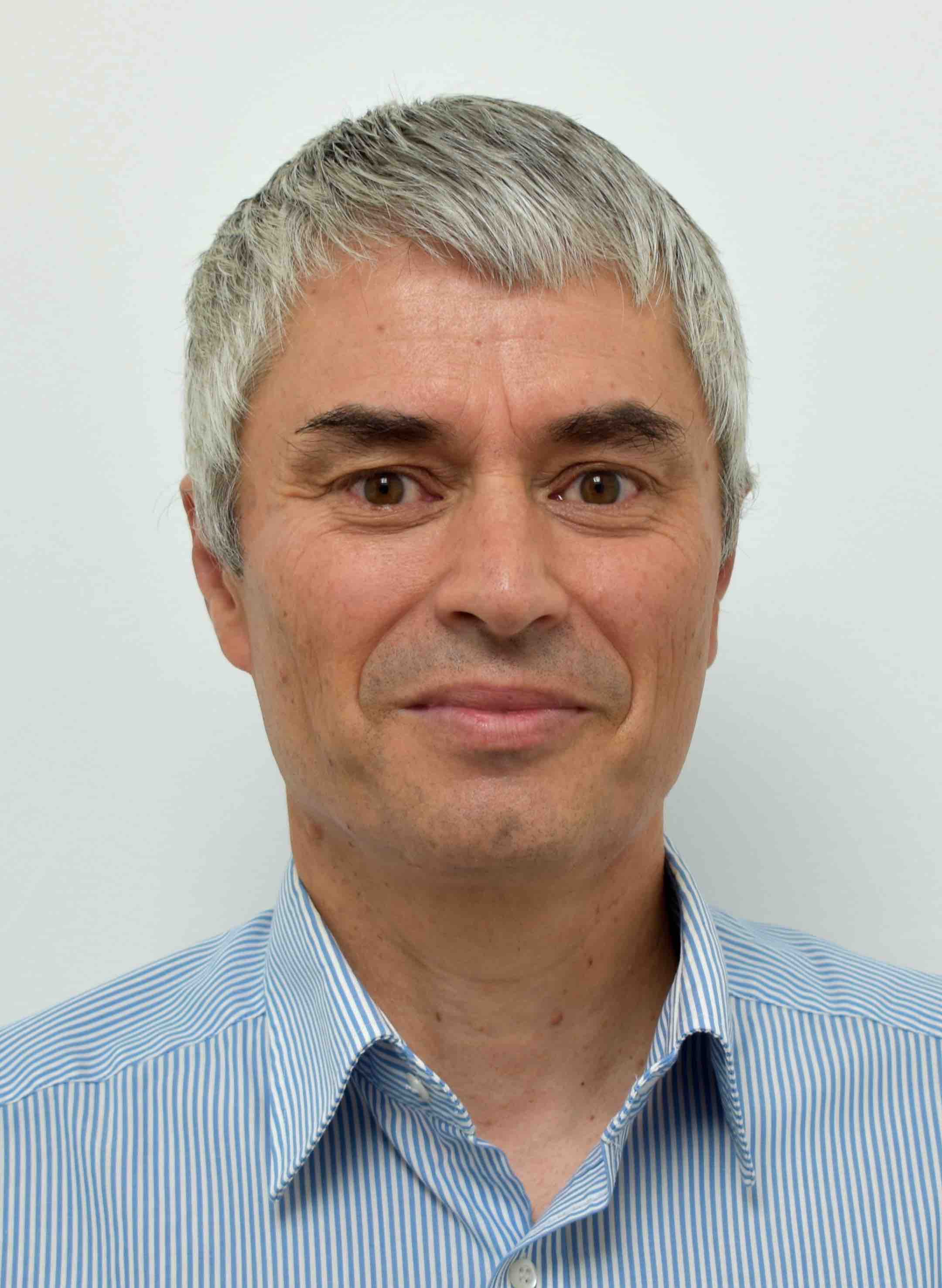 Olivier Schneider合作论文数High Energy Physics Laboratory, Institute of Physics, School of Basic Sciences, Ecole Polytechnique Fédérale De Lausanne1094
 Hiroaki Aihara (相原博昭)合作论文数Kavli Institute for The Physics and Mathematics of the Universe, Department of Physics, School of Science, The University of Tokyo1045
 Thomas E. Browder合作论文数University of Hawaii1004
 Byung Gu Cheon合作论文数Department of Physics, College of Natural Sciences, Hanyang University987
 Leo Piilonen合作论文数Department of Physics, College of Science, Virginia Polytechnic Institute and State University963
 Hisaki Hayashii合作论文数Department of Physics, Nara Women's University;Faculty of Science, Nara Women's University957
 Y. Sakai合作论文数953Stephan Eisenhardt合作论文数University of Edinburgh, University of Edinburgh942Andrzej Bożek合作论文数Department of Leptonic Interactions, Institute of Nuclear Physics936
 Ryosuke Itoh (伊藤領介)合作论文数Institute of Particle and Nuclear Studies, High Energy Accelerator Research Organization926
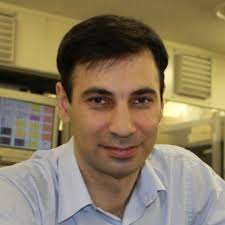 Tagir Aushev合作论文数Moscow Institute of Physics and Technology924Y.-J. Kwon合作论文数914Dmitri Liventsev合作论文数Department of Physics and Astronomy, College of Liberal Arts and Sciences, Wayne State University907
 Kenji Inami (居波賢二)合作论文数Department of Physics, Graduate School of Science, Nagoya University;High Energy Accelerator Research Organization904
 Ichiro Adachi (足立一郎)合作论文数Institute of Particle and Nuclear Studies, High Energy Accelerator Research Organization895Bračko M.合作论文数886
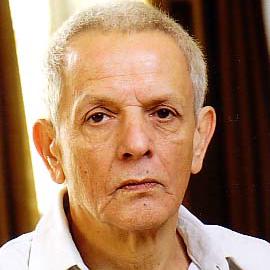 Andrew Bakich合作论文数School of Physics, University of Sydney883Shoji Uno (宇野彰二)合作论文数Institute of Particle and Nuclear Studies, High Energy Accelerator Research Organization875
 Katsumi Senyo (千代勝実)合作论文数Institute of Arts and Sciences, Yamagata University874Nikolay I. Gabyshev合作论文数Budker Institute of Nuclear Physics865
 Kenkichi Miyabayashi (宮林謙吉)合作论文数Faculty Division of Natural Sciences, Nara Women's University;Institute of Particle and Nuclear Studies, High Energy Accelerator Research Organization;Department of Physics, Nara Women's University856T. Sumiyoshi合作论文数Tokyo Metropolitan University851
 Mikihiko Nakao (中尾幹彦)合作论文数Institute of Particle and Nuclear Studies, High Energy Accelerator Research Organization849Jeremy Peter Dalseno合作论文数Instituto Galego de Física de Altas Enerxías, Universidade de Santiago de Compostela849Starič M.合作论文数848S. Nishida合作论文数848
 Martin Sevior合作论文数School of Physics, Faculty of Science, The University of Melbourne837
 Kay Kinoshita合作论文数Department of Physics, University of Cincinnati831
 Eunil Won合作论文数Department of Physics, Korea University830A. Kuzmin合作论文数Numerical simulations of multiphase flows in microchannels823
 Toru Iijima (飯嶋徹)合作论文数Tau-Lepton Data Analytics Laboratory, Kobayashi-Maskawa Institute, Nagoya University;Division of Experimental Studies, Kobayashi-Maskawa Institute, Nagoya University820Pavel Krokovny合作论文数Novosibirsk State University813
 Ishikawa Akira (石川朗)合作论文数Kobe University809
 Pavel Pakhlov合作论文数Department of Physics of Elemental Particles, Moscow Institute of Physics and Technology;Department of Experimental Nuclear Physics and Cosmophysics, MEPhI;Department of Discrete Mathematics, MIEM HSE;School of Electronic Engineering, HSE Tikhonov Moscow Institute of Electronics and Mathematics802Victor Zhilich合作论文数Budker Institute of Nuclear Physics797C. H. Wang合作论文数790Iwasaki Y.合作论文数780
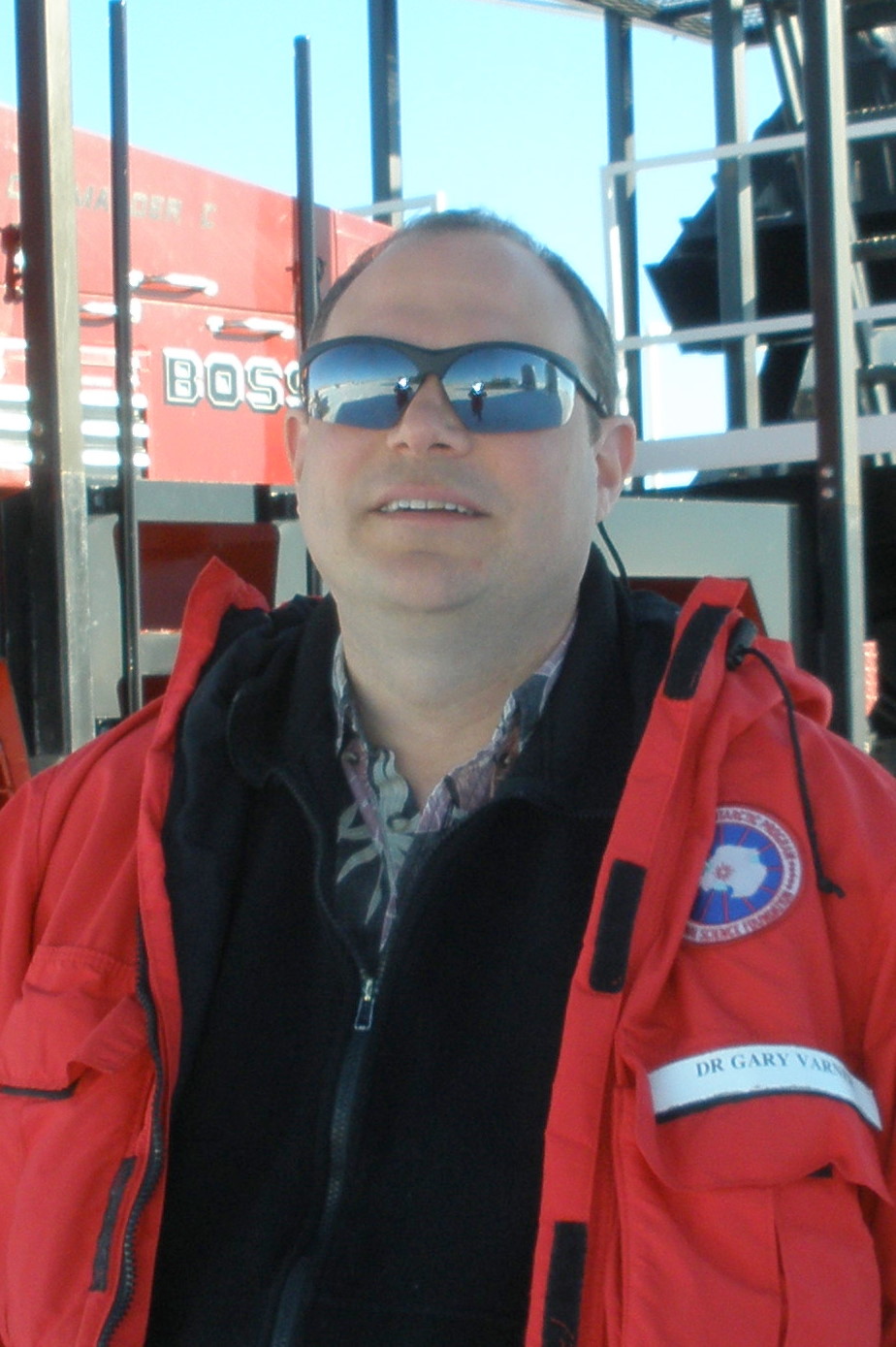 Gary Varner合作论文数University of Hawaii778
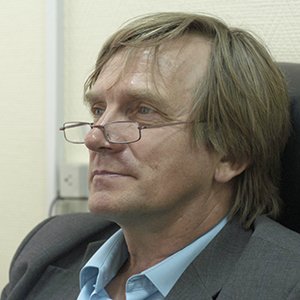 Alexander E. Bondar合作论文数Budker Institute of Nuclear Physics, Russian Academy of Sciences;Department of Physics, Novosibirsk State University759S. Okuno合作论文数755
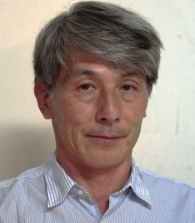 Satoru Ogawa (小川了)合作论文数Department of Physics, Faculty of Science, Toho University750Unno Y.合作论文数748Timofey Uglov合作论文数National Research University Higher School of Economics742Roman Mizuk合作论文数Tel Aviv University731Y. Teramoto合作论文数729Takeo Kawasaki合作论文数728Samo Korpar合作论文数727Y. Choi合作论文数726B. Golob合作论文数721




