Sustainable development, a concept of concern today in the political decision-making arena, captures and combines the need for economic development and the urgency of ecosystem protection. Sustainability indicators not only describe the environmental situation and the current burden on it; they also show what environmental burden the ecosystem is able to withstand in the long-run. Sustainability indicators tell us if, and to what degree, we are making progress toward the goal of sustainable development. This paper examines the purposes and requirements of sustainability indicators, using the AMOEBA approach as its main focus. AMOEBA, in the Dutch language, stands for 'general method of ecosystem description and assessment'. In the AMOEBA approach, quantitative and verifiable objectives are developed that allow for a quantitative description and assessment of ecosystems. The AMOEBA approach is a tool in aiding political decision makers to better understand the ecological status of an area of concern. AMOEBA is described both in general terms and with respect to its application at Jumping Run Creek shellfish restoration project in North Carolina. The project seeks to mitigate impacts to watershed hydrology due to land use changes that contribute to excessive bacterial loading and bed closure. Parameters being studied are indicators of bacterial stores, hydrologic modification and building density. An altered AMOEBA was developed which graphically presents the selected indicators and allows for an assessment of ecosystem impairments. (C) 2000 Elsevier Science B.V. All rights reserved.
AbstractThe paper tests two alternative specifications for the opportunity cost of time in travel cost models. The standard travel cost survey design is enriched to include a contingent valuation type question about peoples' willingness to accept compensation to forgo a precisely defined recreational experience. It is hypothesized that individually revealed value of time more appropriately reflects the opportunity costs of time associated with a particular aspect of recreation than the wage rate which measures the trade-off between work and leisure generally. The results seem to indicate a better overall fit for the models with the elicited value of individual consumer's time than for the models with the more traditional hourly earnings (wage rates). The importance of the correct measurement of the opportunity cost time is illustrated by showing that estimated consumer surpluses based on two different value of time measurements differ significantly.
Federal and state reforestation cost-share and income tax programs increase the economic incentives to grow timber, including production on pocosin wetlands that must be cleared and drained before planting. Elimination of the capital gains exclusion by the 1986 Tax Reform Act is estimated to reduce by 26 percent the rate of return to clearing and draining pocosin wetlands for timber production. The simulated loss of reforestation cost-share would reduce the rate of return by about 16 percent, while loss of investment tax credit and cost amortization tax incentives would reduce the rate of return by 20 percent. Removing all three programs simultaneously is estimated to reduce the rate of return by 48 percent. Several other factors influence the rate of return, including the amount of marketable timber on the tract at the time of clearing, the cost of ditching and draining, the productivity of the land, timber prices, and the marginal tax rate of the producer.
An abstract is not available for this content so a preview has been provided. As you have access to this content, a full PDF is available via the ‘Save PDF’ action button.
An abstract is not available for this content so a preview has been provided. As you have access to this content, a full PDF is available via the ‘Save PDF’ action button.
An abstract is not available for this content so a preview has been provided. As you have access to this content, a full PDF is available via the ‘Save PDF’ action button.
An abstract is not available for this content so a preview has been provided. As you have access to this content, a full PDF is available via the ‘Save PDF’ action button.
It has become abundantly clear this nation is confronted with a set of issues regarding allocation and use of land resources which present profound challenges to agricultural economists as well as all citizens. The ability of existing institutions to adequately deal with land use policy questions is being increasingly questioned. The theoretical causes of market failure in land policy and alternatives to the market have been dealt with extensively in the literature and will not be repeated here. The purpose of this paper is to comment on research and educational programs and needs in land policy and planning with particular reference to the South.
JAWRA Journal of the American Water Resources AssociationVolume 12, Issue 1 p. 182-183 Coupling of Land and Water Systems by Arthur d. Hasler (editor); Springer-Verlag, New York, Heidleberg, Berlin. 1975, 308 pages. Leon E. Danielson, Leon E. Danielson Assistant Professor North Carolina State UniversitySearch for more papers by this author Leon E. Danielson, Leon E. Danielson Assistant Professor North Carolina State UniversitySearch for more papers by this author First published: February 1976 https://doi.org/10.1111/j.1752-1688.1976.tb02651.xCitations: 1AboutPDF ToolsRequest permissionExport citationAdd to favoritesTrack citation ShareShare Give accessShare full text accessShare full-text accessPlease review our Terms and Conditions of Use and check box below to share full-text version of article.I have read and accept the Wiley Online Library Terms and Conditions of UseShareable LinkUse the link below to share a full-text version of this article with your friends and colleagues. Learn more.Copy URL Share a linkShare onFacebookTwitterLinkedInRedditWechat No abstract is available for this article.Citing Literature Volume12, Issue1February 1976Pages 182-183 RelatedInformation
 John R. Stoll合作论文数4ernest bentley合作论文数4Jay A. Leitch合作论文数4Kenneth C. Clayton合作论文数4gregory m sullivan合作论文数3Joseph Havlicek合作论文数3Kenneth W. Paxton合作论文数3Alvin R. Schupp合作论文数3Calvin R. Berry合作论文数2
 L. Steven Smutko合作论文数Department of Agricultural and Resource Economics;North Carolina State University;Department of Agricultural and Resource Economics, North Carolina State University2m sabowrin合作论文数1Neil E Martin合作论文数1kathryn paxton george合作论文数1l harrington合作论文数1j r wilder合作论文数1ezatollah karami合作论文数1joseph romm合作论文数1john m antle合作论文数1C H Green合作论文数1michael wagner合作论文数1g d puttock合作论文数1Erin McGraw合作论文数Dept Biol Sci, Auburn Univ1
 Sujit Kumar Roy合作论文数Bangladesh University of Engineering and Technology (BUET)1Paul Selman合作论文数1
 James Casey合作论文数Microbiology and Immunolog, College of Veterinary Medicine, Cornell University1White Nancy合作论文数1
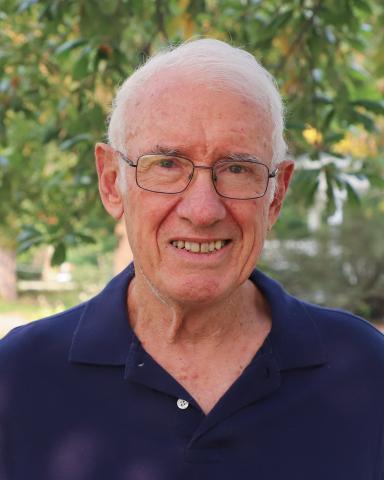 Charles A. Francis合作论文数Department of Agronomy and Horticulture, Institute of Agriculture and Natural Resources, University of Nebraska–Lincoln1
 Jeffrey K Conner合作论文数Department of Plant Biology, College of Natural Science, Michigan State University1
 Harold Alderman合作论文数International Food Policy Research Institute1
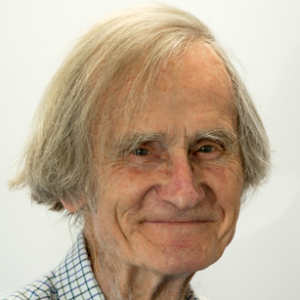 Robert Chambers合作论文数Institute of Development Studies, University of Sussex1
 Richard B. Norgaard合作论文数University of California, Berkeley1
 Paul Preckel合作论文数Dept . of Agricultural Economics;Purdue University;Dept . of Agricultural Economics, Purdue University1Jay Schulkin合作论文数1William T. Peterson合作论文数1Ron C. Mittelhammer合作论文数Washington State University1
 David Zilberman合作论文数Department of Agricultural and Resource Economics, University of California, Berkeley1
 Oral Capps合作论文数Department of Agricultural Economics;Texas A&M University;Department of Agricultural Economics, Texas A&M University1
 Philip N. Smith合作论文数Publishing Research Group, Electronic;Department of Computer Science;University of Nottingham;Electronic Publishing Research Group, University of Nottingham1
 Dodo Jesuthason Thampapillai合作论文数Lee Kuan Yew;School of Public Policy;National University of Singapore;School of Public Policy, National University of Singapore1
 Maureen Cropper合作论文数Department of Economics, College of Behavioral & Social Sciences, University of Maryland;Maryland Population Research Center, University of Maryland;CESifo;Resources for the Future1Raymond B. Palmquist合作论文数1Thomas R. Crow合作论文数1
 Florencia G. Palis合作论文数Social Science Division, International Rice Research Institute (IRRI),1S. M. Tunstall合作论文数1
 Robert Costanza合作论文数Stockholm Resilience Center;Gund Institute of Ecological Economics, Rubenstein School of Environment and Natural Resources, The University of Vermont;Institute for Global Prosperity, University College London1Joseph E. Swierzbinski合作论文数1Craig L. Infanger合作论文数1Dan L. Mclemore合作论文数1Lynn Robbins合作论文数1




