The authors examined the prevalence of anxiety disorders in elderly adults as presented in a recent review of the topic (Flint, 1994) where it was concluded that these disorders are rare in this segment of the population. Considering that anxiety research with older adults often involves instruments and criteria that have not been validated with elders, it is suggested that results may lack validity and underestimate the occurrence of anxiety in this age group. Issues that should be considered in the assessment of anxiety in elderly adults are reviewed. In particular, elderly persons may tend to somatize anxiety symptoms and there is a large overlap between anxiety and other psychiatric symptoms among older persons. It is concluded that anxiety may present differently in elderly persons and estimates of prevalence should await more research in this area.
The present article examines the history of the behavioral movement and shows that it is a commitment to an outer model that most defines its character and course. The efforts to integrate functional analysis and syndromal classification represent a weakening of this that has characterized behavioral intervention. The behavioral movement seems in danger of losing its root identity. While many of the trends seem to be going in the opposite direction, returning to roots may still be possible if they are understood and
Annals of the New York Academy of SciencesVolume 517, Issue 1 p. 139-152 The Classroom of the Future LEONARD KRASNER, LEONARD KRASNER Department of Psychology State University of New York Stony Brook, New York 11794 66 Pearce Mitchell, Stanford, California 94305.Search for more papers by this authorMIRIAM KRASNER, MIRIAM KRASNER Three Village School District Setauket, New York 11733 66 Pearce Mitchell, Stanford, California 94305.Search for more papers by this author LEONARD KRASNER, LEONARD KRASNER Department of Psychology State University of New York Stony Brook, New York 11794 66 Pearce Mitchell, Stanford, California 94305.Search for more papers by this authorMIRIAM KRASNER, MIRIAM KRASNER Three Village School District Setauket, New York 11733 66 Pearce Mitchell, Stanford, California 94305.Search for more papers by this author First published: December 1987 https://doi.org/10.1111/j.1749-6632.1987.tb52790.x AboutPDF ToolsRequest permissionExport citationAdd to favoritesTrack citation ShareShare Give accessShare full text accessShare full-text accessPlease review our Terms and Conditions of Use and check box below to share full-text version of article.I have read and accept the Wiley Online Library Terms and Conditions of UseShareable LinkUse the link below to share a full-text version of this article with your friends and colleagues. Learn more.Copy URL Share a linkShare onEmailFacebookTwitterLinkedInRedditWechat REFERENCES Barker, R. G. 1968. Ecological Psychology: Concepts and Methods for Studying the Environment of Human Behavior. Stanford University Press. Stanford , CA . Google Scholar Barker, R. G. & P. Gump. 1964. Big School, Small School: High School Size and Student Behavior. Stanford. University Press. Stanford , CA . Google Scholar Craik, K. H. 1973. Environmental psychology. In Annual Review of Psychology, Vol. 24. P. H. Mussen & M. R. Rosenzweig, Eds. Annual Reviews, Inc. Palo Alto , CA . Google Scholar Cremin, L.A. 1961. The Transformation of the School. Knopf. New York , NY . Web of Science®Google Scholar Dewey, J. 1916. Democracy and Education. MacMillan. New York , NY . Google Scholar Drucker, P. F. 1972. School around the bend. Psychology Today 6: 49–51, 86–89. Web of Science®Google Scholar Featherstone, J. 1971. Schools Where Children Learn. Liveright. New York , NY . Google Scholar Giaconia, R. M. & L. V. Hedges. 1982. Identifying features of effective open education. Rev. Ed. Res. 52: 579–602. 10.3102/00346543052004579 Web of Science®Google Scholar Goodlad, J. I. 1983. A Place Called School. McGraw-Hill. New York , NY . Google Scholar Hanley, G. L., A. C. Houts, J. Ruzek, M. Krasner & L. Krasner. 1981. Children as community planners: Report on an environmental design project 1. Education 102: 189–192. Web of Science®Google Scholar Holt, J. 1967. How Children Learn. Pitman. New York , NY . Google Scholar Horwitz, R. A. 1979. Psychological effects of the “open classroom. Rev. Ed. Res. 49: 71–86. 10.3102/00346543049001071 Web of Science®Google Scholar Ittelson, W. H., H. M. Proshansky, L. G. Rivlin & G. H. Winkel. 1974. An Introduction to Environmental Psychology. Holt. Rinehart & Winston. New York , NY . Web of Science®Google Scholar L. Krasner, Ed. 1980. Environmental Design and Human Behavior: A Psychology of the Individual in Society. Pergamon. Elmsford , NY . Google Scholar Krasner, L., J. D. Ford, R. E. Harpin & M. Krasner. 1977. The human behavior lab as an environmental design procedure. Education 97: 336–342. Web of Science®Google Scholar Krasner, M. 1980. Environmental design in the classroom. In Environmental Design and Human Behavior: A Psychology of the Individual in Society. L. Krasner, Ed. Pergamon. Elmsford , NY . Google Scholar Krasner, M. & G. L. Hanley. 1984. On evaluating open education. Education 105: 206–213. Web of Science®Google Scholar Lewin, K. 1936. Principles of Topological Psychology. McGraw-Hill. New York , NY . 10.1037/10019-000 Google Scholar National Commission On Excellence In Education. 1983. A Nation at Risk. U.S. Government Printing Office. Washington , DC . Google Scholar E. B. Nyquist & G. R. Hawes, Eds. 1972. Open education. Bantam, New York , NY . Google Scholar Papert, S. 1980. Mindstorms: Children, Computers and Powerful Ideas. Basic Books. New York , NY . Google Scholar Plowden, L. 1967. Children and the Primary Schools. A report on the Central Advisory Council for Education (England), Vol. 1. British Information Service. New York , NY . Google Scholar H. M. Proshansky, W. H. Ittelson & L. G. Rivlin, Eds. 1970. Environmental Psychology. Holt, Rinehart & Winston. New York , NY . Google Scholar Proshansky, E. & M. Wolfe. 1974. The physical setting and open education. School Rev. 82: 557–574. 10.1086/443150 Web of Science®Google Scholar Sarason, S. B. 1971. The Culture of the School and the Problem of Change. Allyn and Bacon. Boston , MA . Google Scholar Sarason, S. B. 1983. Schooling in America: Scapegoat and Salvation. Free Press. New York , NY . Google Scholar Silberman, C. E. 1970. Crisis in the Classroom: the Remaking of American Education. Random House. New York , NY . Google Scholar Skinner, B. F. The shame of American education. Invited Address at the Annual Meeting of the American Psychological Association, Anaheim, CA, August 27, 1983. Google Scholar Sirotnik, K. A. 1983. What you see is what you get—consistency, persistency, and mediocrity in classrooms. Harvard Ed. Rev. 53: 16–31. 10.17763/haer.53.1.9645457u7030m285 Web of Science®Google Scholar Thorndike, E. L. 1906. Principles of Teaching. Seiler. New York , NY . 10.1037/11487-000 Google Scholar Van Wagenberg, D., M. Krasner & L. Krasner. 1981. Children planning an ideal classroom. Environ. Behav. 102: 189–192. Google Scholar Yawkey, T. D. & D. M. Jones. 1974. Application of behavior modification to learning center: Choices in a kindergarten open education classroom. Psychology in the Schools 11: 321–328. 10.1002/1520-6807(197407)11:3<321::AID-PITS2310110316>3.0.CO;2-N Web of Science®Google Scholar Volume517, Issue1Psychology and Educational PolicyDecember 1987Pages 139-152 ReferencesRelatedInformation
An abstract is not available for this content so a preview has been provided. Please use the Get access link above for information on how to access this content.
 Leonard P. Ullmann合作论文数18Rc Winkler合作论文数5
 John H. Kagel合作论文数Department of Economics, Ohio State University5Raymond C. Battalio合作论文数5Robert L. Weiss合作论文数4R. L. Basmann合作论文数4
 Edwin B. Fisher合作论文数Department of Health Behavior, Gillings School of Global Public Health, University of North Carolina at Chapel Hill4Rl Weiss合作论文数3Miriam Krasner合作论文数3gerard l hanley合作论文数2
 William o'Donohue合作论文数Department of Psychology;University of Nevada;Department of Psychology, University of Nevada2
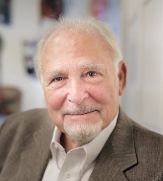 Paul Ekman合作论文数University of California, San Francisco;Paul Ekman Group2
 Arthur C. Houts合作论文数2C. Steven Richards合作论文数2OL BETTAG合作论文数1Lp Ullmann合作论文数1
 Richard A. Winett合作论文数Department of Psychology, College of Science, Virginia Polytechnic Institute and State University1
 Gerald C. Davison合作论文数University of Southern California1Donna M. Gelfand合作论文数1S GELFAND合作论文数1Beverly J. Collins合作论文数1H. Alan Brown合作论文数1




