The title compound, [OsCl(NO)(C48H36N4)]·4C4H8O, is a six-coordinate osmium(II) porphyrin complex with nitrosyl (NO) and chloride (Cl) ligands trans to each other in an octahedral geometry. The metal complex lies on a fourfold rotation axis that passes through the Os, N, O and Cl atoms. The NO and Cl ligands are disordered in an 0.511 (12):0.486 (12) ratio.
The title compound, [OsCl(NO)(C48H36N4)]·4C4H8O, is a six-coordinate osmium(II) porphyrin complex with nitrosyl (NO) and chloride (Cl) ligands trans to each other in an octahedral geometry. The metal complex lies on a fourfold rotation axis that passes through the Os, N, O and Cl atoms. The NO and Cl ligands are disordered in an 0.511 (12):0.486 (12) ratio.
The Os(P)(NO)(ONO) compounds (P = TTP, TMP, OEP, TmTP; TTP = 5,10,15,20-tetra-p-tolylporphyrinato dianion, TMP = 5,10,15,20-tetramesitylporphyrinato dianion, OEP = octaethylporphyrinato dianion, TmTP = tetra(m-tolyl)porphyrinato dianion) have been prepared from the reaction of the precursor carbonyl complexes Os(P)(CO) with excess nitric oxide. Nitrous oxide was detected as a by-product of the reaction. The IR spectra of the Os(P)(NO)(ONO) compounds (as KBr pellets) reveal bands in the 17901804 cm1 range that are assigned to υNO. The IR spectra also reveal two new bands for each complex in the 14951531 and 913962 cm1 ranges indicative of O-bound nitrito ligands. The linearity of the bound NO groups and the O-binding of the trans nitrito ligands in the Os(P)(NO)(ONO) complexes are evident in the single-crystal X-ray crystal structures of the TTP and TMP derivatives. The kinetics of the reaction were studied by stopped-flow mixing techniques. Spectroscopic analysis of rapidly mixed solutions of Os(P)CO and NO in toluene showed a biphasic approach to the Os(P)(NO)(ONO) and N2O products, owing to the starting material Os(P)CO scavenging CO formed during the reaction to give Os(P)(CO)2 (KCO = 106 M1). The dicarbonyl was the only transient species observed. It is proposed that the rate-determining step of the reaction leading to Os(P)(NO)(ONO) is NO displacement of CO from Os(P)(CO) via initial formation of an unstable 19 electron Os(P)(NO)(CO) intermediate.Key words: osmium, nitric oxide, X-ray, nitrosyl, porphyrin, kinetics.
AbstractChemInform is a weekly Abstracting Service, delivering concise information at a glance that was extracted from about 100 leading journals. To access a ChemInform Abstract of an article which was published elsewhere, please select a “Full Text” option. The original article is trackable via the “References” option.
The six-coordinate nitrosyl sigma-bonded aryl(iron) and -(ruthenium) porphyrin complexes (OEP)Fe(NO)(p-C(6)H(4)F) and (OEP)Ru(NO)(p-C(6)H(4)F) (OEP = octaethylporphyrinato dianion) have been synthesized and characterized. Single-crystal X-ray structure determinations reveal an unprecedented bending and tilting of the MNO group for both [MNO](6) species as well as significant lengthening of trans axial bond distances. In (OEP)Fe(NO)(p-C(6)H(4)F) the Fe-N-O angle is 157.4(2) degrees, the nitrosyl nitrogen atom is tilted off of the normal to the heme plane by 9.2 degrees, Fe-N(NO) = 1.728(2) A, and Fe-C(aryl) = 2.040(3) A. In (OEP)Ru(NO)(p-C(6)H(4)F) the Ru-N-O angle is 154.9(3) degrees, the nitrosyl nitrogen atom is tilted off of the heme normal by 10.8 degrees, Ru-N(NO) = 1.807(3) A, and Ru-C(aryl) = 2.111(3) A. We show that these structural features are intrinsic to the molecules and are imposed by the strongly sigma-donating aryl ligand trans to the nitrosyl. Density functional-based calculations reproduce the structural distortions observed in the parent (OEP)Fe(NO)(p-C(6)H(4)F) and, combined with the results of extended Hückel calculations, show that the observed bending and tilting of the FeNO group indeed represent a low-energy conformation. We have identified specific orbital interactions that favor the unexpected bending and tilting of the FeNO group. The aryl ligand also affects the Fe-NO pi-bonding as measured by infrared and (57)Fe Mössbauer spectroscopies. The solid-state nitrosyl stretching frequencies for the iron complex (1791 cm(-)(1)) and the ruthenium complex (1773 cm(-)(1)) are significantly reduced compared to their respective [MNO](6) counterparts. The Mössbauer data for (OEP)Fe(NO)(p-C(6)H(4)F) yield the quadrupole splitting parameter +0.57 mm/s and the isomer shift 0.14 mm/s at 4.2 K. The results of our study show, for the first time, that bent Fe-N-O linkages are possible in formally ferric nitrosyl porphyrins.
An entry from the Cambridge Structural Database, the world’s repository for small molecule crystal structures. The entry contains experimental data from a crystal diffraction study. The deposited dataset for this entry is freely available from the CCDC and typically includes 3D coordinates, cell parameters, space group, experimental conditions and quality measures.
Para-aminosubstituted nitrosoarenes react with Ru ( CO )( OEP ) or [ Co ( TPP )( THF )2] SbF 6 (OEP2- = 2,3,7,8,12,13,17,18-octaethylporphyrinato dianion, TPP2- = 5,10,15,20-tetraphenylporphyrinato dianion) to generate Ru ( OEP )( ONC 6 H 4 NMe 2)2 and [ Co ( TPP )( ONC 6 H 4 NR 2)2] SbF 6 ( R = Me , Et ), respectively, in fair to high yields. These N -bound nitrosoarene complexes have been characterized by spectroscopic methods. The complexes Ru ( OEP )( ONC 6 H 4 NMe 2)2 and [ Co ( TPP )( ONC 6 H 4 NMe 2)2] ClO 4 have also been characterized by single-crystal X-ray crystallography. Their structures represent the first reported solid-state structures of Ru and Co porphyrins containing C-nitroso ligands.
Para -aminosubstituted nitrosoarenes react with Ru(CO)(OEP) or [Co(TPP)(THF) 2 ]SbF 6 (OEP 2− = 2,3,7,8,12,13,17,18-octaethylporphyrinato dianion, TPP 2− = 5,10,15,20-tetraphenylporphyrinato dianion) to generate Ru(OEP)(ONC 6 H 4 NMe 2 ) 2 and [Co(TPP)(ONC 6 H 4 NR 2 ) 2 ]SbF 6 (R = Me, Et), respectively, in fair to high yields. These N-bound nitrosoarene complexes have been characterized by spectroscopic methods. The complexes Ru(OEP)(ONC 6 H 4 NMe 2 ) 2 and [Co(TPP)(ONC 6 H 4 NMe 2 ) 2 ]ClO 4 have also been characterized by single-crystal X-ray crystallography. Their structures represent the first reported solid-state structures of Ru and Co porphyrins containing C -nitroso ligands. Copyright © 2001 John Wiley & Sons, Ltd.
An entry from the Cambridge Structural Database, the world’s repository for small molecule crystal structures. The entry contains experimental data from a crystal diffraction study. The deposited dataset for this entry is freely available from the CCDC and typically includes 3D coordinates, cell parameters, space group, experimental conditions and quality measures.
IR spectroscopic results, combined with earlier crystallographic and spectroscopic evidence on Fe and Ru nitrosyl complexes, indicate that metastable eta(1)-O and eta(2)-NO linkage isomers are formed on low-temperature irradiation of the nitrosyl metalloporphyrins (OEP)Ru(NO)L (L = O-i-C5H11, SCH2CF3); the new compounds are stable at low temperature, but revert to the ground state on warming.
(OEP)Os(CO) reacts with n-butyl nitrite to give, after workup, the (OEP)Os(NO)(O-n-Bu) trans addition product (OEP = octaethylporphyrinato dianion). Similarly, the reaction of (OEP)Os(CO) or [(OEP)Os](2) with isoamyl nitrite gives the corresponding nitrosyl alkoxide, (OEP)Os(NO)(O-i-C(5)H(11)). The related reactions of (OEP)Os(CO) or [(OEP)Os](2) with isoamyl thionitrite gives the (OEP)Os(NO)(S-i-C(5)H(11)) nitrosyl thiolate. The reaction of the [(OEP)Os](2)(PF(6))(2) reagent with isoamyl thionitrite gives the nitrosylation product, [(OEP)Os(NO)]PF(6), which undergoes anion hydrolysis to give the isolable difluorophosphate (OEP)Os(NO)(O(2)PF(2)) derivative. Interestingly, the reaction of O(2)NC(6)H(4)N=NSPh with [(OEP)Os](2) gives the (OEP)Os(SPh)(2) product with loss of the arylazo fragments. The solid-state structures of (OEP)Os(NO)(O-n-Bu), (OEP)Os(NO)(O(2)PF(2)), and (OEP)Os(SPh)(2) have been determined by X-ray crystallography.
Diethylnitrosamine reacts with [(TPP)Fe(THF)(2)]ClO(4) (TPP = 5,10,15,20-tetraphenylporphyrinato dianion) in toluene to generate the bis-nitrosamine complex, [(TPP)Fe(Et(2)NNO)(2)]ClO(4), in 96% isolated yield. The related [(TTP)Fe(Et(2)NNO)(2)]SbF(6) (TTP = 5,10,15,20-tetra-p-tolylporphyrinato dianion) complex is prepared in 70% isolated yield via a similar reaction in CH(2)Cl(2). Reaction of [(TPP)Fe(Et(2)NNO)(2)]ClO(4) in CH(2)Cl(2) with NO gas results in the displacement of one of the Et(2)NNO ligands to give the air-sensitive and thermally sensitive [(TPP)Fe(NO)(Et(2)NNO)]ClO(4) derivative. Reaction of (OEP)Ru(CO) (OEP = 2,3,7,8,12,13,17,18-octaethylporphyrinato dianion) with NOBF(4) in CH(2)Cl(2) gives [(OEP)Ru(NO)(H(2)O)]BF(4) as the final isolated product (after exposure to air) in 71% isolated yield. The aqua ligand is then displaced by Et(2)NNO in CH(2)Cl(2) to give [(OEP)Ru(NO)(Et(2)NNO)]BF(4) in 82% isolated yield. The valence isoelectronic (OEP)Ru(CO)(Et(2)NNO) compound is prepared in 71% isolated yield by the addition of excess Et(2)NNO to (OEP)Ru(CO) in CH(2)Cl(2). The nitrosyl amine complex [(OEP)Ru(NO)(HNEt(2))]BF(4) is prepared (i) in 78% yield by diethylamine addition to [(OEP)Ru(NO)(H(2)O)]BF(4) or (ii) in 71% isolated yield by diethylamine addition to [(OEP)Ru(NO)(Et(2)NNO)]BF(4). The osmium nitrosamine complexes, (TTP)Os(CO)(Et(2)NNO) and (OEP)Os(CO)(Et(2)NNO), are prepared in 74% and 66% yields, respectively, by diethylnitrosamine addition to the precursor (porphyrin)Os(CO) compounds in CH(2)Cl(2). The nitrosyl [(OEP)Os(NO)(Et(2)NNO)]BF(4) derivative is prepared in quantitative yield (by IR and (1)H NMR spectroscopy) by the reaction of (OEP)Os(CO)(Et(2)NNO) with NOBF(4). Labeling studies using (15)NOBF(4), Et(2)N(15)NO, and Et(2)NN(18)O have been used to assign the nitrosyl and nitrosamine bands in the IR spectra of several of the complexes. The solid-state structures of [(TPP)Fe(THF)(2)]ClO(4), [(TPP)Fe(Et(2)NNO)(2)]ClO(4), [(OEP)Ru(NO)(H(2)O)]BF(4), (OEP)Ru(CO)(Et(2)NNO), and (TTP)Os(CO)(Et(2)NNO) have also been determined by single-crystal X-ray diffraction. The Et(2)NNO ligands display a rare eta(1)-O binding mode in all three nitrosamine complexes.
The sequential reaction of (OEP)Os(CO) with NOPF6 (in CH2Cl2) followed by RMgX (in THF) gives variable isolated yields of the new (OEP)Os(NO)R (5-44%), (OEP)Os(R)(2) (1-10%), (OEP)Os(NO)X (14-19%), and [(OEP)Os(NO)](2)(mu-O) (up to 24%) compounds, depending on the reaction conditions and the nature of R and X (OEP = octaethylporphyrinato dianion; R = Me, Et, Pr-i, Bu-t, p-C6H4F; X = Cl, Br). The IR v(NO) values of the complexes (in CH2Cl2) decrease in the order (OEP)Os(NO)X(1799-1795 cm(-1)) > [(OEP)Os(NO)](2)(mu-O) (1770 cm(-1)) > (OEP)Os(NO)R (1748-1703 cm(-1)). The delta(meso) peaks in the H-1 NMR spectra of the (OEP)Os complexes (in CDCl3) also decrease in the order (OEP)Os(NO)X (10.41-10.40 ppm) > [(OEP)Os(NO)](2)(mu-O) (10.35 ppm) > (OEP)Os(NO)R (10.24-10.21 ppm) > (OEP)Os(R)(2) (9.71-9.03 ppm). The thionitrosyl (OEP)Os(NS)Cl and (OEP)Os(NS)Me compounds have also been prepared. The solid-state molecular structures of [(OEP)Os(NO)](2)(mu-O), (OEP)Os(NS)Cl, and (OEP)Os(NS)Me have been determined by single-crystal X-ray diffraction.
p-Amino-substituted nitrosoarenes react with cationic [(T(p/m-X)PP)Mn(THF)2]+ porphyrins to give bis-nitrosoarene adducts. The molecular structure of [(TPP)Mn(ONC6H4NEt2)2]SbF6 has been determined by a single-crystal X-ray crystallographic analysis and reveals a rare O-binding mode of the aryl nitroso ligand.
Ruthenium and osmium porphyrins of the form (por)M(CO) (per = octaelhylporphyrinato diction (OEP), tetratolylporphyrinato dianion (TTP)) react with thionitrites (RSNO) and isoamyl nitrite (RONO) to give the (por)(NO)(SR) and (por)M(NO)(OR) addition products. Reaction of S-nitroso-N-acetyl-L-cysteine methyl ester with (TPP)Fe(THF)(2) (TPP tetraphenylporphyrinato dianion) gives (TPP)Fe(NO) in high yield. The related reaction of isoamyl nitrite with [(TPP)Fe(THF)(2)](+) gives the nitrosyl alcohol product [(TPP)Fe(NO)(HO-i-C5H11)](+). The solid stare structures of (OEP)Ru(NO)(NACysMe-S) (NACysMe = N-acetyl-L-cysteinate methyl ester), (TTP)Os(NO)(S-i-C5H11), and [(TPP)Fe(NO)(HO-i-C5H11)](+) have been determined by X-ray diffraction.
 George B. Richter-Addo合作论文数Department of Chemistry and Biochemistry, University of Oklahoma14
 Ma Khan合作论文数7Gb Yi合作论文数5J LEE合作论文数3Li-Sheng Wang合作论文数3
 Masood A. Khan合作论文数Department of Chemistry and Biochemistry, University of Oklahoma3Mary K. Ellison合作论文数3Charles E. Schulz合作论文数3Masood Khan合作论文数2
 W. Robert Scheidt合作论文数Department of Chemistry and Biochemistry, University of Notre Dame2
 Lin Cheng (程林)合作论文数School of Chemistry and Chemical Engineering, Southeast University2Christopher Adam Hixson合作论文数2TCG Kibbey合作论文数1Dv Fomitchev合作论文数1Jb Fox合作论文数1Ca Hixson合作论文数1
 Ivan Lorkovic合作论文数Raytheon Vision Systems1Ka Bagley合作论文数1
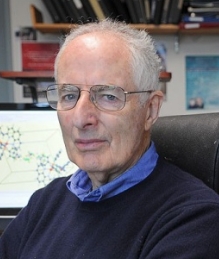 Philip Coppens合作论文数Department of Chemistry, University at Buffalo1
 Ralph A. Wheeler合作论文数Department of Chemistry and Biochemistry, College of Liberal Arts and Sciences, Northern Illinois University1
 Ann H. West合作论文数Department of Chemistry and Biochemistry, Dodge Family College of Arts and Sciences, The University of Oklahoma;Stephenson Life Sciences Research Center, The University of Oklahoma1Nan Xu合作论文数1Udeni R. Dharmawardana合作论文数1Shelia J. (Schultze) Fox合作论文数1
 Peter C. Ford合作论文数Department of Chemistry & Biochemistry, College of Letters and Science, University of California Santa Barbara1Douglas R. Powell合作论文数Department of Chemistry & Biochemistry University of Oklahoma1Amelia C. Dart合作论文数1




