Predicting stock prices presents challenges in financial forecasting. While traditional approaches such as ARIMA and RNNs are prevalent, recent developments in Large Language Models (LLMs) offer alternative methodologies. This paper introduces an approach that integrates LLMs with daily financial news for stock price prediction. To address the challenge of processing news data and identifying relevant content, we utilize stock name embeddings within attention mechanisms. Specifically, we encode news articles using a pre-trained LLM and implement three attention-based pooling techniques – self-attentive, cross-attentive, and position-aware self-attentive pooling – to filter news based on stock relevance. The filtered news embeddings, combined with historical stock prices, serve as inputs to the prediction model. Unlike prior studies that focus on individual stocks, our method trains a single generalized model applicable across multiple stocks. Experimental results demonstrate a 7.11
We introduce DiceHuBERT, a knowledge distillation framework for compressing HuBERT, a widely used self-supervised learning (SSL)-based speech foundation model. Unlike existing distillation methods that rely on layer-wise and feature-wise mapping between teacher and student models, DiceHuBERT leverages HuBERT's iterative self-distillation mechanism by directly replacing the original model with a student model. This replacement allows the student to be trained using the same SSL objective used when pre-training HuBERT, eliminating the need for additional modules or architectural constraints. Experimental results on SUPERB show that DiceHuBERT consistently outperforms existing distillation methods, improving phoneme recognition performance by over 21% and ASR performance by more than 14%. Furthermore, DiceHuBERT demonstrates competitive performance across multiple tasks, highlighting its clear advantage.
Iterative self-training, or iterative pseudo-labeling (IPL)—using an improved model from the current iteration to provide pseudo-labels for the next iteration—has proven to be a powerful approach to enhance the quality of speaker representations. Recent applications of IPL in unsupervised speaker recognition start with representations extracted from very elaborate self-supervised methods (e.g., DINO). However, training such strong self-supervised models is not straightforward (they require hyper-parameter tuning and may not generalize to out-of-domain data) and, moreover, may not be needed at all. To this end, we show that the simple, well-studied, and established i-vector generative model is enough to bootstrap the IPL process for the unsupervised learning of speaker representations. We also systematically study the impact of other components on the IPL process, which includes the initial model, the encoder, augmentations, the number of clusters, and the clustering algorithm. Remarkably, we find that even with a simple and significantly weaker initial model like i-vector, IPL can still achieve speaker verification performance that rivals state-of-the-art methods.
While pre-trained automatic speech recognition (ASR) systems demonstrate impressive performance on matched domains, their performance often degrades when confronted with channel mismatch stemming from unseen recording environments and conditions. To mitigate this issue, we propose a novel channel-aware data simulation method for robust ASR training. Our method harnesses the synergistic power of channel-extractive techniques and generative adversarial networks (GANs). We first train a channel encoder capable of extracting embeddings from arbitrary audio. On top of this, channel embeddings are extracted using a minimal amount of target-domain data and used to guide a GAN-based speech synthesizer. This synthesizer generates speech that faithfully preserves the phonetic content of the input while mimicking the channel characteristics of the target domain. We evaluate our method on the challenging Hakka Across Taiwan (HAT) and Taiwanese Across Taiwan (TAT) corpora, achieving relative character error rate (CER) reductions of 20.02% and 9.64%, respectively, compared to the baselines. These results highlight the efficacy of our channel-aware data simulation method for bridging the gap between source- and target-domain acoustics.
The success of large language models in text processing has inspired their adaptation to speech modeling. However, since speech is continuous and complex, it is often discretized for autoregressive modeling. Speech tokens derived from self-supervised models (known as semantic tokens) typically focus on the linguistic aspects of speech but neglect prosodic information. As a result, models trained on these tokens can generate speech with reduced naturalness. Existing approaches try to fix this by adding pitch features to the semantic tokens. However, pitch alone cannot fully represent the range of paralinguistic attributes, and selecting the right features requires careful hand-engineering. To overcome this, we propose an end-to-end variational approach that automatically learns to encode these continuous speech attributes to enhance the semantic tokens. Our approach eliminates the need for manual extraction and selection of paralinguistic features. Moreover, it produces preferred speech continuations according to human raters. Code, samples and models are available at https://github.com/b04901014/vae-gslm.
Speech foundation models, such as HuBERT and its variants, are pre-trained on large amounts of unlabeled speech data and then used for a range of downstream tasks. These models use a masked prediction objective, where the model learns to predict information about masked input segments from the unmasked context. The choice of prediction targets in this framework impacts their performance on downstream tasks. For instance, models pre-trained with targets that capture prosody learn representations suited for speaker-related tasks, while those pre-trained with targets that capture phonetics learn representations suited for content-related tasks. Moreover, prediction targets can differ in the level of detail they capture. Models pre-trained with targets that encode fine-grained acoustic features perform better on tasks like denoising, while those pre-trained with targets focused on higher-level abstractions are more effective for content-related tasks. Despite the importance of prediction targets, the design choices that affect them have not been thoroughly studied. This work explores the design choices and their impact on downstream task performance. Our results indicate that the commonly used design choices for HuBERT can be suboptimal. We propose approaches to create more informative prediction targets and demonstrate their effectiveness through improvements across various downstream tasks.
This report provides a concise overview of the proposed North system, which aims to achieve automatic word/syllable recognition for Taiwanese Hakka (Sixian). The report outlines three key components of the system: the acquisition, composition, and utilization of the training data; the architecture of the model; and the hardware specifications and operational statistics. The demonstration of the system has been made public at https://asrvm.iis.sinica.edu.tw/hakka_sixian.
Recent Text-to-Speech (TTS) systems trained on reading or acted corpora have achieved near human-level naturalness. The diversity of human speech, however, often goes beyond the coverage of these corpora. We believe the ability to handle such diversity is crucial for AI systems to achieve human-level communication. Our work explores the use of more abundant real-world data for building speech synthesizers. We train TTS systems using real-world speech from YouTube and podcasts. We observe the mismatch between training and inference alignments in mel-spectrogram based autoregressive models, leading to unintelligible synthesis, and demonstrate that learned discrete codes within multiple code groups effectively resolves this issue. We introduce our MQTTS system whose architecture is designed for multiple code generation and monotonic alignment, along with the use of a clean silence prompt to improve synthesis quality. We conduct ablation analyses to identify the efficacy of our methods. We show that MQTTS outperforms existing TTS systems in several objective and subjective measures.
We present a unified system to realize one-shot voice conversion (VC) on the pitch, rhythm, and speaker attributes. Existing works generally ignore the correlation between prosody and language content, leading to the degradation of naturalness in converted speech. Additionally, the lack of proper language features prevents these systems from accurately preserving language content after conversion. To address these issues, we devise a cascaded modular system leveraging self-supervised discrete speech units as language representation. These discrete units provide duration information essential for rhythm modeling. Our system first extracts utterance-level prosody and speaker representations from the raw waveform. Given the prosody representation, a prosody predictor estimates pitch, energy, and duration for each discrete unit in the utterance. A synthesizer further reconstructs speech based on the predicted prosody, speaker representation, and discrete units. Experiments show that our system outperforms previous approaches in naturalness, intelligibility, speaker transferability, and prosody transferability. Code and samples are publicly available. 1
The use of positional embeddings in transformer language models is widely accepted. However, recent research has called into question the necessity of such embeddings. We further extend this inquiry by demonstrating that a randomly initialized and frozen transformer language model, devoid of positional embeddings, inherently encodes strong positional information through the shrinkage of self-attention variance. To quantify this variance, we derive the underlying distribution of each step within a transformer layer. Through empirical validation using a fully pretrained model, we show that the variance shrinkage effect still persists after extensive gradient updates. Our findings serve to justify the decision to discard positional embeddings and thus facilitate more efficient pretraining of transformer language models.
The lack of clean speech is a practical challenge to the development of speech enhancement systems, which means that there is an inevitable mismatch between their training criterion and evaluation metric. In response to this unfavorable situation, we propose a training and inference strategy that additionally uses enhanced speech as a target by improving the previously proposed noisy-target training (NyTT). Because homogeneity between in-domain noise and extraneous noise is the key to the effectiveness of NyTT, we train various student models by remixing 1) the teacher model's estimated speech and noise for enhanced-target training or 2) raw noisy speech and the teacher model's estimated noise for noisy-target training. Experimental results show that our proposed method outperforms several baselines, especially with the teacher/student inference, where predicted clean speech is derived successively through the teacher and final student models.
To build speech processing methods that can handle speech as naturally as humans, researchers have explored multiple ways of building an invertible mapping from speech to an interpretable space. The articulatory space is a promising inversion target, since this space captures the mechanics of speech production. To this end, we build an acoustic-to-articulatory inversion (AAI) model that leverages autoregression, adversarial training, and self supervision to generalize to unseen speakers. Our approach obtains 0.784 correlation on an electromagnetic articulography (EMA) dataset, improving the state-of-the-art by 12.5%. Additionally, we show the interpretability of these representations through directly com-paring the behavior of estimated representations with speech production behavior. Finally, we propose a resynthesis-based AAI evaluation metric that does not rely on articulatory labels, demonstrating its efficacy with an 18-speaker dataset.
While Wav2Vec 2.0 has been proposed for speech recognition (ASR), it can also be used for speech emotion recognition (SER); its performance can be significantly improved using different fine-tuning strategies. Two baseline methods, vanilla fine-tuning (V-FT) and task adaptive pretraining (TAPT) are first presented. We show that V-FT is able to outperform state-of-the-art models on the IEMOCAP dataset. TAPT, an existing NLP fine-tuning strategy, further improves the performance on SER. We also introduce a novel fine-tuning method termed P-TAPT, which modifies the TAPT objective to learn contextualized emotion representations. Experiments show that P-TAPT performs better than TAPT, especially under low-resource settings. Compared to prior works in this literature, our top-line system achieved a 7.4% absolute improvement in unweighted accuracy (UA) over the state-of-the-art performance on IEMOCAP. Our code is publicly available.1
In this paper, we present a novel architecture to realize fine-grained style control on the transformer-based text-to-speech synthesis (TransformerTTS). Specifically, we model the speaking style by extracting a time sequence of local style tokens (LST) from the reference speech. The existing content encoder in TransformerTTS is then replaced by our designed cross-attention blocks for fusion and alignment between content and style. As the fusion is performed along with the skip connection, our cross-attention block provides a good inductive bias to gradually infuse the phoneme representation with a given style. Additionally, we prevent the style embedding from encoding linguistic content by randomly truncating LST during training and using wav2vec 2.0 features. Experiments show that with fine-grained style control, our system performs better in terms of naturalness, intelligibility, and style transferability. Our code and samples are publicly available. 1
We investigate the importance of temporal context for speech emotion recognition (SER). Two SER systems trained on traditional and learned features, respectively, are developed to predict categorical labels of emotion. For traditional acoustical features, we study the combination of filterbank features and prosodic features and the impact on SER when the temporal context of these features is expanded by learnable spectro-temporal receptive fields (STRFs). Experiments show that the system trained on learnable STRFs outperforms other reported systems evalu-ated with a similar setup. We also demonstrate that the wav2vec features, pretrained with long temporal context, are superior to traditional features. We then introduce a novel segment-based learning objective to constrain our classifier to extract local emotion features from the large temporal context. Combined with the learning objective and fine-tuning strategy, our top-line system using wav2vec features reaches state-of-the-art performance on the IEMOCAP dataset.
We present a system for the Zero Resource Speech Challenge 2021, which combines a Contrastive Predictive Coding (CPC) with deep cluster. In deep cluster, we first prepare pseudo-labels obtained by clustering the outputs of a CPC network with k-means. Then, we train an additional autoregressive model to classify the previously obtained pseudo-labels in a supervised manner. Phoneme discriminative representation is achieved by executing the second-round clustering with the outputs of the final layer of the autoregressive model. We show that replacing a Transformer layer with a Conformer layer leads to a further gain in a lexical metric. Experimental results show that a relative improvement of 35% in a phonetic metric, 1.5% in the lexical metric, and 2.3% in a syntactic metric are achieved compared to a baseline method of CPC-small which is trained on LibriSpeech 460h data. We achieve top results in this challenge with the syntactic metric.
This paper focuses on using voice conversion (VC) to improve the speech intelligibility of surgical patients who have had parts of their articulators removed. Due to the difficulty of data collection, VC without parallel data is highly desired. Although techniques for unparallel VC-for example, CycleGAN-have been developed, they usually focus on transforming the speaker identity, and directly transforming the speech of one speaker to that of another speaker and as such do not address the task here. In this paper, we propose a new approach for unparallel VC. The proposed approach transforms impaired speech to normal speech while preserving the linguistic content and speaker characteristics. To our knowledge, this is the first end-to-end GAN-based unsupervised VC model applied to impaired speech. The experimental results show that the proposed approach outperforms CycleGAN.
 Alexander I. Rudnicky合作论文数Language Technologies Institute, School of Computer Science, Carnegie Mellon University;Automated Speech Technologies LLC9
 Shinji Watanabe合作论文数Department of Electrical and Computer Engineering, College of Engineering, Carnegie Mellon University7
 Takuya Higuchi合作论文数Apple4
 Hung-Shin Lee合作论文数Department of Computer Science and Information Engineering;National, Taiwan Normal University;Department of Computer Science and Information Engineering, National Taiwan Normal University4
 Ahmed Hussen Abdelaziz合作论文数4
 Zakaria Aldeneh合作论文数Apple4
 Tatiana Likhomanenko合作论文数Apple3
 Hsin-Min Wang (王新民)合作论文数Institute of Information Science, Academia Sinica;Department of Computer Science and Information Engineering, National Cheng Kung University;Digital Center, Academia Sinica2
 Yu Tsao (曹昱)合作论文数Research Center for Information Technology Innovation, Academia Sinica2
 Barry-John Theobald合作论文数Apple2Cheng-Kang Chou合作论文数1Chien-Chun Wang合作论文数1Ta-Chung Chi合作论文数1Jee-weon Jung合作论文数1Oggi Rudovic合作论文数1
 Cheol Jun Cho合作论文数Department of Electrical Engineering and Computer Sciences, University of California, Berkeley;Berkeley Artificial Intelligence Research Lab, University of California, Berkeley1Takashi Maekaku合作论文数1
 Yao-Fei Cheng合作论文数Institute of Information Science, Academia Sinica1Peter Wu合作论文数1
 Gopala Anumanchipalli合作论文数Department of Electrical Engineering and Computer Sciences, University of California, Berkeley1
 Peter J. Ramadge合作论文数Department of Electrical and Computer Engineering, School of Engineering and Applied Science, Princeton University1
 Berlin Chen (陳柏琳)合作论文数Department of Computer Science and Information Engineering, National Taiwan Normal University1
 Alan W Black合作论文数Language Technologies Institute, School of Computer Science, Carnegie Mellon University1
 Stephen H. Shum合作论文数Computer Science and Artificial Intelligence Laboratory, Massachusetts Intitute of Technology1
 Yangyang Xia合作论文数University of Science and Technology of China, Univ. of Sci. and Technol. of China1
 Richard Stern合作论文数Department of Electrical and Computer Engineering, College of Engineering, Carnegie Mellon University;Language Technologies Institute, Carnegie Mellon University;Department of Computer Science, Carnegie Mellon University;School of Music, Carnegie Mellon University1
 Louis Goldstein合作论文数Department of Linguistics, Dornsife College of Letters, Arts and Sciences, University of Southern California1
 He Bai (Richard)合作论文数University of Waterloo;Apple1
 Yuya Fujita合作论文数Yahoo Japan1
 Xuankai Chang (常烜恺)合作论文数Google1
 Hung-Yi Lee (李宏毅)合作论文数Graduate Institute of Networking and Multimedia, National Taiwan University;Department of Electrical Engineering, National Taiwan University;Department of Computer Science & Information Engineering, National Taiwan University1
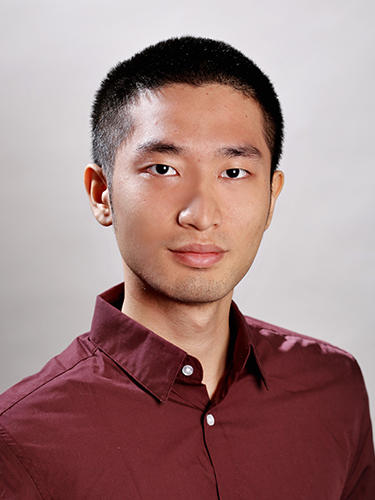 Ting-Han Fan合作论文数ByteDance1




