Iterative self-training, or iterative pseudo-labeling (IPL)—using an improved model from the current iteration to provide pseudo-labels for the next iteration—has proven to be a powerful approach to enhance the quality of speaker representations. Recent applications of IPL in unsupervised speaker recognition start with representations extracted from very elaborate self-supervised methods (e.g., DINO). However, training such strong self-supervised models is not straightforward (they require hyper-parameter tuning and may not generalize to out-of-domain data) and, moreover, may not be needed at all. To this end, we show that the simple, well-studied, and established i-vector generative model is enough to bootstrap the IPL process for the unsupervised learning of speaker representations. We also systematically study the impact of other components on the IPL process, which includes the initial model, the encoder, augmentations, the number of clusters, and the clustering algorithm. Remarkably, we find that even with a simple and significantly weaker initial model like i-vector, IPL can still achieve speaker verification performance that rivals state-of-the-art methods.
Self-supervised features are typically used in place of filter-bank features in speaker verification models. However, these models were originally designed to ingest filter-banks as inputs, and thus, training them on self-supervised features assumes that both feature types require the same amount of learning for the task. In this work, we observe that pre-trained self-supervised speech features inherently include information required for a downstream speaker verification task, and therefore, we can simplify the downstream model without sacrificing performance. To this end, we revisit the design of the downstream model for speaker verification using self-supervised features. We show that we can simplify the model to use 97.51% fewer parameters while achieving a 29.93% average improvement in performance on SUPERB. Consequently, we show that the simplified downstream model is more data efficient compared to the baseline---it achieves better performance with only 60% of the training data.
Voice triggering (VT) enables users to activate their devices by just speaking a trigger phrase. A front-end system is typically used to perform speech enhancement and/or separation, and produces multiple enhanced and/or separated signals. Since conventional VT systems take only single-channel audio as input, channel selection is performed. A drawback of this approach is that unselected channels are discarded, even if the discarded channels could contain useful information for VT. In this work, we propose multichannel acoustic models for VT, where the multichannel output from the frond-end is fed directly into a VT model. We adopt a transform-average-concatenate (TAC) block and modify the TAC block by incorporating the channel from the conventional channel selection so that the model can attend to a target speaker when multiple speakers are present. The proposed approach achieves up to 30% reduction in the false rejection rate compared to the baseline channel selection approach.
Noise robustness is a key aspect of successful speech applications. Speech enhancement (SE) has been investigated to improve automatic speech recognition accuracy; however, its effectiveness for keyword spotting (KWS) is still under-investigated. In this paper, we conduct a comprehensive study on single-channel speech enhancement for keyword spotting on the Google Speech Command (GSC) dataset. To investigate robustness to noise, the GSC dataset is augmented with noise signals from the WSJ0 Hipster Ambient Mixtures (WHAM!) noise dataset. Our investigation includes not only applying SE before KWS but also performing joint training of the SE frontend and KWS backend models. Moreover, we explore audio injection, a common approach to reduce distortions by using a weighted average of the enhanced and original signals. Audio injection is then further optimized by using another model that predicts the weight for each utterance. Our investigation reveals that SE can improve KWS accuracy on noisy speech when the backend model is trained on clean speech; however, despite our extensive exploration, it is difficult to improve the KWS accuracy with SE when the backend is trained on noisy speech.
Voice trigger detection is an important task, which enables activating a voice assistant when a target user speaks a keyword phrase. A detector is typically trained on speech data independent of speaker information and used for the voice trigger detection task. However, such a speaker independent voice trigger detector typically suffers from performance degradation on speech from underrepresented groups, such as accented speakers. In this work, we propose a novel voice trigger detector that can use a small number of utterances from a target speaker to improve detection accuracy. Our proposed model employs an encoder-decoder architecture. While the encoder performs speaker independent voice trigger detection, similar to the conventional detector, the decoder is trained with metric learning and predicts a personalized embedding for each utterance. A personalized voice trigger score is then obtained as a similarity score between the embeddings of enrollment utterances and a test utterance. The personalized embedding allows adapting to target speaker's speech when computing the voice trigger score, hence improving voice trigger detection accuracy. Experimental results show that the proposed approach achieves a 38% relative reduction in a false rejection rate (FRR) compared to a baseline speaker independent voice trigger model.
Information on speaker characteristics can be useful as side information in improving speaker recognition accuracy. However, such information is often private. This paper investigates how privacy-preserving learning can improve a speaker verification system, by enabling the use of privacy-sensitive speaker data to train an auxiliary classification model that predicts vocal characteristics of speakers. In particular, this paper explores the utility achieved by approaches which combine different federated learning and differential privacy mechanisms. These approaches make it possible to train a central model while protecting user privacy, with users' data remaining on their devices. Furthermore, they make learning on a large population of speakers possible, ensuring good coverage of speaker characteristics when training a model. The auxiliary model described here uses features extracted from phrases which trigger a speaker verification system. From these features, the model predicts speaker characteristic labels considered useful as side information. The knowledge of the auxiliary model is distilled into a speaker verification system using multi-task learning, with the side information labels predicted by this auxiliary model being the additional task. This approach results in a 6% relative improvement in equal error rate over a baseline system.
In this paper we introduce a speaker verification system deployed on mobile devices that can be used to personalise a keyword spotter. We describe a baseline DNN system that maps an utterance to a speaker embedding, which is used to measure speaker differences via cosine similarity. We then introduce an architectural modification which uses an LSTM system where the parameters are optimised via a curriculum learning procedure to reduce the detection error and improve its generalisability across various conditions. Experiments on our internal datasets show that the proposed approach outperforms the DNN baseline system and yields a relative EER reduction of 30-70% on both text-dependent and text-independent tasks under a variety of acoustic conditions.
In this paper, we explore the use of large-scale acoustic unit discovery for language recognition. The deep neural network-based approaches that have achieved recent success in this task require transcribed speech and pronunciation dictionaries, which may be limited in availability and expensive to obtain. We aim to replace the need for such supervision via the unsupervised discovery of acoustic units. In this work, we present a parallelized version of a Bayesian nonparametric model from previous work and use it to learn acoustic units from a few hundred hours of multilingual data. These unit (or senone) sequences are then used as targets to train a deep neural network-based i-vector language recognition system. We find that a score-level fusion of our unsupervised system with an acoustic baseline can shrink the gap significantly between the baseline and a supervised benchmark system built using transcribed English. Subsequent experiments also show that an improved acoustic representation of the data can yield substantial performance gains and that language specificity is important for discovering meaningful acoustic units. We validate the generalizability of our proposed approach by presenting state-of-the-art results that exhibit similar trends on the NIST Language Recognition Evaluations from 2011 and 2015.
: In this paper we describe the most recent MIT Lincoln Laboratory language recognition system developed for the NIST 2015 Language Recognition Evaluation (LRE). The submission features a fusion of five core classifiers, with most systems developed in the context of an i-vector framework. The 2015 evaluation presented new paradigms. First, the evaluation included fixed training and open training tracks for the first time; second, language classification performance was measured across 6 language clusters using 20 language classes instead of an N-way language task; and third, performance was measured across a nominal 3-30 second range. Results are presented for the overall performance across the six language clusters for both the fixed and open training tasks. On the 6-cluster metric the Lincoln system achieved overall costs of 0.173 and 0.168 for the fixed and open tasks respectively.
In this paper, we attempt to quantify the amount of labeled data necessary to build a state-of-the-art speaker recognition system. We begin by using i-vectors and the cosine similarity metric to represent an unlabeled set of utterances, then obtain labels from a noiseless oracle in the form of pairwise queries. Finally, we use the resulting speaker clusters to train a PLDA scoring function, which is assessed on the 2010 NIST Speaker Recognition Evaluation. After presenting the initial results of an algorithm that sorts queries based on nearest-neighbor pairs, we develop techniques that further minimize the number of queries needed to obtain state-of-the-art performance. We show the generalizability of our methods in anecdotal fashion by applying our methods to two different distributions of utterances-per-speaker and, ultimately, find that the actual number of pairwise labels needed to obtain state-of-the-art results may be a mere fraction of the queries required to fully label the entire set of utterances. Index Terms: speaker recognition, i-vectors, active learning
In this paper, we motivate and define the domain adaptation challenge task for speaker recognition. Using an i-vector system trained only on out-of-domain data as a starting point, we propose a framework that utilizes large-scale clustering algorithms and unlabeled in-domain data to adapt the system for evaluation. In presenting the results and analyses of an empirical exploration of this problem, our initial findings suggest that, while perfect clustering yields the best results, imperfect clustering can still provide recognition performance within 15% of the optimal. We further present a system that achieves recognition performance comparable to one that is provided all knowledge of the domain mismatch, and lastly, we outline throughout this paper some of the many directions for future work that this new task provides.
We consider the use of community detection algorithms to perform speaker clustering on content graphs built from large audio corpora. We survey the application of agglomerative hierarchical clustering, modularity optimization methods, and spectral clustering as well as two random walk algorithms: Markov clustering and Infomap. Our results on graphs built from the NIST 2005+2006 and 2008+2010 Speaker Recognition Evaluations (SREs) provide insight into both the structure of the speakers present in the data and the intricacies of the clustering methods. In particular, we introduce an additional parameter to Infomap that improves its clustering performance on all graphs. Lastly, we also develop an automatic technique to purify the neighbors of each node by pruning away unnecessary edges.
In speaker diarization, standard approaches typically perform speaker clustering on some initial segmentation before refining the segment boundaries in a re-segmentation step to obtain a final diarization hypothesis. In this paper, we integrate an improved clustering method with an existing re-segmentation algorithm and, in iterative fashion, optimize both speaker cluster assignments and segmentation boundaries jointly. For clustering, we extend our previous research using factor analysis for speaker modeling. In continuing to take advantage of the effectiveness of factor analysis as a front-end for extracting speaker-specific features (i.e., i-vectors), we develop a probabilistic approach to speaker clustering by applying a Bayesian Gaussian Mixture Model (GMM) to principal component analysis (PCA)-processed i-vectors. We then utilize information at different temporal resolutions to arrive at an iterative optimization scheme that, in alternating between clustering and re-segmentation steps, demonstrates the ability to improve both speaker cluster assignments and segmentation boundaries in an unsupervised manner. Our proposed methods attain results that are comparable to those of a state-of-the-art benchmark set on the multi-speaker CallHome telephone corpus. We further compare our system with a Bayesian nonparametric approach to diarization and attempt to reconcile their differences in both methodology and performance.
This paper extends upon our previous work using i-vectors for speaker diarization. We examine the effectiveness of spectral clustering as an alternative to our previous approach using Kmeans clustering and adapt a previously-used heuristic to estimate the number of speakers. Additionally, we consider an iterative optimization scheme and experiment with its ability to improve both cluster assignments and segmentation boundaries in an unsupervised manner. Our proposed methods attain results similar to those of a state-of-the-art benchmark set on the multi-speaker CallHome telephone corpus.
In this paper, we propose a new approach to speaker diarization based on the Total Variability approach to speaker verification. Drawing on previous work done in applying factor analysis priors to the diarization problem, we arrive at a simplified approach that exploits intra-conversation variability in the Total Variability space through the use of Principal Component Analysis (PCA). Using our proposed methods, we demonstrate the ability to achieve state-of-the-art performance (0.9% DER) in the diarization of summed-channel telephone data from the NIST 2008 SRE. Index Terms: speaker diarization, factor analysis, Total Variability, principal component analysis
Given a stream of unlabeled audio data, speaker diarization is the process of determining “who spoke when.” We propose a novel approach to solving this problem by taking advantage of the effectiveness of factor analysis as a front-end for extracting speaker-specific features and exploiting the inherent variabilities in the data through the use of unsupervised methods. Upon initial evaluation, our system achieves stateof-the art results of 0.9% Diarization Error Rate in the diarization of two-speaker telephone conversations. The approach is then generalized to the problem of K-speaker diarization, for which we take measures to address issues of data sparsity and experiment with the use of the von Mises-Fisher distribution for clustering on a unit hypersphere. Our extended system performs competitively on the diarization of conversations involving two or more speakers. Finally, we present promising initial results obtained from applying variational inference on our front-end speaker representation to estimate the unknown number of speakers in a given utterance. Thesis Supervisor: James R. Glass Title: Principal Research Scientist Thesis Supervisor: Najim Dehak Title: Research Scientist
Research in the speaker recognition community has continued to ad dress methods of mitigating variational nuisances. Telephone and auxiliary-microphone recorded speech emphasize the need for a ro bust way of dealing with unwanted variation. The design of recent 2010 NIST-SRE Speaker Recognition Evaluation (SRE) reflects this research emphasis. In this paper, we present the MIT submission applied to the tasks of the 2010 NIST-SRE with two main goals- language-independent scalable modeling and robust nuisance mitigation. For modeling, exclusive use of inner product-based and cepstral systems produced a language-independent computationally scalable system. For robustness, systems that captured spectral and prosodic information, modeled nuisance subspaces using multiple novel methods, and fused scores of multiple systems were implemented. The performance of the system is presented on a subset of the NIST SRE 2010 core tasks.
Automated 3D modeling of building interiors is useful in applications such as virtual reality and entertainment. Using a human-operated backpack system equipped with 2D laser scanners and inertial measurement units, we develop four scan-matching-based algorithms to localize the backpack and compare their performance and tradeoffs. We present results for two datasets of a 30-meter-long indoor hallway and compare one of the best performing localization algorithms with a visual-odometry-based method. We find that our scan-matching-based approach results in comparable or higher accuracy.
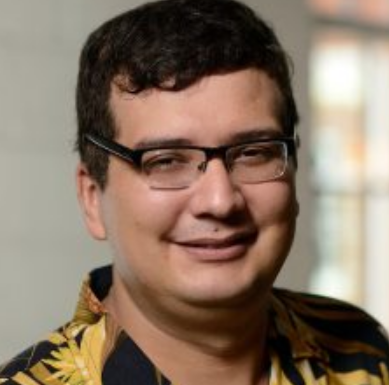 Najim Dehak合作论文数Department of Electrical and Computer Engineering, Whiting School of Engineering, Johns Hopkins University10
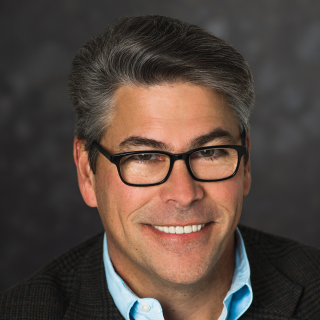 Douglas A. Reynolds合作论文数Lincoln Laboratory, Massachusetts Institute of Technology6
 Jim Glass合作论文数Computer Science and Artificial Intelligence Laboratory, Massachusetts Institute of Technology6
 Takuya Higuchi合作论文数Apple5
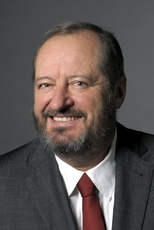 Elmar Nöth合作论文数Department of Computer Science, Friedrich-Alexander-Universität;Pattern Recognition Lab, Friedrich-Alexander-Universität3
 Peter Beyerlein合作论文数Dept Bioinformat & Biosyst Technol, Univ Appl Sci Wildau3
 Douglas E. Sturim合作论文数Lincoln Laboratory, Massachusetts Institute of Technology3
 Werner Spiegl合作论文数3
 Varada Kolhatkar合作论文数University of Minnesota3
 Jee-weon Jung合作论文数2
 Avamarie Brueggeman合作论文数2
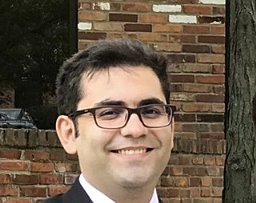 Masood Delfarah合作论文数Ohio State University2
 Siddharth Sigtia合作论文数Apple2
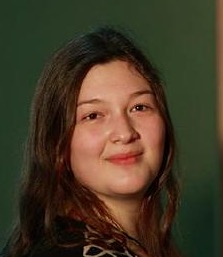 Tatiana Likhomanenko合作论文数Apple2Elliot Singer合作论文数2Barry-John Theobald合作论文数Apple2
 Erik Marchi合作论文数Apple Inc.2Fred Richardson合作论文数MIT Lincoln Laboratory2
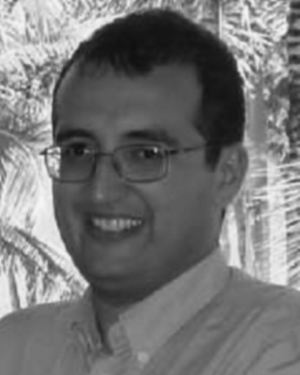 Réda Dehak合作论文数École pour l'Informatique et les Techniques Avancées2
 William M. Campbell合作论文数Lincoln Laboratory, MIT2
 Alan Mccree合作论文数Center for Language and Speech Processing, Whiting School of Engineering, Johns Hopkins University2
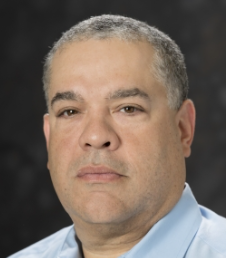 Pedro A. Torres-Carrasquillo合作论文数Lincoln Laboratory, Massachusetts Institute of Technology2
 Ahmed Hussen Abdelaziz合作论文数2
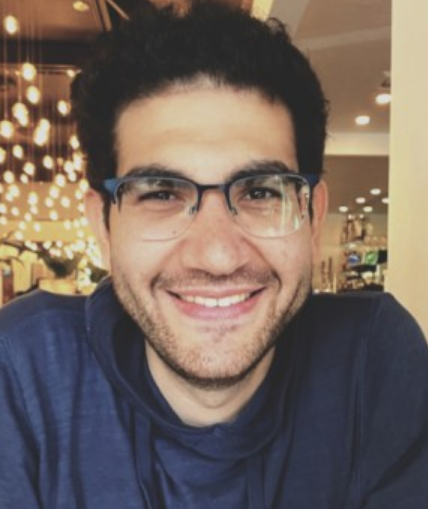 Zakaria Aldeneh合作论文数Apple2
 Shinji Watanabe合作论文数Department of Electrical and Computer Engineering, College of Engineering, Carnegie Mellon University2Pedro Torres-Carrasquillo合作论文数1Kyuyeon Hwang合作论文数1
 Liwei Chen合作论文数Language Technologies Institute, Carnegie Mellon University1James Harnsberger合作论文数1Áine Cahill合作论文数1Matthew Carlberg合作论文数1Sachin Kajarekar合作论文数1
 Prateeth Nayak合作论文数La1Haynes Rob合作论文数Apple Inc.1
 Varun Bharadhwaj Lakshminarasimhan合作论文数1
 Saurabh N. Adya合作论文数Intel Corp, Santa Clara, CA 95051 USA1Matt Seigel合作论文数1Vineet Garg合作论文数Apple1Filip Granqvist合作论文数1
 Ekapol Chuangsuwanich合作论文数Chulalongkorn University1Skyler Seto合作论文数Apple1
 Chandra Dhir合作论文数Apple Inc1
 Minsik Cho合作论文数Apple1
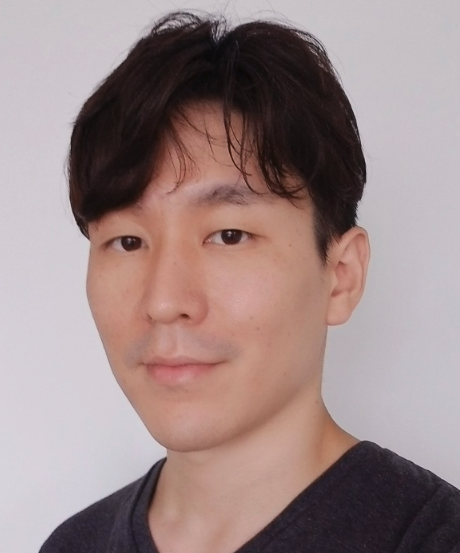 Yoon Kim合作论文数Massachusetts Institute of Technology1
 Anmol Gupta合作论文数Department of Community Medicine, Indira Gandhi Medical College1
 Avideh Zakhor合作论文数Video and Image Processing Lab, Department of Electrical Engineering and Computer Sciences, College of Engineering, University of California, Berkeley1
 Ahmed Tewfik合作论文数Chandra Department of Electrical and Computer Engineering, Cockrell School of Engineering, University of Texas at Austin;Apple1
 Matthias Paulik合作论文数Apple1Zahi N. Karam合作论文数1




