Inverse Vulcanisation (IV) under neat reaction conditions (without solvent) has enabled the research and development of the fundamental chemistry as well as the generation of unique sulfur -rich polymers with unprecedented properties. However, such bulk polymerisation can be problematic, especially with high molecular weight. The energetics of the thermal polymerisation process, combined with poor heat control of solvent -free polymerisation, cause risks of dangerous auto -acceleration if the process is scaled up. The required high temperatures (>160 C-degrees or 135 C-degrees even with catalysts), exceed the boiling point of most commonplace organic solvents, preventing implementation of solvents for IV under thermal conditions. We report here a photo -induced IV polymerisation in solvent at room temperature. The reactions proceed smoothly and efficiently with excellent yields, despite the potential negative factors of reflection, refraction, and low absorption intensity of light by these organic solvents, opening an attractive avenue for the preparation of functional sulfur -rich polymers as well as their potential applications. The extension of crosslinkers to the value-added C5 fraction of industrial byproduct and beta-carotene showcase the benefit of this low temperature protocol. Mechanistic study reveals that the moisture in both substrates and solvents might play a key role for the generation of toxic H2S by-product in IV reaction under thermal conditions, with photopolymerisation remaining un-affected. This protocol not only extensively expands the scope of crosslinkers for the IV reaction together with resultant polymers, but also provides a potential scale -up route for industrial application by avoiding the generation of toxic H2S by-product and possible explosion risk with high temperature.
Synthesis of an inverse vulcanised polymer with bended mono- and di-olefins, adjusting the ratio of which allows control of the shape memory response and self-healing temperatures.
Raman analysis has been found to provide otherwise hard to obtain information on inverse vulcanised polymers, including their homogeneity, sulfur rank, and unpolymerised sulfur content.
Self-activating crosslinkers were used to create inverse vulcanised polymers with improved properties via method optimised dispersion polymerisation, and were also used alongside other comonomers to enhance the product polymer's properties.
Inverse vulcanization has emerged as a popular strategy for transforming the waste material, elemental sulfur, into functional polymers with high sulfur content (>50 wt.%, normally). Inverse vulcanized polymers are intrinsically processable and recyclable, and have been demonstrated as promising for applications in many fields. However, the mechanical properties of inverse vulcanized polymers are currently underdeveloped. If this kind of material is to be widely used in some scenarios to replace some traditional plastics, it is necessary to make them with appropriate thermal and mechanical properties that meet basic application requirements. Here, we report a series of terpolymers copolymerized from two distinct organic comonomers and elemental sulfur to obtain polymers with a wide range of glass transition temperatures (-43 °C to 45 °C) that exhibit good mechanical properties, by blending crosslinkers with varying feed monomer ratio and chain length of linear sections, which expands the application opportunities of inverse vulcanization.
Sulfur-rich polymers prepared by inverse vulcanization (IV), as a new chemistry and polymerization technique, have attracted increasing attention since their invention in 2013. Although extensive research has been devoted to IV, there is still huge scope for advance, particularly in terms of the practical applications of the resultant polymers. Previously SiO2-embedded sulfur-rich polymers from IV were reported as superhydrophobic, antibacterial and anti-corrosion coating materials. We report herein the improved properties of superhydrophobic and anti-corrosion functional materials prepared by embedding more hydrophobic TiN nanoparticles into sulfur-rich polymers. This method provides fluoride-free composite materials, which is important considering the possible hazard to humans and the environment and concerns of fluorine-containing olefins with long carbon chains. Static water contact angles (WCA) of up to 173.6 +/- 1.1 degrees as well as superior properties such as higher superhydrophobicity and anti-corrosion (97.2% coating protection rate) are achieved. The generated coating has good to excellent self-cleaning functions. This protocol not only improves the superhydrophobicity of the synthesized composites, but also provides a feasible method for the preparation of nonharmful and environmentally benign fluorine-free superhydrophobic anti-corrosion materials applied in marine industries.
Sulfur-rich polymers generated from the inverse vulcanization of elemental sulfur with unsaturated monomers have emerged as a family of organic polymers with unique functionalities and broad potential applications. First described in 2013, inverse vulcanization is still in its infancy regarding its fundamental development, property exploration of the resultant polymers, and practical utilizations. Herein, the robust properties of sulfur-rich composites generated by inverse vulcanization with SiO2-embedded elemental sulfur are revealed, furnishing superhydrophobicity with static water contact angles of up to 154.7 +/- 1.8 degrees, a high anticorrosive effect of 98.9% protection efficiency for Mg alloy in 3.5 wt % NaCl solution, and a good antibacterial performance against Escherichia coli (81%) and Staphylococcus aureus (75%). The resulted composite also shows excellent self-cleaning functionalities. This has not only expanded the properties/functionalities and applications of the sulfur-rich polymers resulting from inverse vulcanization but also provided low-cost alternatives to superhydrophobic coating materials for practical applications.
Inverse vulcanised sulfur polymer nanoparticles prepared by antisolvent precipitation–demonstrated as mercury ion absorbent in solution, showing high selectivity and capacity, and as membrane filters.
The refining of petroleum feedstocks has produced a surplus of the by-product elemental sulfur that is currently underused and is therefore, extremely low cost. The combination of sulfur with organic crosslinking units by inverse vulcanization polymerization, provides a route to low cost materials with a wide array of potential applications. To fully exploit the availability of elemental sulfur and to allow the product polymers to align well with the principles of green chemistry, a renewable crosslinker is desirable. Reported here is a polymer formed from inverse vulcanization, produced from industrial waste sulfur, and bio-derived garlic oil blend. This polymer has tuneable properties when blended with another industrial waste product, dicyclopentadiene. These polymers were found to have a high affinity to capture mercury, particularly for low mercury concentrations where other sorbents are often not effective. It is these low concentrations that are most industrially relevant and important for environmental and health concerns as even low concentrations of toxic mercury can have cumulative and severe consequences. Crucially, these ternary polymer systems are mechanically robust due to their increased glass transition temperatures and hardness values, making them viable for practical applications.
Inverse vulcanization is a potential route to the use of the large excesses of elemental sulfur, creating high-sulfur-content polymers with many potential applications. The addition of a metal diethyldithiocarbamate catalyst was previously found to bring several benefits to inverse vulcanization, making the process more attractive industrially. Herein is reported the establishment and exploration of a library of catalysts for inverse vulcanization. Three ranges of catalysts and up to 32 compounds and their combinations have been investigated. By trialing these alternative catalysts, several tentative deductions about the mechanism have been made. It has been found that stronger nucleophiles give a greater rate enhancement, but with the tradeoff that harder bases may promote hydrogen sulfide byproduct formation. Monomer binding by the cation may be a crucial mechanistic step, and it is possible that the catalysts act as phase transfer agents between the immiscible sulfur and organic phases. Additionally, the versatility of catalytic inverse vulcanization has been demonstrated with several different comonomer families.
 Tom Hasell合作论文数University of Liverpool10
 Peiyao Yan合作论文数Dept Chem, Univ Liverpool7
 Haoran Wang合作论文数Institute of Physical Chemistry, Friedrich Schiller University Jena5
 Xiao-Feng Wu (吴小锋)合作论文数Dalian National Laboratory for Clean Energy, Dalian Institute of Chemical Physics, Chinese Academy of Sciences;Leibniz Institut für Katalyse e. V. an der Universität Rostock;University of Chinese Academy of Sciences5
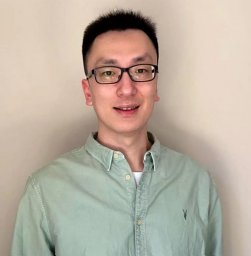 Bowen Zhang合作论文数Univ Liverpool, Dept Chem, Crown St, Liverpool L69 7ZD, Merseyside, England4
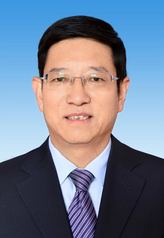 Xicun Wang (王喜存)合作论文数Northwest Normal University3
 Congcong Miao合作论文数3
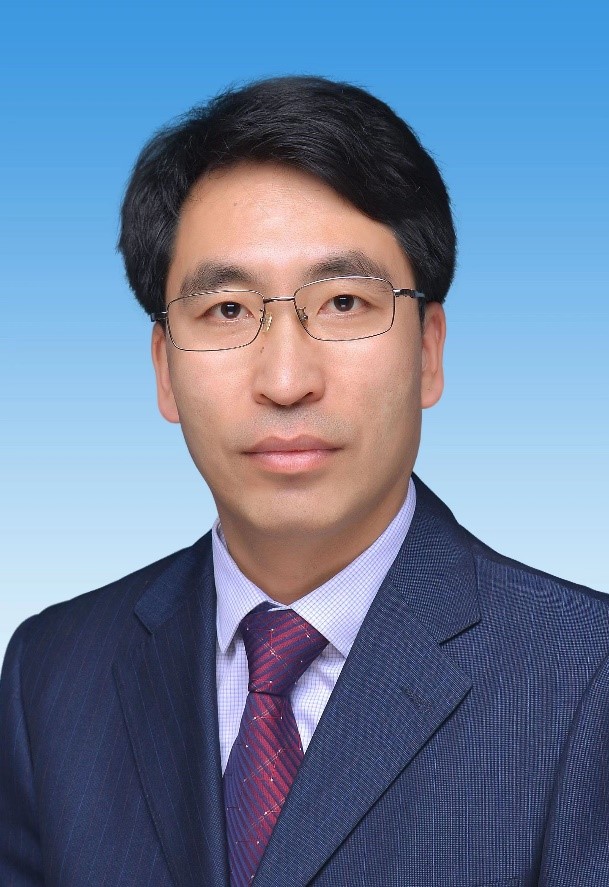 Zhengjun Quan (权正军)合作论文数Northwest Normal University3
 Jian Li (李健)合作论文数Northwest Normal University2Romy A. Dop合作论文数2
 Xiaolin Hu合作论文数2Amy M. Lunt合作论文数1Liu Haichao (刘海超)合作论文数1
 Wei Zhao合作论文数1Benedict Saunders合作论文数1Zhao Yang合作论文数1
 Daniel Lester合作论文数Electronic supplementary information (ESI) available. See DOI: 10.1039/d1py01432c1
 Ömer H Omar合作论文数Dept Chem, Univ Liverpool1Jing-Jiang Liu合作论文数1
 Samuel Petcher合作论文数Univ Liverpool, Dept Chem, Crown St, Liverpool L69 7ZD, Merseyside, England1Alex R Neale合作论文数Queens Univ Belfast, Sch Chem & Chem Engn, David Keir Bldg,Stranmillis Rd, Belfast BT9 5AG, Antrim, North Ireland1ShiQuan Niu (牛世全)合作论文数1
 Caren Freel Meyers合作论文数Department of Pharmacology and Molecular Sciences, School of Medicine, Johns Hopkins University1Xi Deng合作论文数1
 David Costa Milan合作论文数1
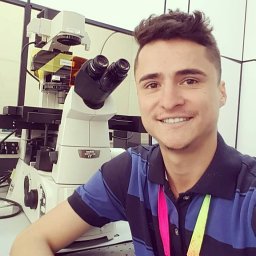 Cassio Lima合作论文数Center for Lasers and Applications, Instituto de Pesquisas Energéticas e Nucleares1
 Pengfei Song (宋鹏飞)合作论文数Northwest Normal University1
 Roy Goodacre合作论文数Institute of Systems, Molecular and Integrative Biology, Faculty of Health and Life Sciences, University of Liverpool1
 Daniel R. Neill合作论文数Department of Infection, Immunity and Inflammation, University of Leicester1
 Andrei Sarua合作论文数School of Physics, University of Bristol1
 Laurence Hardwick合作论文数Stephenson Insitute for Renewable Energy, Department of Chemistry, University of Liverpool1
 Martin Kuball合作论文数University of Bristol1




