The previously reported open‐cage fullerene derivative C60(O)2(OOtBu)4 with two carbonyl groups was converted into an orifice‐expanded new compound with four carbonyl groups, two of which reacted with one water molecule to form hydrated hemiketals. Further orifice expansion and reduction led to the open‐cage derivative C60(O)5(OH)4 with six carbonyl groups, one of which readily reacts with a water molecule to form a hydrated carbonyl group on the 18‐membered orifice. An analogous open‐cage derivative C60(O)5(OH)2Cl2 was also obtained with five carbonyl groups and a dichloromethylene moiety. Selective cleavage of the tert‐butylperoxo groups plays a key role in the cage‐opening processes.
Iodine-mediated ring enlargement of the fullerene mixed peroxide C60(O)3(OAc)(OOtBu)3 affords iodine-containing open-cage fullerene C60(O)4(OAc)(I)(OOtBu)2 with a 15-membered orifice. Further modifications under acidic or basic conditions give derivatives with expanded or reshaped orifices. The iodo substituent remains intact under various conditions including reduction and oxidation. Single-crystal X-ray structures of key derivatives confirmed the cage architectures. Water encapsulation was observed in one derivative. These transformations demonstrate the unique reactivity of fullerene peroxides and provide a route to functionalized open-cage fullerenes as potential molecular containers.
Chloride recognition systems usually employ H-bonding with OH, NH, and CH groups and/or planar electron deficient pi-molecules. The present work reports the first open-cage fullerene derivative (Buckybowl) capable of encapsulating chloride anion selectively. Single crystal X-ray diffraction analysis and theoretical calculations reveal that the encapsulated chloride forms strong H-bonding with the hydroxyl group directly above the orifice, in addition to strong interactions with the electron deficient spherical pi-system. All other common anions including fluoride, iodide, and di-and polyatomic anions cannot enter the cavity of this open-cage fullerene derivative except for the bromide anion. Competitive encapsulation experiments with equimolar chloride and bromide mixtures demonstrate a remarkable 94:6 selectivity ratio in favor of chloride. Reversible hydration/dehydration of a carbonyl group along the rim of the 17-membered orifice serves as a chemical switch regulating transitions between open and closed states. The encapsulated chloride/bromide anion can be released upon dehydration to form the open state, followed by interaction with a silver cation. Alternatively, structural modification through 1,2-benzenediamine-mediated orifice expansion provides another pathway for halide release.
2,6-Diisopropylaniline reacts with an open-cage fullerene derivative with a 11-membered orifice and forms an open-cage derivative containing one imino group on the rim of the expanded orifice. Further treatment with Lewis acids leads to open-cage fullerenes with an 18-membered orifice. Instead of the direct addition process observed before for less bulky anilines, an electron transfer process takes place in the initial step in the present reaction with bulky 2,6-diisopropylaniline. As a result, the chemo-selectivity is completely different affording the mono imino open-cage derivative selectively.
Fullerene (C70), a promising new photosensitizer, faces challenges in its biological applications due to its extreme hydrophobicity. In order to enhance the solubility of fullerene (C70) and facilitate its biological applications, we synthesized a novel hydroxyl-modified fullerene compound (C70(OH)8) with excellent photosensitizing properties. The introduction of hydroxyl groups allows it to self-assemble with DSPE-PEG(2000); therefore, we prepared it as a nanomedicine (C70(OH)8@NP). Under white light irradiation, C70(OH)8@NP stimulates the production of reactive oxygen species (ROS). Furthermore, results have demonstrated that a substantial amount of ROS can also be generated within cells, resulting in cell death. We found that C70(OH)8@NP can induce both apoptosis and pyroptosis in HeLa cells and identified its mechanism of cell death through the activation of caspase 3/gasdermin E pathways. Importantly, C70(OH)8@NP demonstrates significant anti-tumor activity in a nude mouse tumor-bearing model. These results highlight the potential of novel fullerene compounds as photodynamic therapy agents.
One amino group of o-phenylenediamine undergoes nucleophilic addition to the carbonyl moiety of an open-cage fullerene containing a 9-membered ring orifice. Subsequent intramolecular cyclization under mild conditions generated a novel open-cage fullerene derivative featuring an enlarged 12-membered orifice. The unreacted amino group in this o-phenylenediamine adduct could be selectively oxidized to form a nitroso group, which was subsequently reduced back to an amino group using hydrochloric acid. This reduction process simultaneously induced dichlorination on the adjacent aromatic ring.
The chemical reactivity of a 10-membered diketo open-cage fullerene C60(O)2(OOtBu)4 was investigated in an effort to reveal the unique reaction pattern of fullerene derivatives. Selective cleavage of peroxo O-O bonds was observed under thermolysis in the presence of iodine to form epoxy groups around the orifice. Opening of the epoxy groups leads to vicinal diol moiety, oxidation of which resulted in a new 10-membered keto-lactone open-cage fullerene derivative. Single crystal X-ray diffraction analysis showed that the size of the rectangular orifice is around 2.96x4.66 & Aring;.
Benzylamine selectively adds to one of the two carbonyl groups on the 9-membered orifice to form an N , O -aminal moiety. Subsequent oxidation and hydrogen atom transfer lead to a decarboxylation process and formation of a nor [59]fullerene derivative.
Most of the known open-cage fullerene derivatives contain carbonyl and other relatively inert groups on the rim of the orifice. It is difficult to rationally design further reactions and attach other functional groups on to these open-cage derivatives. In the present work, two molecules of difunctional 1,4-benzenediamine have been incorporated into the rim of an open-cage C-60 derivative through one amino group leaving the other amino group free for further functionalization. The difunctional 4-aminophenol reacted analogously to form an open-cage derivative with a free OH group each on the two phenyl rings. The amino and hydroxyl groups on the phenyl ring above the rim of the orifice showed similar reactivity as aniline and phenol. One of the carbonyl groups on the rim of the orifice could be selectively reduced by NaBH4 and P(OEt)(3). The reduction reactions were reversible and the reduced products could be readily converted back to the carbonyl precursor. Thus, this redox process acts as a tool to fine tune the size of the orifice for host-guest studies.
Three new open-cage fullerene derivatives with a 19-membered orifice have been prepared, two of which readily formed Pt complexes when treated with Pt(PPh3)4. Several related open-cage fullerene derivatives were also found to form very stable platinum complexes, which could be purified by chromatography on silica gel under ambient conditions. Single crystal X-ray diffraction data revealed that the Pt metal formed eta 2-type coordination pattern with a fullerene double bond on the rim of the orifice. Regio-selectivity of the platinum coordination is determined by the electron density of double bonds on the cage. The most electron deficient double bond shows the highest reactivity.
An open-cage [60]fullerene derivative was prepared through Malaprade oxidation of a vicinal triol moiety as the key step. Above the 17-membered orifice, there is one carboxyl group. Three ketone carbonyl groups and one lactone carbonyl group are located on the rim of the orifice. The carboxylic and carbonyl oxygen atoms around the orifice act as strong polydentate ligands for a sodium ion. These oxygen atoms also react with [Rh(CO)2Cl]2 to form various isomeric rhodium complexes with comparable stability. The fullerene C═C bond on the rim of the orifice forms a stable platinum complex when treated with Pt(PPh3)4. Single crystal X-ray diffraction data reveal that one of the carboxylic oxygen atoms above the orifice forms a H-bond with the water molecule trapped in the cage.
The insertion of ionic compounds into open-cage fullerenes is a challenging task due to the electropositive nature of the cavity. The present work reports the preparation of an open-cage C 60 derivative with a hydroxy group pointing towards the centre of the cavity, which can coordinate to a metal cation, thus acting as a bait/hook to trap the metal cation such as the lithium cation in neutral LiF and the beryllium cation in the cationic [BeF] + species. Other metal salts could not be inserted under similar conditions. The structure of MF in the cage was unambiguously determined by single-crystal X-ray diffraction. Owing to its tendency to undergo polycoordination, Li + monomer salts have not been isolated before, despite extensive research on Li bonds. The present results provide a unique example of a Li bond.
Open-cage fullerenes with a quinoxaline moiety on the rim of the orifice showed evident π-system extension effect on the NMR and UV-Vis spectra.
A 19-membered open-cage fullerene derivative was prepared from C 60 in 7 steps and 5.5 % yield through the peroxide-mediate pathway. There are four carbonyl groups, an ether oxygen and a quinoxaline moiety on the rim of the orifice. A chloride anion could be inserted into its cavity by heating with hydrochloric acid at 60 °C for 4 h. Encapsulation of fluoride, bromide and iodide anions was also achieved at slightly more forcing conditions, 90 °C for 14 h. Single crystal X-ray structures of the sodium salt of the chloride and the bromide encapsulated derivatives were obtained, which showed the halide anion in the center of the cavity and two sodium cations connecting two cages through coordination to the oxygen atoms on the rim of the orifices. The halide encapsulation ratio is quantitative in the isolated products.
An entry from the Cambridge Structural Database, the world’s repository for small molecule crystal structures. The entry contains experimental data from a crystal diffraction study. The deposited dataset for this entry is freely available from the CCDC and typically includes 3D coordinates, cell parameters, space group, experimental conditions and quality measures.
Further hydrolysis of an open-cage fullerene derivative with an epoxy moiety on the rim of the orifice led to the formation of a new open-cage fullerene with a 17-membered orifice and an amide group directly above the orifice. The water encapsulation ratio in the new open-cage compound reached 100 % as a result of heating with water at 80 degrees C. The amide group above the orifice completely blocks the opening and forms H-bond with the trapped water molecule. Single crystal X-ray structure shows that the bond length between the trapped water oxygen and the amide oxygen is 2.859 angstrom. The H-bond energy is about -3.83 kcal/mol as shown by theoretical calculation.
An open-cage fullerene derivative with a pyranone and a diiminopentanone moiety was prepared. Further reaction with aniline could convert the pyranone moiety into a pyrrole moiety through the pyridinone moiety as an intermediate. During the process, decarboxylation and dehydroxylation aromatization reactions also took place on the diiminopentanone moiety and the two adjacent hydroxyl groups, thus forming iminofuran or pyrrolone moiety on the rim of the open-cage fullerene. Protonation experiment showed that the imino nitrogen atom on the rim of the orifice is more basic than the pyrrole nitrogen atom. The lone pair of the pyrrole nitrogen is partially conjugated with the pi system of the fullerene cage as shown by single crystal X-ray structures.
The carbonyl group on the rim of open-cage C60 derivative was converted into an oxime group when treated with hydroxylamine. Nitrogen tetroxide could convert the oxime group into gem-dinitro groups, similar to the Ponzio reaction of classical organic compounds. Single crystal X-ray diffraction data shows that one of the nitro group is directly above the orifice acting as an effective stopper. Presence of the gem-dinitro groups also showed significant effect on the reactivity of other functional groups on the rim of the orifice.
Abstract To explore potential applications for open-cage fullerenes, we employed 4-((6-bromohexyl)oxy)aniline to react with an open-cage fullerene precursor which has an 11-membered orifice and prepared open-cage fullerenes with an 18-membered orifice. The bromo atom at the end of the hexyl chain in these open-cage compounds could be easily replaced by alkoxyl groups to further extend the linear chain. The results also show that the presence of the alkyl chain slightly changes the reactivity of the orifice-expansion reaction.
 Chunhui Huang (黄春辉)合作论文数College of Chemistry and Molecular Engineering, Peking University65
 Chuping Luo (罗楚平)合作论文数Huaiyin Institute of Technology26
 Dejian Zhou合作论文数School of Chemistry, Faculty of Engineering and Physical Sciences, University of Leeds24
 Zuo Xiao (肖作)合作论文数University of Chinese Academy of Sciences;National Center for Nanoscience and Technology, Chinese Academy of Sciences23
 Yanbang Li合作论文数21
 Jie Su合作论文数21Xu Liang合作论文数15
 Yuliang Li (李玉良)合作论文数Institute of Chemistry, Chinese Academy of Sciences;University of Chinese Academy of Sciences15
 Yuming Yu合作论文数14Liang Sisi合作论文数14
 Ning Lou合作论文数14
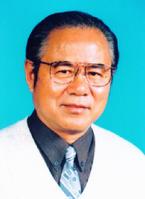 Dazhi Yang (杨大智)合作论文数Dalian University of Technology14
 Yanyi Huang (黄岩谊)合作论文数College of Engineering, Peking University;College of Chemistry and Molecular Engineering, Peking University;Beijing Advanced Innovation Center for Genomics, Peking University13Shi-Wei Zhang合作论文数12Zhenshan Jia合作论文数Institute of Chemistry, Chinese Academy of Science12Rui Gao合作论文数11
 Wen Zhang (张雯)合作论文数福建师范大学化学与材料学院11
 Xinsheng Zhao (赵新生)合作论文数College of Chemistry and Molecular Engineering, Peking University;Beijing National Laboratory for Molecular Sciences, Peking University11Nana Xin合作论文数10
 Jin Zhai (翟锦)合作论文数School of Chemistry, Beihang University10
 Daoben Zhu (朱道本)合作论文数Institute of Chemistry, Chinese Academy of Sciences10
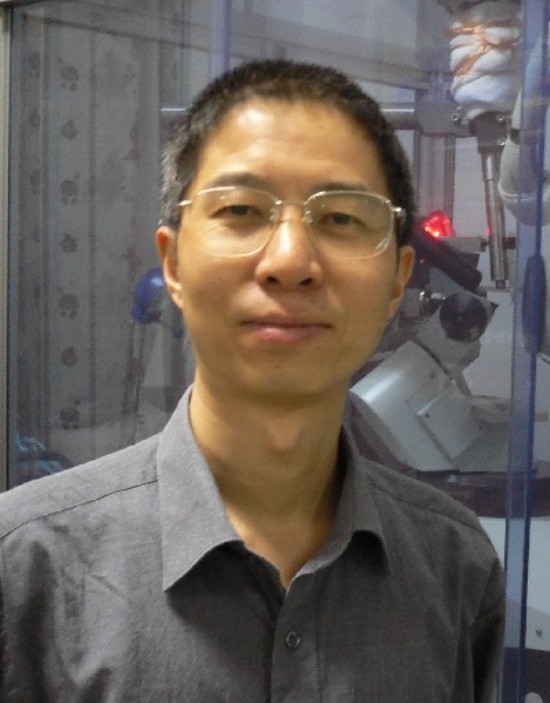 Zheming Wang (王哲明)合作论文数College of Chemistry and Molecular Engineering, Peking University10
 Tianxin Wei (韦天新)合作论文数School of Chemistry and Chemical Engineering, Beijing Institute of Technology10
 Fudong Wang合作论文数Dalian Institute of Chemical Physics Chinese Academy of Sciences, Chinese Academy of Sciences10Mj Lu合作论文数9Jq Pan合作论文数9Dan Xu合作论文数9
 Gang Zhang (张纲)合作论文数College of Chemical Engineering, Nanjing Forestry University9Nanqiang Li合作论文数9Haisong Tan合作论文数9Xiaobing Yang合作论文数9Jiayao Yao合作论文数9Zhang Gaihong合作论文数8
 Qianyan Zhang (张前炎)合作论文数College of Chemistry and Chemical Engineering, Xiamen University8Zhongping Jiang合作论文数7Zeyu Liu合作论文数7
 Yuren Shi (石玉仁)合作论文数7
 Gu Yuan (袁谷)合作论文数College of Chemistry and Molecular Engineering,Peking University7
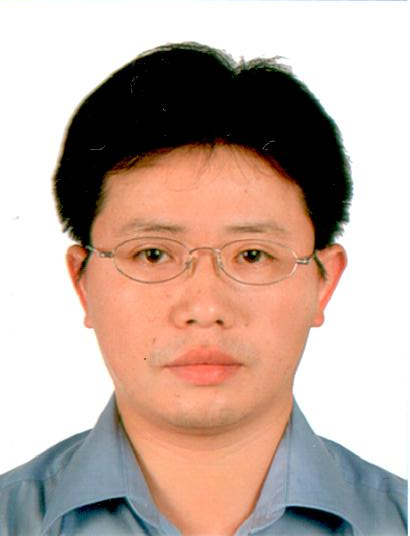 Huibiao Liu (刘辉彪)合作论文数University of Chinese Academy of Sciences;Laboratory of Organic Solid, Institute of Chemistry, Chinese Academy of Sciences7
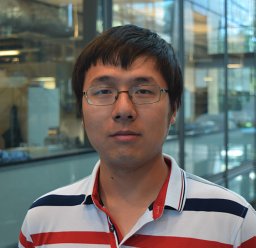 Dian Wang合作论文数College of Chemistry and Molecular Engineering, Peking University7Deng-Guo Wu合作论文数7
 Yi Qiu (邱忆)合作论文数Analytical Instrumentation Center, College of Chemistry and Molecular Engineering, Peking University6XiangQing Hu (胡向青)合作论文数6
 Zhen Liu (刘臻)合作论文数National Institute of Biological Sciences, Beijing;Tsinghua Institute of Multidisciplinary Biomedical Research, Tsinghua University6Shuming Liu合作论文数6
 Anchi Yu (于安池)合作论文数Department of Chemistry, Renmin University of China6
 Shihua Huang (黄仕华)合作论文数College of Physics and Electronic Information Engineering, Zhejiang Normal University6Sheng Zhang合作论文数6




