This paper addresses the challenge of developing a realistic urban-driving simulator to accurately model agent behaviors, a crucial component for self-driving car development. Most previous simulators focus on the plausibility of sensor data synthesis, whereas the plausibility of driving behaviors is poorly explored. To tackle this problem, we propose a hierarchical architecture, which comprises (i) a high-level intention simulation summarizing driving scenarios and (ii) a low-level policy trained by reinforcement algorithms to refine plans. Unlike existing simulators, our approach captures diverse behaviors, even sub-optimal ones, vital for robust policy training and evaluation. We also highlight the importance of interactive simulations over static scenarios for realistic policy development. Extensive experiments demonstrate that our approach significantly improves long-term behavior prediction and closed-loop simulation, enhancing the realism and diversity of urban-driving simulations. The videos of this work are available in our project page: href{https://sites.google.com/ucsd.edu/h-sim/home}{https:/ /sites.google.com/ucsd.edu/h-sim/home}.
Deep learning models for medical image segmentation often struggle with task-specific characteristics, limiting their generalization to unseen tasks with new anatomies, labels, or modalities. Retraining or fine-tuning these models requires substantial human effort and computational resources. To address this, in-context learning (ICL) has emerged as a promising paradigm, enabling query image segmentation by conditioning on example image-mask pairs provided as prompts. Unlike previous approaches that rely on implicit modeling or non-end-to-end pipelines, we redefine the core interaction mechanism in ICL as an explicit retrieval process, termed E-ICL, benefiting from the emergence of vision foundation models (VFMs). E-ICL captures dense correspondences between queries and prompts at minimal learning cost and leverages them to dynamically weight multi-class prompt masks. Built upon E-ICL, we propose EICSeg, the first end-to-end ICL framework that integrates complementary VFMs for universal medical image segmentation. Specifically, we introduce a lightweight SD-Adapter to bridge the distinct functionalities of the VFMs, enabling more accurate segmentation predictions. To fully exploit the potential of EICSeg, we further design a scalable self-prompt training strategy and an adaptive token-to-image prompt selection mechanism, facilitating both efficient training and inference. EICSeg is trained on 47 datasets covering diverse modalities and segmentation targets. Experiments on nine unseen datasets demonstrate its strong few-shot generalization ability, achieving an average Dice score of 74.0%, outperforming existing in-context and few-shot methods by 4.5%, and reducing the gap to task-specific models to 10.8%. Even with a single prompt, EICSeg achieves a competitive average Dice score of 60.1%. Notably, it performs automatic segmentation without manual prompt engineering, delivering results comparable to interactive models while requiring minimal labeled data. Source code will be available at https://github.com/ zerone-fg/EICSeg.
Granular materials (GMs) are formed by a collection of particles. Even if their visual representation is straightforward, it can be seriously affected in the visually constrained environment. Based on frequency features observed in force signals, this paper proposes a non-visual classifier, GmClass, using the force feedback in the robot-granules interaction. Specifically, we transform the force sequences into the frequency domain and integrate them with high-dimensional textual information into a two-branch architecture for multimodal supervised contrastive learning (MSCL). This method achieves an 84.10% classification accuracy, surpassing traditional supervised learning by 10% and outperforming supervised contrastive learning by more than 40%, demonstrating the positive impact of adding text modality on classification, and when applied to a larger dataset, it attains an even higher 85.28% accuracy, further validating its effectiveness. Also, we demonstrate the performance of our approach in handling unseen particles and the generalization capability for varying data collection parameters.
Despite the recent success of Neural Radiance Field (NeRF), it is still challenging to render large-scale driving scenes with long trajectories, particularly when the rendering quality and efficiency are in high demand. Existing methods for such scenes usually involve with spatial warping, geometric supervision from zero-shot normal or depth estimation, or scene division strategies, where the synthesized views are often blurry or fail to meet the requirement of efficient rendering. To address the above challenges, this paper presents a novel framework that learns a density space from the scenes to guide the construction of a point-based renderer, dubbed as DGNR (Density-Guided Neural Rendering). In DGNR, geometric priors are no longer needed, which can be intrinsically learned from the density space through volumetric rendering. Specifically, we make use of a differentiable renderer to synthesize images from the neural density features obtained from the learned density space. A density-based fusion module and geometric regularization are proposed to optimize the density space. By conducting experiments on a widely used autonomous driving dataset, we have validated the effectiveness of DGNR in synthesizing photorealistic driving scenes and achieving real-time capable rendering.
3D object detection is essential in autonomous driving, providing vital information about moving objects and obstacles. Detecting objects in distant regions with only a few LiDAR points is still a challenge, and numerous strategies have been developed to address point cloud sparsity through densification. This paper presents a joint completion and detection framework that improves the detection feature in sparse areas while maintaining costs unchanged. Specifically, we propose TransBridge, a novel transformer-based up-sampling block that fuses the features from the detection and completion networks. The detection network can benefit from acquiring implicit completion features derived from the completion network. Additionally, we design the Dynamic-Static Reconstruction (DSRecon) module to produce dense LiDAR data for the completion network, meeting the requirement for dense point cloud ground truth. Furthermore, we employ the transformer mechanism to establish connections between channels and spatial relations, resulting in a high-resolution feature map used for completion purposes. Extensive experiments on the nuScenes and Waymo datasets demonstrate the effectiveness of the proposed framework. The results show that our framework consistently improves end-to-end 3D object detection, with the mean average precision (mAP) ranging from 0.7 to 1.5 across multiple methods, indicating its generalization ability. For the two-stage detection framework, it also boosts the mAP up to 5.78 points.
Granular materials (GMs) are ubiquitous in daily life. Understanding their properties is also important, especially in agriculture and industry. However, existing works require dedicated measurement equipment and also need large human efforts to handle a large number of particles. In this paper, we introduce a method for estimating the relative values of particle size and density from the video of the interaction with GMs. It is trained on a visuo-haptic learning framework inspired by a contact model, which reveals the strong correlation between GM properties and the visual-haptic data during the probe-dragging in the GMs. After training, the network can map the visual modality well to the haptic signal and implicitly characterize the relative distribution of particle properties in its latent embeddings, as interpreted in that contact model. Therefore, we can analyze GM properties using the trained encoder, and only visual information is needed without extra sensory modalities and human efforts for labeling. The presented GM property estimator has been extensively validated via comparison and ablation experiments. The generalization capability has also been evaluated and a real-world application on the beach is also demonstrated. Experiment videos are available at https://sites.google.com/view/gmwork/vhlearning .
In this paper, we propose NeuS-PIR, a novel approach for learning relightable neural surfaces using pre-integrated rendering from multiview image observations. Unlike traditional methods based on NeRFs or discrete mesh representations, our approach employs an implicit neural surface representation to reconstruct high-quality geometry. This representation enables the factorization of the radiance field into two components: a spatially varying material field and an all-frequency lighting model. By jointly optimizing this factorization with a differentiable pre-integrated rendering framework, and material encoding regularization, our method effectively addresses the ambiguity in geometry reconstruction, leading to improved disentanglement and refinement of scene properties. Furthermore, we introduce a technique to distill indirect illumination fields, capturing complex lighting effects such as interreflections. As a result, NeuS-PIR enables advanced applications like relighting, which can be seamlessly integrated into modern graphics engines. Extensive qualitative and quantitative experiments on both synthetic and real datasets demonstrate that NeuS-PIR outperforms existing methods across various tasks. Source code is available at https://github.com/Sheldonmao/NeuSPIR.
Recently, learning-based stereo matching methods have achieved great improvement in public benchmarks, where soft argmin and smooth L1 loss play core contributions to its success. However, in unsupervised domain adaptation scenarios, we observe that these two operations often yield multimodal disparity probability distributions in target domains, resulting in degraded generalization. In this paper, we propose a novel approach, Constrain Multi-modal Distribution (CMD), to address this issue. Specifically, we introduce uncertainty-regularized minimization and anisotropic soft argmin to encourage the network to produce predominantly unimodal disparity distributions in the target domain, thereby improving prediction accuracy. Experimentally, we apply the proposed method to multiple representative stereo-matching networks and conduct domain adaptation from synthetic data to unlabeled real-world scenes. Results consistently demonstrate improved generalization in both top-performing and domain-adaptable stereo-matching models. The code for CMD will be available at: https://github.com/gallenszl/CMD.
The proximity perception of objects in granular materials is significant, especially for applications like minesweeping. However, due to particles' opacity and complex properties, existing proximity sensors suffer from high costs from sophisticated hardware and high user-cost from unintuitive results. In this paper, we propose a simple yet effective proximity sensing system for underground stuff based on the haptic feedback of the sensor-granules interaction. We study and employ the unique characteristic of particles – failure wedge zone, and combine the machine learning method – Gaussian process regression, to identify the force signal changes induced by the proximity of objects, so as to achieve near-field perception. Furthermore, we design a novel trajectory to control the probe searching in granules for a wide range of perception. Also, our proximity sensing system can adaptively determine optimal parameters for robustness operation in different particles. Experiments demonstrate our system can perceive underground objects over 0.5 to 7 cm in advance among various materials.
Generating safety-critical scenarios is essential for testing and verifying the safety of autonomous vehicles. Traditional optimization techniques suffer from the curse of dimensionality and limit the search space to fixed parameter spaces. To address these challenges, we propose a deep reinforcement learning approach that generates scenarios by sequential editing, such as adding new agents or modifying the trajectories of the existing agents. Our framework employs a reward function consisting of both risk and plausibility objectives. The plausibility objective leverages generative models, such as a variational autoencoder, to learn the likelihood of the generated parameters from the training datasets; It penalizes the generation of unlikely scenarios. Our approach overcomes the dimensionality challenge and explores a wide range of safety-critical scenarios. Our evaluation demonstrates that the proposed method generates safety-critical scenarios of higher quality compared with previous approaches.
Excavators are crucial for diverse tasks such as construction and mining, while autonomous excavator systems enhance safety and efficiency, address labor shortages, and improve human working conditions. Different from the existing modularized approaches, this paper introduces ExACT, an end-to-end autonomous excavator system that processes raw LiDAR, camera data, and joint positions to control excavator valves directly. Utilizing the Action Chunking with Transformers (ACT) architecture, ExACT employs imitation learning to take observations from multi-modal sensors as inputs and generate actionable sequences. In our experiment, we build a simulator based on the captured real-world data to model the relations between excavator valve states and joint velocities. With a few human-operated demonstration data trajectories, ExACT demonstrates the capability of completing different excavation tasks, including reaching, digging and dumping through imitation learning in validations with the simulator. To the best of our knowledge, ExACT represents the first instance towards building an end-to-end autonomous excavator system via imitation learning methods with a minimal set of human demonstrations. The video about this work can be accessed at https://youtu.be/NmzR_Rf-aEk.
Image-to-3D diffusion models have significantly advanced 3D content generation. However, existing methods often struggle to disentangle material and illumination from coupled appearance, as they primarily focus on modeling geometry and appearance. This paper introduces a novel approach to generate material-aware 3D models from sparse-view images using generative models and efficient pre-integrated rendering. The output of our method is a relightable model that independently models geometry, material, and lighting, enabling downstream tasks to manipulate these components separately. To fully leverage information from limited sparse views, we propose a mixed supervision framework that simultaneously exploits view-consistency via captured views and diffusion prior via generating views. Additionally, a view selection mechanism is proposed to mitigate the degenerated diffusion prior. We adapt an efficient yet powerful pre-integrated rendering pipeline to factorize the scene into a differentiable environment illumination, a spatially varying material field, and an implicit SDF field. Our experiments on both real-world and synthetic datasets demonstrate the effectiveness of our approach in decomposing each component as well as manipulating the illumination. Source codes are available at https://github.com/Sheldonmao/MatSparse3D.
Over the past few years, there has been remarkable progress in research on 3D point clouds and their use in autonomous driving scenarios has become widespread. However, deep learning methods heavily rely on annotated data and often face domain generalization issues. Unlike 2D images whose domains usually pertain to the texture information present in them, the features derived from a 3D point cloud are affected by the distribution of the points. The lack of a 3D domain adaptation benchmark leads to the common practice of training a model on one benchmark (e.g. Waymo) and then assessing it on another dataset (e.g. KITTI). This setting results in two distinct domain gaps: scenarios and sensors, making it difficult to analyze and evaluate the method accurately. To tackle this problem, this paper presents LiDAR Dataset with Cross Sensors (LiDAR-CS Dataset), which contains large-scale annotated LiDAR point cloud under six groups of different sensors but with the same corresponding scenarios, captured from hybrid realistic LiDAR simulator. To our knowledge, LiDAR-CS Dataset is the first dataset that addresses the sensor-related gaps in the domain of 3D object detection in real traffic. Furthermore, we evaluate and analyze the performance using various baseline detectors and demonstrated its potential applications. Project page: https://opendriving.github.io/lidar-cs.
Reinforcement learning (RL) has demonstrated its capability in solving various tasks but is notorious for its low sample efficiency. In this paper, we propose RLingua, a framework that can leverage the internal knowledge of large language models (LLMs) to reduce the sample complexity of RL in robotic manipulations. To this end, we first present how to extract the prior knowledge of LLMs by prompt engineering so that a preliminary rule-based robot controller for a specific task can be generated. Despite being imperfect, the LLM-generated robot controller is utilized to produce action samples during rollouts with a decaying probability, thereby improving RL's sample efficiency. We employ the actor-critic framework and modify the actor loss to regularize the policy learning towards the LLM-generated controller. RLingua also provides a novel method of improving the imperfect LLM-generated robot controllers by RL. We demonstrated that RLingua can significantly reduce the sample complexity of TD3 in the robot tasks of panda_gym and achieve high success rates in sparsely rewarded robot tasks in RLBench, where the standard TD3 fails. Additionally, We validated RLingua's effectiveness in real-world robot experiments through Sim2Real, demonstrating that the learned policies are effectively transferable to real robot tasks. Further details and videos about our work are available at our project website https://rlingua.github.io.
Simultaneous Localization and Mapping (SLAM) is a fundamental task in robotics, driving numerous applications such as autonomous driving and virtual reality. Recent progress on neural implicit SLAM has shown encouraging and impressive results. However, the robustness of neural SLAM, particularly in challenging or data-limited situations, remains an unresolved issue. This paper presents HERO-SLAM, a Hybrid Enhanced Robust Optimization method for neural SLAM, which combines the benefits of neural implicit field and feature-metric optimization. This hybrid method optimizes a multi-resolution implicit field and enhances robustness in challenging environments with sudden viewpoint changes or sparse data collection. Our comprehensive experimental results on benchmarking datasets validate the effectiveness of our hybrid approach, demonstrating its superior performance over existing implicit field-based methods in challenging scenarios. HERO-SLAM provides a new pathway to enhance the stability, performance, and applicability of neural SLAM in real-world scenarios. Project page: https://hero-slam.github.io.
The rapid growth of 3D Gaussian Splatting (3DGS) has revolutionized neural rendering, enabling real-time production of high-quality renderings. However, the previous 3DGS-based methods have limitations in urban scenes due to reliance on initial Structure-from-Motion(SfM) points and difficulties in rendering distant, sky and low-texture areas. To overcome these challenges, we propose a hybrid optimization method named HO-Gaussian, which combines a grid-based volume with the 3DGS pipeline. HO-Gaussian eliminates the dependency on SfM point initialization, allowing for rendering of urban scenes, and incorporates the Point Densitification to enhance rendering quality in problematic regions during training. Furthermore, we introduce Gaussian Direction Encoding as an alternative for spherical harmonics in the rendering pipeline, which enables view-dependent color representation. To account for multi-camera systems, we introduce neural warping to enhance object consistency across different cameras. Experimental results on widely used autonomous driving datasets demonstrate that HO-Gaussian achieves photo-realistic rendering in real-time on multi-camera urban datasets.
Temporal dependencies are essential in 3D human pose estimation to mitigate depth ambiguity. Previous methods typically use a fixed-length sliding window to capture these dependencies. However, they treat past and future frames equally, ignoring the fact that relying on too many future frames increases the inference latency. In this paper, we present a 3D human pose estimation model based on Retentive Networks (RetNet) that incorporates temporal information by utilizing a large number of past frames and a few future frames. The Non-Causal RetNet (NC-RetNet) is designed to allow the originally causal RetNet to be aware of future information. Additionally, we propose a knowledge transfer strategy, i.e., training the model with a larger chunk size and using a smaller chunk size during inference, to reduce latency while maintaining comparable accuracy. Extensive experiments have been conducted on the Human3.6M and MPI-INF-3DHP datasets, and the results demonstrate that our method achieves state-of-the-art performance. Code and models are available at https://github.com/Kelly510/PoseRetNet.
In this work, we introduce the Virtual In-Hand Eye Transformer (VIHE), a novel method designed to enhance 3D manipulation capabilities through action-aware view rendering. VIHE autoregressively refines actions in multiple stages by conditioning on rendered views posed from action predictions in the earlier stages. These virtual in-hand views provide a strong inductive bias for effectively recognizing the correct pose for the hand, especially for challenging high-precision tasks such as peg insertion. On 18 manipulation tasks in RLBench simulated environments, VIHE achieves a new state-of-the-art, with a 12% absolute improvement, increasing from 65% to 77% over the existing state-of-the-art model using 100 demonstrations per task. In real-world scenarios, VIHE can learn manipulation tasks with just a handful of demonstrations, highlighting its practical utility. Videos and code implementation can be found at our project site: https://vihe-3d.github.io.
Despite significant progress in robotic systems for operation within human-centric environments, existing models still heavily rely on explicit human commands to identify and manipulate specific objects. This limits their effectiveness in environments where understanding and acting on implicit human intentions are crucial. In this study, we introduce a novel task: reasoning grasping, where robots need to generate grasp poses based on indirect verbal instructions or intentions. To accomplish this, we propose an end-to-end reasoning grasping model that integrates a multimodal Large Language Model (LLM) with a vision-based robotic grasping framework. In addition, we present the first reasoning grasping benchmark dataset generated from the GraspNet-1 billion, incorporating implicit instructions for object-level and part-level grasping. Our results show that directly integrating CLIP or LLaVA with the grasp detection model performs poorly on the challenging reasoning grasping tasks, while our proposed model demonstrates significantly enhanced performance both in the reasoning grasping benchmark and real-world experiments.
Neural Radiance Fields (NeRFs) have become a widely-applied scene representation technique in recent years, showing advantages for robot navigation and manipulation tasks. To further advance the utility of NeRFs for robotics, we propose a transformer-based framework, NeRF-Loc, to extract 3D bounding boxes of objects in NeRF scenes. NeRF-Loc takes a pre-trained NeRF model and camera view as input and produces labeled, oriented 3D bounding boxes of objects as output. Using current NeRF training tools, a robot can train a NeRF environment model in real-time and, using our algorithm, identify 3D bounding boxes of objects of interest within the NeRF for downstream navigation or manipulation tasks. Concretely, we design a pair of paralleled transformer encoder branches, namely the coarse stream and the fine stream, to encode both the context and details of target objects. The encoded features are then fused together with attention layers to alleviate ambiguities for accurate object localization. We have compared our method with conventional RGB(-D) based methods that take rendered RGB images and depths from NeRFs as inputs. Our method is better than the baselines.
 Dinesh Manocha合作论文数Department of Computer Science, University of Maryland33
 Xibin Song合作论文数XR Vision Lab, Tencent23
 Dingfu Zhou (周定富)合作论文数Baidu Inc20
 Jia Pan合作论文数Department of Computer Science, School of Computing and Data Science, The University of Hong Kong18
 Jin Fang合作论文数Inceptio Technology14
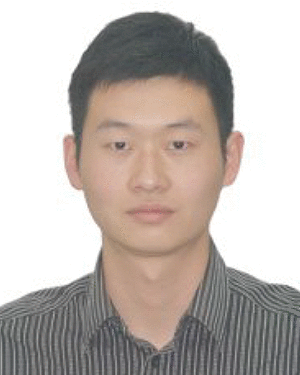 Feixiang Lu合作论文数Baidu Research13
 Yuchao Dai (戴玉超)合作论文数School of Electronics and Information, Northwestern Polytechnical University10
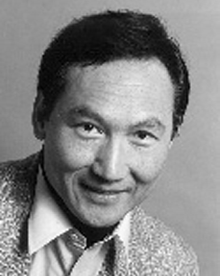 Chenming Wu合作论文数9
 Young Kim合作论文数Medtronic9
 Shiyu Jin合作论文数Univ Calif Berkeley, Dept Mech Engn, Berkeley, CA 94720 USA8Zhelun Shen合作论文数8
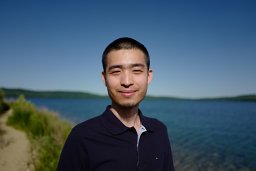 Liyang Wang (王励扬)合作论文数Robot & Autonomous Driving Lab, Baidu USA8
 Bin Zhou (周彬)合作论文数School of Computer Science and Engineering, Beihang University8
 Ruigang Yang (杨睿刚)合作论文数Global Institute of Future Technology, Shanghai Jiao Tong University8Zongdai Liu合作论文数Robotics and Autonomous Driving Laboratory, Baidu Research7Zhixian Ye合作论文数6Hui Miao合作论文数6
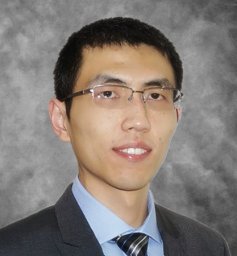 Ruitao Song合作论文数Aptiv Corporation6
 Jinxin Zhao合作论文数6
 Lina Liu合作论文数Advanced Perception on Robotics and Intelligent Learning Laboratory, Institute of Cyber-Systems and Control, College of Control Science and Engineering, Zhejiang University6Zeqing Zhang合作论文数Department of Computer Science, The University of Hong Kong5Zhenpeng He合作论文数ShanghaiTech University5Yajue Yang合作论文数5Miao Liao (廖苗)合作论文数5
 Pinxin Long合作论文数Baidu Apollo5Yutian Lei合作论文数4
 Tianrui Guan合作论文数Waymo;University of Maryland4Lingfeng Qian合作论文数4
 Sibo Zhang合作论文数Baidu Research4
 Junbo Yin (阴俊博)合作论文数King Abdullah University of Science and Technology4
 Yong Liu (刘勇)合作论文数Institute of Cyber-Systems and Control, College of Control Science and Engineering, Zhejiang University;Advanced Perception on Robotics and Intelligent Learning Lab, Zhejiang University4
 Hongdong Li (李宏东)合作论文数School of Computing, College of Systems & Society, Australian National University4
 Haolan Liu合作论文数Amazon3Ruixing Jia合作论文数3
 Zhibo Rao (饶智博)合作论文数Nanchang Hangkong University;Northwestern Polytechnical University3
 Ruihua Han合作论文数Department of Computer Science, The University of Hong Kong3
 Jiadai Sun合作论文数Northwestern Polytech Univ, Sch Elect & Informat, Xian 710129, Peoples R China3
 Jishen Zhao合作论文数Computer Science and Engineering Department, Jacobs School of Engineering, University of California, San Diego3
 Jianbing Shen (沈建冰)合作论文数Faculty of Science and Technology, University of Macau;Centre for Artificial Intelligence and Robotics, University of Macau3
 Wei Li (李威)合作论文数School of Mechanical and Electrical Engineering, China University of Mining and Technology3
 Cheng-Zhong Xu (须成忠)合作论文数Faculty of Science and Technology, University of Macau3
 Gokul Varadhan合作论文数Google3
 Mengmeng Wang (王蒙蒙)合作论文数College of Computer Science & Technology, Zhejiang University of Technology3Jinxuan Xu合作论文数2
 Zhuopeng Li合作论文数College of Computer Science, Zhejiang University;College of Software, Zhejiang University2
 Dayan Wu (吴大衍)合作论文数Institute of Information Engineering, Chinese Academy of Sciences;University of Chinese Academy of Sciences2
 Jean-Claude Latombe合作论文数Computer Science Department, School of Engineering, Stanford University;Department of Applied Informatics and Multimedia, Asia University Taichung2OSung Kwon合作论文数2
 Xiaoyang Lyu (吕晓阳)合作论文数Computer Vision and Machine Intelligence Lab, University of Hong Kong2




