Despite research and outreach efforts by ecologists and environmental scientists (EES), environmental crises continue to escalate. As a diverse group of concerned EES, we perceived a lack of clear guidance to articulate individual actions to improve sustainability. To address that gap, we propose 'The Conguill & iacute;o Statement on the values and responsibilities of ecologists', a document summarizing values and responsibilities for EES in their different roles. Scientific and professional societies are fundamental institutions for the development and sharing of such guidelines across the many roles that EES take on. With the ongoing convergence of several crises, EES societies must take the lead to develop and disseminate contextualized and appropriate guidelines to their members. The 'Conguill & iacute;o Statement' can stimulate that debate. We call on EES and their professional societies to take the lead on the effort to debate, adapt and adopt guidelines to inform EES practice towards a more sustainable future.
Following large-scale threatening events, a key challenge is to rapidly establish which species have been most affected and are in need of urgent conservation. For data-poor taxa, such assessments are challenging. In Australia, invertebrates represent over 90% of faunal diversity and are critical for ecosystem function, yet most are undescribed, and, of the described, most are poorly known. Thus, it is important to have a way to estimate susceptibility to major disturbance of data-deficient taxa. We developed a novel trait-based method for assessing the impact of a major wildfire on invertebrates. We applied it to 1220 species that showed high distributional overlap with the 2019-2020 Australian megafires. We estimated susceptibility based on the microhabitat species occupy, their life-history and ecological traits, and mechanisms that account for key data uncertainties (number of usable occurrence records, availability of traits data, and recency of taxonomic work). We found 748 species likely to be of potential conservation concern following the megafires; 169, 579, and 454 were highly, moderately, and mildly threatened by a major fire, respectively. Most species (867) were associated with poor or very poor data quality. Of the 867 poorly known species, 97 were most at risk from a major fire. Our approach is generalizable to other data-deficient taxa and to major disturbance events globally and can be used to improve representation of poorly known species in conservation assessments and threat mitigation decisions. If the uncertainties and knowledge gaps we identified are addressed, it is likely risk prediction could be improved.
ABSTRACT The dual crises of climate change and biodiversity loss continue despite overwhelming scientific evidence of their impacts on human well‐being and planetary health. Those of us working in the fields of conservation and ecology are acutely aware that current efforts to avert these crises are profoundly inadequate. But how are we, as professionals working in these fields, responding? We engage in many different activities from generating knowledge and educating students to communicating research findings. Some of us work to implement science‐based evidence and advocate for policy change. A few of us engage in activism. In this perspective, we explore how to increase our impact by re‐prioritizing how we spend our time on various activities and focus our efforts on actions most likely to lead to positive change. We offer an exercise to self‐reflect and identify pathways to increase our impact. The escalating crises demand an urgent re‐think from us all in how we currently spend our time.
1. Questionable research practices (QRPs) bias the published literature towards apparently strong and conclusive results, resulting in low rates of replicability. Recent metaresearch reveals that ecology is not immune to the ‘reproducibility crisis’ seen in other disciplines, due to similar rates of QRPs and a lack of transparency in published research. However, metaresearch to date focuses on hypothesis-testing research and treats data-dependent analytic decisions as inherently questionable. This is not a good fit for ecology and related fields that conduct exploratory or predictive research using complex models, where data-dependent decisions are often necessary and legitimate aspects of the modelling process. 2. To aid in understanding why and how frequently QRPs occur, and how severe the consequences might be, we develop a conceptual framework describing QRPs in ecological modelling, distinguishing questionable from legitimate data-dependent decisions. we present a typology of QRPs organised by decision-making mechanism and target, reframing QRPs in modelling as practices that inflate perceived model credibility, rather than as producing false-positive statistical results. 3. We identified six QRP classes that may occur at various points in the modelling process: selective reporting, S-hacking (manipulating performance metrics), model fishing, sample curation, HARKing and overhyping. These practices threaten the reliability and reproducibility of model-based research by artificially inflating the apparent credibility of models. 4. We aim to raise awareness among modellers about different types of QRPs and how they might emerge in ecological modelling. We offer strategies to mitigate QRP risks, while preserving legitimate adaptive decision-making characteristic of ecological modelling.
Growing commitments to environmental sustainability and nature conservation by industry, government and communities globally have led to a pressing need for consistent methods to characterise and quantify outcomes of land use and ecological restoration. State-and-transition models (STMs) are widely used to describe and communicate knowledge about ecosystem dynamics and are increasingly applied in such contexts. However, STMs are usually tailored to specific ecosystems and questions, resulting in models that vary widely in character and representation. To support comparability among STMs and facilitate their application to large-scale environmental initiatives, we collaborated with over 100 ecological scientists, restoration practitioners, and environmental program managers to design a set of generic STM templates and guides. These have already assisted the development of 28 STMs for Australia’s Nature Repair Market and other land management programs, enabling iterative testing and improvement. Our templates recognise common patterns of ecosystem modification and restoration across terrestrial ecosystems. Three primary templates distinguish an ecologically defining layer from complementary layers, including overstorey versus understorey in forests and woodlands, shrub versus tree or ground layers in shrublands, and ground versus woody layers in grasslands. The templates recognise potential for independent modification or recovery gradients in these layers, leading to a matrix of 16 core ecosystem states, augmented by a set of intensive land-use states. Four secondary templates identify potential finer distinctions within ecological layers. Supporting guides (a) propose a set of attributes for describing states, (b) specify ranges for ecosystem condition scores to guide user allocation of states to the template, and (c) support identification of plausible transitions between states. Our templates and guides advance state-and-transition modelling by establishing a consistent yet flexible foundation for applying STMs in environmental management programs, environmental accounting, and on-ground ecosystem management. They achieve this by establishing a common framing of ecosystem states linked to ecosystem condition, and aligning with globally-established frameworks. While developed in an Australian context, the templates are adaptable to any terrestrial ecosystem where a historic, climate-adapted or idealised reference state is identifiable. We propose further development to support Indigenous engagement, systematic integration of climate change, and representation of landscape and fauna dynamics.
This paper reports two approaches to forecasting replicability for a corpus of 3000 published social science papers, using large-scale human assessments. Replication Markets used incentivized surveys and prediction markets where participants traded assets linked to replication outcomes and market prices were interpreted as replication predictions. The repliCATS project used a structured group deliberation protocol, including interactive discussion, and mathematically aggregated forecasts to generate replication predictions. Accuracy for both approaches was validated against a subset of (n=37) independent, high-power replication studies. The predictive accuracy (median [range]) achieved for AUC by Replication Markets was 0.76 [0.72-0.82], and 0.76 [0.68-0.81] by repliCATS. Replication Markets achieved a classification accuracy of 73% [68-76%] and repliCATS achieved 68% [59-78%]. These results place the performance of both teams within the accuracy range achieved in prior replication forecasting studies. We conclude that informative forecasts can be elicited by both methods, but there are trade-offs between scale and accuracy.
Wildfire has shaped many ecosystems across Earth, and humans have in turn shaped fire and its interactions within a range of socio-ecological systems. Climate change is changing fire regimes, and recent major and disruptive fire seasons around the globe have indicated a need to reimagine and redefine how fire research is conducted. One potential path forward is increased promotion and development of interdisciplinary approaches to fire research, yet these are hindered by a lack of a common language and 'framing' of the 'problem'. In this paper, we seek to advance the field of interdisciplinary fire research by bringing together experts from a wide range of disciplines to identify the key challenges for understanding and living with wildfires of the future ('Wildfire Futures'). Through an iterative process, we identify seven major interdisciplinary challenges relating to Wildfire Futures in south-eastern Australia: data and understanding of fire; the need to reorientate cultural relationships with fire; recognising diverse tangible and intangible values of fire; exploring different ways to understand fire risk; adaptation pathways to envision alternate ways of living with fire; exploring the uncertainties and trade-offs inherent in decision making around fire; and how inertia in multiple systems hinders transformative change and interdisciplinary progress. Our paper illustrates how researchers from diverse disciplines can develop a common language for interdisciplinary fire research and identifies fire challenges relevant to many other regions around the world.
With accelerated declines in ecosystems, targeted and effective environmental management programs are increasingly important. These programs always operate under some degree of uncertainty, and adaptive management is often used as an iterative learning process to assist decision making under uncertainty. Monitoring plays a critical role in adaptive management as knowledge is gathered to evaluate the effectiveness of the interventions to resolve uncertainty and improve decisions. While there is extensive literature on improving adaptive management, little has focused specifically on monitoring. In this paper, we examine the role that different types of monitoring play in supporting adaptive management and how monitoring programs are conceived and evolve over time. We propose a novel double-loop framework that facilitates identification of critical uncertainties and iterative adjustment of the investment in monitoring to support management. It foreshadows a shift in monitoring resources away from filling knowledge gaps as understanding of ecosystem processes improves, towards other knowledge gaps or fundamental environmental outcomes. We demonstrate the framework through a case study on golden perch responses to environmental flows in the Goulburn River, Australia. After 8 years of monitoring, an initial knowledge gap regarding the flow-spawning relationship for golden perch has been filled, and we recommend now reducing monitoring effort in this area to redirect resources to other critical uncertainties. This framework is broadly applicable across various fields. It has the potential to enhance the efficiency and effectiveness of environmental management programs and strengthen purposeful learning within the adaptive management cycle.
Reducing extinction risk is a common aim of threatened species management. However, over the period 1990 to 2020, extinction risk was recently assessed as having declined in only 25 out of the 199 Australian bird taxa eligible for assessment. Here we analyse patterns that emerge from these taxa. Some of these improvements may be only temporary; the extinction risk of three taxa increased after it had initially declined. Invasive predator control on islands was the conservation intervention with greatest impact, benefitting 13 taxa (with nine of these from Macquarie Island). For four taxa, intensive management was the primary driver of reduced risk. Another four benefited from habitat protection and one from law enforcement. For seven taxa, conservation actions had no discernible effect; for two albatrosses a shift in fishing patterns may have reduced bycatch, for one, losses on the mainland meant that most birds now persist only in a stable island population and, for four taxa, reasons for changes in population trend are unknown. Never was there only one driver of reduced extinction risk with most taxa benefitting from at least five drivers. Macquarie Island was the only geographic cluster of taxa; there was little overlap among other taxa. Although the number of improvements is small, our results demonstrate that reduced extinction risk can be achieved with the right combination of targeted actions and, in some cases, serendipity. However, due to insufficient data, our ability to predict accurately the drivers of, or changes in, extinction risk for most species remains poor. Reductions in extinction risk are rare but achievable.Up to ten different factors contributed to reduced extinction risk in a taxon; there were rarely fewer than five.Extinction risk reduction had no geographical focus apart from the cluster of taxa on Macquarie Island.There is currently no widely accepted approach to classifying the many ways in which extinction risk can be reduced.Over a quarter of risk reduction examples were not the result of conservation interventions.
Indigenous peoples globally are actively seeking better recognition of plants and animals that are of cultural significance, which encompass both species and ecological communities. Acknowledgement and collaborative management of culturally significant entities in biodiversity conservation improves environmental outcomes as well as the health and wellbeing of Indigenous people. The global diversity and complexity of Indigenous knowledge, values and obligations make achieving a universal approach to designating culturally significant entities highly unlikely. Instead, empowering local Indigenous-led governance structures with methods to identify place-based culturally significant entities will yield culturally supported results. Here we used a structured decision-making framework with objectives and biocultural measures developed by Indigenous experts, with the aim of prioritizing place-based culturally significant entities for collaborative management approaches on Bundjalung Country in coastal eastern Australia. We found some congruence and some important differences between culturally significant entities priorities and management compared with the colonial focus of threatened species management underpinned by current laws and policies. We provide reproduceable methods and a demonstration of successful local culturally significant entities designation and prioritization in an Australian context that highlights opportunities for Indigenous leadership, supported by governments in the designation and management of culturally significant entities. Indigenous-led structured decision-making workshops with local Indigenous people on Bundjalung Country in Australia identified and prioritized culturally significant species and determined Bundjalung-led actions for the management of these culturally significant entities.
Amid global environmental crises threatening the survival of many species, including our own, a diverse group of scientists from 15 countries and members of 16 professional and academic societies, concerned with the current global environmental crisis met in February 2024 to address the urgent need to reflect on, and identify, our core values and responsibilities as individual professionals and as academic societies. We invited fellow professionals to join this conversation and we share here the result of this discussion, which was informed by: i) our professional experiences; ii) a scoping review of the mission and vision statements of 73 professional ecological societies from across the globe, including codes of ethics and statements of values for researchers and professionals, and several statements that other professions use to guide their practice; and iii) direct conversations with people facing environmental crises in the vicinity of Conguillío National Park, in Chile, where our meeting was held.
AimsEnvironmental managers require reliable and cost-efficient monitoring methods for effective decision-making. Understanding forage availability is important for managing wild, vertebrate herbivore populations. We developed a process for exploring the accuracy and cost efficiency of various biomass estimation techniques for a case study where semi-arid woodland restoration is threatened by kangaroo grazing, with the aim of determining which method was most fit for purpose in a given decision context.LocationWyperfeld National Park, southeastern Australia.MethodsGrass biomass was estimated using a variety of methods, then compared to clipped biomass using linear models. Biomass estimation methods were either field-based (i.e., rising plate meter, multispectral radiometer) or satellite-based (i.e., Landsat satellite imagery, AussieGRASS forage production model). Sampling occurred across open and wooded semi-arid vegetation types. We compared methods based on accuracy, the ability of each method to accurately predict a 'forage-switch' threshold, cost, and the suitability for the management context.ResultsFor this case study, the multispectral radiometer was the most precise, yet most expensive, biomass estimation method over a single survey. However, satellite imagery proved to be the most cost-efficient and fit for purpose, as it was inexpensive and most accurately estimated biomass around a forage-switch threshold, second only to the multispectral radiometer. Accuracy of all methods was improved by including tree cover in the regression models.ConclusionsWe demonstrate a process for exploring which biomass estimation tool might be preferred for a given decision context, highlighting accuracy, consideration of tolerance to uncertainty and risk, the spatial and temporal scale of information required, and budget constraints. We compared the performance, cost, and suitability of multiple field and satellite-based grass biomass estimation methods. We demonstrated a process for method selection for a case study of kangaroo management for semi-arid woodland restoration in south-eastern Australia. The choice of method will ultimately depend on accuracy, cost, the scale of information required, and managers' tolerance to uncertainty and risk.image
Desires that mine sites are restored to self‐sustaining native ecosystems providing benefits for people have been longstanding. However, achieving and demonstrating progress toward mine restoration goals is complex and requires sustained assessment of numerous disparate components. The recently released Society for Ecological Restoration Mine Site Restoration Standards (SER MSRS) recommend utilizing restoration science assessments to determine whether sites are developing toward similarity with targeted ecosystems and exhibiting self‐sustainability. We conducted a global review of publications that assessed restoration to native ecosystems after mining. Our objectives were to (1) document case studies of long‐term assessments of mine restoration and (2) evaluate the extent to which restoration assessment has reported the achievement of varied mine restoration goals on a global scale, including (3) whether any ecosystem components and restoration attributes are underrepresented in published assessments. Among the 712 publications we collated, we documented case studies with sustained reporting on similar restoration and significant increase over time in the quantity and breadth of attributes and ecosystems assessed. Nevertheless, notable gaps remain, or underreporting persists. For example, there have been relatively few assessments targeting understanding of key ecosystem processes, resilience, and threats to ecosystem persistence that are necessary for demonstrating “self‐sustainability.” Our review also revealed limited consideration of ecosystem services that rarely involved impacted communities. We recommend efforts to collate and expand assessments of similar restoration trajectories, placing more focus on indicators that enable the evaluation of characteristics and progress toward a self‐sustaining socioecological ecosystem, to help achieve the goals of mine site restoration.
The global decline in the extent and condition of ecological communities has resulted in an increasing demand for recovery and conservation plans. Conservation plans for ecological communities require a management framework with measurable, time-bound objectives, a targeted management strategy, and indicators that enable actions to be evaluated in relation to objectives. Methods that allow for the transfer of knowledge among similar systems and facilitate consistent and comparable plans are essential, especially when resources are constrained. We describe a process to streamline the development of conservation plans by combining functionally similar community sub-types into a multi-community State and Transition Model. We demonstrate this approach in a case study where we use the combined expertise of Australian ecologists to build a multi-community State and Transition Model for eucalypt woodlands of southern Australia – an ecosystem which occupies a vast geographical range across temperate Australia and includes many distinct vegetation communities, a growing number of which are endangered or threatened. We identify commonalities and differences among three broad woodland sub-types including a set of eight general condition states, a list of drivers of transitions among condition states, and the uncertainties and time-frames associated with each transition. Two key findings across all models are that management is state-dependent, and transition directly to the ‘Exemplar’ state from any other state is considered highly unlikely. Other examples of State and Transition Models in the literature are focused on single communities or a significantly smaller scale, and this is the first attempt to construct a nationally relevant multi-community State and Transition Model via a structured and consultative process. Based on this case study, we propose a repeatable protocol for developing multi-community State and Transition Models. This process could improve and streamline the development of robust conservation plans for threatened ecological communities more broadly.
Extinction risk assessments are challenged by population data deficiencies, especially at large scales and for diverse taxa like insects. We generally have a better handle on insect distributions than on their population sizes and trends. As a composite expression of other traits and population factors, geographic range size may compensate for lagging population data and extend regional status coverage to more insect species over more jurisdictional area, at least within the relatively accessible and charismatic taxa. We tested this using a range-based index of regional extinction risk and two “incomplete” regional status assessments for North American dragonflies and damselflies (Odonata). The range index revealed signatures for generalizing High-concern and Low-concern status throughout the regional jurisdictions and Odonata species pools. Using the High-concern signature, we identified 38 regional priority candidates that currently lack regional concern status in the Midwest United States, and 15 candidates in central Canada where regional status was never assessed. Our robust range index covered almost 10 % of the world's described Odonata species and could be adapted to other regional jurisdictions and insect groups supported by strong community science. Range size alone may offer a workable approach for estimating regional extinction risk and facilitating prioritization of charismatic insects in regions lacking population trend data and IUCN Red Lists.
This paper explores judgements about the replicability of social and behavioural sciences research and what drives those judgements. Using a mixed methods approach, it draws on qualitative and quantitative data elicited from groups using a structured approach called the IDEA protocol ('investigate', 'discuss', 'estimate' and 'aggregate'). Five groups of five people with relevant domain expertise evaluated 25 research claims that were subject to at least one replication study. Participants assessed the probability that each of the 25 research claims would replicate (i.e. that a replication study would find a statistically significant result in the same direction as the original study) and described the reasoning behind those judgements. We quantitatively analysed possible correlates of predictive accuracy, including self-rated expertise and updating of judgements after feedback and discussion. We qualitatively analysed the reasoning data to explore the cues, heuristics and patterns of reasoning used by participants. Participants achieved 84% classification accuracy in predicting replicability. Those who engaged in a greater breadth of reasoning provided more accurate replicability judgements. Some reasons were more commonly invoked by more accurate participants, such as 'effect size' and 'reputation' (e.g. of the field of research). There was also some evidence of a relationship between statistical literacy and accuracy.
Biodiversity is in chronic decline, and extreme events – such as wildfires – can add further episodes of acute losses. Fires of increasing magnitude will often overwhelm response capacity, and decision-makers need to make choices about what to protect. Conventionally, such choices prioritise human life then infrastructure then biodiversity. Based on shortcomings revealed in the 2019–20 Australian wildfires, we propose a series of linked steps that can be used to identify and prioritise biodiversity assets (including their priority relative to other types of assets), enhance and implement their protection through planning and practice, and strengthen legislation to safeguard them.
Context and challenges center dot Many ecological communities (ECs) are in decline due to the impacts of inappropriate fire regimes and other threatening processes, many of which compound the impacts of fire. center dot Although Australian legislation, and that of most states/territories, provides for listing of ECs as threatened ( TECs), national assessment of the impacts of the 2019-20 wildfires on ECs is constrained by inconsistent EC definition, classification and mapping across jurisdictions. center dot Of TECs that were nationally listed as threatened prior to the 2019-20 wildfires, three had > 40% of their distributions burnt, and another three had 20- 40% of their extent burnt. Of a broader group of 92 fire-impacted ECs, including many listed as threatened by state jurisdictions, five had more than 90% of their extent burnt and 26 had more than half of their extent burnt. center dot The impacts of fire on ECs are diverse, but not always negative, and consequences can include changes in species composition (including reduced abundance of foundational species), vegetation structure, ecosystem functions, resource availability and incidence and extent of other threats. center dot The interval between successive fires is critical to community persistence, with irreversible changes ('ecosystem collapse') to disequilibrium states likely in some ECs, especially if inappropriate fire regimes disrupt life-cycle processes or transform habitats of key species. Main findings center dot Priority management responses needed to recover fire-affected ECs, and reduce the likelihood of further loss in future fires, include post-fire control of introduced herbivores; control of disease; protection of unburnt refuges from fire; protection of burnt areas from further fire; and protection of hydrological integrity. center dot Major knowledge gaps (including the mechanisms of threats, their interactions and effective control methods) constrain effective management needed for recovery. center dot Underlying these threats is a more pervasive need to reduce anthropogenic climate change. If this cannot be achieved, there will be ongoing diminution at least of rainforest, montane ash, peatland and montane heathland ecosystems.
Governments have commissioned many inquiries following wildfires in Australia, mostly to assess causation, identify failings and make recommendations for improvements in order to reduce the risks and impacts of future fires. Such inquiries are reactive and undertaken soon after wildfire, so there has been far less scrutiny directed to longer-term post-fire recovery, and of the effectiveness of actions taken to support such recovery. The 2019-20 wildfires were the subject of two national inquiries and reviews in most states. Biodiversity impacts were considered most substantially in the national royal commission and inquiries in New South Wales and Victoria. These inquiries recognised that climate change was a fundamental driver of the severity and extent of the 2019-20 wildfires, that the future was likely to be exposed to an increasing frequency of such fires, and hence that there was a pressing need to adapt management, policy and legislation to reduce the risks associated with escalating climate change. Typically, biodiversity conservation has not been a primary focus of post-fire inquiries, but the 2020 royal commission collated a large evidence base that attested to the unprecedented scale of detrimental impacts on biodiversity. It identified shortcomings in policy and management practices, and exemplary practices and policy that helped reduce impacts. However, just one of its 80 recommendations focused on biodiversity conservation, and this related only to enhanced national collation of biodiversity data. Biodiversity was also a feature of the Victorian inquiry, which found that readily accessible spatial information on biodiversity assets was crucial for their likelihood of being protected in fire, for rapid assessment of impacts, and to help guide prioritisation of responses after fire. The Victorian inquiry also noted the importance of appropriate planning, monitoring and modelling to support preparedness for fire events, the importance of formally embedding wildlife expertise in the fire operations hierarchy, and the value of nature-led recovery for rural communities.
 John C. Z. Woinarski合作论文数Department of Infrastructure;Planning and Environment;Department of Infrastructure|Planning and Environment26
 Hannah Fraser合作论文数13
 Brendan Wintle合作论文数School of Ecosystem and Forest Sciences, Faculty of Science, The University of Melbourne13
 Cindy E. Hauser合作论文数School of Botany, University of Melbourne13
 Sarah Legge合作论文数Centre for Biodiversity and Conservation Science, Faculty of Science, The University of Queensland12
 Peter Anton Vesk (Peter Vesk)合作论文数School of Ecosystem and Forest Sciences, University of Melbourne12
 Stephen Garnett合作论文数Research Institute for Environment and Livelihoods, Faculty of Science and Technology, Charles Darwin University12
 Mark Burgman合作论文数Centre for Environmental Policy, Faculty of Natural Sciences, Imperial College London9
 David Duncan合作论文数Institute for Environmental Research;Department of Sus - tainability and Environment;Department of Sus - tainability and Environment, Institute for Environmental Research9
 Mark Lintermans合作论文数Environment ACT, Wildlife Research & Monitoring7
 José J. Lahoz-Monfort合作论文数School of Ecosystem and Forest Sciences, University of Melbourne;Pyrenean Institute of Ecology6Benshemesh Joe合作论文数6
 Michael Bode合作论文数Astrophysics Research Institute;Liverpool John Moores University;Astrophysics Research Institute, Liverpool John Moores University6
 Marissa F McBride合作论文数Australian Ctr Excellence Risk Anal, Univ Melbourne6
 Bonnie C. Wintle合作论文数6Tim Burnard合作论文数5
 Victoria Hemming合作论文数Martin Conservation Decisions Lab, University of British Columbia5
 Fiona Fidler合作论文数School of Historical and Philosophical Studies, Faculty of Arts, The University of Melbourne5
 Darren Southwell合作论文数5
 Michael Runge合作论文数USGS Eastern Ecological Science Center5
 Graeme Gillespie合作论文数The University of Melbourne5
 Michael McCarthy合作论文数School of BioSciences, The University of Melbourne5
 Georgia E. Garrard合作论文数5
 Stephen Van Leeuwen合作论文数5
 Jessica Marsh合作论文数Earth & Biol Sci, South Australian Museum4
 Rosanna van Hespen合作论文数School of Marine Science, Sun Yat-Sen University4Elliot Gould合作论文数4
 Damian Michael合作论文数Fenner Sch Environm & Soc, Australian Natl Univ4
 Payal Bal合作论文数School of Geography, Planning, and Environmental Management, The University of Queensland4
 Gwenllian D Iacona合作论文数J. W. Jones Ecological Research Center4
 Hugh Possingham合作论文数Centre for Biodiversity and Conservation Science, Faculty of Science, The University of Queensland;Accounting for Nature Ltd4
 Avril Horne合作论文数University of Melbourne4
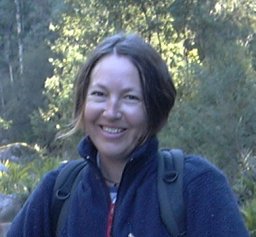 Joslin L Moore合作论文数Sch Biol Sci, Monash Univ4
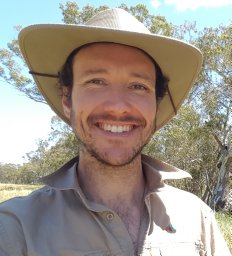 Christopher Stuart Jones合作论文数4Sana Bau合作论文数3Ann Thornton合作论文数3
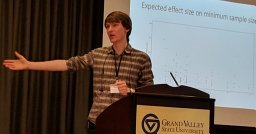 Felix Singleton Thorn合作论文数MetaMelb Lab, University of Melbourne3
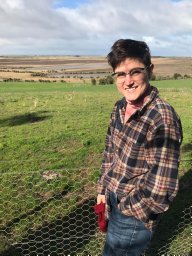 Meghan Mussehl合作论文数Environm Hydrol & Water Resources Grp, Univ Melbourne3Linda Riquelme合作论文数3Eden T. Smith合作论文数MetaMelb Lab, University of Melbourne3kelly de bie合作论文数3
 Hayley M. Geyle合作论文数Research Institute for the Environment and Livelihoods, Charles Darwin University3
 Alexandru Marcoci合作论文数Sch Sci & Engn, Univ Dundee3
 Martin Bush合作论文数MetaMelb Lab, University of Melbourne3
 Tara Martin合作论文数Department of Forest & Conservation Sciences, Faculty of Forestry, The University of British Columbia3
 Tanya Latty合作论文数School of Life and Environmental Sciences, Faculty of Science, The University of Sydney3
 Aaron Greenville合作论文数School of Life and Environmental Sciences, Faculty of Science, The University of Sydney3
 Nicola Mitchell合作论文数Department of Environmental Biology, University of Adelaide3
 Kate D L Umbers合作论文数3




