Titanium alloys can experience a cooling-induced phase transformation from a body-centred cubic phase into a hexagonal close-packed phase which occurs in 12 crystallographically equivalent variants. Among them, variant selection II, 60 degrees/< 1 (2) over bar 10 >, is very close to the orientation of {10 (1) over bar1} < 1 (2) over bar 10 > twins (57.42 degrees/< 1 (2) over bar 10 >). We propose that the cyclic thermal loading during additive manufacturing introduces large thermal stresses at high temperature, enabling grain reorientation that transforms the 60 degrees/< 1 (2) over bar 10 > variant boundaries into the more energetically stable 57.42 degrees/< 1 (2) over bar 10 > twin boundaries. This transformation twinning phenomenon follows a strain accommodation mechanism and the resulting boundary structure benefits the mechanical properties and thermal stability of titanium alloys. [GRAPHICS] . IMPACT STATEMENT A new twinning mechanism, transformation twinning, was discovered in a Ti- 6Al-4V alloy fabricated by selective laser melting. The resulting high density of transformation twins impact the global mechanical properties significantly.
Trace elements and isotopic signatures are continuously recorded in growing shells and are empirically applied to monitor or reconstruct past environmental and climatic conditions. However, the precondition to correctly apply these proxy records is our understanding how trace elements are incorporated into growing biominerals. Although this understanding is still limited, we know today that bivalve shells form via non-classical crystallization pathways involving amorphous calcium carbonate (ACC) nanoparticles that transform to stable polymorphs aragonite calcite applications general understanding of the nano-scale properties of nacre is still limited. aim to understand trace element incorporation and mechanics of bivalve shell nacre at the nano-scale.
AFRICA (NWA) 11522. L. Daly, M.R. Lee, B.E. Cohen, J. Cairney, K. Eder, L. Yang, M.A. Cox, and A.J. Cavosie. School of Geographical and Earth Sciences, Univesity of Glasgow, Glasgow, G12 8QQ, UK, luke.daly@glasgow.ac.uk, Australian Centre for Microscopy and Microanalysis, University of Sydney, Sydney, 2006, NSW, Australia. School of Earth and Planetary Science, Curtin University, Bentley, 6102,WA, Australia.
The CV3 Allende is one of the most extensively studied meteorites in worldwide collections. It is currently classified as S1—essentially unshocked—using the classification scheme of Stöffler et al. (1991), however recent modelling suggests the low porosity observed in Allende indicates the body should have undergone compaction-related deformation. In this study, we detail previously undetected evidence of impact through use of Electron Backscatter Diffraction mapping to identify deformation microstructures in chondrules, AOAs and matrix grains. Our results demonstrate that forsterite-rich chondrules commonly preserve crystal-plastic microstructures (particularly at their margins); that low-angle boundaries in deformed matrix grains of olivine have a preferred orientation; and that disparities in deformation occur between chondrules, surrounding and non-adjacent matrix grains. We find heterogeneous compaction effects present throughout the matrix, consistent with a highly porous initial material. Given the spatial distribution of these crystal-plastic deformation microstructures, we suggest that this is evidence that Allende has undergone impact-induced compaction from an initially heterogeneous and porous parent body. We suggest that current shock classifications (Stöffler et al., 1991) relying upon data from chondrule interiors do not constrain the complete shock history of a sample.
 Luke Daly合作论文数7
 Julie Cairney合作论文数School of Aerospace, Mechanical and Mechatronic Engineering, The University of Sydney7
 Phil Bland合作论文数School of Earth and Planetary Sciences, Faculty of Science and Engineering, Curtin University;Space Science & Technology Centre, Curtin University;Space Machines Company6
 L. V. Forman合作论文数Dept Earth & Planetary Sci, Western Australian Museum5
 Simon Ringer合作论文数School of Aerospace, Mechanical and Mechatronic Engineering, The University of Sydney;Australian Centre for Microscopy & Microanalysis, The University of Sydney5
 Katja Eder合作论文数4
 Patrick Trimby合作论文数Carl Zeiss Ltd4
 Martin R. Lee合作论文数Department of Geology and Geophysics, University of Edinburgh4
 William Rickard合作论文数Faculty of Science and Engineering, Curtin University3
 David Saxey合作论文数Department of Materials, University of Oxford3
 Steven Reddy合作论文数Faculty of Science and Engineering, Curtin University3G. K. Benedix合作论文数2D. Fougerouse合作论文数2
 Morgan A. Cox合作论文数Sch Earth & Planetary Sci, Curtin Univ2
 Benjamin E. Cohen合作论文数University of Queensland, The University of Queensland2
 Bruce Schaefer合作论文数Tectoniq;Bruce Schaefer Consulting2
 Aaron J. Cavosie合作论文数Department of Geology, University of Puerto Rico2
 Hao Wang合作论文数1Hongwei Liu合作论文数1Z.Z. Song合作论文数1steven moody合作论文数Australian Ctr Microscopy & Microanal, Univ Sydney1
 Matthew J. Cabral合作论文数North Carolina State Univ, Dept Mat Sci & Engn, Raleigh, NC 27695 USA1
 Laura M. Otter合作论文数Macquarie Univ, Dept Earth & Planetary Sci, Sydney, NSW, Australia1
 Ingrid Mccarroll合作论文数Australian Centre for Microscopy and Microanalysis, The University of Sydney1
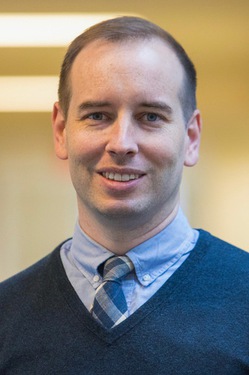 Robert Hovden合作论文数Department of Materials Science & Engineering, College of Engineering, University of Michigan1Lewis Daly合作论文数Anthropology, Faculty of Social & Historical Sciences, University College London1
 Thomas Davison合作论文数Department of Earth Science and Engineering, Faculty of Engineering, Imperial College London1
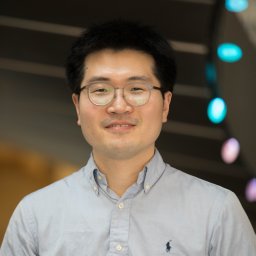 Gim, J.合作论文数1
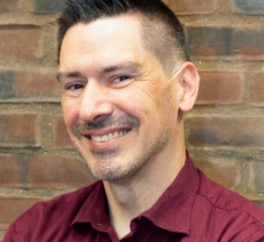 Fred J. Ciesla合作论文数Department of the Geophysical Sciences, The University of Chicago1
 Zibin Chen合作论文数School of Aerospace, Mechanical and Mechatronic Engineering, The University of Sydney1
 Dorrit Jacob合作论文数Research School of Earth Sciences, College of Science, The Australian National University1
 Wei Xu合作论文数1Yanbo Wang合作论文数School of Aerospace, Mechanical and Mechatronic Engineering, The University of Sydney1
 Martin Saunders合作论文数Centre for Microscopy, Characterisation and Analysis, The University of Western Australia1
 Qi Chao合作论文数1
 Gareth Collins合作论文数Department of Earth Science & Engineering, Faculty of Engineering, Imperial College London1
 Xiaozhou Liao合作论文数School of Aerospace, Mechanical & Mechatronic Engineering, The University of Sydney1
 Alex La Fontaine合作论文数1
 Paul Bagot合作论文数Department of Materials, University of Oxford1
 Nick Timms合作论文数School of Earth and Planetary Sciences, Faculty of Science and Engineering, Curtin University1
 James Darling合作论文数Sch Earth & Environm Sci, Univ Portsmouth1
 Sophie Primig合作论文数School of Materials Science and Engineering, Faculty of Science, The University of New South Wales1Matt R. Kilburn合作论文数Centre for Microscopy, Characterisation and Analysis, The University of Western Australia1
 Svetlana G. Tessalina合作论文数Laboratoire de Géochimie et Cosmochimie, Institute de Physique du Globe1




