Neurocritical care is an important branch of critical care medicine. The mechanism of critical neurological damage is complex and diverse, and the pathophysiology changes rapidly. Different pathophysiological changes determine different degrees of brain injury. In a special plateau environment, the incidence of critical neurological disease is higher, the age of onset is younger, the disease progress is faster, and the degree of damage is more severe. In order to standardize the diagnosis and treatment, enhance monitoring and management, provide timely and precise treatment, prevent irreversible brain injury, and improve the prognosis of patients with critical neurological illness at high altitudes, the Research Group of Calm Treatment of China, Research Group of Critical Care Ultrasound of China, and the Quality Control Center of Critical Care Medicine in Tibet formulated the Expert Consensus on Monitoring and Management of Patients with Critical Neurological Illness at High Altitudes on the basis of full discussion and communication of relevant critical medical experts and neurosurgery experts according to domestic and foreign literature and years of experience in clinical application and promotion. The main contents of the consensus are as follows.(1) According to the pathophysiological mechanism of neurological involvement in critical illness, scenarios of neurocritical care at high altitudes can be divided into cerebral hemorrhage at high altitudes, severe traumatic brain injuries, ischemic stroke, cerebral edema at high altitudes, and septic encephalopathy (8.4 points).(2) It is recommended to use cerebral blood flow, brain function monitoring and cerebral oxygen saturation as a 'triad' monitoring core in management of neurocritical care at high altitude, to as well as cerebrospinal fluid dynamics monitoring and brain structure surveillance (9.0 points).(3) It is recommended to grade patients quickly, and the '5-avoids' approach based on 'brain protection' theory were adhered to avoid fever, seizures, anxiety, agitation or pain, shivering, stimulation and nociception, according to different levels. Especially in the 'super critical' stage, with the protection of '446'targets, choose the window for analgesia and sedation (8.4 points).(4) It is recommended to monitor systemic and cerebral hemodynamic continuously and dynamically in order to improve systemic perfusion and optimize cerebral perfusion simultaneously (8.4 points).(5) It is recommended to choose the method of direct measurement of intracranial pressure by intraventricular catheter or optic nerve sheath diameter under ultrasound to estimate intracranial pressure, and choose the appropriate target mean arterial pressure to ensure optimal brain perfusion (8.8 points).(6) It is recommended to use transcranial Doppler ultrasound to evaluate the blood flow velocity and blood flow waveform of the bilateral cerebral arteries. It is recommended to target the blood flow velocity of M1 at 40 cm/s in the 'super critical' period (8.2 points).(7) In the 'super critical' period, we recommend to routinely monitor BIS and maintain the BIS value around 40 as the goal to guide the depth of sedation; those with conditions can be monitored by quantitative electroencephalography to assist determining whether there are non-convulsive seizures, and perform diagnostic evaluation of the prognosis (8.6 points).(8) It is recommended to monitor brain oxygen levels routinely, starting early in the ICU admission of patients with critical neurological conditions at high altitudes, which can assist in the assessment of brain damage (8.6 points).(9) It is recommended to evaluate the cerebral blood flow self-regulation ability routinely to achieve the optimal cerebral perfusion pressure in time and timely adjust the intensity and scheme of treatment (8.2 points).(10) It is recommended to emphasize the importance of target arterial partial pressure of carbon dioxide in the artery in critical illness and neurocritical care at high altitudes (8.0 points).(11) It is recommended to devote attention to the importance of targeted temperature management in in critical illness and neurocritical care at high altitudes (8.6 points).(12) It is recommended that multidisciplinary consultation and multi-professional cooperation could improve the management in critical neurological illness at high altitudes (8.8 points).(13) It is recommended that the constitution of improvement in brain structure imaging, pressure normalization of cerebrospinal fluid and restoration of cerebral blood autoregulation could be as the de-escalation triad (8.0 points).(14) It is recommended to be cautious of paroxysmal sympathetic hyperreactivity patients in neurocritical and critical illness at high altitude (8.0 points).(15) It is recommended to be cautious about the management of agitation (delirium) and cognitive function of patients in TBI at high altitudes(8.0 points).(16) It is recommended to assess the itinerary of the rehabilitation in a timely manner for critically sick patients at high altitudes (8.2 points).(17) It is recommended to be cautious of post-traumatic hydrocephalus and related neuroendocrine abnormalities in patients with critical neurological illness at high altitudes (7.6 points).
Purpose:Little epidemiological data exist on patients with severe infection in the plateau region of China, and the data that do exist are lacking in quality. Using the medical records of patients with severe infection in the Department of Intensive Medicine (intensive care unit; ICU) of the People's Hospital of Tibet Autonomous Region, this study analyzed the epidemiological and clinical characteristics of patients with septic shock in plateau area (Tibet), with the ultimate aim of reducing the incidence and mortality from this condition.Methods:Clinical data on 137 patients with septic shock in the studied ICU from November 2017 to October 2019 were retrospectively analyzed using SPSS, Version 21.0.Results:Among the 137 patients with septic shock, there were 47 survivors and 90 in-hospital or post-discharge deaths. There were 91 male patients and 46 female patients. The incidence of septic shock was 11.3%, and mortality rate was 65.7%. Median age was 55 years old, median APACHE-II score on the day of admission was 17, median SOFA score was 11, and median number of organ injuries was one. APACHE-II score (P = 0.02), SOFA score (P < 0.001), and the number of organ injuries (P < 0.001) were higher among patients who died than among survivors. The infections were mainly pulmonary and abdominal, and the main pathogen was gram-negative bacteria.Conclusion:The incidence and mortality of septic shock in ICU wards in Tibet are very high. The APACHE-II score, SOFA score, and the number of organ damage on the first day after diagnosis are independent risk factors for septic shock. To some extent, this study reflects the epidemiological characteristics of septic shock in the plateau region of China (≥ 3,650 m above sea level) and provides data that can support the prevention and treatment of sepsis in the future. More and deeper epidemiological studies of septic shock are necessary.
Objective To explore the situation of fungal detection in adult patients with severe diseases in Tibet region, and further analyze the influencing factors of fungal detection. Methods All patients admitted to the Department of Critical Care Medicine Tibet Autonomous Region People's Hospital from January 1, 2018 to December 31, 2019 were retrospectively analyzed. According to the results of fungal detection, the patients were then divided into the positive group and the negative group. The distribution of fungal strains detected and clinical data of the two groups were collected by the electronic medical record system. Multivariate Logistic regression was used to analyze the influencing factors of fungal detection. Results A total of 755 severe patients (4917 specimens were submitted) were enrolled, including 142 patients with positive fungal detection and 613 patients with negative fungal detection.Of which, 192 fungal strains were detected, including 183(95.3%) Candida strains, 7(3.7%) Aspergillus strains and 2(1.0%) other fungi strains. Among Candida genus, there were 164 strains (89.6%) of Candida albicans, 9 strains (4.9%) of Candida glabrata, 7 strains (3.8%) of Candida parapsilosis, 2 strains (1.1%) of Candida krusei, and 1 strain (0.6%) of Candida tropicalis. Among Aspergillus, there were 3 strains (42.8%) of Aspergillus fumigatus, 2 strains (28.6%) of Aspergillus niger, and 2 strains (28.6%) of Aspergillus flavus. Multivariate Logistic regression analysis showed that, high sequential organ failure assessment score (OR=1.402, 95% CI: 1.277-1.538, P < 0.001), severe digestive diseases (OR=2.671, 95% CI: 1.465-4.872, P=0.001), the duration of tracheal intubation ≥48 h(OR=2.661, 95% CI: 1.611-4.397, P=0.000), the use of carbapenemes ≥24 h (OR=2.825, 95% CI: 1.522-5.245, P=0.001), the use of cephalosporins plus beta lactamase inhibitor ≥24 h (OR=2.678, 95% CI: 1.679-4.272, P=0.000), and the long ICU stay (OR=1.043, 95% CI: 1.011-1.076, P=0.008) were independent risk factors for fungal detection in adult patients with severe diseases. High altitude of residence (OR=0.999, 95% CI: 0.999-1.000, P=0.040) and the high hemoglobin level (OR=0.994, 95% CI: 0.988-0.999, P=0.020) were protective factors. Conclusions Positive fungal detection in adult patients with severe diseases in the Tibet area is not uncommon, and Candida albicans is the main strain detected. The factors affecting the detection of fungi involve many aspects. Corresponding preventive measures should be taken according to the characteristics of Tibet.
目的 研究物理治疗对肺部感染预后的效果.方法 回顾性分析西藏自治区人民医院重症医学科2012年12月至2016年12月收治颅脑重症患者伴有意识障碍合并肺部感染总共564例,符合条件入组92例,分为治疗组46例,对照组46例,回顾性对给予肺部物理治疗后,在ICU住院天数、呼吸机辅助呼吸天数、抗生素使用天数进行对照分析.结果 发现给予肺部物理治疗组在ICU住院天数、呼吸机辅助呼吸天数、抗生素使用天数均明显低于对照组.结论 颅脑重症极易发生肺部感染,在既往无糖尿病、肺部疾患的患者中,除了给予抗感染治疗,给予肺部物理治疗可以明显减少在ICU的住院天数,加强肺部物理治疗呼吸机辅助呼吸更易更早脱机,同时抗生素的使用天数也会缩短.在颅脑重症合并肺部感染的患者,肺部物理治疗极其重要.
目的 观察指南推荐的丙泊酚10-8-6输注模式在高原地区全凭静脉麻醉中的效果和安全性.方法100例ASA I至II级拟在全身麻醉下行择期手术的成年患者,麻醉维持采用丙泊酚联合瑞芬太尼持续泵注全凭静脉麻醉,按指南推荐的方式设定和调整丙泊酚输注速度,观察患者术中意识水平和血流动力学变化,术后苏醒时间及有无躁动、术中知晓等.结果100例患者均在全凭静脉麻醉下完成了手术,31例患者术中发生低血压或血压下降超过基础血压30%需要给予血管活性药物,4例患者发生可疑术中知晓,13例患者苏醒延迟,8例患者发生术后躁动.结论丙泊酚10-8-6持续静脉泵注模式可以用于高原地区患者全凭静脉麻醉维持,管理相对简单,适合在西藏自治区基层医院推广.
目的探讨在危重症患者中简单易行的开放气道的方法及临床应用。方法收集我院ICU自2009年12月以来实施经皮穿刺气管内置管术救治患者59例临床资料进行观察。结果 59例患者均顺利完成经皮穿刺气管内置管术,术程中出血少,手术时间均在40分钟内,最快在7分钟内完成,平均需12~20分钟,术后伴切口渗血2例。结论经皮穿刺气管内置管术较传统气管切开术省时、操作简单、并发症少、床边即可开展、拔除气管内置管后切开愈合快,紧急情况下可一人操作。
目的探讨高原地区急性呼吸窘迫综合征的治疗体会和临床疗效。方法对30例急性呼吸窘迫综合征的诊断和治疗进行临床分析。结果完全恢复14例,死亡16例。结论急性呼吸窘迫综合征必须早诊断,合理治疗,最大程度阻断病情恶化,提高治愈率;高效呼吸机治疗是成功的关键。
目的探讨高血压脑出血引起高钠血症的病因、临床特点及其预后。方法回顾性分析28例并发高钠血症的高血压脑出血患者,观察血钠程度与预后的关系。结果高钠血症是高血压脑出血患者的严重并发症,也会进一步加重脑损伤。血钠水平愈高,预后愈差。结论血钠水平可作为高血压脑出血患者的一项重要监测指标,对判断预后及指导治疗有重要意义。严密监测血清电解质,尽早发现高钠血症,控制恶性增高,可降低死亡率。
目的观察在全身麻醉用于剖宫产对产妇及胎儿的影响。方法选择ASAⅠ~Ⅴ急诊剖宫产手术21例,采用气管插管静脉复合麻醉,药物以丙泊酚、琥珀胆碱、氯胺酮、芬太尼为主,观察该方法对产妇及胎儿的影响。结果诱导平稳,麻醉满意,无呕吐误吸和返流发生,无术中知晓,对胎儿Apgar评分无明显影响,对子宫收缩无抑制。结论全身麻醉为剖宫产可以选用的安全方法之一。
 Jianlei Fu合作论文数3Wenjun Pan合作论文数3Wuzhu Dawa (达娃吾珠)合作论文数3Li Cheng (程莉)合作论文数3Xiaoting Wang (王小亭)合作论文数3
 Wenzhao Chai (柴文昭)合作论文数Peking Union Medical College Hospital3Xiying Gui合作论文数2Qianwei Li合作论文数2WenJun Pan (潘文君)合作论文数2Xin Cai (蔡鑫)合作论文数2DA Wa (达瓦)合作论文数1Sang-zhu CIREN (次仁桑珠)合作论文数1Shihong Zhu (朱世宏)合作论文数1
 Yangong Chao合作论文数1Lü JI (吉律)合作论文数1QIU Cheng (邱成)合作论文数1ZengQuZhen Dan (旦增曲珍)合作论文数1WenJin Chen (陈文劲)合作论文数1Huan Chen (陈焕)合作论文数1
 Longxiang Su (苏龙翔)合作论文数ICU, Peking Union Medical College Hospital1
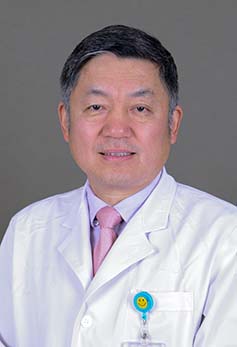 Dawei Liu (刘大为)合作论文数Peking Union Medical College Hospital1
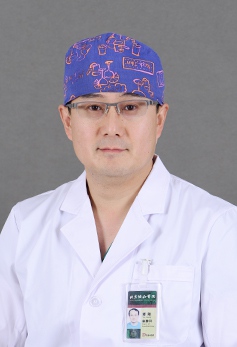 Gang Tan (谭刚)合作论文数Peking Union Medical College Hospital1Yang Ci (次央)合作论文数1
 Wei Du (杜微)合作论文数Peking Union Medical College Hospital1Song Xue (薛松)合作论文数1




