Capacitive micromachined ultrasonic transducers (CMUTs) have been widely utilized in applications of biomolecule monitoring, ultrasound medical diagnosis, and ultrasound therapy because of their advantages in high-level integration with integrated circuits, good impedance matching for acoustic transmission, and flexible element and array configuration compared with conventional piezoelectric ceramic transducers. Crosstalk effects on dynamics of a CMUT element, i.e. electrical, mechanical, and acoustic performance, would lead to unexpected spurious resonances. In this study, the mutual interaction from fluid and nearby cells in a CMUT element is newly investigated specially aiming to characterize their coupling effects with series and parallel parasitic effects based on a nonlinear Equivalent Circuit Model (ECM). The mutual interaction is evaluated with the electromechanical and acoustic characteristics by comparison between ECM and 3D Finite Element Analysis (FEA). Two representative CMUT element configurations, that are the rectangular with nine cells and the hexagonal with seven cells, are analyzed with different center-to-center distance. The radii of cells are set to be $\lambda $ /8 with different edge-to-edge distances. The parasitic effects are modeled by a series parasitic factor and a parallel-capacitance parasitic ratio. The coupling influence of crosstalk and parasitic effects on the performance of a CMUT element is evaluated, such as the impedance, phase, conductance, velocity, and ultrasound pressure field. The results of ECM-FEA-based methods show good agreements, and the improved ECM can be used for co-parasitic extraction with front-end interface.
A capacitive micromachined ultrasonic transducers (CMUTs) array with dual-mixed radii is designed to improve bandwidth and realize multi-modes operating for immersed ultrasonic applications. The two-size (TS) CMUT array is composed of two sub-arrays with different membrane radii, but the same cell arrangement. The two sub-arrays are separately connected to external power sources to achieve separate control of each array. An electromechanical-acoustic coupling simulation model of the TS-CMUTs array is established by finite element method to investigate their impedance and conductance properties under different DC voltages in the frequency domain. The results indicate that the designed CMUTs can operate with a significant improved frequency bandwidth ranging from 9.75 MHz to 13.35 MHz by adjusting the DC bias voltage. Compared with traditional CMUTs arrays, the proposed CMUTs array can contribute to an increase of up to 270% in the bandwidth.
Electrostatically actuated microplates with multilayer and material anisotropy properties, are widely employed in microelectromechanical systems. However, previous theories rarely consider the aforementioned properties simultaneously, hindering their widespread application. This paper proposes a general theoretical model for electrostatically actuated rectangular multilayer anisotropic microplates subjected to residual stress and hydrostatic pressure by combining the classical laminated thin plate theory, Galerkin method and a partial expansion approach for nonlinear electrostatic force. This model enables successful establishment of closed-form expressions for the main mechanical behaviors, e.g. the pull-in voltage, static deflection, and resonant frequency. Validation of these expressions, using finite element method simulations and experimental results, shows significant improvement in the analysis accuracy (15 times higher) compared to those theories neglecting the material anisotropy, as well as excellent applicability across a wide range of DC voltages and dimensions. Additionally, the influences of electrostatic softening effects and scale effects on the theories are also discussed.
Capacitive micromachined ultrasonic transducers (CMUTs) are promising in the emerging fields of personalized ultrasonic diagnostics, therapy, and noninvasive 3-D biometric. However, previous theories describing their mechanical behavior rarely consider multilayer and anisotropic material properties, resulting in limited application and significant analysis errors. This article proposes closed-form expressions for the static deflection, collapse voltage, and resonant frequency of circular-microplate-based CMUTs, which consider both the aforementioned properties as well as the effects of residual stress and hydrostatic pressure. These expressions are established by combining the classical laminated thin plate (CLTP) theory, Galerkin method, a partial expansion approach for electrostatic force, and an energy equivalent method. A parametric study based on finite-element method simulations shows that considering the material anisotropy can significantly improve analysis accuracy (similar to 25 times higher than the theories neglecting the material anisotropy). These expressions maintain accuracy across almost the whole working voltage range (up to 96% of collapse voltages) and a wide dimension range (diameter-to-thickness ratios of 20-80 with gap-to-thickness ratios of <= 2). Furthermore, their utility in practical applications is well verified using numerical results based on more realistic boundary conditions and experimental results of CMUT chips. Finally, we demonstrate that the high accuracy of these expressions at thickness-comparable deflection results from the extended applicable deflection range of the CLTP theory when it is used for electrostatically actuated microplates.
The modulation scheme of ultrasonic communication using capacitive micromachined ultrasonic transducers, acting as the transmitted port and received port, was simulated and experimented with four parallel channels in silicone oil. Four channel signals were coded by a steady and reliable binary amplitude shift keying method such as on–off keying modulation. The modulation scheme was simulated with additive Gaussian noise and attenuated for every channel in silicone oil, and the sound attenuation influence was evaluated with different distances. The capacitive micromachined ultrasonic transducers were measured to achieve a −6 dB bandwidth of 305 kHz when operating in silicone oil. The channels were operated at different frequencies ranging from 300 kHz to 600 kHz with a channel spacing of 100 kHz. The bit rate of 50 kbps for one channel was achieved with a data rate of 200 kbps over a short-range distance of 0.1 m. The proposed correction coefficient could be used to adjust the threshold. The high overall signal-to-noise ratio of 29.41 dB ensured the system to have a low-level bit error rate.
电容式微加工超声换能器(Capacitive micromachined ultrasonic transducers,CMUTs)在超声成像与治疗、3D超声姿态识别等领域具有广泛应用需求.将CMUTs与ICs进行集成是减小寄生电容、提高信噪比的重要途径,然而目前基于熔融键合的CMUTs制备技术需要高温条件(>1 000℃),无法实现与ICs的集成制备.开发基于共晶键合的CMUTs制备工艺是解决上述问题的有效途径.针对该低温工艺,设计了圆形和正六边形空腔CMUTs单元及相应的阵列结构,利用有限元仿真和理论公式分析了CMUTs结构的塌陷电压、谐振频率以及其薄膜在热应力、大气压力条件下的变形.分析结果表明CMUTs塌陷电压及谐振频率在预期范围内,其薄膜在热应力、大气压力作用下不会发生塌陷.对所制备的CMUTs芯片的形貌、结构尺寸、电容以及阻抗频率特性开展试验研究.结果 表明芯片形貌、结构参数、电容以及阻抗频率特性与设计预期一致,芯片能正常工作;测试结果验证了CMUTs结构设计与制备工艺的可行性.这些研究对进一步实现CMUTs与ICs的集成设计与制备提供了基础.
In order to deal with the problem that electronic device can be affected by electromagnetic interference from external environment, this paper studied the influence of the proposed rectangular metallic enclosures to achieve effective electromagnetic shielding based on finite-integration technique. A three-dimensional simulation model of a rectangular shielding enclosure was directly established with the plane wave of timebased Gaussian pulse excitation, which was utilized to establish electromagnetic radiation intensity. The electromagnetic shielding effectiveness was simulated both in frequency domains and in time domains, with different apertures numbers on front of rectangular enclosure. The thickness parameter was further investigated, which is essential to increase the operating stability of electronic system. It needed to have high capability in anti-electromagnetic interference to ensure the efficient transmission of weak signals.
: Capacitive micromachined ultrasonic transducers (CMUTs) are promising in applications such as portable ultrasonic imaging, ultrasonic therapy, ultrasonic diagnostic for homecare and ultrasound-based touchless human-machine interface. Development of CMUTs with low power consumption and high electromechanical coupling coefficient is the key to meeting the requirements from the aforementioned applications. The analytical expressions for the CMUTs with circular and square membranes based on the ratio of the fixed capacitance to free capacitance are established. The finite element simulation (FEM) and experiment testing on the fabricated CMUTs chips are carried out to validate the analytical expressions. Parametric studies using the proposed analytical expressions are done to study the effects of CMUTs parameters on the electromechanical coupling coefficient. The relationship between the power consumption of CMUTs and the bias voltage is established. The results show that the analytical expressions for the CMUTs with circular and square membranes can accurately predict the electromechanical coupling coefficients under the bias voltages lower than 96% of the corresponding collapsed voltages. The electromechanical coupling coefficients decrease with the increasing height of the CMUTs cavities, while increase with the increasing radius under the same bias voltages. CMUTs with different parameters have the same electromechanical coupling coefficient under the same ratios of bias voltages to collapse voltages. In addition, from the study on the relationship between the power consumption and electromechanical coupling coefficient, it can be concluded that the performance requirements for both low power consumption and high electromechanical coupling coefficient can be coordinately achieved through reducing the collapse voltages or increasing the electromechanical coupling coefficient under low bias voltages.
In this paper, a gas density sensor based on capacitive microfabricated ultrasonic transducers (CMUTs) is developed. The working principle is based on the resonant frequency shift of the membrane by the change of gas density under the fluid-solid interaction. Due to the advantages of high frequency, the frequency shift will be larger, which also results in higher detection measuring sensitivity (DMS). Combined with the fluid added mass model and the electromechanical coupling reduced order model of a CMUT in vacuum, the relationship between gas density and resonant frequency is established. Furthermore, the influences of the structural parameters and the bias voltage on DMS are further analyzed. As a result, a good linearity is shown between gas density and resonant frequency of CMUTs in a certain density range. Simultaneously, the CMUT-based density sensor shows a high measuring sensitivity. After fabricating a sensor with the low-temperature direct wafer-bonding technique and building the gas density detection platform, the resonant frequency and phase-frequency curves of the CMUTs-based density sensor under different bias voltages are achieved by the experimental analysis in the different mixed gas. The results demonstrate the excellent capability of fabricated CMUTs for gas density measurement with a good linear relationship between gas density and resonant frequency and a higher DMS of 9760 Hz.kg(-1).m(3), which make it a promising sensor.
Lumped element model (LEM) for resonant chemical sensors based on the capacitive micromachined ultrasonic transducers (CMUTs) was developed and analyzed with electrical characterization. The CMUTs chip were functionalized with the electrospinning technology. Two Butterworth Van-Dyke (BvD) models for functionalized CMUTs were proposed and analyzed with different DC voltages. Considering the electrical phase with parasitic capacitance, the modified BvD model can be used to illustrate more comprehensive features for both mechanical impedance and phase properties. The parallel capacitance was measured accurately using an impedance analyzer, and the quality factor was calculated based on the proposed model under different DC voltages. These models will provide important theoretical basis for CMUTs-based chemical sensors to further electrical analysis and oscillator design.
A megahertz ultrasonic transmitting and receiving system operating in air is demonstrated using capacitive micromachined ultrasonic transducers (CMUTs). These CMUTs were designed and fabricated using a low-temperature direct wafer-bonding technique with circular and rectangular shapes. The electrical characteristics of the CMUTs, including impedance, phase, resistance, and reactance, were measured using an impedance analyzer. Results showed that the CMUTs can operate as an ultrasonic device. The six-element equivalent circuits for CMUTs were presented to characterize parasitic effects based on the measured impedance characteristics. The front-end interface circuits for transmitting and receiving ultrasound waves were simulated and optimized via PSpice methods to improve response stability and to reduce noise. The CMUTs were packaged with the front-end interface circuits to achieve a dynamic range of 44.67 dB at 1.72 MHz for transmitting and receiving ultrasound in air. The signal-to-noise ratio of the received signal without averaging was 31.31 dB at the transmission distance of 23.5?mm. The maximum transmission distance was evaluated as 88.2?mm with the maximum fractional bandwidth of 15.3%. The bandwidth and gain of CMUTs could be adjusted by changing the transmitting pulse numbers and the coupled DC bias voltages pulsing AC voltages.
 Yihe Zhao (赵一鹤)合作论文数School of Instrument Science and Technology, Xi'an Jiaotong University12
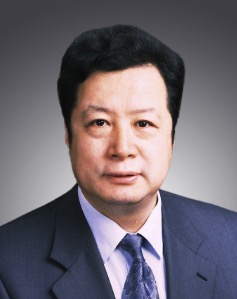 Zhuangde Jiang (蒋庄德)合作论文数Institute of Precision Engineering, Xi'an Jiaotong University;Shaanxi University of Science & Technology11
 Libo Zhao (赵立波)合作论文数School of Instrument Science and Technology, Xi'an Jiaotong University11
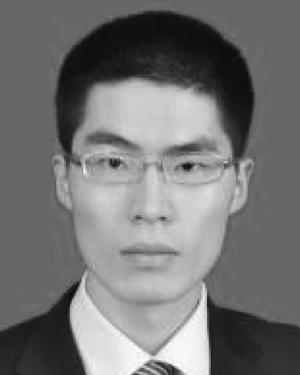 Tingzhong Xu合作论文数9
 Guoxi Luo (罗国希)合作论文数School of Mechanical Engineering, Xi'an Jiaotong University;School of Instrument Science and Technology, Xi'an Jiaotong University;State Key Laboratory for Manufacturing System Engineering, Xi'an Jiaotong University6
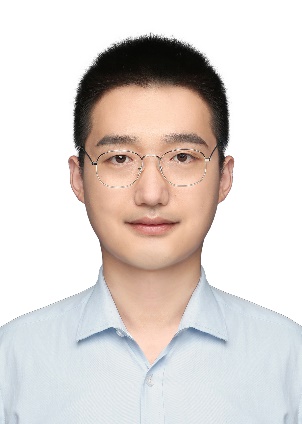 Shuaishuai Guo (郭帅帅)合作论文数School of Control Science and Engineering, Shandong University6
 Pingxiong Yang (杨平雄)合作论文数6
 Zixuan Li合作论文数3
 Jie Li (李杰)合作论文数School of Information and Communications Engineering, Xi'an Jiaotong University3
 Kai-Ming Hu (胡开明)合作论文数School of Mechanical Engineering, Shanghai Jiao Tong University3
 Qijing Lin (林启敬)合作论文数School of Instrument Science and Technology, Xi'an Jiaotong University3
 Jiuhong Wang (王久洪)合作论文数School of Ingtrument Science and Technology, Xi'an Jiaotong University3
 Dejiang Lu (卢德江)合作论文数School of Mechanical Engineering, Xi'an Jiaotong University;Bright Stone Industrial Technology Research Institute3
 Jiawei Yuan合作论文数2
 Shiming Zhang合作论文数Department of Electrical and Electronic Engineering, Faculty of Engineering, The University of Hong Kong2
 Wenming Zhang (张文明)合作论文数School of Mechanical Engineering, Shanghai Jiao Tong University2
 LI Xuejiao合作论文数1
 Mimi Huang合作论文数1Yu Bai合作论文数1
 Tyler Hoffman合作论文数Department of Bioengineering and Center for Minimally Invasive Therapeutics (C‐MIT), University of California Los Angeles1
 Martin C. Hartel合作论文数Department of Bioengineering, University of California-Los Angeles1jie li (李杰)合作论文数1
 Qi Mao (毛琦)合作论文数School of Instrument Science and Technology, Xi'an Jiaotong University1Yongshun Wu合作论文数1Hongyan Wang合作论文数1
 Shahid Saghir合作论文数UMT1
 Yulong Zhao (赵玉龙)合作论文数Institute of Precision Engineering, Xi'an Jiaotong University;School of Mechanical Engineering, Xi'an Jiaotong University1
 Xiangyang Zhou (周向阳)合作论文数School of Instrumentation and Optoelectronic Engineering, Beihang University1
 Jing Li (李静)合作论文数College of Physical Science and Technology, Xiamen University;Pen-Tung Sah Institute of Micro-Nano Science and Technology, Xiamen University1
 Zhikang Li (黎志康)合作论文数Institute of Crop Science, Chinese Academy of Agricultural Sciences1
 Sandro Carrara合作论文数Institute of Electrical and Micro Engineering, School of Engineering, Ecole Polytechnique Fédérale de Lausanne;Electrical Engineering Section, School of Engineering, Ecole Polytechnique Fédérale de Lausanne1
 Weile Jiang (蒋维乐)合作论文数Department of Art, School of Humanities and Social Science, Xi'an Jiaotong University1




