Background Withdrawal management and opioid agonist treatment (OAT) programs help to reduce some of the harms experienced by people who use substances (PWUS). There is literature on how features of drug treatment programs (e.g., policies and practices) are helpful, or not helpful, to PWUS when seeking access to, or in, treatment. There is, however, relatively little literature based on the perspectives of family members/family of choice of PWUS and community-based organization staff within the context of Atlantic Canada. This paper explored the perspectives of these two groups on what was helpful, or not, about drug treatment programs in Atlantic Canada in terms of supporting access to, and retention in, treatment. Methods One-on-one qualitative telephone interviews were conducted in 2020 with the two groups. Interviews focused on government-funded withdrawal management and OAT programs. Data were coded using a qualitative data management program (ATLAS.ti) and analyzed inductively for key themes/subthemes using grounded theory techniques. Results Fifteen family members/family of choice and 16 community-based organization staff members participated ( n = 31). Participants spoke about features of drug treatment programs in various places, and noted features that were perceived as helpful (e.g., quick access), as well as not helpful (e.g., wait times, programs located far from where PWUS live). Some participants provided their perceptions of how PWUS felt when seeking or accessing treatment. A number of participants reported taking various actions to help support access to treatment, including providing transportation to programs. A few participants also provided suggestions for change to help support access and retention such as better alignment of mental health and addiction systems. Conclusions Participants highlighted several helpful and not helpful features of drug treatment programs in terms of supporting treatment access and retention. Previous studies with PWUS and in other places have reported similar features, some of which (e.g., wait times) have been reported for many years. Changes are needed to reduce barriers to access and retention including the changes recommended by study participants. It is critical that the voices of key groups, (including PWUS) are heard to ensure treatment programs in all places support access and retention.
Women have experienced increased rates of intimate partner violence (IPV) since the onset of the COVID-19 global pandemic, and at the same time requirements for physical distancing and/or remote delivery of services have created challenges in accessing services. We synthesized research evidence from 4 systematic reviews and 20 individual studies to address how IPV interventions can be adapted within the context of the pandemic. As many interventions have been delivered via various technologies, access to technology is of particular importance during the pandemic. Our results can inform the provision of services during the remainder of the COVID-19 pandemic including how to support women who have little access to in-person services.
Context: The routine and systematic collection of demographic and social needs data remains uncommon in primary care clinics across Canada. Such data can create a foundation to integrate social interventions into clinical care, to identify health inequities, and to reorient health organizations to address the "upstream" factors that result in illness, disability and death seen "downstream". Objective: To report on findings from a national mixed-methods study of implementing a tool for routinely collecting patients' demographic and social needs data in primary care. Study Design and Analysis: We conducted a mixed methods implementation evaluation over a 6-month period. Setting: Researchers across Manitoba, Saskatchewan, Ontario, Nova Scotia and Newfoundland implemented the SPARK Tool in five primary care clinics. Instrument: The SPARK Tool includes questions about demographics (e.g. race, gender identity) and social needs (e.g. income, housing). Dataset: Data include SPARK Tool patient responses (n=>2500), patient and clerical staff feedback surveys, interviews with patients (n=~50) and clinic staff (n=~30), focus groups (n=~10) and implementation surveys (n=~40) with clinic leaders, providers, and clerical staff. Population Studied: Patients, clerical staff, and providers in primary care clinics using the SPARK Tool. Outcome Measures: Implementation outcomes such as number of surveys completed/declined and number of surveys completed on tablets in-clinic or online using an emailed survey link. Results: SPARK Tool completion rates were approximately 50%. Smaller clinics had a higher proportion of responses from tablets in-clinic compared to larger clinics, where most responses were completed using an emailed survey link. Patients, providers, clerical staff, and clinic leadership perceived the SPARK Tool to be acceptable for routine demographic and social needs data collection. A challenge was a lack of provider and staff time to explain the tool to patients. Patients and providers shared concerns about having sensitive social data in patients' medical records. A benefit of implementation included providers learning about previously unknown social needs of some patients. Conclusions: The results highlight challenges and benefits of using a demographic and social needs data collection tool in primary care across Canada. These will guide efforts to scale up this data collection in Canadian primary care and beyond.
Background Healthcare organizations are increasingly exploring ways to address the social determinants of health. Accurate data on social determinants is essential to identify opportunities for action to improve health outcomes, to identify patterns of inequity, and to help evaluate the impact of interventions. The objective of this study was to refine a standardized tool for the collection of social determinants data through cognitive testing. Methods An initial set of questions on social determinants for use in healthcare settings was developed by a collaboration of hospitals and a local public health organization in Toronto, Canada during 2011–2012. Subsequent research on how patients interpreted the questions, and how they performed in primary care and other settings led to revisions. We administered these questions and conducted in-depth cognitive interviews with all the participants, who were from Saskatchewan, Manitoba, Ontario, and Newfoundland and Labrador. Cognitive interviewing was used, with participants invited to verbalize thoughts and feelings as they read the questions. Interview notes were grouped thematically, and high frequency themes were addressed. Results Three hundred and seventy-five individuals responded to the study advertisements and 195 ultimately participated in the study. Although all interviews were conducted in English, participants were diverse. For many, the value of this information being collected in typical healthcare settings was unclear, and hence, we included descriptors for each question. In general, the questions were understood, but participants highlighted a number of ways the questions could be changed to be even clearer and more inclusive. For example, more response options were added to the question of sexual orientation and the “making ends meet” question was completely reworded in light of challenges to understand the informal phrasing cited by English as a Second Language (ESL) users of the tool. Conclusion In this work we have refined an initial set of 16 sociodemographic and social needs questions into a simple yet comprehensive 18-question tool. The changes were largely related to wording, rather than content. These questions require validation against accepted, standardized tools. Further work is required to enable community data governance, and to ensure implementation of the tool as well as the use of its data is successful in a range of organizations.
People who use substances (PWUS) (e.g. inject substances) are at risk of many harms. Various services help reduce risks including drug treatment programs such as withdrawal management and opioid agonist treatment. Much of the research on PWUS' experiences of treatment programs is set in large urban centers creating a knowledge gap of experiences in other places. Our study helps address this gap by exploring PWUS' experiences of treatment programs in Atlantic Canada which is a region with many small urban centers and rural areas. One-on-one qualitative interviews were conducted with 55 PWUS focusing on their experiences of treatment program facilitators (or what helped with access and retention), and/or barriers to treatment access and retention (or what was not helpful). Data were analyzed for key themes/subthemes and organized using a slightly modified Rhodes' risk environment framework. PWUS' experiences of facilitators and barriers cross all four environments of treatment programs: policy and practice, physical, social, and resource environments. For some PWUS, barriers impacted their access to or retention in treatment, and hence are of serious concern given the current toxic illicit drug supply in Canada. Several barriers are shaped by drug criminalization and thus this research points to the need for decriminalization to help reduce barriers.
Introduction: Women who experience sexualized violence can face significant barriers to accessing services and supports, including fear of victim blaming, stigma, and fear of re-traumatization. To date, there is a paucity of research that specifically examines the experiences of women accessing sexualized violence services and supports in rural places, and the potential unique or additional barriers they may face. Objectives: The purpose of this qualitative study was to understand the experiences of women living in rural [province] who accessed services or supports after experiencing sexualized violence. Methods: Participants were recruited through community organizations and social media. Interviews were conducted with nine women in Fall 2019. Data were analyzed using feminist-thematic analysis. Results: Findings indicate that the women shared experiences of navigating a fragmented system of services and supports, many reported harmful experiences with the justice system and formal healthcare system, and some also experienced positive experiences with community-based services. Enhancing community-based services is recommended as one key strategy for improving access to sexualized violence services and supports in rural communities.
AIM:The purpose of this qualitative study was to understand Syrian refugee women's perceptions and experiences of access to formal health services and informal supports during the postpartum period in Nova Scotia, Canada and to identify valued and missing services and supports in the community.BACKGROUND:The postnatal period is a critical time when mothers may need access to health services (e.g., family physicians, psychologists) and informal supports (e.g., friends, family) to support their positive mental and physical health after birth. Resettled refugee women commonly encounter barriers when accessing care during the postnatal period and often have limited social supports.METHODS:Semi-structured, telephone or virtual interviews were conducted with 11 resettled Syrian refugee women who gave birth in Nova Scotia, Canada within the past five years. Data were collected in the summer of 2020. This study was conducted using elements of constructivist grounded theory.FINDINGS:Four key themes were identified from women's experiences: (i) postpartum social support was critical, but often lacking, (ii) structural barriers (e.g., irregular interpreter services, limited childcare options) impeded women's access to healthcare, (iii) paternalistic healthcare providers limited women's decision-making autonomy, and (iv) the value and need for culturally competent, integrated care (e.g., newcomer specific healthcare centres), in-home services, and family support.CONCLUSION:Resettled Syrian refugee women in Nova Scotia, Canada experience a range of barriers that limits their access to postnatal healthcare. Policy change, program development, and/or interventions are needed to improve access to postnatal services and supports for resettled Syrian women in Canada.
Objective To describe current approaches in treatment of opioid use disorder (OUD) within Canadian psychosocial outpatient, day, and residential addiction treatment programs, with an emphasis on the use of opioid agonist therapy (OAT). Method An online census survey was conducted in English and French of Canadian psychosocial addiction treatment programs (N = 214). Results Programs estimated that 25% of their clients have OUD. A slight majority of programs provide some type of specialized services to clients with OUD (58%), most frequently providing or facilitating access to OAT but also specialized counselling, case management, education, and harm reduction services. Most programs reported that they admitted clients on OAT (88%) and only a minority expected or encouraged clients to taper (14%) or discontinue (6%). Programs focusing on client abstinence as the treatment goal were more likely to expect or encourage tapering or discontinuation than programs that focus on helping clients achieve personal consumption goals. Of programs that did not currently facilitate OAT, 44% indicated that they would provide OAT, but lacked the necessary accreditation, physician support, or other resources. No philosophical objections to OAT were noted. OAT initiation was provided by 30% of programs, 23% referred to another service within their organization, and 29% referred to a service outside their organization. The remaining 18% did not facilitate OAT initiation at all, ranging from 0% in Quebec to 23% in the Prairies. Overdose response kits were provided by 86% of programs. The majority not providing kits indicated willingness if policy support and resources were provided (67%). Conclusions Overall, the results demonstrate that psychosocial programs provide some specialized services for OUD but desire further support specifically to provide OAT, including training, knowledge, and the expertise of individuals qualified to prescribe and dispense OAT. Many psychosocial treatment programs expressed a need for staff and resources for this purpose.
Relatively little is known about how physical and social environments influence access to and inclusion in educational and leisure activities for students with a mobility-related physical disability attending a post-secondary institution. Understanding how environments shape access is important because educational and leisure activities affect one’s emotional, social, mental, and physical health. The aim of this qualitative exploratory study was to gain an understanding of the lived experiences of access and inclusion for students with a mobility-related physical disability, and specifically, the barriers and facilitators within the physical and social environments which shape access and inclusion. One-on-one semi-structured interviews were conducted with nine students attending a post-secondary institution in Nova Scotia, Canada who self-identified as living with a mobility-related physical disability. From an analysis of the interviews, five themes emerged: 1) navigating disclosure; 2) invisibility (and passing) and visibility; 3) accommodations and supports; 4) the prevailing conceptualization of mobility-related disabilities; and 5) places and spaces for the “normal” body. Although there have been actions taken by the post-secondary institution to transform environments and improve access and inclusion, additional efforts are urgently needed, and it is suggested that Universal Design is one possible strategy.
There is limited literature on youths’ experiences of accessing mental health supports and services in rural Canada. Through interviews with young women, this research explored barriers and facilitators to accessing mental health services and supports in rural Nova Scotia. Participants shared numerous barriers at the family, school, and community levels, including stigma from family, lack of knowledge of school supports, and limited community service options. Facilitators also existed at these three levels, including supportive parents, school-based service availability, and supportive community members. Increased investment in school-based services may improve access; however, an understanding of young men’s experiences is needed first.
Defining competencies within health disciplines is important because it provides a shared understanding of the fundamental knowledge, skills, and attitudes necessary for research and practice while also offering a practical reference point for academic preparation and professional development. However, existing literature regarding competency frameworks does not address the unique needs of interdisciplinary population health research graduate students. The purpose of this project was to understand the competencies desired by interdisciplinary population health research graduate students within the Healthy Populations Institute (HPI) at Dalhousie University and to create a competency framework on which training and program development could be based. A student-led initiative was undertaken to identify core competencies necessary for interdisciplinary population health research graduate students from both traditional (e.g., health promotion) and nontraditional health (e.g., political science) backgrounds. Data were collected and analyzed via three phases: environmental scan, community resource mapping, and consultations with HPI research scholars. Through the environmental scan, core competencies and guiding principles were identified. Community resource mapping of local employment, volunteer, educational, and/or skill-building opportunities resulted in the development of a database. Consultations confirmed the validity of competencies identified in the scan and elicited further resources and suggestions for educational and professional skill development. This project resulted in a unique competency framework that will inform ongoing program development and foster additional opportunities for graduate students within HPI. The process of creating this framework may also be of value to other universities wishing to develop or refine their own set of competencies.
People who use substances (PWUS), and specifically individuals who use injection drugs and/or smoke crack cocaine, experience risks which harm reduction programmes can help reduce. Prior to implementing harm reduction programmes, however, it is critical to understand how programme users and others in the community perceive the programmes as their perceptions may influence implementation. A mixed-methods study asked PWUS and key informants about their perceptions of implementing five harm reduction programmes in their communities, including perceptions of the advantages of the programmes, where best to locate them, and community support. Questionnaires were administered to 160 PWUS, and qualitative interviews were conducted with 11 purposefully sampled key informants. Data were collected in one medium-size and one small-size community/municipality in Nova Scotia, Canada, during 2017-2018. SPSS was used to generate descriptive statistics and means from the quantitative data, and the qualitative data were analysed for key themes using thematic analysis. Both PWUS and key informants perceived numerous advantages of the harm reduction programmes, but some key informants suggested that there might be potential opposition to the implementation of additional needle distribution and disposal programmes in some locations and potential opposition to safer consumption sites. Further research is needed to understand why these programmes were viewed as potentially generating opposition, but findings suggest that a key factor is the association of the programmes with 'danger' because the programmes are directly linked with criminalized drug use. In contrast, the three other programmes are linked to 'safety' because naloxone saves lives, peer navigation programmes support access to existing programmes and detoxification programmes are associated with safety through the reduction/elimination of drug use. Legalization/decriminalization of drugs might help to change the association of some programmes with 'danger' and therefore help support the implementation of harm reduction programmes that appear to be perceived by some as linked to danger.
BACKGROUND:Prior to COVID-19, postnatal resettled refugee women in Canada reported barriers to healthcare and low levels of social support, contributing to maternal health morbidities. The COVID-19 pandemic appears to be further exacerbating health inequities for marginalized populations. The experiences of resettled refugee women are not fully known.AIM:To understand Syrian refugee women's experiences accessing postnatal healthcare services and supports during the COVID-19 pandemic.METHODS:Semi-structured, virtual interviews were conducted with eight resettled Syrian refugee women living in Nova Scotia (Canada) who were postnatal between March and August 2020. Data analysis was informed by constructivist grounded theory.FINDINGS:Three themes emerged: "the impacts of COVID-19 on postnatal healthcare;" "loss of informal support;" and "grief and anxiety." Women experienced difficult healthcare interactions, including socially and physically isolated deliveries, challenges accessing in-person interpreters, and cancelled or unavailable in-home services (e.g., public health nurse and doula visits). Increased childcare responsibilities and limited informal supports due to pandemic restrictions left women feeling overwhelmed and exhausted. Stay-at-home orders resulted in some women reporting feelings of isolation and loss, as they were unable to share in person postnatal moments with friends and family, ultimately impacting their mental wellness.CONCLUSIONS:COVID-19 and associated public health restrictions had significant impacts on postnatal Syrian refugee women. Data presented in this study demonstrated the ways in which the pandemic environment and related restrictions amplified pre-existing barriers to care and postnatal health inequalities for resettled refugee women-particularly a lack of postnatal informal supports and systemic barriers to care.
The COVID-19 pandemic has seen increased rates of intimate partner violence (IPV). This is attributed to greater stress on households and families (e.g., reduced income, limited access to childcare and schools), and isolation from friends and family. Public Health guidance on physical distancing and/or remote delivery of services are helpful for reducing the spread of infection, yet these restrictions can create further challenges and barriers for women seeking IPV services. In this review, we synthesized evidence from 4 systematic reviews and 20 individual studies to suggest how IPV services, supports, or interventions for women might be adapted within the context of the COVID-19 pandemic. Interventions generally fit into four main categories: 1) Preventing IPV through early recognition and awareness of IPV; 2) Counteracting abuse and breaking free; 3) Supporting women while living with and/or leaving an abusive partner; and 4) Supporting women after leaving an abusive partner. Many initiatives depend primarily on technology such as mobile phones and an internet connection for delivering information and interventions (e.g., mHealth, telehealth, websites, digital applications). However, it is important to consider that technological interventions are not available to all women given the financial resources necessary to secure a device and access to reliable internet. The results of this review can inform the service provision during the remainder of the COVID-19 pandemic and may be especially important for supporting women who have little access to face-to-face services (e.g., women living in rural and remote places where there are few in-person services).
To contribute to our knowledge about initiatives to support older women who experience intimate partner violence (IPV), we conducted an internet search, online surveys, and telephone interviews with administrators of programs for women who have experienced IPV. We compiled information on initiatives providing individual in-person and telephone support, educational and/or therapeutic groups, and short- and long-term shelters and housing. The interviews provided insights about the history and rationale for these initiatives, strengths, positive outcomes, challenges, and future program development. Our study results can inform the creation of appropriate services to meet the needs of older women who experience IPV.
Mental health is central to overall wellbeing and, for students attending university, mental health is critical for learning and academic success. A wealth of research has focused on young people who experience psychosocial declines during academic and developmental transitions, but little is known about how young people flourish in this transition. The first to explore the experiences of flourishing among first-year Canadian university students making the transition directly from high school, this study sought to develop an understanding of: 1) the factors that promote flourishing amidst this academic and developmental transition, and 2) how first-year students define and experience flourishing. An interpretive phenomenological approach underpinned by Gadamerian hermeneutic philosophy was used to explore experiences of flourishing, using semi-structured interviews, in a sample of nine full-time, first-year university students, ages 18–20 years. What it meant to flourish amidst this developmental and academic transition and how participants defined flourishing offer new understandings of the concept associated with: 1) personal/individual aspects of flourishing, 2) contextual nature of flourishing, 3) temporality of flourishing, 4) dialectic aspects of flourishing. Implications for practice, policy, and research in light of these new understandings are discussed.
Many healthcare workers are “on the road” traveling to and from fixed sites (eg, patients’/clients’ homes). Qualitative interviews with nine Nova Scotian managers of mobile healthcare workers explored the conditions of workers’ travel. Findings highlight challenges such as changing schedules, as well as positive features including flexibility over the travel schedule. Some managers noted worker mobility-related responsibilities including having to decide if travel is too dangerous due to poor weather. A few managers suggested that workers may not receive adequate economic reimbursement for travel costs (eg, wear and tear on vehicle), and in some instances, workers need to use a benefit (eg, vacation day) or are not paid if they cannot drive due to poor weather. Reported organizational supports for workers’ travel were variable. This research indicates a need for supportive mobility-related policies and practices across all organizations, including policies that cover economic costs related to travel for all workers.
Background: The postnatal period is a critical time when women may need access to formal maternal health services (e.g., family physicians) and informal supports (e.g., family, friends). Resettled refugee women often encounter a myriad of barriers and challenges when attempting to access these services and supports in resettlement countries, including language and communication differences, socioeconomic constraints, challenges navigating foreign healthcare systems, and reduced social support networks. This has contributed to health inequities among postnatal resettled refugee women, including low self-reported health, five-times higher rates of postpartum depression, and social isolation. The purpose of this review is to understand access to formal maternal health services and informal supports for resettled refugee women during the postnatal period. Methods: This review will be conducted in accordance with JBI methodology for scoping reviews. A comprehensive search strategy, developed with a librarian scientist, will be used to identify relevant sources. Titles, abstracts, and full texts will be evaluated against inclusion criteria. Evidence from peer-reviewed and gray literature published after 2003 will be included. This review will focus only on studies conducted in middle- and high-income resettlement countries. Information will be extracted by two independent reviewers using a screening tool. Data will be synthesized and presented narratively, with tables and figures where appropriate. Discussion : This scoping review will provide an overview of resettled refugee women’s experiences during the postnatal period, with a focus on understanding access to health services and the availability and use of informal supports. It is expected that this review will outline both the barriers and facilitators affecting resettled refugee women seeking formal and informal care during the postnatal period. Findings will help to inform policy direction and future interventions seeking to improve postnatal care for resettled refugee women. Systematic Review Registration : This scoping review protocol has been registered with the Open Science Framework database, https://osf.io/rkqj6.
Many harm-reduction services are provided through mobile programs (e.g., vans traveling to various locations), and such services are particularly important for reaching people who use substances who are socially and economically marginalized. Mobile harm reduction is not, however, a given but is shaped by the environment within which it occurs. Based on peer-reviewed literature, grey literature, and media reports primarily from Canada and the United States, we point to environmental conditions (e.g., limited funds for harm reduction, stigmatization of substance use) that appear to force mobile harm reduction, and influence (directly or indirectly) the route and speed of mobility, when and how it stops, as well as how it is experienced by harm-reduction workers and people who use substances. It is argued that there is a need to examine how environmental conditions in various places influence mobile harm reduction, including potential differences in impacts on harm-reduction workers' experiences, and service provision.
 Jacqueline Gahagan合作论文数12
 Jeff Karabanow合作论文数School of Social Work, Dalhousie University9Robin Urquhart合作论文数Cancer Outcomes Research Program, Cancer Care Nova Scotia7Margaret Dykeman合作论文数6
 Sheri L. Price合作论文数IWK Health Centre6Holly Mathias合作论文数5Hughes Jean合作论文数5
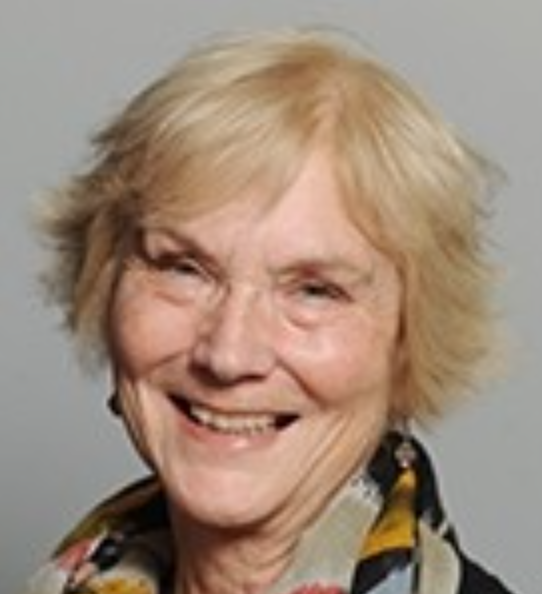 Joan Sargeant合作论文数Department of Community Health and Epidemiology, Faculty of Medicine, Dalhousie University5
 Eva Grunfeld合作论文数Department of Family and Community Medicine, Temerty Faculty of Medicine, University of Toronto5Geoffrey A. Porter合作论文数Department of Surgery, Dalhousie University5
 Debbie H Martin合作论文数Dr. Debbie Martin. School of Health and Human Performance, Dalhousie University4
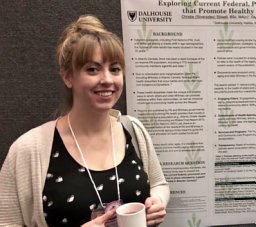 Christie Stilwell合作论文数Fac Hlth, Dalhousie Univ4
 Shiva Nourpanah合作论文数St Marys Univ4
 Emily G Marshall合作论文数Dalhousie University4
 Ivy Lynn Bourgeault合作论文数CIHR/Health Canada Research Chair in Health Human Resources Policy, University of Ottawa4Pauline Gardiner Barber合作论文数4
 Michael P. Leiter合作论文数Deakin University;Acadia University;Michael Leiter Consulting4
 Lori E. Weeks合作论文数4Catherine Donovan合作论文数3Joanne Parker合作论文数3Audrey Kruisselbrink合作论文数3
 Suzanne Dupuis-Blanchard合作论文数École de Science Infirmière, Faculté des Sciences de la Santé et des Services Communautaires, Université de Moncton;Center for Aging Research, Université de Moncton3
 Emma Stirling Cameron合作论文数Fac Hlth, Dalhousie Univ3
 Steve Kisely合作论文数Faculty of Health, Medicine and Behavioural Sciences, University of Queensland;Metro South Health;West Moreton Hospital and Health Service3Steenbeek Audrey合作论文数3
 Jane Buxton合作论文数School of Population and Public Health, Faculty of Medicine, University of British, Columbia;BC Centre for Disease Control3Carolyn Bennett合作论文数3
 Megan Aston合作论文数3
 Susan C. Tirone合作论文数3
 Fiona Susan Martin合作论文数3
 Howard Ramos合作论文数3
 Liviana Mostacci Calzavara合作论文数Division of Social & Behavioural Health Sciences, Dalla Lana School of Public Health, University of Toronto;Centre for Global Health, University of Toronto3J. Gahagan合作论文数2andrea currie合作论文数2diane l bailey合作论文数2Anika Daclan合作论文数2Alexander Zsager合作论文数2Jane Cooney合作论文数2Dana Howse合作论文数2
 Anik Dube合作论文数2
 Alannah Delahunty-Pike合作论文数2Celeste Alvaro合作论文数2Heather Helpard合作论文数2Marjeiry Robinson合作论文数2Alyssa Weeks合作论文数2Marwa Kuri合作论文数2barbara sowinski bpr合作论文数2
 Ella Vermeir合作论文数2Lauren Moritz合作论文数2




