This study provides an isotopic examination of both human and animal paleodiets and mobility patterns at a highland Maya community. Kaminaljuyu, Guatemala, was a large Prehispanic center located in a distinctly cooler, drier setting compared with the majority of Maya sites in the surrounding lowlands. Previous archaeological research at Kaminaljuyu revealed it played an important political and economic role in the Maya region, assisting in the obsidian trade network and maintaining ties with communities as far away as Teotihuacan in central Mexico. By examining the strontium ( 87 Sr/ 86 Sr), carbon (δ 13 C), and oxygen (δ 18 O) isotope values from dental enamel of humans and terrestrial mammals at the site, this study provides direct evidence of long-distance animal trade, explores the nature and timing of such activities, and compares highland dietary patterns with faunal studies in the lowlands. Our results indicate that isotopically non-local humans and animals are most frequently found in special and ceremonial contexts, indicating that long-distance movements of people and products were motivated for politically or ritually significant events. Although dietary patterns showed cross-species variation, diets within species were similar between highland and lowland settings.
Pathophysiological fractionation of stable nitrogen and carbon isotopes during periods of nutritional stress has the potential to bias investigations of ancient diets using such methods, particularly when no corroborating evidence of stress is apparent. More stable isotope analyses of human proxies for nutritional stress are therefore necessary to resolve this issue of diet vs. stress. We show here that individuals undergoing bariatric surgery are an ideal proxy for studying pathophysiological fractionation among humans. Using sequential samples of hair from two individuals, we construct an isotopic timeline demonstrating a 1% enrichment in d15N values immediately following bariatric surgery, reflecting the catabolism of body tissues. Stable carbon isotopes show little systematic change with tissue catabolism.
The development and emergence of teeth is the most commonly used and most accurate method for estimating the age at death of subadult skeletal remains. Early dental aging standards developed from the study of deceased children and X‐rays of living children continue to be used today, although there are reasons to suspect the accuracy of these methods. A new standard, based on archaeological and modern children from London, appears to be more accurate. Histological study of incremental features in tooth enamel can also be used to pinpoint age for incompletely formed teeth.
Lori Wright and Mario Vásquez take a new look at William Haviland’s classic (1967) study to reexamine stature variation at the Maya center of Tikal, Guatemala, spanning the Preclassic through the Terminal Classic periods (1 B.C.–A.D. 950). They also include new samples and stable isotope data to develop an understanding of temporal and social variation in Maya growth processes. The results demonstrate that archaeological distinctions between elites and commoners are associated with weak overall correlations between hierarchy and stature. Still, significantly shorter women are found in mid- and low status domestic settings that correlate to isotopic indications of poorer nutrition and stunted growth. Tentatively, middle and lower status male stature may have declined slightly over the span of Tikal’s history, perhaps indicating subtly declining nutrition as Classic Maya society peaked and faded.
American Journal of Physical AnthropologyVolume 158, Issue 4 p. 527-529 Obituary Obituary—D. Gentry Steele (1941–2014) Lori E. Wright, Corresponding Author Lori E. Wright Texas A&M University, College Station, TX, 77845Correspondence to: Dr. Lori Wright; Department of Anthropology, Texas A&M University, College Station TX 77845-4352. E-mail: [email protected]Search for more papers by this authorRoss MacPhee, Ross MacPhee American Museum of Natural History, New York, NYSearch for more papers by this authorAnthony G Comuzzie, Anthony G Comuzzie Texas Biomedical Research Institute, San Antonio, TXSearch for more papers by this author Lori E. Wright, Corresponding Author Lori E. Wright Texas A&M University, College Station, TX, 77845Correspondence to: Dr. Lori Wright; Department of Anthropology, Texas A&M University, College Station TX 77845-4352. E-mail: [email protected]Search for more papers by this authorRoss MacPhee, Ross MacPhee American Museum of Natural History, New York, NYSearch for more papers by this authorAnthony G Comuzzie, Anthony G Comuzzie Texas Biomedical Research Institute, San Antonio, TXSearch for more papers by this author First published: 29 September 2015 https://doi.org/10.1002/ajpa.22876Read the full textAboutPDF ToolsRequest permissionExport citationAdd to favoritesTrack citation ShareShare Give accessShare full text accessShare full-text accessPlease review our Terms and Conditions of Use and check box below to share full-text version of article.I have read and accept the Wiley Online Library Terms and Conditions of UseShareable LinkUse the link below to share a full-text version of this article with your friends and colleagues. Learn more.Copy URL Volume158, Issue4December 2015Pages 527-529 RelatedInformation
This volume presents the analyses and interpretation of a wide range of human osteological and burial data. The Petexbatun bioarchaeology subproject included a complete assessment of burial practices and human osteology in the Petexbatun sites and in the Pasion region at large. The chapters on paleopathology explore the human skeletal evidence for childhood nutrition and ill health throughout the various sites and the inter-site areas of the Petexbatun region, as well as from Seibal and Altar de Sacrificios. Wright's innovative study goes on to apply the most recent chemical techniques, particularly isotopic and elemental analyses of human bones, to assess the ancient diet of the populations of the Pasion region. Variability between sites, across social status groups, and over time is evaluated and conservatively interpreted in the light of contemporary issues and problems of bioarchaeological methodology and interpretation. Wright uses the new Petexbatun and Pasion region osteological results in order to re-examine past and current work on skeletal remains from other regions of the ancient Maya lowlands. In the final chapters of this work, Wright's osteological analyses inform a critique of the role that bioarchaeological data have played in the development of current ideas regarding the role of ecology, diet, nutrition, disease, invasion, and other factors in the demise of Classic Period Lowland Maya society. For bioarchaeologists, this work sets a new standard in the breadth and depth of osteological study, and its integration with problem-oriented archaeological research. For Pre-Columbian scholars in general, it provides new insights into the environmental and biological issues central to the debate on the end of the Classic period of Maya civilization.
We explore the evidence for population mobility at the Classic Maya center of Tikal, Guatemala through the analysis of dental morphometric and strontium isotope ratios measured in human remains excavated at the site. Both lines of investigation are concerned with mobility and immigration yet rely on significantly different methodologies. As we will demonstrate here, both approaches have their limitations in the assessment of ancient migration. However, we suggest that when the two methods are integrated a more robust understanding of population mobility emerges. Our results have implications for not only our understanding of population history at Tikal, but also for the application of biological distance analysis to the Classic Maya. This research originated in the late 1990s as part of Wright's large-scale bioarchaeological study of the ancient skeletons of Tikal. Aspects of the migratory isotope and dental morphometric research have been published previously (Dental analysis of Classic period population variability in the Maya area, Doctoral Dissertation, Texas A&M University, 2004; American Journal of Physical Anthropology, 132, 367–380, 2007; Journal of Archaeological Science, 32(4), 555–566, 2005; Ancient Mesoamerica, 16, 89–100, 2005; Journal of Anthropological Archaeology, 31(3), 334–352, 2012). This publication integrates these data in a combined analysis of population mobility at Classic period Tikal.
Sea salt is getting increasing attention as a potential source of strontium incorporated into human tissues. One particularly interesting instance was published by one of us in 2005 in which sea salt was proposed as a possible reason why the stable strontium isotope ratios of ancient Maya human tooth enamel from Tikal, Guatemala, did not match the expected local strontium isotope signature. We revisit that analysis and identify a calculation error that led to an underestimate of the amount of salt required. Our revised mixing model increases the amount of salt required by 51 percent. We consider the implications of this for the case of the ancient Maya at Tikal and also discuss application of the mixing model in other circumstances.
Stable carbon and oxygen isotope ratios of tooth enamel provide a means to examine nutritional changes during childhood. To date, such studies have used large enamel samples, often spanning the developmental period of the tooth. This paper reports the results of small samples drilled from first molars and premolars of human teeth from Kaminaljuyu, a Classic period city in highland Guatemala. Carbon isotopes show considerable increase between cuspal and cervical enamel for both teeth, indicating an increase in maize consumption during childhood. Oxygen isotope trends are more variable, and suggest some seasonal fluctuation. While the oxygen isotope data confirm the identification of foreign skeletons among the samples, they illustrate a need for caution when sampling teeth due to variable δ 18 O composition of enamel within a tooth.
This paper presents strontium and oxygen isotopic measurements on archaeological human teeth from the ancient Maya city of Tikal, Guatemala, that illuminate the role that migration played in the history of the state. Stable strontium isotope ratios of human teeth parallel the bedrock geology of the location where foods were grown, while stable oxygen isotope ratios reflect the sources of water imbibed, and track geographic variation in the isotopic composition of rain water. Because tooth enamel forms during childhood and is not remodeled during life, we can identify foreign-born individuals at Tikal by their outlying strontium and oxygen isotope ratios. These data indicate that approximately 11–16% of the sampled Tikal skeletons spent their childhood at distant sites. Most of the migrant burials date from the Early Classic period and are high status contexts. Several royal burials demonstrate long distance movement of both males and females, and shed light on the identification of epigraphically-known individuals. Yet, both Early and Late Classic migrants are found in lower status domestic burials. Interaction with distant peers was important in the rise of the Tikal polity, however, immigration from all social tiers contributed to the city’s rapid population growth.
An incomplete skeleton recovered from a multiple, secondary burial at Tikal, Guatemala, shows malformed foot bones consistent with a diagnosis of bilateral idiopathic talipes equinovarus. Bones attributable to the skeleton include paired bowed fibulae, fragmentary calcanei, complete tali, naviculars, cuneiforms, metatarsals, and some phalanges. The tali are reduced in size, flattened, and hyperextended, with the tibia partially articulated on the calcaneus, posterior to the talus. The cuboid and cuneiforms show marked contraction of the inferior surfaces, and angulation. The metatarsals and phalanges present minor changes to the articulations, and slender shafts. Articulated, both feet show marked equinovarus deformity, with weight carried on the lateral margin and superior surface of the feet. Key conditions considered in the differential diagnosis are those producing an equinovarus or a calcaneocavovarus deformation, especially progressive neuromuscular disorders. This paper describes the nature of the bony changes, reconstructs the morphology of the feet, and offers a differential diagnosis. Scholars of the ancient Maya have identified artwork that appears to depict talipes equinovarus, although there was no osteological evidence for the condition among the Maya prior to the diagnosis of this case.
This study presents a differential diagnosis of benign mandibular tumours identified in two adult burials from the precontact Maya city of Tikal, Guatemala. Both individuals were recovered from domestic structures that date to the Late Classic Period (AD 550-850). The osseous growths were interpreted as probable benign tumours based on evidence of localised growth, a circumscribed border, a dense texture and a lack of osteolytic activity or spiculate bone formation.Burial PTP-026A is a middle adult (35-50 years) of indeterminate sex with evidence of a small dense, circular mass extending laterally from the right mandibular corpus. Macroscopic and radiographic assessment of this lesion provided a diagnosis of osteoma, a true neoplasm, or alternately, hyperplasia (e. g. exostosis) or hamartoma, which are not true neoplasms.Burial PTP-017 is a probable young adult female (20-35 years) with a large osteoblastic lesion on the right anterior mandibular corpus. This dense, bony mass extends from the anterior margin of the mental canal, and shows a distinct boundary from the adjacent trabecular and cortical bone. The growth of the osseous mass displaced the right first premolar anteriorly. Radiographic assessment showed the presence of dense, radiopaque material, indicating significant calcification. This suggested a likely fibro-osseous origin for this lesion, with a probable diagnosis of ossifying fibroma, or possibly osseous dysplasia. Although not definitive, our differential diagnosis was able to exclude a number of neoplastic and non-neoplastic conditions that affect the jaws. This study provides the first reported cases of possible benign mandibular tumours in the ancient Maya. Copyright (C) 2009 John Wiley & Sons, Ltd.
Known for its spectacular tombs and adobe talud–tablero architecture, the highland Guatemalan city of Kaminaljuyu is key to models of long distance interaction in Mesoamerica. We use stable isotopic data from human bone, dentine and tooth enamel to reconstruct Kaminaljuyu’s dietary history. Stable carbon isotope ratios and alkaline earth ratios of enamel carbonate indicate a decline in maize consumption from Preclassic to Classic periods, perhaps due to the desiccation of Lake Miraflores, which was used to irrigate Late Preclassic fields. Stable oxygen and strontium isotope ratios in enamel shed light on the geographic origin of Early Classic skeletons, and show that the central skeletons in the tombs were local children. However, four decapitated skulls and two peripheral skeletons show enriched oxygen ratios, similar to Lowland Maya sites. Strontium isotope ratios indicate that most of these are from an area underlain by Cretaceous limestones; one is from a metamorphic region. Two individuals may have traveled to or from Central Mexico. The greater evidence for lowland individuals among the tomb skeletons implies that political connections with the Maya area were more significant to elites at Kaminaljuyu than was direct contact with Central Mexico.
 James H. Burton合作论文数Laboratory for Archaeological Chemistry, University of Wisconsin-Madison, 1180 Observatory Drive, Madison WI 53706, United States6
 Theron Douglas Price合作论文数Department of Anthropology, College of Letters & Science, University of Wisconsin-Madison4
 Henry Schwarcz合作论文数School of Earth, Environment & Society, Faculty of Science, McMaster University4Kristin K. Hoffmeister合作论文数3
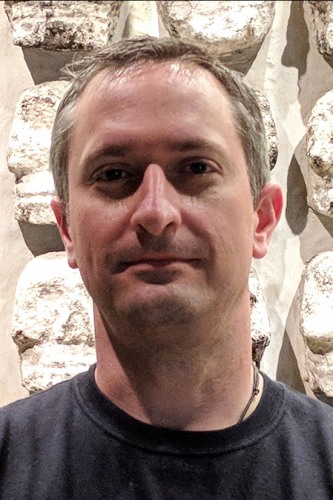 Andrew K Scherer合作论文数Department of Anthropology, Brown University3Mario A. Vasquez合作论文数2
 Chase Beck合作论文数Dept Anthropol, Texas A&M Univ2F Chew合作论文数2
 Jane Buikstra合作论文数School of Human Evolution and Social Change, Arizona State University2
 Christine D White合作论文数Social Science Centre, Faculty of Social Science, Western University2
 Kitty F. Emery合作论文数Florida Museum of Natural History Environmental Archaeology2
 Eric J Bartelink合作论文数2Gloria Ajú合作论文数1Javier Estrada合作论文数1Juan Antonio Valdés合作论文数1Emanuel Serech合作论文数1megan greenfelder合作论文数1renaldo acevedo合作论文数1
 Barbara Arroyo合作论文数1Robert J. Sharer合作论文数1
 Loa Traxler合作论文数1
 Paul Francis Healy合作论文数1
 Katherine Miller Wolf合作论文数Department of Anthropology, University of West Florida1Crystal A. Dozier合作论文数1
 Angelina Perrotti合作论文数Dept Geog, Univ Wisconsin1
 Ashley Sharpe合作论文数Department of Anthropology, University of Florida, Turlington Hall, Room 1112, PO Box 117305, Gainesville, FL 32611, United States1Jack Fenner合作论文数School of Culture, History and Language, College of Asia & the Pacific, The Australian National University1Ash D合作论文数1
 Zavodny Emily合作论文数1Anthony G. Comuzzie合作论文数1
 Vera Tiesler合作论文数Facultad de Ciencias Antropológicas, Universidad Autónoma de Yucatán1
 Ross MacPhee合作论文数Department of Mammalogy, American Museum of Natural History1Bernard Hermes合作论文数1
 Paul Fullagar合作论文数1
 Fred Longstaffe合作论文数Laboratory for Stable Isotope Science, Department of Earth Sciences, University of Western1
 George Kamenov合作论文数Department of Geological Sciences, College of Liberal Arts and Sciences, University of Florida1Anthony J. Taylor合作论文数Department of Respiratory Product Development, Glaxo-Wellcome Research and Development1
 T. Douglas Price合作论文数College of Letters and Science, University of Wisconsin-Madison1Cassady J. Yoder合作论文数1




